On February 13-14, a meeting was held within the framework of the "Bridge of Peace” initiative. The next meeting of Azerbaijani and Armenian civil society representatives took place. This time, in addition to the five main members of the initiative from both sides, the number of participants was increased, and a total of 39 people attended the meeting. The Azerbaijani delegation entered Armenia by crossing the delimited and demarcated land border. The border crossing was carried out in accordance with border and customs control procedures, and a special permit was also obtained due to existing COVID restrictions.
According to the program, the Azerbaijani delegation stayed in Armenia for approximately 35 hours. During this period, 4 hours were allocated for travel and hotel accommodation, 4 discussion sessions, two official meetings, a press conference, and continuous informal dialogue were organized.
Modern.az learned about the impressions of the delegation members who traveled to Armenia regarding the meeting.
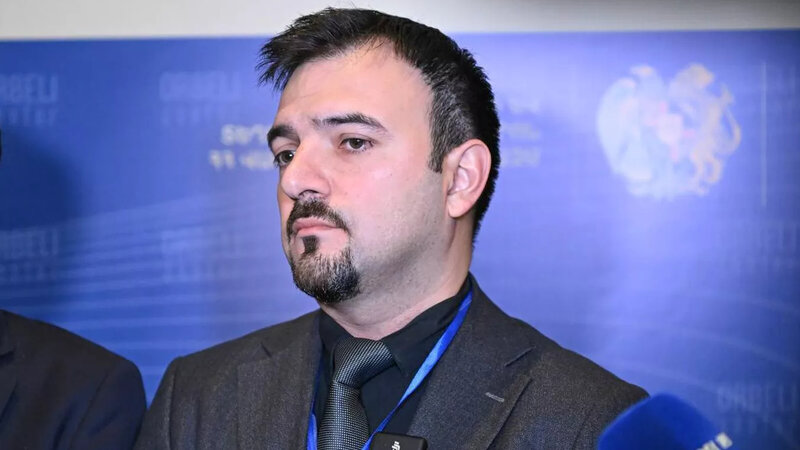
In a statement to our website, Rusif Huseynov, director of the Topchubashov Center, stated that the meeting was generally constructive and based on mutual respect:
“From the outset, we had agreed to focus on topics that could bring mutual benefit and relate to the future, rather than highly controversial subjects. However, this does not mean that the parties agreed on all issues and points. Minor disagreements also occurred. Based on mutual respect, both sides brought issues concerning and worrying their respective societies to the attention of the other.
We crossed into Armenia from the delimited section of the border between the two states. This was, on the one hand, a symbolic act related to the normalization process and the issue of delimitation within it. On the other hand, it also has practical significance. It demonstrates that citizens of the two countries can now cross into each other's territory, even in a large group, via the border. As all group members, we highly value the importance of this.”
Rusif Huseynov added that several other meetings are planned before the elections in Armenia:
“Regarding the Bridge of Peace, our current timeframe for this stage covers May-July. This is because election preparations will take place in May, and the election itself will be held in June. Therefore, it becomes difficult for us to undertake serious work during that period. For this reason, if it is possible to hold several more meetings before May-June, to convey the message of peace to a larger segment of both societies, to media organizations, and to think tanks, we intend to undertake several joint projects.”
Kamala Mammadova, editor-in-chief of 1news.az, also noted that the meeting took place in a positive atmosphere:
“At the same time, security was fully maintained. Unlike our previous visit, this time we crossed into Armenia by land. This was also a symbolic step. Furthermore, the delegation was larger, with nearly 40 participants. In other words, they were received normally. We had discussions there. That is, in addition to the regular table, meetings were held with officials – Deputy Foreign Minister of Armenia Vahan Kostanyan and Secretary of the Security Council Armen Grigoryan. Questions and issues that concerned us were discussed, and we received answers from them. Generally, it can be said that issues concerning both sides were raised. The advantages of peace were discussed. The socio-economic benefits that peace could bring to our country were discussed, so the overall impression is good.”
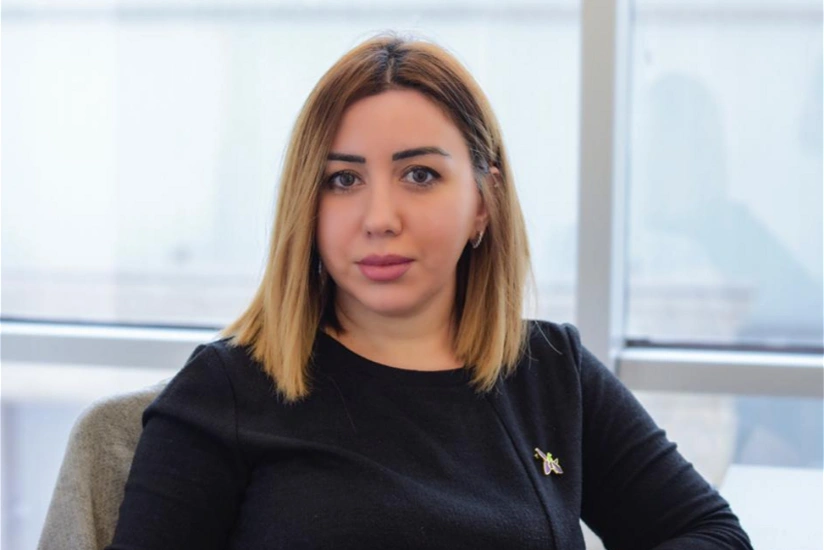
K. Mammadova also pointed out that there were points where the parties' positions did not coincide:
“This is also normal. That is, the parties raised sensitive topics for both countries. I cannot fully disclose these issues. However, there was no provocation or conflict. Simply put, in fully closed meetings, each side raised and discussed the issues that concerned them.”
Regarding the roads they traveled, K. Mammadova said the following:
“We crossed from the delimited territory – from the village of Ashaghi Askipara. There was concern about how the meeting would proceed. However, the Armenian representatives we met there are fully supportive of the peace agenda. Therefore, there was no problem.
The roads we traveled were remnants from the Soviet era. Of course, they had been somewhat cleared on our side. However, the car journey proceeded normally. The old road remains, not completely dilapidated. They will probably reconstruct it.”
Rauf Agamirzayev, a transport expert and member of the Public Council under the Ministry of Digital Development and Transport, said the following about the meeting:
“I represented the transport aspect of the meeting. In this context, I presented Azerbaijan's vision. That is, I explained how Azerbaijan views the concept of transport corridors in this region. I spoke about the contribution that newly formed roads would make. Among the roads on the Armenia-Azerbaijan border, the Zangazur corridor, which ensures Azerbaijan's access to Nakhchivan and from there to Turkey, is initially important for us.
However, we are also interested in the opening of other roads. This will happen in stages. I gave a presentation on this, and also demonstrated these examples using their peace road divider project. In fact, the transport network is almost a system that complements itself and inherently includes diversification. Every state is interested in having not just one, but several roads, and thus having a certain share in the overall network. The dialogue was very constructive and, in my opinion, contributed to peace. But this is an initiative. That is, we are showing the initiative. Relevant structures from both sides are already doing their work, and we are gradually approaching peace.”
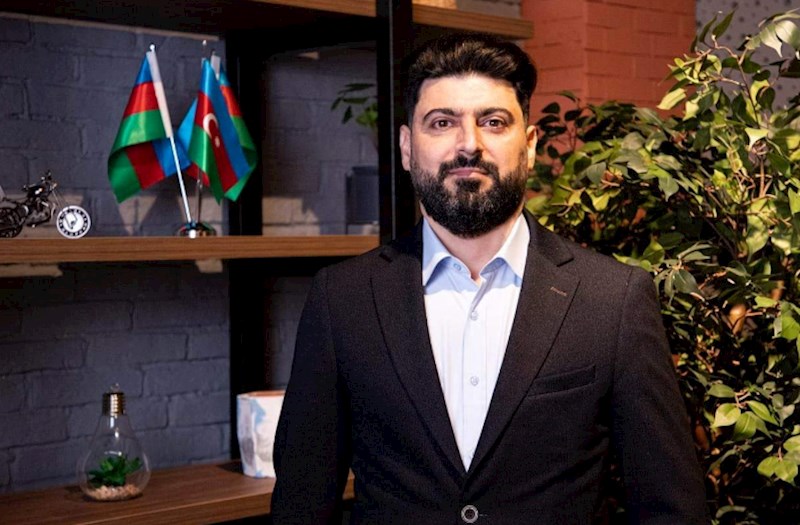
R. Agamirzayev also spoke about the condition of the road they traveled:
“The condition of the road we traveled was good. We crossed from the village of Askipara in Gazakh, that is, from the delimited area, under the control of the Border Service of both states. The road we took to the city of Tsaghkadzor is in normal condition. Incidentally, this road can be considered the third road leading to Georgia. Because Armenia also has several roads to Georgia. This road is one of them, running parallel. Along the road we traveled, elements of an old railway can also be observed. We did not go to other regions. Because our journey there, our stay, and other activities took 35 hours. Panel discussions and discussions with state representatives took place in a very tight schedule, right in the hotel where we stayed, and every minute had its importance. Because Azerbaijanis do not cross in that direction every day. Since we had crossed, we had to complete our work efficiently and productively within the allotted time and return.”