Events in the Middle East and South Caucasus region indicate that wars in the system of international relations are often the visible side of processes. In reality, the main causes of geopolitical confrontations are linked to unseen political, economic, and strategic factors. The ongoing tension between Iran, the US, and Israel is precisely a product of such a complex geopolitical context. This confrontation draws attention not only due to military balance issues but also due to energy routes, regional spheres of influence, ideological clashes, and the strategic plans of major powers.
In modern international relations theory, these processes are often explained with terms such as “hidden geopolitical dynamics,” “strategic competition,” and “asymmetric influence mechanisms.” On the visible side stand missiles, military exercises, diplomatic statements, and sanctions. On the unseen side lie the long-term strategic plans of major states, the struggle for regional influence, and geo-economic interests. Iran's confrontation with the US and Israel is also an integral part of this complex system.
Azerbaijan holds a special geopolitical position in this context. As one of the main actors in the South Caucasus region, Azerbaijan is a country that has experienced the severe consequences of war for many years. In the early 1990s, as a result of Armenia's military aggression against Azerbaijan, approximately 20 percent of the country's territory remained under occupation. During this period of occupation, the Karabakh and East Zangazur regions suffered serious humanitarian and ecological disasters.
International organizations, particularly the UN Security Council, adopted resolutions 822, 853, 874, and 884 in 1993, demanding the unconditional withdrawal of Armenian troops from Azerbaijani territories. However, for many years, these resolutions remained on paper. On the visible side, many states declared their support for Azerbaijan's territorial integrity. Yet, on the unseen side, various political and geopolitical interests hindered the resolution of this problem.
Azerbaijan fundamentally changed this situation with the 44-day Patriotic War that occurred in 2020. As a result of successful military operations carried out by the Azerbaijani Army, the occupied territories were liberated. This war is regarded as an example of high-tech warfare in modern military history. Particularly, the application of unmanned aerial vehicles and network-centric operations demonstrated the formation of a new military doctrine.
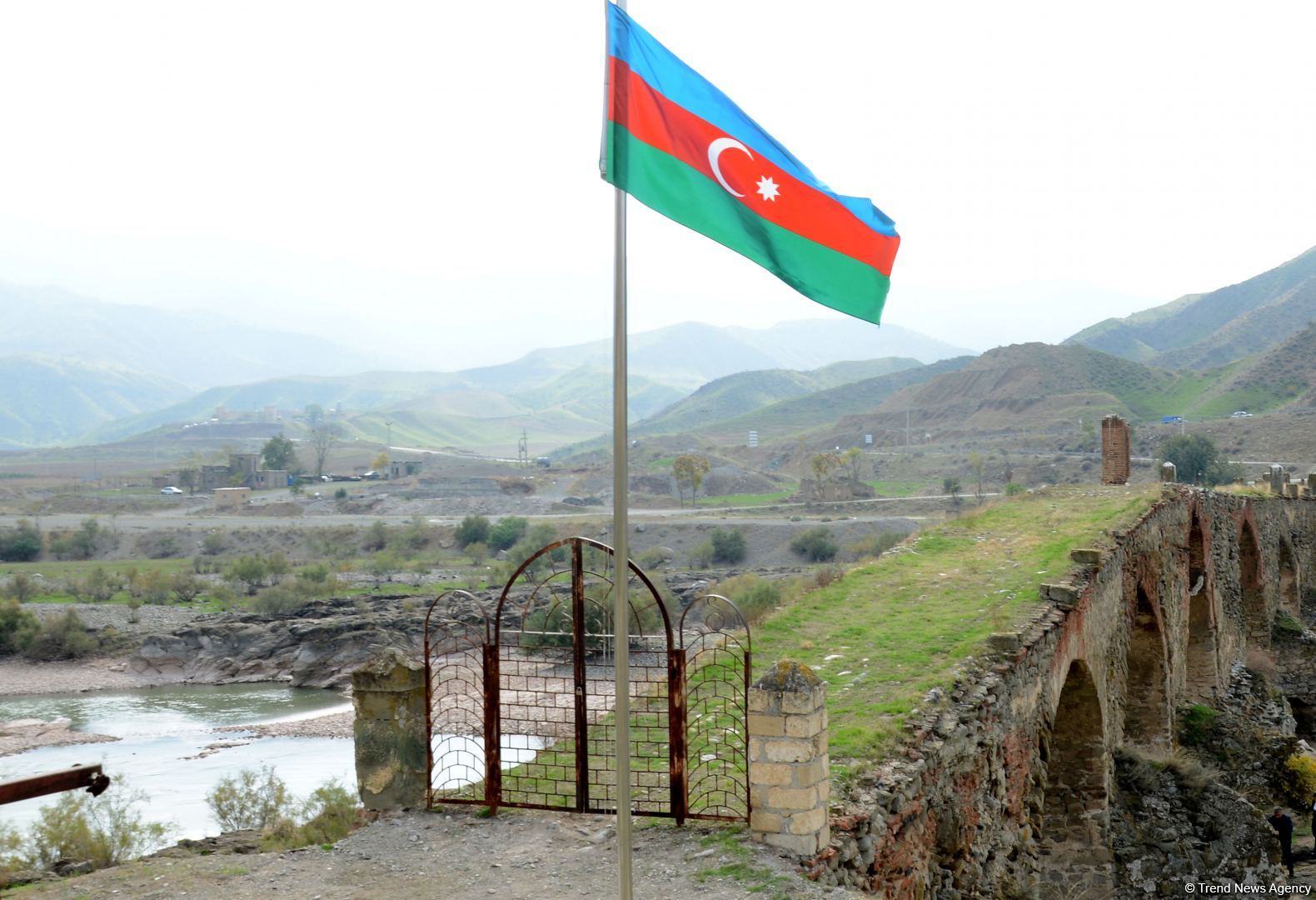
After the 44-day Victory, new geopolitical realities emerged in the region. These realities led to changes in the policies of many states and regional powers. Some geopolitical actors, who had operated unseen and secretly for many years, began to openly demonstrate their positions. Azerbaijan's strengthening and the emergence of a new political balance in the region came as a surprise to some forces.
In this regard, it is no coincidence that the Iran factor has become a particular focus of attention. The Islamic Republic of Iran is one of the oldest states in the region and possesses significant geopolitical ambitions. Iran's political system is based on a theocratic republic model, and the institution of the supreme religious leader plays a crucial role in the country.
Nevertheless, Iran's attitude towards Azerbaijan has not been unambiguous throughout history. Iran's supreme religious leader, and certain circles subordinate to him, have, to put it mildly, struggled for many years to accept Azerbaijan as an independent state.
At the same time, Iran's position during the period of Armenia's occupation of Azerbaijani lands also raised numerous questions. Large-scale looting and illegal economic activities were carried out in the occupied Karabakh and East Zangazur territories. Historical and religious monuments were destroyed, and mosques were desecrated. Facts of pigs being kept in some mosques were also recorded by the international community.
The paradoxical situation was that Iran, presenting itself as a Muslim country, not only failed to react seriously to these events but turned a blind eye to those mosques. Economic and political cooperation with Armenia continued. This led to serious discussions in the region regarding issues of religious and political principledness.
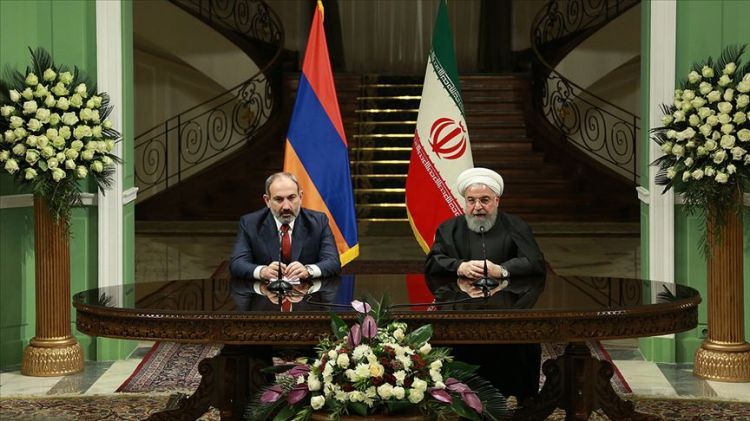
In contrast, Azerbaijan demonstrated a position loyal to international law. Azerbaijan did not allow its territory to be used for any military operations by Iran. Even despite international pressure, Azerbaijan remained committed to the principle of neighborliness and regional stability.
Azerbaijan's foreign policy doctrine is based on the principles of balanced diplomacy. This principle is built on both regional cooperation and respect for international law. On one hand, Azerbaijan cooperates with strategic allies such as Turkey and Pakistan, and on the other hand, it develops relations with America, the European Union, and other international organizations.
Currently, the escalating tension between Iran, the US, and Israel is a process beyond Azerbaijan's will. This confrontation is more related to the changing strategic balance in the Middle East. US sanctions against Iran's nuclear program, Israel's security concerns, and Iran's regional influence policy are cited as the main causes of this confrontation. Key factors like China and Russia are not yet visible behind the curtain.
Despite all that has happened, Azerbaijan continues to demonstrate a responsible stance on this issue. Official Baku has repeatedly stated that the escalation of wars in the region benefits no one. Azerbaijan's main priority is peace, stability, and economic cooperation in the region.
History shows that exemplary policies yield more effective results in the long term. Azerbaijan has precisely formed such an example in recent years. Baku pursues a constructive policy on both diplomatic and economic platforms.
For Azerbaijan, the city of Tabriz holds special spiritual and historical significance. Throughout history, Tabriz has been one of the important centers of Azerbaijani culture. In the Middle Ages, Tabriz became the political and economic center of the region as the capital of the Safavid state.
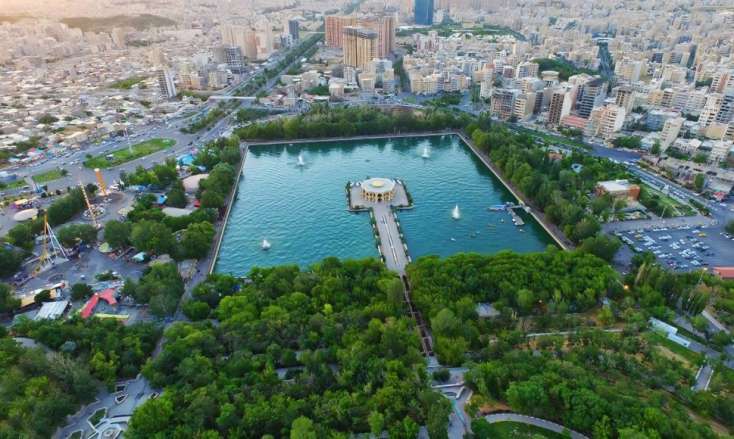
Even today, millions of Azerbaijanis consider Tabriz as dear as Baku. This city holds a special place in Azerbaijani history and culture. The Azerbaijani people's attitude towards Tabriz should not be perceived as mere emotionality. Here, history, culture, ideology, and geopolitical interests are closely intertwined.
Consequently, the confrontation between Iran, the US, and Israel is not merely composed of visible military and diplomatic processes. Behind these processes lie deeper and more complex geopolitical factors. Azerbaijan, in this intricate situation, distinguishes itself with a balanced and principled stance.
History shows that wars are temporary, but the exemplary policies of states have a long-term impact. Azerbaijan, by pursuing such a policy, demonstrates its advocacy for stability and cooperation in the region.
It should not be forgotten that Azerbaijan is an ally with America, a friend with Israel, a brother with Turkey through the Shusha Declaration, and a neighboring friend with Iran. Azerbaijan does not want war anywhere in the world.
Azerbaijan also desires its own interests above all else. In Azerbaijan, Tabriz is loved as much as Baku.
Elnur ƏMİROV