
The fourth year of the large-scale war between Russia and Ukraine is coming to an end. The attack, launched on February 24, 2022, under the name of a “special military operation,” aimed to quickly take control of Kyiv, halt Ukraine's integration into the West, and establish a new security order in the region. The outcome of four years, however, reveals a deep chasm between the Kremlin's plans and reality.
Russia not only failed to achieve its goals but also faced significant economic and material losses.
Sanctions Record-Holder: An Isolated Economy
Over these years, Russia became the most sanctioned country in history. The US, EU, and allies targeted the financial, energy, logistics, and technology sectors. The exclusion of banks from the SWIFT system, a price cap on energy exports, a high-tech embargo, and the freezing of state and oligarch assets were severe blows. The Kremlin attempted to mitigate the impact by redirecting energy sales to Asian markets. However, in the long term, technological dependence, lack of investment, and limited opportunities for industrial modernization have deepened the structural weaknesses of the economy.
In February 2022, due to Russia's military operations against Ukraine, Western countries and allies froze the foreign currency reserves, government bonds, and other assets of the Russian Central Bank and other state institutions within their jurisdictions.
Calculations regarding the volume of these assets vary across different international sources. According to various estimates and Western media reports, approximately 300-350 billion dollars worth of foreign assets have been frozen in Western countries. The frozen assets primarily consist of the Russian Central Bank's foreign currency reserves and government bonds.
Within the framework of the European Union, approximately 210 billion euros of Russian state assets have been frozen. Additionally, private assets totaling 28 billion euros belonging to Russian businessmen and companies owned by Russian citizens have also been frozen.
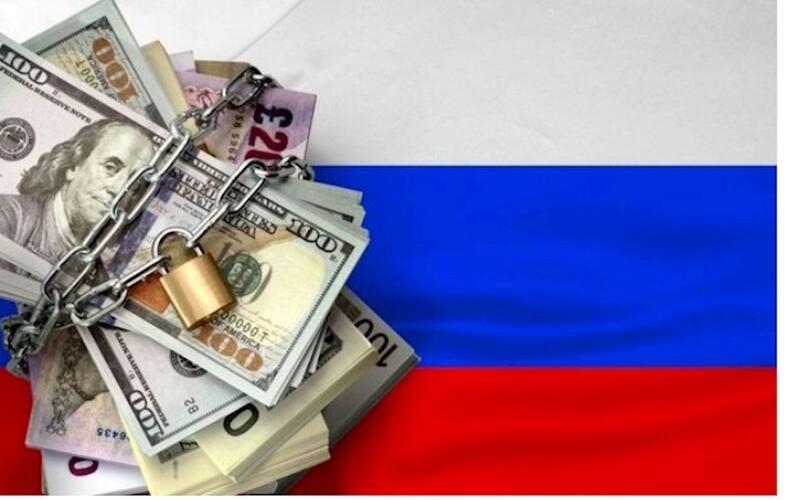
Experts state that these amounts are approximate calculations. The value of assets changes according to market conditions, and some countries have not yet disclosed specific figures. Therefore, it is not excluded that the total amount of Russia's frozen assets could be larger. A portion of the frozen assets is merely unused. In some countries, interest income generated from frozen assets is already being used to aid Ukraine. The European Commission recently presented a new, 20th package of sanctions against Russia. According to the press service of the European Commission, the main element of the package will be a complete ban on services for the transportation of Russian oil. The European Commission plans to implement this in coordination with G7 partners.
The new package of restrictions will include the following:
- A complete ban on services provided for the transportation of Russian oil;
- Sanctions on 43 tankers transporting Russian oil;
- Restrictions and new transaction bans against 20 regional Russian banks;
- A ban on the export of goods with an annual volume of 360 million euros — from rubber to tractors;
- A ban on the purchase of metals, minerals, and rare earth elements from Russia;
- Restrictions on the export of computer and radio-electronic equipment to countries suspected of re-exporting technology to Russia.
Number of Russian Military Personnel Killed Since the War Began
BBC, Mediazona, and a group of volunteers have identified the identities of 186,102 Russian soldiers killed since the start of the war with Ukraine. According to researchers, the number of confirmed names has increased by approximately 20,000 in the last month. This is a record increase since the counting began. However, the authors of the study emphasize that the increase in deaths is not related to the current situation on the front line.
The calculation methodology is based on the analysis of public records: obituaries, social media posts, and notifications regarding missing persons. The actual number of losses may be higher.
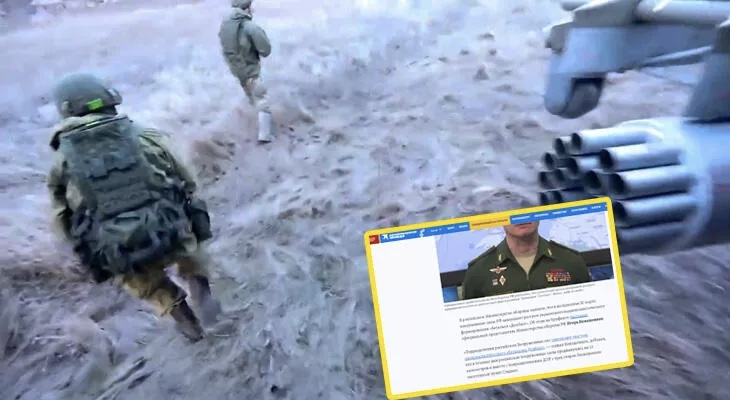
Over the past month, researchers have been able to compare data collected over several years with publicly available government databases, primarily lists from inheritance registries that effectively confirm a person's death.
It was also noted that the proportion of volunteers among the deceased continues to increase: they currently account for one-third of all confirmed losses. More than half of all identified volunteers have died in the last year and a half.
Number of Russians Who Left Their Country
666,000 Russians have left the country since the war began and have not returned. This figure was published by “The Bell” based on the statistics of each of the approximately 70 countries hosting Russians.
This was obtained after studying officially published figures, statements by officials, and direct responses from the authorities of the countries to which inquiries were sent.
Currently, the top 5 countries where Russians have settled are:
Armenia - 110,000 people
Israel and Kazakhstan - 80,000 people each
Georgia - 73,500 people
USA - 48,000 people
Germany - 36,000 people.
Serbia and Turkey have also accepted Russians. According to official data, the number of Russians fleeing the war is approximately 30,000 in Serbia and 28,000 in Turkey.
Russia's Eroding Influence
After the start of the Russia-Ukraine war, Moscow faced not only sanctions but also effective exclusion from a number of regional and global mechanisms. At the end of four years, this isolation manifests itself in several directions.
European Security Architecture
Russia has lost its former role in the European security system. The activities of the NATO-Russia Council have effectively ceased, institutional dialogue with the European Union has been minimized, and arms control mechanisms in Europe (various bilateral formats) have been frozen or abolished. Consequently, Russia is not participating in the formation of Europe's new security model.
“Group of Seven” and Western Economic Platforms
Russia has been outside the G7 format for years, but after the war, any prospect of cooperation with this platform has been completely closed.
At the same time, Western investment funds and financial institutions have left the Russian market, the exclusion of major banks from the SWIFT system has weakened global financial integration, and the European direction in the energy market has significantly narrowed.
Energy and Transport Routes
European countries prioritized alternative projects to reduce their dependence on Russian gas. This resulted in the expansion of the Southern Gas Corridor, which transports Caspian gas to Europe, the rapid construction of LNG terminals, and the revitalization of the Middle Corridor and Trans-Caspian routes. This process, in turn, led to the weakening of Russia's transit role.
Sports and Cultural Platforms
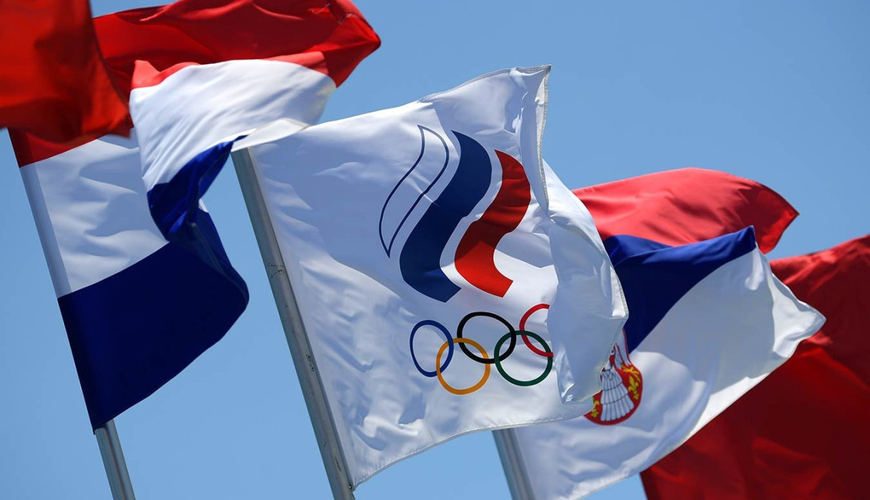
Due to the war, Russia has been excluded from many international competitions.
These include:
- Exclusion from FIFA and UEFA tournaments
- Limited participation in the Olympic Games
- Restrictions on representation in international cultural events.
This has reduced the country's “soft power” capabilities.
Decreased Influence in Regional Processes
A new geopolitical balance has formed in the South Caucasus, the role of Turkey and the EU has increased, NATO activity in the Black Sea security agenda has expanded, and military infrastructure in Eastern Europe has been strengthened.
Although Russia formally remains on some platforms, such as the UN Security Council, its practical influence is not at its previous level.
In short, Russia not only failed to achieve its desires but also sank into a quagmire.
However, these 4 years brought two parallel realities to Ukraine: on one hand, destruction and human tragedy, and on the other, strengthened national identity, a modernized army, and accelerated integration with the West.
If the main goal of the war was to weaken Ukraine, the outcome was paradoxical. That is, although Ukraine suffered heavy losses, it became more connected to the West politically and strategically than before, and achieved a more consolidated statehood.




