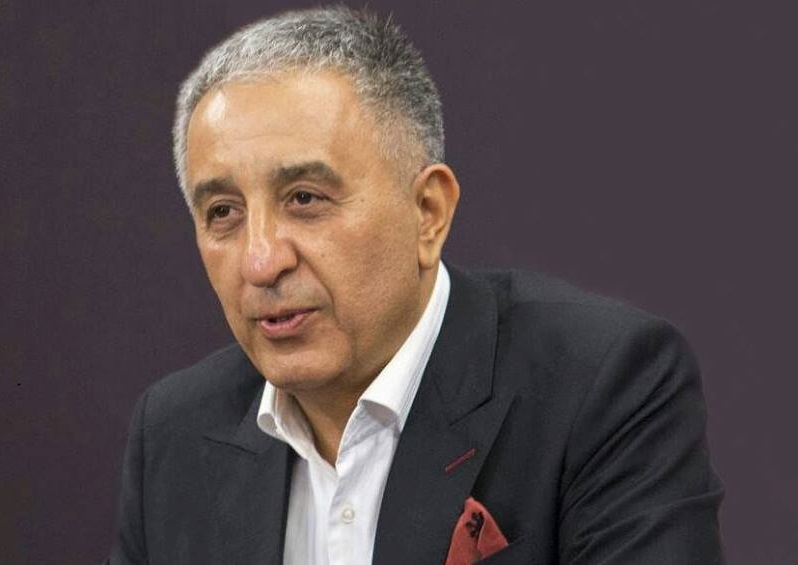
Senator Sheldon Whitehouse (b. 1955) has been known in recent years as one of the harshest critics of corruption and “dark money” schemes in Washington politics. His speeches focus on global financial networks, the influence of oligarchic capital on politics, and the vulnerability of democratic institutions to this influence. Although phrases like “exposed an international crime syndicate” are sometimes used in the media, the essence of the matter is more complex. Whitehouse is more of a politician who tries to show how the global financial-corruption ecosystem works, rather than exposing a specific mafia.
One of the topics frequently raised by the legendary Yale University alumnus, former Federal Prosecutor, former Attorney General, and Democratic Senator is the possibility that some law firms, lobbying companies, and financial intermediaries in the US and European financial systems serve the oligarchic capital of authoritarian countries. In his opinion, these structures sometimes act as intermediaries in the entry of corrupt money into the Western financial system. When explaining this phenomenon, Whitehouse often uses the concept of a “global kleptocracy network.” This term refers to a transnational financial mechanism through which state and business elites conceal large sums of money via offshore structures, the real estate market, and various funds.
 After Russia's invasion of Ukraine, Whitehouse stated several times that the Western financial system has served as a safe haven for Russian oligarchs' capital for many years. In his view, stricter financial laws and higher transparency standards are needed to prevent this situation. Another topic for the Senator is the problem of anonymous financing, or “dark money,” in US politics. He claims that some large foundations and donor networks can influence the formation of political decisions through hidden financing.
It was in this context that Whitehouse delivered an extensive speech of approximately 48 minutes in the Senate, drawing attention to a new issue. He placed three names side by side as the corners of a political triangle: Donald Trump, Jeffrey Epstein, and Vladimir Putin. According to the Senator, these names are not separate scandals but elements indicating different sides of a system of connections that need to be investigated.
In his speech, Whitehouse put forward the thesis that the Trump–Russia, Trump–Epstein, and Epstein–Russia connections should be investigated not as isolated incidents but as parts of a possible structure. Referring to the Epstein materials, which were disclosed in 2026 and consist of millions of documents, the Senator noted that Jeffrey Epstein might not have been merely a financier but a figure who facilitated connections between political and financial elites. According to him, the nature of these networks is not yet fully clear and requires serious investigation.
In his speech, the Senator also listed ten political decisions during Donald Trump's presidency that he believed benefited Russia, claiming that these were problematic from the perspective of US strategic interests. Alongside this, the Senator posed questions rather than making direct accusations. He brought up the possibility that if kompromat, financial ties, and personal relationships turn into tools of influence in international politics, this might no longer be merely an individual scandal but a geopolitical mechanism.
There are several reasons why this speech generated widespread resonance. The video garnered millions of views on social media, and the topic immediately became a subject of polemics in the political atmosphere of the US election year. Republican circles viewed it as a political attack, while Democrats presented the issue as serious questions that needed investigation. Nevertheless, the important point is that Whitehouse did not present definitive evidence of specific criminal connections in his speech. His speech aimed more at drawing attention to a chain of political and financial connections that require investigation.
In Washington politics, sometimes a single speech is not merely a political statement; it reveals clues to a larger shadow map. Whitehouse's speech was perceived precisely in this way. This is because Epstein was a figure who circulated among financial elites, politicians, and billionaires for years, and his network still holds dark points that have not been fully uncovered.
The Senator's main question, however, is quite weighty: If financial networks and kompromat mechanisms can influence political decisions, this is no longer just a scandal but a transformation into a tool of global power struggle. For many in Washington, this is merely election-year polemics. Others, however, see it as traces of a larger system.
History shows that major political scandals often initially appear as rumors, but later, as documents and investigations emerge, they reveal how the system works. For this reason, the question at the heart of today's debate remains open: is this merely election rhetoric, or a clue that opens the door to global financial and political networks?
US politics is currently seeking the answer to precisely this question…