
The rules regarding the return and insurance of deposits in closed banks in Azerbaijan are primarily regulated by the Law of the Republic of Azerbaijan "On Deposit Insurance" and the regulations of the Deposit Insurance Fund (ADIF).
In accordance with the Law, when a bank is liquidated or loses its solvency, ADIF compensates 100% of the insured deposit for each depositor, up to 100,000 manats (insurance limit). For funds in accounts related to an individual's entrepreneurial activity, this amount is up to 20,000 manats, and funds in notary deposits are paid in full. Interest accrued up to the date of the insurance event is also compensated.
According to the latest updated information from the Deposit Insurance Fund on paid compensations as of September 11, 2025, a total of 204,548,584.16 manats in compensation has been paid to 7,711 depositors for LPO MUĞANBANK OJSC.
For LPO GUNAY BANK OJSC, compensation totaling 35,143,691.00 manats has been paid to 2,211 depositors.
Within the framework of payments made for LPO AGBANK OJSC, 134,036,217.00 manats in compensation has been paid to 4,976 depositors.
For LPO NBCBANK OJSC, a total of 137,150,158.00 manats has been returned to 4,314 depositors.
The number of depositors who received compensation for LPO AMRAHBANK OJSC was 5,904. The total amount paid in this regard was 144,932,975.00 manats.
For LPO ATABANK OJSC, compensation totaling 260,337,217.00 manats has been paid to 9,946 depositors.
It is interesting to know, what is the amount of unpaid compensation for banks that have ceased operations?
Although we addressed an inquiry to the Deposit Insurance Fund to obtain the latest information regarding the amount of the aforementioned unpaid compensation and statistical figures subsequent to the disclosed date, we were unable to receive a response from the relevant institution regarding our inquiry.
Modern.az-a açıqlamasında hüquqşünas, iqtisadçı Əkrəm Həsənov qeyd edib ki, ümumiyyətlə, Əmanətlərin Sığortalanması Fondunun fəaliyyətini iki əsas istiqamət üzrə fərqləndirmək lazımdır.
“The first direction is the compensation of protected, i.e., insured, deposits. According to current legislation, deposits with an annual interest rate not exceeding 12 percent in national currency and 2.5 percent in foreign currency, and up to 100,000 manats, must be compensated within 1 month after the bank's closure. Previously, this period was 6 months, but it has now been reduced to 1 month. In practice, the Fund fulfills this obligation. If a citizen has not received compensation, it is usually not due to the Fund's non-payment, but rather the individual's failure to apply. No serious problems are observed in this direction.”

The lawyer noted that the problem lies in the second direction, namely, the process of returning uninsured deposits and funds of other creditors. According to him, the Fund's activities in this area are non-transparent and even illegal:
“After a bank is closed, the Fund must act as a liquidator, put all the bank's assets up for sale, ensure the prompt recovery of issued loans as much as possible, and conduct this process in a fully transparent manner. The remaining funds should then be distributed proportionally among creditors in accordance with legislation. It is clear that when a bank goes bankrupt, full repayment of all debts is not possible, but the distribution principle must be open and justified.”

Ə.Həsənov also added that a serious transparency problem exists precisely at this stage:
“The public and creditors are not provided with comprehensive information on how the process is conducted, under what conditions assets are sold, and how loans are collected. Complete arbitrariness prevails. Furthermore, the creditors' committee, i.e., those whose money remains, are not adequately informed. In fact, the remaining money in the bank is also effectively lost,” the economist concluded.
Chairman of the Center for Liberal Economists, Akif Nəsirli, explained the fate of lost (uninsured) deposits in banks as follows:
“The claim for the portion exceeding the insurance limit is included among other creditors in the bank's liquidation process, and there may be an opportunity to receive a certain payment from the sale of bank assets, but this will not be immediate and full like an insurance payout. In such cases, depositors may have to wait a long time for their share, and sometimes they may not receive this portion in full.
The Deposit Insurance Fund pays compensation up to a certain limit, which helps prevent mass bank runs. However, some experts also believe that a more transparent system, more timely information dissemination to depositors, and the strengthening of some protective mechanisms for uninsured deposits could be beneficial.”
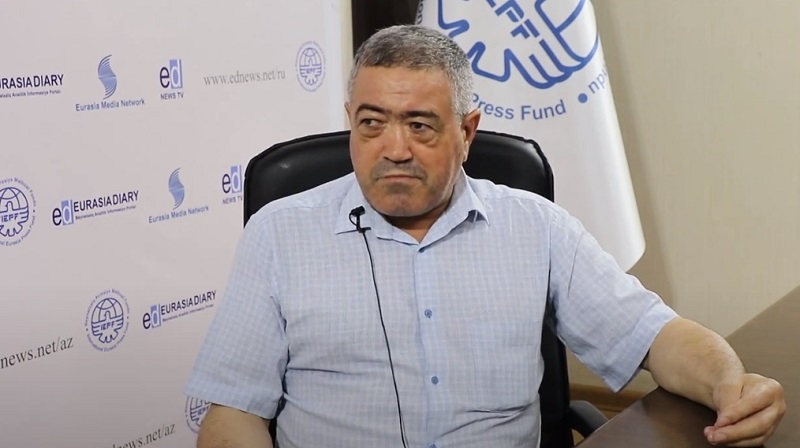
The economist also drew attention to the application of deposit insurance in many countries around the world, by looking at international practice:
“A state or independent fund protects deposits up to a certain limit in the event of a bank's failure. For example, in the US, this limit is approximately up to 250,000 dollars, and for insured deposits, depositors receive compensation either through a new account at another bank or in the form of a payment.
In many countries of the European Union, the minimum insurance limit is 100,000 euros, and compensation is usually provided shortly after the bank's closure.”
A.Nəsirli also emphasized that insurance systems operate according to certain principles and methods in line with international standards:
“These include key requirements such as the payment of deposit fees by banks, the calculation of insured assets, and the timely execution of compensation mechanisms.
Thus, in both national and international practice, the deposit insurance system plays an important role in mitigating the social impacts of bank closures, but the risk for uninsured portions and funds placed in banks that are not members of the system still remains.”
In conclusion, it can be stated that while the mechanism for returning insured deposits functions relatively smoothly, serious shortcomings in transparency and accountability are observed in the liquidation and return process of uninsured funds.