Saffron harvesting has concluded in Azerbaijan. In recent years, a decline in the yield of this valuable plant has been observed. Now, finding the famous Absheron saffron has also become difficult.
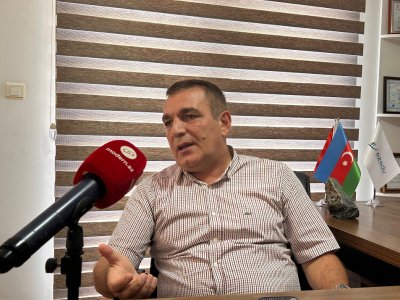
Regarding this year's results, journalist İsmayıl Rafiqoğlu, who is involved in saffron cultivation and promotion, spoke to Modern.az.
- The next saffron season has concluded. Farmers are collecting the harvest and considering selling it at a reasonable price. As someone involved in this work, what can you say about this year's results?
- In the last 3-4 years, the hopes of people eagerly awaiting the saffron season have not been fulfilled. Saffron has become scarce, it has disappeared. Moreover, this decrease is occurring throughout Absheron. Whoever you ask says they couldn't harvest anything. Even if someone manages to collect 1-2 grams, it's a big achievement. Although some saffron growers have achieved high yields, the overall picture is not very encouraging. Recently, I watched a report about saffron on one of the TV channels. Even during the peak of the season, it was clearly visible how sparse the saffron flowers were in the field. This process has been ongoing for years.
- Personally, how much saffron have you been able to collect? What changes are there compared to previous years?
- With great difficulty, I managed to obtain 1-2 grams of product. Because there was no saffron this year either. The same situation was observed last year as well. In recent years, this situation has become a tradition. However, 10 years ago, I harvested handfuls of product from the yard area located in Bilgah. From the end of October until November 20th, we would have no peace. Upon entering the yard, the scent of saffron would emanate from the air. I remember preparing special glass containers beforehand to store the dried product. Saffron must be stored in a dry and dark place. The container's lid must also be tightly sealed. The scent of saffron filled every part of the house; you would think you were in paradise. Now, that product is long gone.
- In your opinion, what is the reason for this? They say that the famous Baku saffron was once widely known and exported to Russian and European markets.
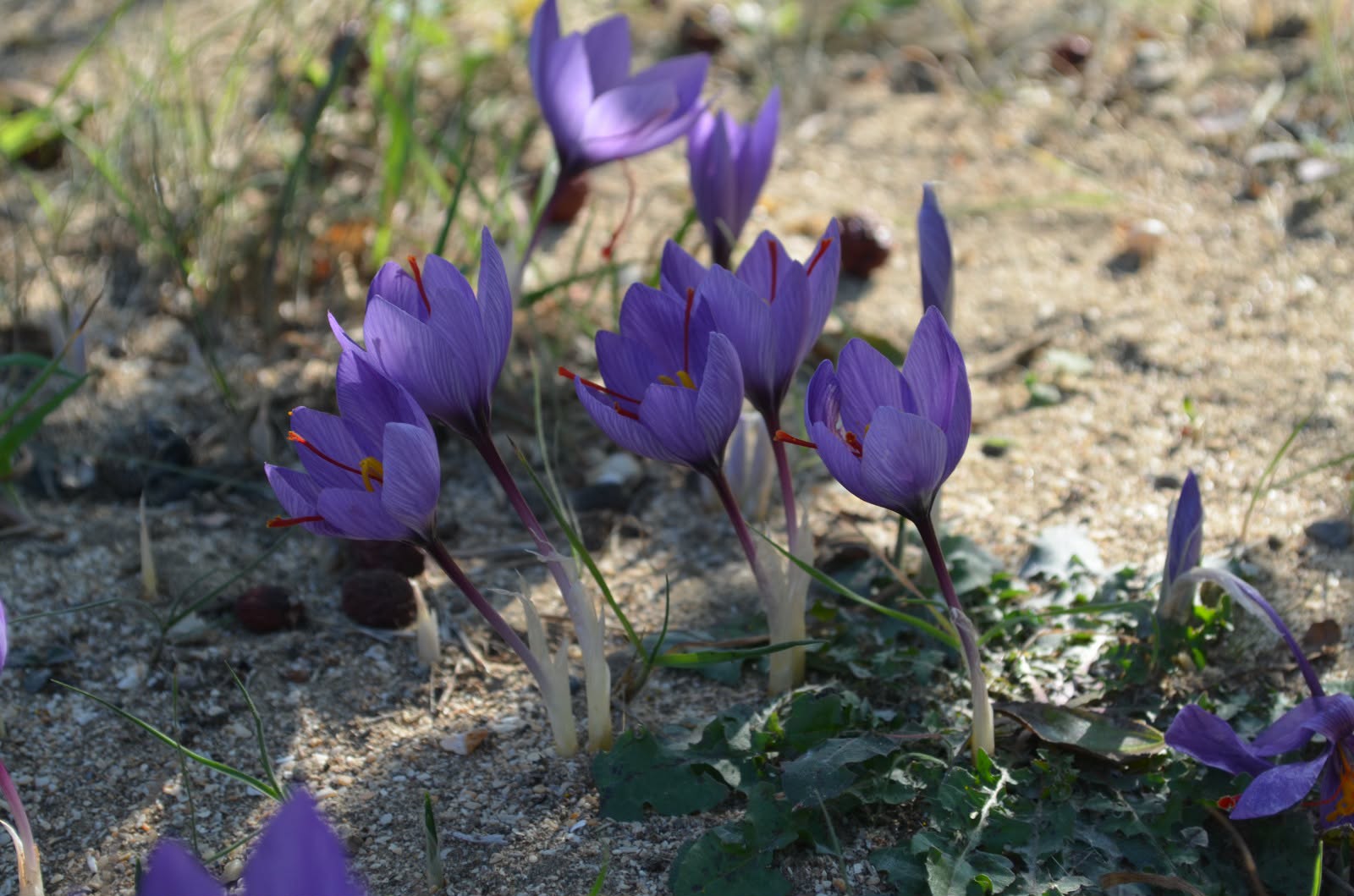
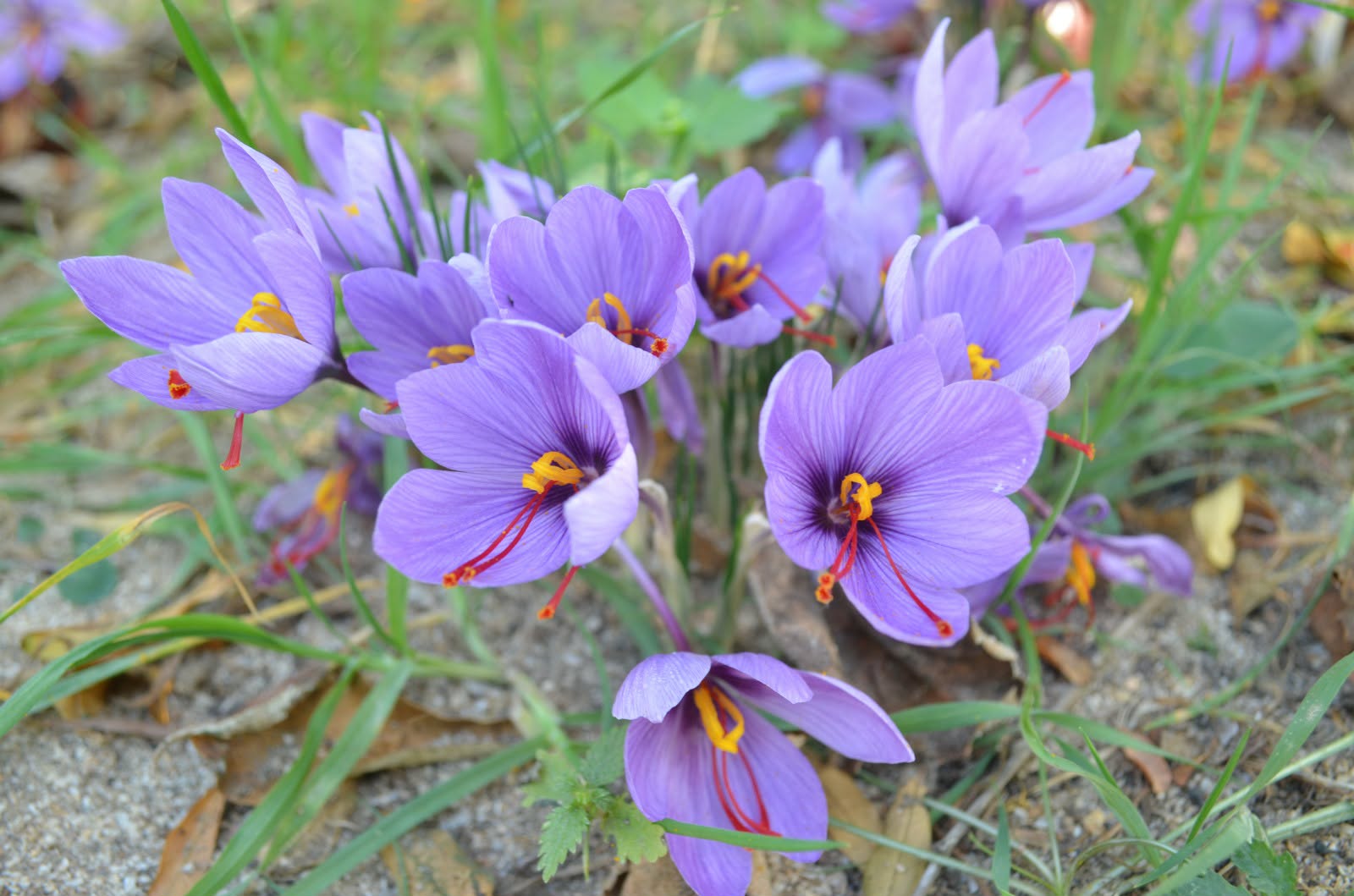
- So, there are several reasons for the decline in yield. Firstly, this is an issue related to climate change. For several years, the amount of precipitation in Absheron during autumn has significantly decreased. Drought is observed. If there is no rain, there is no harvest. Saffron growers know this well. This is a plant that can remain in dry conditions throughout the year without any problems. What is saffron? It's an ordinary corm. It remains dormant from May to September. Then, nourished by rainwater, its green part emerges in October. It primarily flowers in November. As soon as there is drought, the growth of the green part slows down, and then it lacks the strength to flower. During this period, saffron needs both precipitation, mild weather, and sunlight. It rains, then the wind blows, the sun comes out, and it flowers. To aerate the corms, it is also necessary to clear weeds around them and hoe the empty spaces between the rows.
- Is there any other reason besides drought?
- If we are talking about Absheron, yes, there is. Some factors negatively affect productivity. Currently, there is no empty land left on the peninsula; intensive construction is underway, and moreover, there are a significant number of oil wells in some Baku villages. The soils are polluted. In villages like Zabrat and Mammadli, waterlogging is occurring due to the construction of private houses and the lack of a sewage system. Everywhere is water, in the form of puddles. Everyone builds high fences, which also obstructs the air. On one hand, the plant needs moisture, but on the other hand, excessive water supplied to the soil leads to waterlogging, and the corms are lost. The groundwater level has also risen; corms rot in waterlogged yards, while in dry soils, they cannot yield due to lack of water. In a way, the ideal conditions required by the plant cannot be provided. It is also worth noting one point here. The same trend is observed not only in Azerbaijan but also worldwide. Saffron is becoming scarce and disappearing.
- Which countries are facing problems in cultivating the product? Why is the same situation observed in other regions as well?
- For several years now, the world-renowned Kashmir saffron has become an unattainable product. Although the Indian government has taken measures to rectify this severe situation, it has been to no avail. Due to drought, productivity has practically decreased by 5-7 times. Moreover, climate change negatively affects saffron. There is no rain during the required period, and in spring, as glaciers melt rapidly, fields are submerged. Healthy corms rot, while the remaining ones cannot flower in autumn. For several years now, Kashmir farmers have longed for a proper harvest. Difficulties related to drought are observed everywhere. Afghanistan and Iran have also faced significant losses. It has become difficult to cultivate saffron naturally.

- Perhaps success in saffron cultivation can be achieved through new technologies?
- Uzbekistan has been able to establish a highly successful strategy in this direction. Special attention is paid to saffron cultivation in this country. Areas have been allocated, selected saffron corms have been purchased and planted. Uzbekistan collaborates with Italian companies, investments have been attracted, and the product can now be sold at a good price in the world market. Uzbekistan is traditionally a country with low precipitation, and it is difficult to cultivate saffron without irrigation. For this reason, drip irrigation systems are used. Productivity is also high. Uzbekistan aims to become a serious player in the market.
Currently, in some countries, there are attempts to cultivate saffron artificially indoors. Significant work has been done in this direction, especially in China. There are those who cultivate saffron in a small enclosed area with the help of artificial lighting and nutrient systems. Of course, by 'deceiving' the plant, a certain amount of product can be obtained, but it raises doubts about how high-quality an spice it will be. Saffron is a plant that does not like artificial fertilizers and requires ideal climatic conditions. Saffron obtained in this way will be tasteless, much like tomatoes, cucumbers, or peppers grown in a greenhouse. However, we love saffron precisely for its quality. In France, known for its world-renowned cuisine, famous chefs, when the occasion arises, pay 30 euros for a gram and prefer high-quality and well-known saffron brands.
- Is there a demand for saffron in the world market? How are prices formed? Which countries are leading in saffron production?
- There are many producers in this market. Saffron is cultivated in countries such as Morocco, Afghanistan, Spain, China, Italy, and France. Saffron is also grown in several provinces of Turkey. New players are not lagging behind either. Currently, very high-quality product is cultivated in Bulgaria. Saffron is planted in some provinces of Ukraine and Russia. Although productivity is not high, something is harvested nonetheless. Of course, Iran controls the world saffron market. Even in the weakest years, 250-300 tons of dry product are produced. Even some famous brands purchase premium products from here, package them, and offer them to other countries. Depending on its quality, saffron can be sold from 2-3 dollars up to 35 euros. If the product's composition conforms to a known standard, then its price will also be high. Saffron harvested from some provinces of Iran is offered at a very high price.
- Let's return to our own saffron. The product is scarce, but the offer is high. So, has saffron also become more expensive in Azerbaijan?
- Yes, even 7-8 years ago, saffron could easily be found for 5-6 manats in Bilgah, the village where saffron was most abundantly grown. During the harvest season, 1 kilogram of its flowers was offered for 30-40 manats. Meaning, if someone bought and cleaned it, they could obtain 10-12 grams of saffron. Today, it has become difficult to find saffron even for 10 manats. Whoever wants to sell it expensively can easily sell their product for 15 manats after storing it for a while. I think the price could have been even higher, but proximity to Iran affects the overall market. A large quantity of saffron is imported into Azerbaijan, so the price is not that high. Local saffron is not enough for us. There is a perception in Azerbaijan that the product imported from Iran is of poor quality, while local saffron is superior. Both saffron sellers and buyers support this myth.
- Are you saying that Iranian saffron is not bad at all?
- Why should a poor-quality product come from a country that supplies saffron to the world? It is possible that very expensive saffron is sold to European countries, but normal saffron is also imported into Azerbaijan. It's just that sometimes someone might sell something else instead of saffron. I have observed this several times: in containers imported from Iran, something else is sold instead of saffron. That is, unscrupulous traders engage in economic crime, substituting one product for another. This is not only a problem in our country but also a frequently encountered issue worldwide. Because it is expensive, they substitute saffron with cheaper spices.
Our local saffron is very high-quality, especially that grown in Absheron, in Bilgah. However, sometimes local residents cannot dry it properly, leading to a loss in quality. As a result, it turns into a lower-category product. There are also many who sell it expensively. Recently, I encountered an offer for one gram of saffron at 38 manats. Undoubtedly, this product has its documentation, packaging is in order, and laboratory analysis has also been performed. They sell it at a high price because they are confident in their product. Tourists buy such products without hesitation.
- What should we do to develop saffron cultivation in the country?
- I have said a lot about this in my interviews. Before introducing a product to the market, we must establish a correct information policy regarding it. We have a very ancient tradition of saffron cultivation. That is, saffron is the king of national cuisine. This is not just an ordinary spice. It is a product that carries our national spirit and values. Because it is not properly promoted, there is significant regression. The promotion of saffron is not carried out at a very high level. We must constantly emphasize its importance specifically for us.
For years, I have collected a large amount of information about this plant, and my personal notes are also sufficient. I intend to publish all of this in book form. However, this is not just a collection of stories that you can simply pay for and print. Such books need to have beautiful photographs, meaning it is quite an expensive undertaking. I also had a desire to create a website about saffron in 3 languages. I even found a sponsor for these endeavors, but something didn't work out. In fact, companies that brand themselves with the name saffron should provide serious support for this work. The informational aspect of saffron is not very good.
It is true that there are two saffron associations in the country: the Association of Saffron Producers, Processors, and Exporters in Azerbaijan, and the Association for the Development of Saffron Cultivation in Azerbaijan. However, there is no serious promotion or production of the product. In recent years, productivity has also decreased. A state program related to the development of saffron cultivation was envisioned, but it ultimately did not materialize.
- So, how can productivity be increased? Is it possible to establish a competitive strategy?
- I believe that, first and foremost, saffron cultivation should not be the work of individual persons. We must work based on a common plan. We need to seek opportunities to stimulate people working in this field, to harvest the product on time, and to dry it in a high-quality manner. There should be a joint effort by the Ministry of Agriculture and the State Tourism Agency. The Ministry should consider the development of the sector and abundant harvest, while the Agency should add saffron to the range of services offered to tourists visiting the country.
For example, ecotourism could be related to saffron. In many countries where the spice is produced, special tours are organized to the fields, where visitors harvest and dry the product themselves, then pay for it and take it away. We can do the same. On the other hand, the more local brands there are in the domestic market, the better. If a tourist returning to their homeland definitely buys a package of Azerbaijani saffron to take with them, there could be no better presentation than that.
Saffron cultivation is problematic in Absheron due to the lack of available land. However, if specialists join the process, work can be done to develop saffron cultivation in other regions. In my opinion, Sheki can replace Absheron in this regard. We can turn this region, with its mild climate and fertile soil, into the country's saffron capital. Today, it is no longer possible to cultivate saffron using traditional methods; we must increase productivity by applying new technologies and establishing special irrigation systems. Furthermore, companies capable of purchasing the product directly from the market and processing it correctly must emerge. They could even be completely exempt from taxes for 10-15 years. There is much work to be done.