
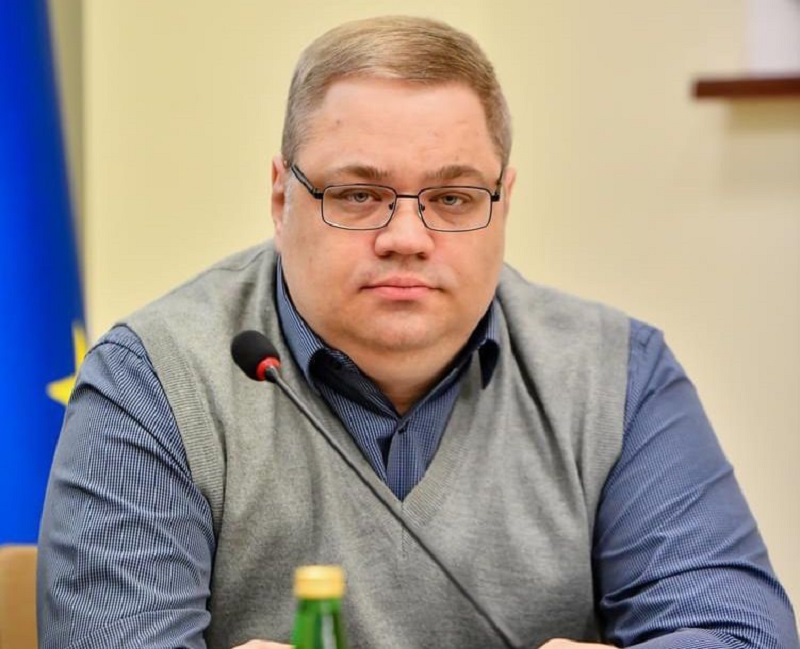
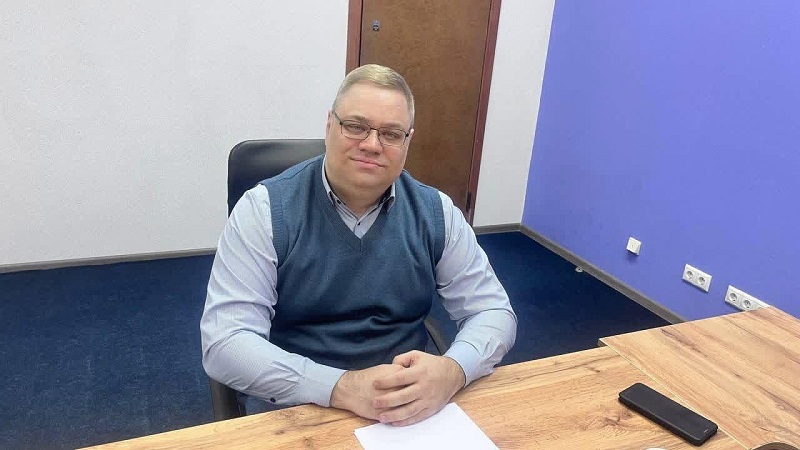
Doctor of Political Sciences, Corresponding Member of the Ukrainian Academy of Geopolitics and Geostrategy Stanislav Jelixovskiy gave an interview to our website. He spoke about the events taking place in Ukraine, our compatriots living there, as well as what Ukrainians think about our country.
Modern.az presents the interview with Stanislav Jelixovskiy:
- How would you assess the current state of Ukraine-Azerbaijan relations?
- Ukraine-Azerbaijan relations can be characterized today as pragmatic and stable. Despite the complex regional environment, both countries maintain open diplomatic channels and refrain from confrontational rhetoric. The parties demonstrate mutual respect for each other's sovereignty and territorial integrity. Although relations are not presented within the framework of a formal strategic alliance, they are built on practical cooperation in trade, energy, and humanitarian spheres. In the current geopolitical circumstances, this pragmatic model appears sustainable and mutually beneficial.
- How are Azerbaijan and the South Caucasus perceived in Ukraine?
- In Ukraine, Azerbaijan and the South Caucasus are primarily assessed in the context of post-Soviet transformation and territorial conflicts. The 2020 Karabakh war and subsequent processes have attracted particular attention in Ukrainian expert circles. For the general public, the region is not a priority topic, as Ukraine's own security challenges are more pressing. However, in recent years, awareness of Azerbaijan's geopolitical role has increased, especially against the backdrop of discussions related to energy security and military modernization.
- What are the distinguishing characteristics of Azerbaijanis living in Ukraine?
- The Azerbaijani community in Ukraine has long been known for its entrepreneurial spirit, internal solidarity, and activity in the small and medium-sized business sector.
Many families have lived in Ukraine for decades, deeply integrated into local society while preserving their national and cultural identities. This balance has strengthened both the visibility and sustainability of the community.
- How many Azerbaijanis currently live in Ukraine, and in which sectors do they primarily work?
- Before the full-scale invasion, it was estimated that between 40,000 and 50,000 people of Azerbaijani origin lived in Ukraine. Due to migration caused by the war, this number is presumed to have decreased, but precise statistics are not available. Traditionally, the community is active in trade, agriculture, logistics, construction, and small business sectors. The number of Azerbaijani students studying in Ukrainian universities, particularly in medical and technical specialties, was also stable, but the war has affected student mobility.
- How are Azerbaijan's humanitarian aid efforts received in Ukraine?
- Azerbaijan's aid, particularly generators and fuel sent during large-scale attacks on energy infrastructure, has been positively received in Ukraine.
In wartime conditions, real and prompt assistance holds more value than declarations. These steps present Azerbaijan as a constructive and responsible partner.
During the 2026 Munich Security Conference, Ukrainian President Volodymyr Zelensky thanked Azerbaijani President Ilham Aliyev for this aid during their meeting and provided information on the state of the country's energy system.
- Is Azerbaijan's restoration of its territorial integrity discussed in Ukraine as a military-strategic example?
- Yes, it is analytically discussed, particularly from the aspect of military modernization, the application of precision technologies, and strategic planning. However, it is not adopted as a direct model. The geopolitical scale and the strength of the opposing side are different. Ukraine faces a nuclear-armed state. For this reason, Azerbaijan's experience is studied more from an analytical perspective.
- What restrictions are there on the dissemination of information during wartime?
- In areas near the front line, journalists are prohibited from disclosing specific coordinates, troop movement routes, logistical supply lines, and the timing of planned operations.
Even images of missile strikes can provide the enemy with analysis opportunities. In wartime, operational security takes precedence over expediency.
- Is there classical military censorship in Ukraine?
- In the constitutional sense, there is no classical censorship. However, within the framework of martial law introduced on February 24, 2022, the dissemination of military information is regulated by law. The system is built on both legal mechanisms and the professional self-restraint of journalists.
- What is the attitude towards the idea of peace in exchange for territorial concessions in Ukrainian society?
- Surveys show that the majority is against territorial concessions. The experience of 2014 and subsequent escalation have significantly influenced public opinion. For many Ukrainians, territorial concession is not peace, but merely a pause for the next aggression.
- Has the war radicalized or united Ukrainian society?
- Society has further united around the core principles – sovereignty and independence. Citizen identity has strengthened, regardless of regional and linguistic differences. While emotional reactions exist, the dominant trend is consolidation, not radicalization.

- What can be said about the role of drone technology in both wars?
- Unmanned aerial vehicles (UAVs) have changed the concept of modern warfare. They have become an important tool in terms of reconnaissance, precision strikes, and psychological impact. Due to the scale of the war in Ukraine, drone usage has become more diversified and industrialized. While Turkish-made UAVs played both a symbolic and tactical role in the initial phase of the war, the technological ecosystem has since expanded significantly.
Unfortunately, the aggressor side uses drone and missile technologies to strike civilian populations and civilian infrastructure, including foreign diplomatic missions.
An example of this is the speech made by Azerbaijani President Ilham Aliyev at the Munich Security Conference. He stated that after the start of Russia's full-scale invasion, Azerbaijan's embassy in Kyiv was hit three times. After the first incident, Baku officially provided the Russian side with the exact coordinates of all its diplomatic facilities located in Kyiv – including the consular section and cultural center. Despite this, two more strikes were carried out, which, according to Azerbaijan's assessment, excludes the possibility of accidental damage.
- Can Azerbaijan's information policy during the Karabakh war serve as a model for Ukraine?
- During the conflict, Azerbaijan demonstrated centralized message discipline and strategic communication unity. Such coordination can be effective in shaping narratives in the international information space. Ukraine, however, operates in a different media environment. Nevertheless, elements of strategic communication can be studied and adapted.
- Is Azerbaijan's restoration of its territorial integrity perceived as a "precedent of hope" in Ukraine?
- For a certain part of Ukrainian society, this is perceived as an example that territorial conflicts can be reversed under certain conditions.
However, most analysts emphasize that each conflict has its unique parameters. Hope exists, but it is balanced by an understanding of geopolitical realities.
- Does the post-conflict reintegration process generate interest as a model in Ukraine?
- Yes, reintegration experiences are studied comparatively. Issues of legal transition mechanisms, property rights, security guarantees, and minority protection hold an important place in Ukraine's long-term planning. However, Ukraine's future reintegration model must be adapted to its own demographic, legal, and geopolitical characteristics.
- What initiatives have Azerbaijani diaspora organizations in Ukraine put forward during the war?
- Diaspora organizations have participated in humanitarian aid campaigns, community coordination, and support initiatives. In many cases, they have contributed to fundraising and volunteer activities.
These activities reflect the community's long-term integration into Ukrainian public life.
- How has the Azerbaijani community supported the Ukrainian army or humanitarian funds?
- Support has been in the form of financial donations, logistical assistance, and participation in volunteer initiatives. Individual members of the community have openly expressed their solidarity with Ukraine.
These steps reinforce the notion of shared civic responsibility.
- Has there been a decrease in the number of Azerbaijanis living in Ukraine due to the war?
- Like many communities, the Azerbaijani population has faced temporary migration due to security reasons.
However, communities formed over many years maintain strong social ties and show a tendency to return once the situation stabilizes.
- How is the role of Azerbaijani businesspeople assessed in Ukrainian society?
- In Ukrainian society, Azerbaijani entrepreneurs are primarily perceived as active participants in trade and the local economy. Their activities are mostly associated with commercial networks and regional markets.
This attitude is primarily pragmatic, not political, and is built on economic contribution.
- What information is prohibited from being disclosed when preparing reports from the front line?
- Journalists working in areas near the front line are strictly prohibited from disclosing the exact geographical coordinates of Ukrainian military positions, troop movement directions, logistical routes, and the timing of planned operations. The dissemination of such information can jeopardize the safety of personnel and harm ongoing operations. It is also prohibited to publish information about the numerical composition of specific units, types of weapons deployed in certain sectors, the location and effectiveness of air defense systems. Even images of missile strikes or drone debris can help the enemy adjust their subsequent attacks. In wartime, operational security takes precedence over expediency.
- Is there a formal military censorship mechanism in Ukraine, or is the system built more on self-regulation?
- In the constitutional sense of peacetime, classical censorship does not exist. However, within the framework of martial law introduced on February 24, 2022, there are legal restrictions regulating the dissemination of military information, and violations can lead to criminal liability. In practice, the system operates based on a combination of official rules and professional self-restraint. Media accreditation, coordination with military press services, and security briefings determine what information can be disseminated. This is not arbitrary censorship, but a wartime information security regime aimed at preventing harm to national defense.
- What tools do Ukrainian journalists use against Russian disinformation campaigns?
- Ukrainian journalists widely use open-source intelligence (OSINT) tools for verifying visual materials. Geolocation methods and metadata analysis are among the primary tools. Satellite imagery archives are applied for confirming or refuting claims related to the battlefield.
Fact-checking organizations and independent analytical centers play a crucial role in exposing false narratives. Media organizations use specialized software to detect bot networks and coordinated influence campaigns on social networks. Inter-editorial cooperation has expanded opportunities for rapid verification and collective response. Given Russia's significant investment in disinformation infrastructure, combating it requires continuous technological adaptation and professional coordination.
- Have platforms like Telegram and TikTok weakened or strengthened the role of traditional media?
- These platforms have changed the information ecosystem. Telegram channels, in particular, have become a source of operational news during air raid alerts and attacks. However, speed is accompanied by risk. Unverified information can create panic and distort public perception. As a result, traditional media has not disappeared; on the contrary, it has adapted. Many media organizations integrate social platforms into their dissemination strategy while maintaining editorial verification standards. Digital platforms have not eliminated traditional journalism; they have transformed it.
- What is the current level of cooperation with foreign journalists?
- Cooperation remains at a high level. Since the start of the full-scale invasion, many international media organizations have opened permanent bureaus in Ukraine or operate through local correspondents and fixers.
Joint investigations, information exchange initiatives, and coordinated reports from front-line areas are being carried out. Ukrainian journalists participate in international security training and digital verification programs. This cooperation has increased the reliability of war reporting and strengthened methodological standards.
- Is there real public support for the idea of "peace in exchange for territorial concessions" in Ukraine?
- Public opinion polls show that the majority of Ukrainians are against the idea of peace in exchange for territorial concessions. This position has been shaped by previous experience. Previous agreements failed to prevent new aggression.
For many citizens, territorial concession is not a path to peace, but rather a pause for future expansion. The experience of 2014 and subsequent escalation play a decisive role in shaping public opinion.
- Under what conditions can the issue of Crimea be considered resolved for Ukraine?
- For Ukraine, the issue of Crimea can only be considered resolved with the full restoration of sovereignty within internationally recognized borders. This implies the withdrawal of Russian forces and the restoration of Ukrainian jurisdiction. A lasting solution also requires local security guarantees and a legal-administrative reintegration mechanism. Without these elements, the issue will remain a frozen conflict, not a resolution. From Kyiv's perspective, sovereignty is not symbolic, but the foundation of long-term stability.
- How long might it take to restore diplomatic relations with Russia after the war?
- This primarily depends on political transformation in Russia and mechanisms of accountability for war crimes. Without accountability, diplomatic normalization will not gain internal legitimacy in Ukraine. Public opinion will be a decisive factor. Given the scale of destruction and human losses, restoring even minimal trust will require a long time. The restoration of relations will likely be possible on a phased, conditional, and verifiable commitment basis.
- Could the status of the Russian language change in Ukraine after the war?
- A formal change in the constitutional status of the Russian language seems unlikely. However, public dynamics have already significantly shifted. Russia's aggression has created a strong tendency in society to distance itself from Russian cultural and symbolic influence. In Ukraine, the language issue is increasingly becoming a factor expressing civic identity rather than ethnic affiliation. The war has accelerated the strengthening of the Ukrainian language as the primary public language, but this process primarily occurs as a result of society's internal transformation and is not forcibly imposed by radical legal measures.
- Can NATO or EU membership provide sufficient security guarantees to Ukraine?
- NATO membership is considered the most reliable guarantee for long-term security in Ukraine. Particularly, the collective defense obligation under Article 5 would significantly increase the cost of any new aggression.
European Union membership, on the other hand, primarily strengthens political and economic stability, which are important components of security. However, no institutional framework can completely eliminate all risks. The effectiveness of security guarantees depends on the political unity and sustained strategic commitment of member states.
- Has Ukraine received the full extent of support it expected from the West?
- Ukraine has received an unprecedented volume of military, financial, and humanitarian aid in modern European history. Nevertheless, expectations have often exceeded delivery times and volumes.
Some weapon systems were provided after lengthy political discussions, which affected operational dynamics on the front. While the scale of aid is historic, discussions continue regarding its sufficiency and timely delivery. Strategic consistency is as important as scale.
- Has the war changed Ukraine's political elite?
- Yes, significantly. Expertise in security and defense now plays a central role in the decision-making process. Representatives of the military and volunteer sectors have gained public trust and influence.
At the same time, some political figures prominent in the pre-war period have lost relevance as society's priorities have shifted. Political discourse has become more security-oriented, and intolerance towards corruption, as well as uncertainty regarding national interests, has increased. The transformation continues and is openly observed.
- Based on your personal observations, does Ukrainian society demonstrate national unity?
- Ukrainian society has notably united around the principles of sovereignty and independence. The war has strengthened civic identity, regardless of linguistic and regional differences. Emotional reactions to aggression are understandable. However, the dominant trend is consolidation, not radicalization. The shared experience of threat has deepened solidarity and further clarified the European-oriented strategic course based on democratic institutions.





