
Modern.az website continues its series of interviews with foreign journalists. In these interviews, we aim to understand the journalists' unique perspectives on inter-country relations, their perceptions of Azerbaijan and Azerbaijanis in their respective countries, and to explore commonalities between the two nations.
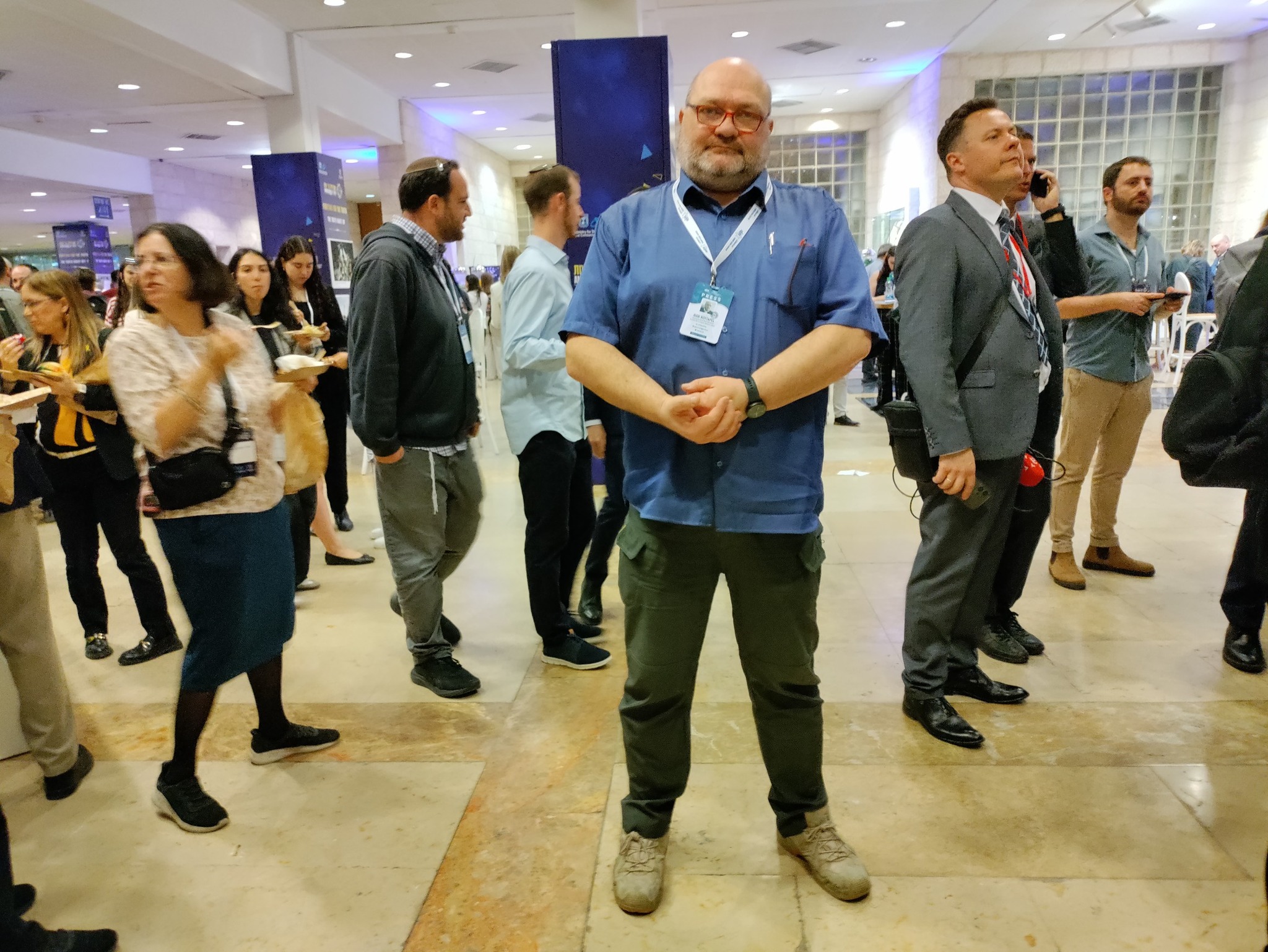
Our interviewee this time is journalist and political analyst Igor Roytapel from Israel. He is the Head of the Bureau of the Jewish Media Center.
For your information, the interview was conducted before the war. However, considering the subsequent reality, we addressed several additional questions to our interviewee.
- Mr. Roytapel, in your opinion, how will the war between Israel, the US, and Iran end? When will peace return to the region?
- Israel and the US launched a preemptive strike against the regime in Iran to prevent aggression against Israel and for the broader international security objectives of US forces in the Persian Gulf region. The operation also aimed to create conditions under which the Iranian people could have the opportunity to shape a different future for their country.
To date, a significant portion of the regime's military capabilities has been weakened. However, there is still much work to be done.
It would be premature to discuss the end of the conflict until security objectives are fully achieved.
- On March 5, Azerbaijan's Nakhchivan region was struck by Iranian drones. Iran denied this, implicitly pointing to a third force in the matter. As a political scientist, we would like to know your position on this issue...
- From an analytical perspective, such a strike can be viewed as an attempt to draw Azerbaijan into a broader regional conflict. The selection of Nakhchivan as a target is likely not accidental. Firstly, Nakhchivan holds special symbolic significance for Azerbaijan. It is the birthplace of the country's current President and the former President Heydar Aliyev, whose memory is deeply revered in Azerbaijan. Therefore, a strike on such a place is perceived not only as a military operation but also as a political and symbolic message.
Secondly, Nakhchivan is located at a very short distance from the Iranian border, in some places less than ten kilometers. From a military standpoint, this ensures relatively easy access to the target with drone capabilities.
This creates a kind of dual effect. On one hand, it puts pressure on Azerbaijan and tests its response. On the other hand, since the strike is directed at an area of special national importance, it creates a strong psychological and political resonance.
In a broader context, such actions could be part of a strategy to demonstrate power and attempt to expand the geography of tension in the region. At the same time, these steps carry the risk of further escalation and could increase international attention and reactions from states interested in maintaining stability in the South Caucasus. If they claim that third forces are involved in the matter, let them prove it.

- What is the latest situation regarding the war?
- The attack on Israel was carried out on Shabbat, a day sacred to Jews, when most citizens are at rest and only emergency services, police, and military operate in a defensive mode. The choice of this day demonstrates the real threat posed by Tehran. The regime did not expect a strike on a day when the country traditionally "sleeps." This is not accidental. This is a military tactic dictated by a specific threat.
Israel is home to Jews, Muslim Arabs, Christian Arabs, Druze, Circassians, and other communities. Their right to a safe and peaceful life rests entirely on the shoulders of the army and the government. Preventing a dangerous escalation of the situation is not merely compulsory; it is a strategic task of the state.
The US acts decisively, protecting its geopolitical interests, control over Iranian oil, and regional balance. Attacks by Iranian forces on Azerbaijan and Turkey have already been recorded, demonstrating Tehran's intention to draw neighboring countries into the regional conflict. These states are becoming potential targets for ballistic missiles and drones.
President Ilham Aliyev tried to restore neighborly relations with Iran, but Tehran acts differently. This is an attempt to involve Turkey and Azerbaijan in the conflict. This is particularly dangerous for Azerbaijan, given the proven strength of its army in real combat. Any miscalculation could lead to catastrophic consequences.
Iran is subjected to continuous attacks by Israel and the US to reduce the risks associated with ballistic missiles and its nuclear program. There are still 400 kilograms of enriched uranium in underground bunkers in the country. Targeted operations against regime leaders, key nuclear specialists, and detected ballistic missile launch sites continue.
Sirens sound less frequently in Israel and neighboring countries. Most missiles are intercepted, but "Hezbollah" operates synchronously with Tehran. The presence of a large number of combat units in Lebanon and Iran makes it impossible to end the conflict quickly.

- Is normalization of relations between Iran and Israel possible?
- Full normalization is unlikely in the short term. The presence of the US factor plays a certain deterrent role.
- Israel is also at a war level with Palestine; would you like the conflict to end completely?
- A long-term cessation of the conflict is a strategic goal, but it requires mutual security guarantees.
- Israel's relations with Turkey are among the points of concern in Azerbaijan. Will these relations move towards normalization?
- Relations with Turkey experience certain fluctuations, but the potential for normalization still remains.
- Israel does not have good relations with Syria either; how do you see its future?
- This depends on regional transformations. In the long term, there is no alternative but a peaceful resolution.
- How do journalists view the issue, do you think classical journalism is a thing of the past? What is the situation in Israel? Do people still read newspapers and watch traditional television channels?
- Classical journalism is not disappearing; it is simply transforming. While the circulation of print media in Israel has decreased, publications like "The Jerusalem Post" maintain their influence through digital platforms.
"Haaretz," on the other hand, occupies a specific media niche, distinguished by its liberal and critical stance. At the same time, a certain segment of society believes that some editorial emphases, especially during military crises, raise questions about national solidarity and patriotic responsibility.
Traditional television channels still play a significant role, especially during times of crisis and war, where their serious importance is evident…
The absence of war is everyone's wish. Unfortunately, sometimes war is the only way out. Journalists are also human, and they do not like war either.
- How do you assess the position of Israeli media compared to global media?
- Israeli media is integrated into the global information space. Alongside this, there is a stronger internal debate and diversity of opinion within Israeli media. This reflects the democratic character of Israeli society.
- How does Israel's technological development affect the media sector?
- Technological leadership strengthens the media sector. The development of digital platforms, analytics systems, and cybersecurity technologies makes Israeli media agile and competitive.
- What is the financial situation of journalists in Israel? Is the average salary sufficient for a normal standard of living?
- The financial situation of journalists presents certain challenges. The average income provides a basic standard of living, but the profession is highly competitive and unstable.
- It is sometimes claimed that global media serves hidden power centers. To what extent do you agree with this view? Is the media free in Israel? Are there restrictions on media activity during wartime?
- Large global media organizations operate within certain political and economic frameworks, which exert a certain influence on editorial policy.
In Israel, the media is generally free. However, during military operations, military censorship is applied to protect national security. Nevertheless, public debate remains active. The balance between security and democratic principles is institutionally maintained.
- How would you characterize Israel-Azerbaijan relations?
- Relations between Israel and Azerbaijan are stable, pragmatic, and strategically calculated. Cooperation is based on specific interests and long-term mechanisms. Overall, this is a mature strategic partnership built on mutual benefit, security, and respect for national interests.
I have contact with Azerbaijanis living in Israel. The Azerbaijani community is well-integrated into the social and economic life of Israeli society and demonstrates a high level of adaptation. We are satisfied with the current situation. Jews of Azerbaijani origin are an organic part of society and hold positions in various fields.
- How do you assess the level of education in Israel?
- The level of education is high. "Hebrew University of Jerusalem" and "Technion-Israel Institute of Technology" have an international reputation and attract students from many countries.
- In what context is Azerbaijan presented in Israeli media?
- Azerbaijan is viewed positively in Israeli media. This country is primarily presented as a strategic partner and an example of religious tolerance. Especially after the Karabakh war, Azerbaijan's role in the regional security architecture is considered even more significant.
Cooperation exists between Azerbaijan and Israel in all areas, including security. Cooperation in this field is strategic and long-term. Common cultural and family values exist between Azerbaijan and Israel. Strong family ties, respect for traditions, the importance given to education, and national identity – I can cite these nuances as examples.





