The area where the International Bus Terminal Complex is located in Baku has been at the center of public discussion for many years. It is frequently emphasized that this transport hub, being one of the main entry-exit points of the capital, is not located in a favorable position from an urban planning perspective, creates traffic congestion in surrounding areas, and does not fully meet modern requirements in terms of passenger comfort. Against the backdrop of all these discussions, the issue of whether or not to relocate the bus terminal also comes to the fore.
According to many, the current location cannot be considered optimal, and relocating it to alternative areas might be more expedient. In such a case, the question of which direction would be more suitable becomes relevant. Furthermore, it is noted that the bus terminal's architecture, as well as the building's aesthetics, do not harmonize with the urban environment, and it fails to meet expectations in terms of functional planning.
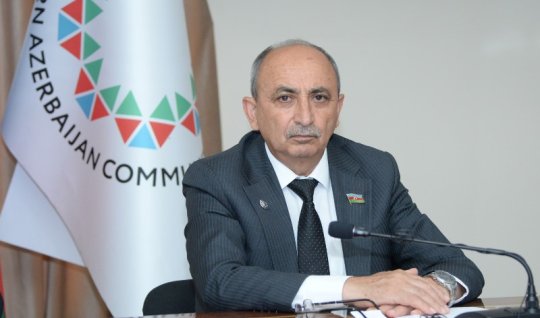
In a statement to Modern.az, Arzuxan Alizade, Deputy Chairman of the Human Rights Committee of the Milli Majlis, expressed his opinion on the matter, stating that he does not consider it necessary to change the location of the bus terminal from a spatial perspective. According to him, the bus terminal is located at the northern entrance of the city and is close to the “Avtovağzal” metro station. Additionally, in terms of road infrastructure, it has access to the Baku ring road.
“However, it would be expedient to consider changes related to the design and structure of the building itself. There may be different positions on this topic, but in my opinion, constructing a bus terminal with a more modern design that meets contemporary requirements would be more appropriate.”
The Deputy Chairman also emphasized that, additionally, the construction of a new bus terminal at the western entrance of the city could be considered:
“In this regard, studying the position of specialists in the transport sector would be a more appropriate approach. Having additional bus terminals at the northern entrance of the city on one side, and in the southwest direction – towards the Bayil area – on the other side, could be beneficial for more efficient organization of movement to the western, southern, and northern regions,” A. Alizade stated.
Renowned architect Jahid Hasanov, however, noted that one of the main reasons for the relocation of the Baku bus terminal coming to the agenda is its location on the Sumgayit-Baku highway, which causes road congestion, especially traffic jams extending towards the 20 January direction. In his opinion, this issue should be based on official reports conducted by relevant institutions.
“If the current location indeed creates problems, there is a need to change it.
But the main question is: where should the relocated bus terminal be situated? It is possible that this facility was built in that area 10-12 years ago and started causing problems after a certain period. This indicates that proper and long-term planning was not carried out. Who can guarantee that relocating the bus terminal, for example, towards Lokbatan, will not create congestion and traffic problems again in 10 years?”
J. Hasanov added that precisely for this reason, planning should be carried out based on a 30-50 year perspective:
Thus, the problem is not solved by relocating the bus terminal every 10-15 years. In many countries around the world, there are strategic locations that have not changed their position for 50, 100, or even 150-200 years. Precisely from this perspective, calculations must be carried out correctly and in a timely manner.”
Our interviewee also stated that, from an architectural perspective, such facilities should be in harmony with the city's overall architectural ensemble:
“The visual appearance of strategically important places like airports, where people arrive from abroad and various regions, requires special attention. Sometimes an administrative building is constructed, but its external appearance resembles a factory. However, each sector should have its own appropriate architectural language.
In the construction of the bus terminal, national and classical architectural elements should form a unity with modern style. The correct synthesis of classical and modern creates projects that maintain their relevance for many years and eventually become historical architectural examples. This is a very important issue.”
According to our interlocutor, an open discussion environment should be created for such important projects, and private architects and designers should be involved:
“Working groups should be established, and broad participation in the preparation, approval, and implementation of projects should be ensured. This should not be limited to the framework of a single institution or law.
Open days should be organized, and everyone with experience and ideas in this field should have the opportunity to submit projects and participate in the commission on a public basis. Our architects are ready for this. Many valuable, diverse, and creative ideas can emerge.
Every new project brings innovation to Azerbaijani architecture. Different perspectives, approaches, and ideas lead to stronger and higher-quality results in a competitive environment. Approving such strategic facilities by making minor changes to standard projects taken from the internet is not the correct approach,” J. Hasanov concluded.