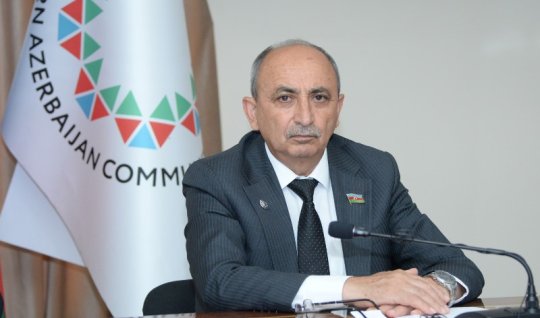
The declaration of 2026 as the “Year of Urban Planning and Architecture”, along with the holding of the 13th World Urban Forum in Azerbaijan, indicates that this field will remain a special focus this year.
This was stated by Milli Majlis deputy Azer Allahverenov in a statement to Modern.az.
The deputy noted that these decisions indicate the implementation of new approaches in urban planning and architecture, and at the same time highlight the importance of considering modern global practices in state policy:
“The implementation of many innovations in this field, as well as the consideration of elements of global urban planning and architectural concepts in the policy pursued in our country, is a positive development”.
According to Azer Allahverenov, the Master Plan of Baku city and urban planning issues have been on the agenda for a long time, and in this context, it is crucial to implement a strategy aligned with the philosophy of urban planning:
“This strategy must emp the principles of advanced urban planning models. At the parliamentary level, we regularly raise these issues and appeal to relevant structures to take necessary steps for the determination of citizens' property rights”.
The deputy noted that the issue is quite sensitive, and it concerns tens of thousands of houses:
“People have been living in these areas for many years. Some built houses 15-20-25 years ago, and it was later discovered that the land belongs to some entity or that strategic communication lines pass through that area. People have spent significant funds on these houses”.
Azer Allahverenov emphasized that the problem requires a comprehensive approach, and the declaration of 2026 as the “Year of Urban Planning and Architecture” presents a serious opportunity for a thorough investigation of these issues:
“There is a great need to establish a unified position, especially regarding unplanned and undocumented constructions. Being unplanned does not necessarily mean being undocumented. Similarly, undocumented houses are not necessarily unplanned constructions”.
The deputy stated that this topic is more sensitive in the Sabunchu and Khirdalan areas:
“The constituency I represent covers Sabunchu district. During meetings with citizens, numerous appeals regarding undocumented houses are received. People say they cannot obtain documents for these houses”.
According to him, the situation is very complex and multifaceted, which is why applying a unified approach is not easy:
“Before a final decision is made, this area must be thoroughly investigated. This issue was also specifically emphasized during the last citizen reception held in Nardaran settlement. Documents are collected and submitted, but there is still no final decision”.
Azer Allahverenov added that in some areas, people have been living for several generations, but the problem of obtaining an extract for the confirmation of property rights remains:
“The main thing is that human interests should be prioritized in this process. Decisions should be made in such a way that citizens do not suffer harm, but rather benefit”.
Finally, the deputy stated that the issue is also relevant for Sabunchu, Khirdalan, and other settlements and villages around Baku, and that the formation of a unified state strategy is only possible through a comprehensive approach.