In Azerbaijan, the production dynamics of agricultural products show an increasing trend in some areas and a decreasing trend in others. According to the latest data released by the State Statistical Committee, compared to January 2025, vegetable production increased by 5.6 percent, and meat production by 0.4 percent. Alongside this, a decrease of 0.5 percent was recorded in milk production and 5.7 percent in egg production.
It is interesting to know what this decrease is related to and what the forecasts for production are in future periods?
In his statement to Modern.az on the topic, Tahir Rzayev, Chairman of the Agrarian Policy Committee of the Milli Majlis, stated that he generally considers 2025 to be a successful year for agricultural sectors.
“Because last year, a significant increase was observed in the main directions of agriculture – especially in the production of grain, cotton, viticulture, and livestock products.
Egg and milk production, however, are sectors that usually develop with stable dynamics and have been characterized by an upward trend in previous periods. The certain decrease recorded compared to last year should not be evaluated as a systemic problem in production. This may be more related to seasonal factors, such as feeding conditions in winter months and cold weather. I believe that this decrease will be eliminated in the near future and will not pose a serious risk in terms of food security.”
The deputy also emphasized that although the increase in meat prices in the market has caused some dissatisfaction, the establishment of large livestock complexes, the application of stimulating mechanisms, and state support will positively impact the development of animal husbandry in the future: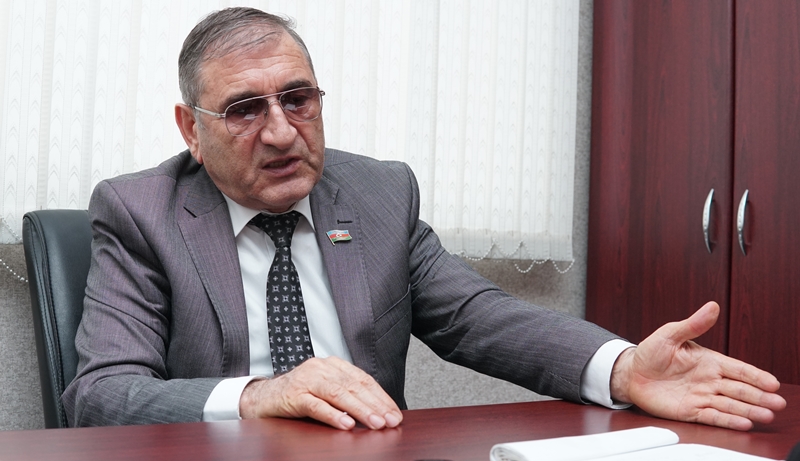
“Meeting the food demands of the population requires the implementation of complex measures, and the state continues its work in this direction. Alongside this, significant responsibility also falls on entrepreneurs and citizens.”
The committee chairman added that it is particularly important to increase attention to the breeding of meat and dairy animals:
“Maintaining the health of sheep, lambs, and cattle in individual farms is important. Unfortunately, in recent years, a decrease in the number of cattle has been observed in some individual farms, which is, to some extent, one of the factors contributing to the increase in prices of meat and dairy products.
Precisely for this reason, every individual and entrepreneur living in rural areas must actively participate in ensuring food security. This is important for the country and beneficial for strengthening the family budget. Overall, the situation is under control, and I believe that the observed decreases in egg and milk production will not create a serious problem for the future.”
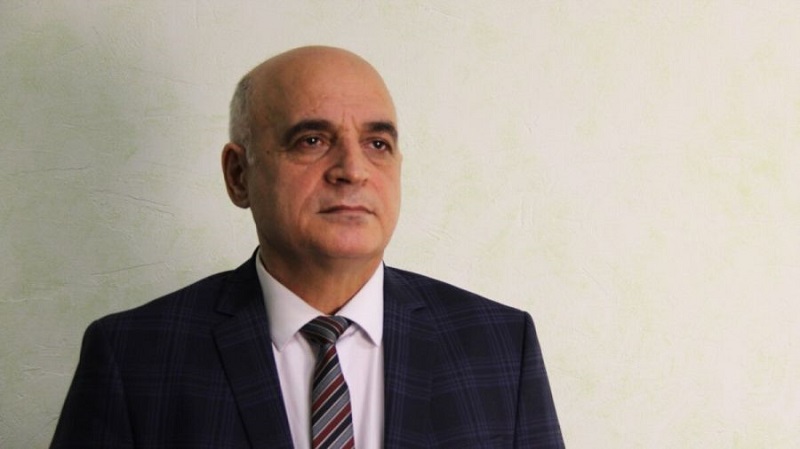
Agricultural expert Vahid Maharramli, however, drew attention to the limited arable land areas for agriculture in Azerbaijan and the weak feed base:
“You are young, perhaps you don't remember, but I clearly recall that in the early years of independence, the number of livestock began to increase sharply. Currently, a decrease is observed. However, the reduction in livestock numbers should only occur through the removal of low-productive animals from circulation and their replacement with high-productive breeds, either imported or bred domestically.
The importance of this approach is also clearly visible in the figures. For example, in Spain, approximately 6 million tons of milk are obtained from 800 thousand dairy cows. In our country, however, only 2 million tons of milk are produced from 1 million 300 thousand dairy cows. The difference is that it is possible to obtain more product from fewer animals. There are animals that consume a lot of feed but have low productivity. Whereas, if that same feed were directed to high-productive animals, milk and meat production could be significantly increased. There is a cow that gives 15-20 liters of milk per day, and another that gives only 3-5 liters. The same situation is observed in the direction of meat production. For example, some animals gain 400 grams of weight per day, while others gain more than 1 kilogram. Naturally, existing feed resources should be directed towards breeds that yield higher results, and low-productive animals should be gradually removed from circulation.”
According to the expert, currently, we are facing a different picture:
“Companies that breed high-productive pedigree animals abroad first sell the highest quality breeds to more affluent countries, for example, African countries. These countries effectively use these animals for a long time, obtain 4-5 offspring, and achieve high milk production. However, often lower quality animals are brought to our market. They are bought cheaply but are shown as expensive in documents and sold to farmers, and the state subsidizes a certain part of this purchase. As a result, it is only possible to obtain 1-2 offspring from these animals, after which they become unproductive.”
The specialist also noted that the observed downward trend in milk and egg production is not solely due to a decrease in livestock numbers:
“Systemic problems exist here: a weak feed base, low-quality feed production, and insufficient breeding of high-productive breeds. It is reported that approximately half of the feed produced in Azerbaijan is of low quality. And with low-quality feed, it is not possible to achieve high productivity.
Furthermore, certain processes that have occurred since August of last year and the increase in costs have also negatively impacted the sector. It will not be easy to restore the number of animals and their productivity to previous levels. Issues of infrastructure development and long-term strategy have also not yet been fully resolved.”
V. Maharramli also noted that if serious reforms are not carried out in the agricultural sector, especially in the structure of relevant institutions, and if professional specialists who deeply understand the field are not promoted, it will be difficult to change the situation:
“We have young veterinarians and specialists who have studied in Turkey and specialized in animal husbandry, and their knowledge and experience should be utilized. It may be difficult for personnel who are distant from the field and lack practical experience to develop this sector. The development of animal husbandry is possible with the participation of specialists who are well-versed in local conditions and realities. Otherwise, production will decrease, and dependence on imports will increase. This process is already being observed and may manifest itself more prominently in the future. Within the next 5 years, we may witness agriculture-oriented development,” he concluded.