Today marks 34 years since the genocide committed by Armenians in the city of Khojaly. On the night of February 25-26, 1992, the city of Khojaly became one of the most tragic pages in human history. On a snowy, frosty night, the civilian population was subjected to a brutal attack. Unarmed people - women, elderly, infants - were targeted simply because they were Azerbaijanis.
Families attempting to flee were shot in the dark, amidst the cold snow. Mothers lost their lives while trying to protect their children. Children, without yet understanding what life was, witnessed its cruelest face.
In a single night, hundreds of people lost their lives, and destinies were cut short. In the memories of the survivors, wounds that would never heal were opened.
During the Khojaly genocide, 613 people, including 63 children, were brutally killed.
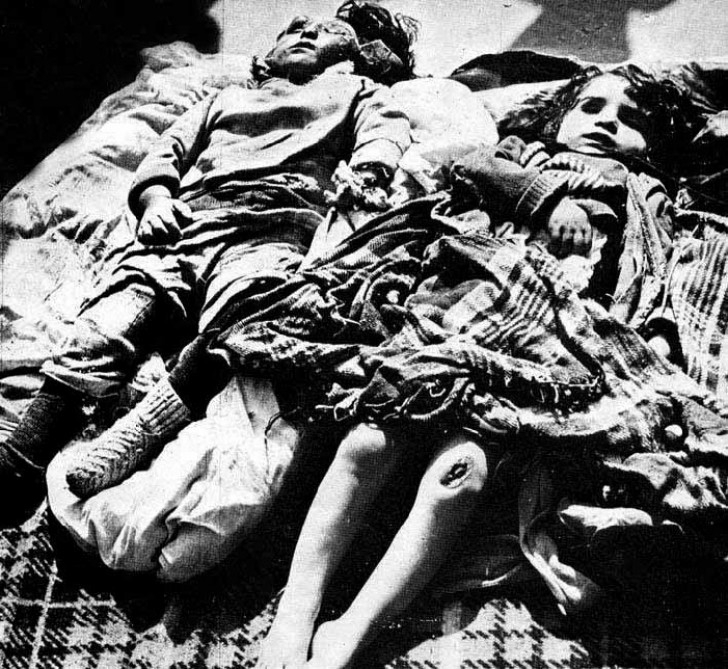
This photograph, presented in the **“History of a Photo”** section of the **Modern.az** website, tells the horrific story of two innocent infant girls...
Time: February 1992... Location: Teze Pir Mosque in Baku... Horrifying images of bodies brought from Khojaly... Among them are two small girls...
This photo was taken by Shahin Abasaliyev, a photographer for the “Səhər” newspaper, which was published at that time. The photographer recalls those poignant moments as follows:
“It was the first few days after the Khojaly tragedy. From the editorial office of the “Səhər” newspaper, where I worked at the time, they sent me to Teze Pir Mosque to photograph the bodies brought from Khojaly. I remember it as if it were today: in front of the mosque's entrance stairs, a checkered patterned shawl was laid on the ground, and on it were the bodies of two innocent infant children. On one of them, the bullet wound on the knee was clearly visible; the back of the other's head was missing. The children's faces were horribly disfigured beyond recognition. Before that incident, and even after that day, I have photographed many martyrs and wounded soldiers. However, no scene as horrific as that has ever affected me to this day.
I took the photo and went to work. Upon arriving at work, I gave the film I had shot to Rauf Umud, a well-known photographer working in the same editorial office, and asked him to develop and print them. I myself experienced a long period of shock...
...I later learned that these little girls, brutally killed in Khojaly, were brought to Baku by helicopter by the late TV journalist Chingiz Mustafayev. One of the girls in that photo is Gulmira, the daughter of Murad Mehdiyev, one of Khojaly's defenders. She was 5 years old; her father and two sisters were murdered by Armenian bandits, and her mother, Nana, was taken captive. On the night of February 26, they tried to evade enemy bullets in Garagaya along with about 70 residents of the city, but it was not possible. Only 4 people from that group survived – Gulmira's mother, her brother Arzu, and also city resident Shahnaz and her daughter; all the others were mercilessly killed by Armenian soldiers.
As for the other little girl, since her identity could not be determined, she was given the name Nishana. After being washed and shrouded at Teze Pir Mosque on February 27, they were buried in the Alley of Martyrs.
That incident is the most difficult and horrific scene of my nearly 35-year photography career. I do not wish such a scene upon anyone – neither to experience that tragedy nor to immortalize it...”
Shahin Abasaliyev later stated that the same photo was published on the cover of the "Khojaly: The Last Day" magazine, which discussed the genocide and was printed in Azerbaijani, Russian, and English, and later appeared in various newspapers and magazines.
A.Gorkhmaz