In recent years, various models related to the more efficient organization of the higher education system have been discussed internationally. The approach applied in a number of countries, particularly in Georgia, and known as the “one city, one faculty” principle, also draws attention in this context. This model primarily covers state universities and aims to prevent the fragmentation of education in the same specialties across different higher education institutions, and to concentrate resources more purposefully. For example, the centralization of technical specialties in one center, and law or other fields in specific cities or universities, is considered effective both in terms of strengthening scientific potential and increasing the quality of education.
It is interesting to consider whether this model, existing in world practice, can also be applied in Azerbaijan?
In her statement to Modern.az regarding the topic, Elnara Akimova, a member of the Science and Education Committee of the Milli Majlis, noted that one of the main trends observed globally in recent decades concerning the structuring of higher education is to prevent the dispersion of resources, merge redundant programs, and centralize academic strength.
“From this perspective, the “one city, one faculty” approach applied in some countries is valued more as an institutional concentration of quality rather than classic administrative optimization. Especially in the process of restructuring education systems in the post-Soviet space, this model has gradually come into focus. As one of the regional examples of this practice, the steps taken by Georgia in recent years towards program consolidation among state universities can be cited; instead of teaching the same specialties in parallel and sometimes with weak material and technical bases, the preference is given to forming stronger academic centers.”
The deputy pointed out that world experience shows that a large number of universities is not always an indicator of quality:
“For example, during structural reforms in higher education, Finland merged several institutions to create larger, research-oriented universities. As a result of this model, both the number of scientific publications increased, and the position of universities in international rankings strengthened. Germany, while applying a different approach, follows the same logic: specialized higher education institutions in some cities play the role of centers for specific fields, and resource allocation is built upon this specialization. The creation of university consortia in France also serves the same purpose: reducing academic redundancy and concentrating scientific potential in a unified space.”
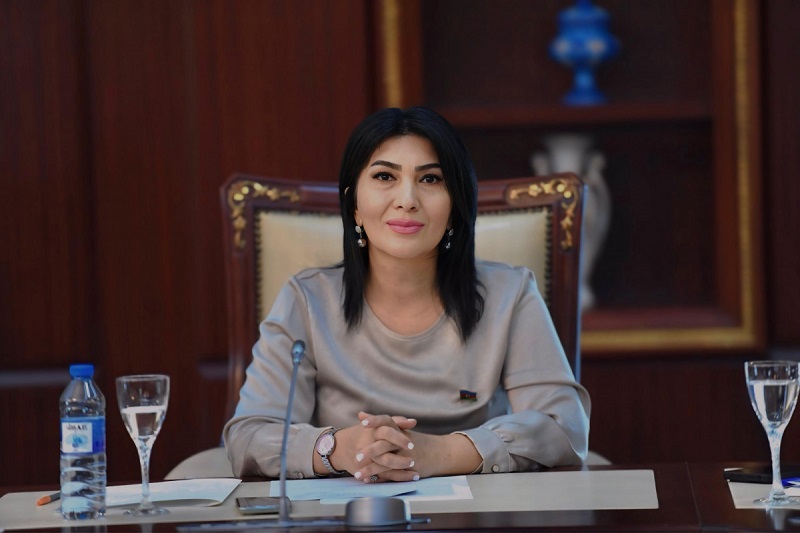
E. Akimova also drew attention to the fact that the advantages of the model manifest themselves in several key directions:
“Firstly, the dispersion of material and technical resources and faculty staff is prevented. Instead of several weak faculties in the same field, a stronger center with better laboratories, research groups, and international cooperation opportunities is formed. Secondly, the efficiency of budget expenditures increases: funds allocated for maintaining parallel structures are converted into development-oriented investments. Thirdly, student selection and academic competition are strengthened; a centralized faculty can create higher admission standards and a higher quality learning environment. Finally, this model can also stimulate inter-regional balance, as specialized faculties are located in different cities, supporting regional development.”
The deputy also emphasized that, alongside this, the success of the model depends more on its implementation mechanism than on the administrative decision itself:
“Hasty mergers carried out without considering social impacts can lead to staff turnover, restriction of student choice freedom, and an imbalance in educational opportunities across regions. Therefore, this approach must be implemented gradually, transparently, and with the participation of the academic community. Successful examples in world practice have been accompanied precisely by extensive consultations, decisions based on performance indicators, and social security mechanisms for the transition period.”
Elnara Akimova also clarified the issue of applying the model in Azerbaijan:
“Regarding the prospect of applying this model for Azerbaijan, alongside the expansion of the higher education network in the country, the issue of program duplication in some specialties is periodically discussed. Considering the goals of economic diversification and outcome-oriented scientific research, the formation of specialized academic centers may seem rational. However, this process should not be carried out merely as a structural change, but in parallel with quality assurance, tightening of accreditation standards, and strengthening the research mission of universities.
Bringing such a model up for discussion at the legislative level also seems natural. Issues related to higher education governance mechanisms and the status of universities are an integral part of state policy, and public discussion of such reforms strengthens legitimacy. In this regard, conducting conceptual discussions at the Milli Majlis level may be expedient both for studying international experience and for clarifying national priorities. Global trends show that optimization in higher education is no longer a choice but a necessity for maintaining competitiveness; the main issue is to find the optimal way to reconcile this necessity with local realities.”, she noted.
However, Hikmat Alizade, Chairman of the Public Council under the Ministry of Science and Education, stated that this innovation is particularly implemented in small countries and aims to improve the quality of personnel training.
“You know, personnel training is a complex process. The quality of the trained personnel depends on many factors. Among these factors, the pedagogical staff responsible for training plays a crucial role. Typically, the number of qualified teaching staff in regions is low. Qualified specialists usually prefer to work in central cities. For this reason, the quality of personnel training, especially in regions, tends to be lower. Therefore, personnel training in regions is reduced, and higher education institutions operating in the center deal with this issue. Such a step is taken in many countries to improve quality.”
He also discussed the positive and negative aspects of applying the “one city, one faculty” model:
“However, alongside the positive aspects of applying this model, there are also negative nuances. I believe that the implementation of such a model could negatively impact the development of regions. In my opinion, the establishment and development of higher education institutions in regions is an extremely important issue. It is no coincidence that discussions have taken place in the press at various times regarding the relocation of higher education institutions to the regions. In these discussions, the relocation of higher education institutions to the regions is considered a primary way to both reduce population density in Baku and foster regional development. Naturally, taking such a step will be resolved within the context of time.
Georgia is a small country. Its population is approximately 3.5 million people. The application of such a model there might yield successful results. However, I believe that implementing such a model in our country would not be as beneficial. This is because personnel training in the same specialty across different higher education institutions creates competition among universities. Previously, the question of which university trained higher quality personnel was not topical, but in recent years, this issue has become relevant and is reflected in the reports of various institutions. It would be beneficial to further increase attention to this issue. It is as a result of such reports that appropriate innovations are now being implemented even in higher education institutions in our regions to improve the quality of education.”

H. Alizade also brought to attention that, as the Public Council under the Ministry of Science and Education, they have witnessed this recently while visiting various educational institutions, including higher education institutions operating in their regions:
“However, of course, today's level of development cannot satisfy us. But the development trend gives us reason to believe that the quality of personnel training in higher education institutions will further increase in the near future. Simply put, I believe that the competition factor needs to be further actualized. The main criterion here is that the trained personnel are in demand.
I must also note that today there are specialties for which personnel training is carried out in an excessive number of higher education institutions. As is known, the Education Quality Assurance Agency operates in our country. This agency conducts program accreditation in addition to institutional accreditation to determine the degree of compliance of education quality and personnel training with state standards in all higher education institutions. The agency has developed criteria and indicators to determine the quality of personnel training for each program. Based on the information I have, I must state that the agency takes the accreditation process very seriously. I believe that in the near future, personnel training in certain specialties may be discontinued in higher education institutions that cannot train quality personnel for those specialties. In this way, personnel training for any given specialty can be concentrated in universities that train higher quality specialists.”
The Chairman of the Public Council also stated that it is necessary to focus attention on another issue:
“Improving the quality of pedagogical staff in higher education institutions operating in the regions remains one of the main demands of the day. Various models can be applied for this purpose.
For example, it might be interesting for teachers lecturing at prestigious higher education institutions in the country to deliver lectures and conduct master classes for pedagogical staff at regional higher education institutions once or twice a month. Specialists for regional higher education institutions can be trained through targeted doctoral programs. Naturally, other models can also be applied. In any case, further improving quality in higher education institutions operating in the regions today is imperative.”
H. Alizade also added that universities with a small number of students operate in our country:
“I believe that the merger of these universities can give impetus to improving the quality of personnel training. From time to time, proposals regarding this issue are also voiced in the press. In world practice, universities with a large number of students are distinguished by their quality of activity. The merger of universities can open up great opportunities for expanding faculties and departments in higher education institutions, more efficient use of university financial resources, further improvement of material and technical base and infrastructure, selection of higher quality pedagogical staff, and increasing the quality of trained personnel. I think that this issue can also find its solution in the context of time,” he concluded.