
After the 2-week ceasefire agreement reached between the United States of America (USA) and Iran, the parties will try to finalize a peace agreement. This is the conclusion drawn from reactions by officials.
The parties will meet in Islamabad, the capital of Pakistan, which mediated the ceasefire. Iran demands the lifting of sanctions and the withdrawal of US forces from the region.
In the US-Iran talks to be held in Islamabad, the capital of Pakistan, on April 10, the American delegation will be led by Vice President J.D. Vance. According to ISNA, the Iranian delegation will be led by Mohammad Bagher Ghalibaf, Speaker of the Islamic Consultative Assembly of Iran (Parliament).
Iranian media reports that "within the framework of Iran's proposed 10-point plan, not only the nuclear program and regional security, but also primary and secondary sanctions imposed on Iran over the past 45 years will be discussed".
Any progress in the US-Iran conflict is also considered important for Ukraine. Because certain analyses are being conducted regarding the negative impacts of the US-Iran conflict on Ukraine, which has been at war with Russia for 4 years now. Thus, some analysts claim that US support for Ukraine has decreased, and the conflict has moved to the background.
In a statement to Modern.az, Ukrainian journalist and political scientist Stanislav Zhelikhovsky stated that the two-week ceasefire announced by Donald Trump should be regarded not as a path to lasting peace, but rather as a tactical de-escalation mechanism:
“The situation is also complicated by the fact that both Washington and Tehran openly declare “victory”. This raises expectations and narrows the possibilities for compromise. Against the backdrop of ongoing tensions around the Strait of Hormuz and Iran's demands for compensation and the lifting of sanctions, a two-week period seems too short to resolve structural problems.
In essence, this serves as a kind of “cooling-off window” for checking compliance. Especially in the context of the upcoming midterm elections in the US, this short period also reflects political urgency. The Trump administration is trying to achieve visible results quickly, which makes the ceasefire politically beneficial but strategically fragile.
The talks are expected to revolve mainly around maritime security, limiting escalation, and the gradual easing of sanctions.
However, both sides enter the talks with extensive proposals. Iran's 10-point plan and the US's multi-item framework exist, indicating a complex agreement process. Iran demands compensation, the lifting of sanctions, and the establishment of a formal regime in the Strait of Hormuz, while the US primarily prioritizes de-escalation and safe navigation.
The main obstacle will be the issue of sequencing: who will take the first step, and how will the implementation of commitments be verified? Political pressure in Washington could accelerate the process, but this also increases the risk of superficial agreements.
The US has demonstrated certain concessions by agreeing to a ceasefire without strict preconditions and by participating in a negotiation framework that partially reflects Iran's proposals.
Trump's explicit emphasis on the more moderate statements of Iranian Foreign Minister Abbas Araqchi and his setting aside of harsher rhetoric indicate a conscious strategy aimed at working through softer channels.
However, these concessions are tactical in nature. The US maintains strategic uncertainty regarding potential strikes or escalation should the agreement be violated. This “dual approach”, meaning public firmness and procedural flexibility, is also conditioned by domestic political motivations ahead of the midterm elections.
Considering the current dynamics, Iran's readiness to join talks, accept the general framework, and discuss safe passage through the Strait of Hormuz indicates certain concessions. However, these steps should be viewed more as tactical adjustments.
Tehran is not backing down from its main strategic demands such as the lifting of sanctions, compensation, and regional influence. The difference between the more moderate tone of the Ministry of Foreign Affairs and the maximalist rhetoric of security institutions is more of an internal signal than a real compromise. Iran is trying to gain time by preserving its main levers of influence”.
According to the political scientist, the prospects for a long-term agreement remain limited:
“The mutual “victory” rhetoric, maximalist proposals, and political pressures within the US suggest that this process will more likely result in temporary agreements.
A more realistic scenario is a model of “managed instability”. Here, escalation is kept under control but not fully resolved. A lasting agreement, however, requires broader regional guarantees and institutional mechanisms, which are currently not in place.
Incidentally, regional actors will play a decisive role. Israel could act as a limiting factor if it considers the agreement insufficient to constrain Iran. Turkey is trying to increase its geopolitical influence by positioning itself as a mediator. Russia, meanwhile, benefits from long-term instability that distracts Western attention from Ukraine.
This dynamic indicates that even if the US and Iran achieve some progress, external actors will be capable of significantly shaping or undermining the outcome”.
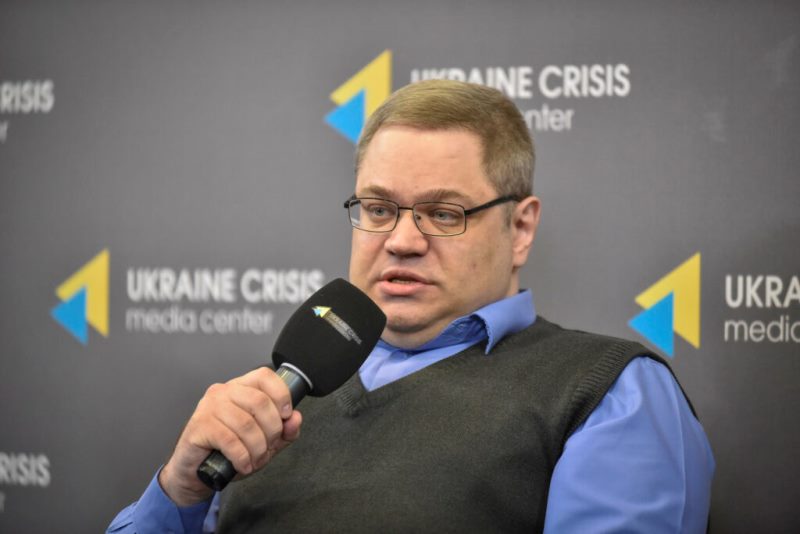
The political scientist stated that perceptions of the US-Iran conflict pushing the Ukraine war out of the global agenda are increasing, and that this is partially true:
“As Volodymyr Zelensky himself admitted, Ukraine is no longer a top priority for Washington in the short term, especially at a time when military, political, and economic resources are being redirected to the Middle East. The most noticeable impact is practical in nature. Ukraine faces the risk of receiving critical assets like “Patriot” air defense systems in smaller volumes, while global supply chains are strained due to the conflict in the Middle East. Furthermore, rising oil prices stemming from instability around the Strait of Hormuz economically benefit Russia and strengthen its capacity to continue the war.
Nevertheless, Ukraine is not a passive victim of these changes. Kyiv is actively trying to reshape its position in the new geopolitical reality. It offers its combat experience, particularly in combating Iranian-made unmanned aerial vehicles, to both the US and Gulf countries, thereby transforming its war experience into strategic capital. This is an attempt to maintain its relevance and importance even if global attention shifts elsewhere.
The two-week ceasefire reached between the US and Iran creates a short-term diplomatic window by temporarily reducing escalation risks in the Middle East and allowing for the partial reopening of critical routes such as the Strait of Hormuz.
This is also important for Ukraine, as the recent escalation in the Middle East had virtually frozen US-led mediation efforts. Now, the temporary reduction in tension creates broader political and diplomatic opportunities for Washington to re-engage in the Russia–Ukraine direction. This is also reflected in plans for a possible visit to Kyiv by key US negotiators – Steve Witkoff, Jared Kushner, and Lindsey Graham – with the aim of revitalizing stalled peace talks”.
S. Zhelikhovsky emphasized that the underlying reality is more complex:
“The ceasefire does not eliminate the structural connection between these two conflicts. On the contrary, there are signs that Russia is trying to exploit this connection. For example, proposals are reportedly being made to reduce support for Iran in exchange for concessions regarding Ukraine. This indicates that the Middle East and Ukraine are increasingly becoming interconnected negotiation arenas.
Furthermore, even if talks resume, the main obstacles remain unchanged: territorial disputes, security guarantees, and the fundamentally irreconcilable war aims of Kyiv and Moscow. Previous rounds of talks in Geneva have already demonstrated how difficult it is to make progress on these issues.
Thus, the ceasefire may procedurally “unfreeze” diplomacy, but it does not fundamentally ensure it. The main risk is that the resumption of talks may only be superficial without real progress. Especially if this process stems from the political calendar in Washington and is not based on a genuine convergence of the parties' positions”.





