Despite the long-standing policy of pressure by the US and Israel against Iran, the non-occurrence of the expected fragmentation within the country is one of the multi-layered topics that provoke discussion. This issue can be approached from political, social, and ideological aspects.
Iran has established a multi-layered and effective security system over many years. The Islamic Revolutionary Guard Corps (IRGC), intelligence agencies, and police structures ("Basij", etc.) react very strictly and promptly to internal threats. This prevents the escalation of potential unrest at an early stage.
Iran is a multinational state (Persians, Azerbaijanis, Kurds, Arabs, Baloch, etc.). Despite this, the state controls this diversity through both administrative and security measures and does not allow separatist tendencies to spread widely.
The political system established after the 1979 Islamic Revolution is not only a state mechanism but also an ideological platform. The government bases its legitimacy on religious and national values. This unites a part of society around the government, especially during periods of external pressure.
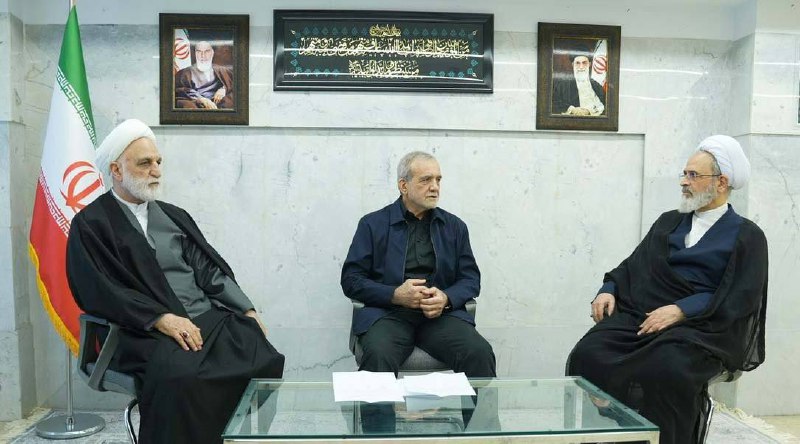
Recent events confirmed this once again. The pressures exerted by the US and Israel – sanctions, cyberattacks, information campaigns, and ultimately military operations – paradoxically strengthened national solidarity within Iran, rather than causing fragmentation.
Observations showed that the image of an external enemy in Iran acts as a psychological factor that weakens internal fragmentation.
However, it should also be noted that the opposition forces existing within Iran and in its diaspora are not unified ideologically or organizationally. There are serious disagreements among liberal, monarchist, leftist, and ethnically based groups. This hinders the formation of a coordinated and effective internal movement.
Overall, the non-occurrence of fragmentation within Iran cannot be explained by a single reason. This is the combined effect of factors such as a strong security apparatus, ideological foundations, the sense of national unity created by external pressure, and the weak coordination of the opposition.
Commenting on the issue, Azerbaijani National Assembly deputy Ceyhun Mammadov linked the non-occurrence of internal fragmentation in Iran to ideology in his statement to Modern.az:
“The role of ideology in the strength and sustainability of states is undeniable. Ideology is not merely a theoretical framework; it is also one of the main pillars that unite society, mobilize it during difficult times, and protect the long-term position of the state.
Looking at the example of Iran today, we see a state that has been operating for many years amidst various political, economic, and military tensions. Although it has been involved in direct or indirect confrontations in many cases, it has been able to maintain a certain stability without experiencing internal fragmentation. This is not accidental.
The question arises: what is the main reason for this continuity? One of the answers is precisely ideology. The ideological system formed in Iran creates a unified vision and approach within society, unites different strata around common goals, and ensures support for the state, especially during periods of tension.”
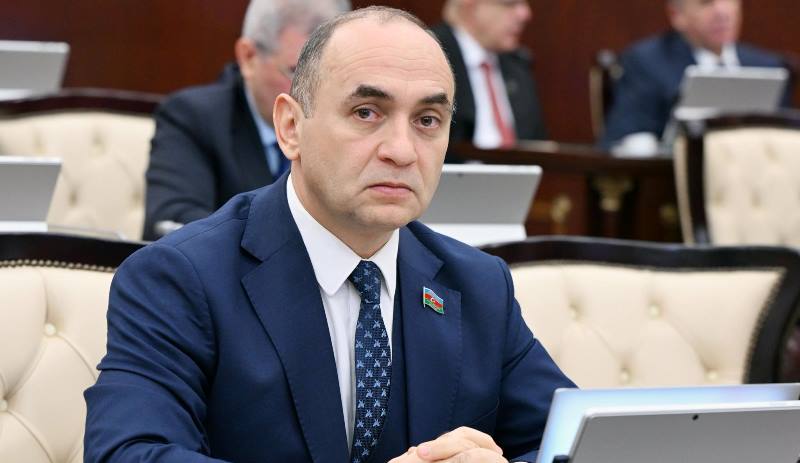
C. Mammadov states that ideology here is not merely a political tool, but also a mobilization mechanism.
“Thanks to this mechanism, society reacts in a more organized and resilient manner to certain challenges. The state, in turn, relies on this unity to protect its position.
At the same time, ideology also influences the state's security approach and foreign policy course. This, in certain cases, creates conditions for the adoption of tougher and more principled stances and serves to protect the long-term strategic line.
It is also an undeniable fact that ideology alone is not sufficient. The real power of the state is formed in conjunction with factors such as economy, technology, governance, and social welfare. Ideology, in turn, acts as the unifying and guiding element of this system.
I believe that the example of Iran once again demonstrates: when ideology is properly constructed and accepted by society, it can become one of the main factors protecting the state's continuity and internal unity, especially during difficult and tense periods.”
Political analysts say that stability in Iran is not absolute and immutable. Economic problems, social discontent, and generational changes could alter internal dynamics in the future. That is, the process continues, and the future direction of Iranian society will depend on the interplay of both internal and international factors. This is inevitable...
A.Qorxmaz