Influential foreign media outlets have frequently reported on him in recent days: news about Mohammad Bagher Ghalibaf is being published on the pages of “Politico”, “Axios”, CNN, BBC, “Hürriyet”, “Bloomberg”, “Al Jazeera” and others. The discussion is about the Speaker of the Iranian Parliament..
According to Modern.az, Mohammad Bagher Ghalibaf came into the center of international attention at the beginning of this week. This was caused by reports in American and Israeli media that he was negotiating with the Trump administration to end the war between the US, Israel, and Iran.
On March 23, the American leader, who had paused attacks on Iran's energy infrastructure for 5 days, stated that his envoys had spoken with Iran's "most important person" – the leader it considers most respected. However, Trump emphasized that this was not Iran's new Supreme Leader Mojtaba Khamenei.
The "Politico" publication, citing its sources, reported that Mohammad Bagher Ghalibaf, the Speaker of the Iranian Parliament, is being considered by the Trump administration as a potential new leader.
"He is one of the highest-ranking officials... But we need to vet them and cannot rush," a source told "Politico".
“The Wall Street Journal” writes that Ghalibaf, with whom the US wants to negotiate, has not been subjected to Israeli attacks in the war that has lasted for about a month.
Israel's "Jerusalem Post" and "Axios" newspapers have also mentioned him as a potential candidate to become Iran's leader.
Ahmet Hakan, a columnist for “Hürriyet” newspaper, noted the following in his latest article while touching upon “the Ghalibaf topic”:
“Larijani had charisma. He knew Kant, loved philosophy. He had no interest in worldly possessions. His composure was impressive. As for Ghalibaf, who is popular in Iran these days... He is said to have corrupt tendencies. He is famous for constantly running for president and then withdrawing from the race for the sake of others. Ah, Larijani, ah! See now who fills the void you left behind”.
Some officials in Washington believe that 64-year-old Ghalibaf is a suitable partner to lead Iran and negotiate with the Trump administration. However, they state that the White House is not yet ready to choose a specific individual and is considering several candidates to find someone willing to reach an agreement. This means the White House has not yet made a final decision regarding Ghalibaf.
White House Press Secretary Karoline Leavitt stated that "these are sensitive diplomatic discussions, and the US Administration will not disclose details to the media”.
Israel's "The Jerusalem Post" and "Axios" newspapers described Mohammad Bagher Ghalibaf as the Iranian official negotiating with the US. Allegedly, US President's special envoy Steve Witkoff and Trump's son-in-law Jared Kushner spoke with the Speaker of the Iranian Parliament.
However, Ghalibaf himself denies any negotiations with the Americans. He said: "No negotiations have been held with the US, and fake news is being used to manipulate financial and oil markets and to help the US and Israel escape the quagmire they have fallen into".
Foreign media writes that as early as 2008, Ghalibaf supported dialogue with the US regarding Iran's nuclear program. At that time, he believed that such negotiations would benefit everyone – Iran, the US, and the international community as a whole.
However, many experts consider Mohammad Bagher Ghalibaf a supporter of the existing order in Iran. This makes him an unlikely candidate to offer any significant concessions to Washington.
According to the latest claim by Israel's “TV Channel 14” regarding Ghalibaf, Tel Aviv and Washington have provided temporary security guarantees for the Speaker of the Iranian Parliament. According to the channel, "temporary immunity" against potential attacks will be in effect for at least 5 days. It is noted that this step was taken to facilitate direct or indirect negotiations with representatives of the Iranian leadership.
So, who is this man whom the American president called "most respected" and whom some experts also refer to as a leader capable of leading Iran? The answer requires a deep look into the biography of Ghalibaf, who transformed from a commander in the Iran-Iraq war to one of the most influential figures in the Islamic Republic over the last 30 years.
Mohammad Bagher Ghalibaf was born in 1961 in Mashhad, a holy Shia city in northeastern Iran, and also the birthplace of the late Supreme Leader Ali Khamenei.
His father, Hossein Ghalibaf, is reported to be of Kurdish ethnicity, and his mother, Kheyr al-Nasa, of Persian ethnicity.
Ghalibaf received a bachelor's degree in human geography from Tehran University (where he later became a professor) and a master's degree from Islamic Azad University. He earned his doctorate from Tarbiat Modares University.
He began his career at the age of 19, joining the newly formed Islamic Revolutionary Guard Corps (IRGC) in 1980. During the Iran-Iraq War, Ghalibaf quickly rose through the ranks, becoming the general commander of the Imam Reza Brigade in 1982, and commanding the 5th “Nasr” Division, which participated in some of the bloodiest battles, from 1983-1984.
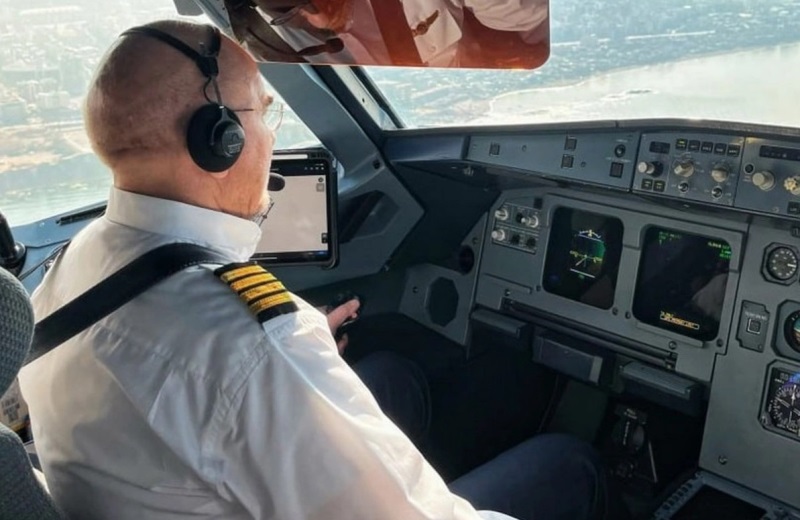
This military experience formed the foundation of his later career. In the late 1990s, Ghalibaf reached the highest echelons of military leadership: from 1997 to 2000, he served as the commander of the IRGC Aerospace Force. This position not only gave him access to Iran's most advanced military technology but also provided an opportunity to establish strong connections with key figures within the IRGC. Ghalibaf is also a qualified military pilot and, according to sources, likes to emphasize his ability to fly passenger planes.
Ghalibaf's career is also linked to the suppression of domestic protests in Iran, and this part of his biography has caused the most controversy. Amidst the student protests of 1999, Ghalibaf was appointed commander of the Iranian National Police. He was among 24 IRGC commanders who signed a warning letter to reformist President Mohammad Khatami about the necessity of taking decisive measures against demonstrators. Human rights organizations claim that Ghalibaf played a key role in suppressing all major waves of protests in Iran over the past 25 years.
Despite his influential positions in the security forces, Mohammad Bagher Ghalibaf struggled for a long time to achieve success in elections. He ran for president four times: in 2005, 2013, 2017, and 2024. His most successful campaign was in 2013: However, Ghalibaf failed to win, coming in second after Hassan Rouhani.
In 2005, he only came in fourth place, while the then little-known conservative Mahmoud Ahmadinejad won.
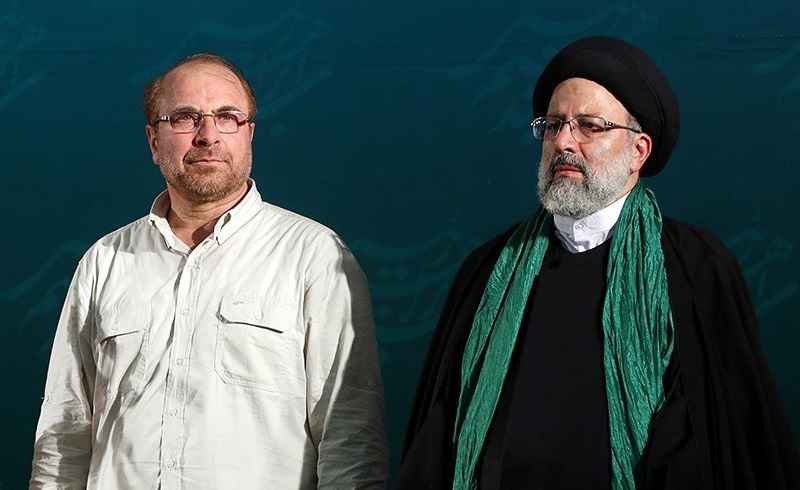
In 2017, Ghalibaf launched a campaign but withdrew in favor of another conservative candidate, Ebrahim Raisi. Following Raisi's death in a plane crash, his last attempt for the presidency in 2024 only earned him third place. Masoud Pezeshkian won these elections.
His unsuccessful presidential elections did not hinder his career. In 2005, immediately after his defeat, Ghalibaf was elected mayor of the capital Tehran and held this position for 12 years until 2017. In this post, he gained a reputation as a pragmatic technocrat: his supporters praise him for developing urban infrastructure, including expanding the metro and establishing parks. However, his critics also note corruption scandals during his tenure.
In the spring of 2020, Mohammad Bagher Ghalibaf was elected Speaker of Parliament, replacing Ali Larijani. It was this position that allowed him to remain in power even without being president.
In early 2026 – in late February – a US-Israeli attack ended the life of Iran's former Supreme Leader Ayatollah Ali Khamenei. In mid-March, Ali Larijani, Secretary of the Supreme National Security Council and one of the late Supreme Leader's closest advisors, was killed in an Israeli attack. Larijani was considered the main decision-maker in Iran after Ali Khamenei. Larijani's death further deepened the power vacuum. It was at this moment that Ghalibaf emerged as a dominant figure.

Unlike the new Supreme Leader Mojtaba Khamenei, who has made no public appearances and only a few written statements, Mohammad Bagher Ghalibaf has become the public face of the Iranian leadership in recent days.
The 64-year-old politician regularly posts on X, gives interviews to Iranian television, and issues statements regarding the course of the war. Ghalibaf is likely one of those managing Iran's military efforts and strategy. According to claims, with President Masoud Pezeshkian focusing on daily civilian administration, Ghalibaf has taken on strategic and military leadership.
Ghalibaf was a close associate of General Qassem Soleimani, who was assassinated in 2020, which earned him a high level of trust from the IRGC.
Since the beginning of the war, Mohammad Bagher Ghalibaf has taken a strong anti-American and anti-Israeli stance. In mid-March, he mocked President Donald Trump, who claimed the US had defeated Iran. Three days later, he declared that the Strait of Hormuz would not return to its pre-war status.
A particularly disturbing point in the West was Ghalibaf's statement on March 22. In that statement, the Speaker called financial institutions supporting the US defense budget legitimate military targets.
However, more interestingly, Ghalibaf denied reports about ongoing negotiations with the US. Calling the information fraudulent, Ghalibaf expressed his certainty that the main purpose of such rumors was to manipulate financial and oil markets. He stated that the people of the Islamic Republic demand the punishment of aggressors.
Iranian Foreign Ministry spokesperson Esmail Baghaei confirmed that messages regarding the US's desire to initiate talks have been sent through "friendly countries" in the past few days, but Iran has responded in accordance with its principled positions, including warnings about the "serious consequences" of any attack on the country's energy infrastructure.
Experts say that despite Tehran's official denials, the possibility of negotiations cannot be ruled out. All parties in the war face high costs: Washington is under pressure from Persian Gulf states, European countries, Japan, and South Korea, who are suffering from the closure of the Strait of Hormuz. Trump also faces growing concern among Republicans ahead of the midterm elections in November.
The Iranian leadership, in turn, is under severe stress due to the threat of strikes on its key energy infrastructure.
Several mediating countries, including Egypt, Saudi Arabia, Pakistan, and Turkey, have already established communication channels with Iranian officials, and China is also using its influence to encourage Tehran to negotiate. Furthermore, Israel and the US had expected shorter military operations that would lead to a change in Iran's leadership. Now they are re-evaluating their expectations, and disagreements over the terms of ending the war must be resolved not only between the US and Iran but also between the US and Israel.
Despite his harsh rhetoric, Washington may view Ghalibaf as a more predictable partner than the new Supreme Leader Mojtaba Khamenei, who remains a secretive and unpredictable figure. At the same time, the US may not be overestimating Ghalibaf's willingness to compromise. Despite his ambitions and pragmatism, he is fundamentally committed to preserving the Islamic order in Iran. Ghalibaf himself has explicitly stated that he has no intention of compromising so far.
Mohammad Bagher Ghalibaf is married, having wed Zahra-Sadat Moshir-Estehareh in 1982. They have three children: Eshaq, Elyas, and Maryam.
Afgan Gafarli