At the last meeting of the Science and Education Committee of the Milli Majlis, the preparation and submission for discussion of a new Law “On Education”, taking into account modern challenges, digitalization, integration into the international educational space, and academic freedoms, has been highlighted as one of the main priorities of the spring session. Observations regarding the education sphere also indicate that the rapidly changing global educational environment, the impact of new technologies on the teaching process, as well as adaptation to international competition, necessitate the updating of existing legislation. In this context, one of the main questions is what specific innovations and changes the new Law “On Education” will encompass, and what mechanisms it will introduce for the management of the education system and the assurance of quality.
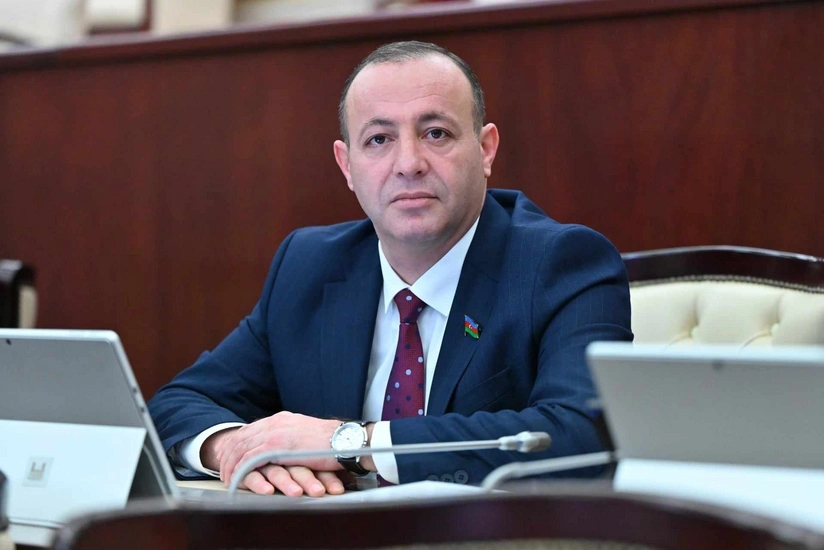
In a statement to Modern.az, Vasif Qafarov, a member who initiated the preparation and submission for discussion of the aforementioned new law at the meeting of the Science and Education Committee of the Milli Majlis, noted that the existing law is primarily based on a traditional teaching model and does not fully cover issues such as the organization of scientific research that meets modern demands and challenges, particularly the essence of master's and doctoral levels, digitalization, academic freedoms, and integration into the international educational space.
“In the current situation, doctoral education is largely based on a formal approach, and a results-oriented model consistent with global scientific competition has not been formed. This is directly related to the gaps and uncertainties existing in the legislation”.
The deputy noted that the New Law should, first and foremost, fundamentally change the approach to doctoral education:
“Doctoral studies should be recognized not merely as a stage of lectures, exams, and formal attestation, but as scientific research activity responding to modern challenges, with the main evaluation criteria being real scientific results, articles published in international scientific journals, research projects, and innovative products. At the same time, academic freedoms must be ensured at the legislative level, and the selection of topics by doctoral students, their relevance, independence in conducting research, and the responsibility of the scientific supervision institution must be clearly regulated.
The weakness of the scientific supervision institution in the existing system also creates serious problems. One scientific supervisor simultaneously guiding numerous doctoral students also leads to a decline in quality. The New Law must bring a concrete legal framework to this issue, ensuring that the scientific supervisor bears responsibility not only formally but also for scientific results. In parallel, I believe that the academic independence of universities should be expanded, and a separate status should be defined for research-oriented higher education institutions”.
According to V. Qafarov, another important point is international integration:
“The law must create the legal basis for joint doctoral programs with foreign universities, dual degrees, and joint dissertation mechanisms. This would both facilitate doctoral students' access to the international scientific environment and increase the global visibility of Azerbaijani science. Currently, the predominantly formal nature of criteria for dissertation quality and the insufficient consideration of recognition in international scientific databases are also among the main problems that need to be eliminated”.
The deputy added that, in general, the contradictions that have arisen over the years in the implementation of the existing Law “On Education”, such as the uncertainty of the legal status of doctoral studies, the weakness of quality assurance mechanisms, the lack of stimulation of the scientific environment, and the centralized management model, must be eliminated with the new Law:
“The law should focus on content, not form; on results, not processes; on global competition, not local approaches. Only in this case can Azerbaijani doctoral studies and the education system as a whole meet the demands of the modern era and become a real participant in the international scientific space”, V. Qafarov noted.
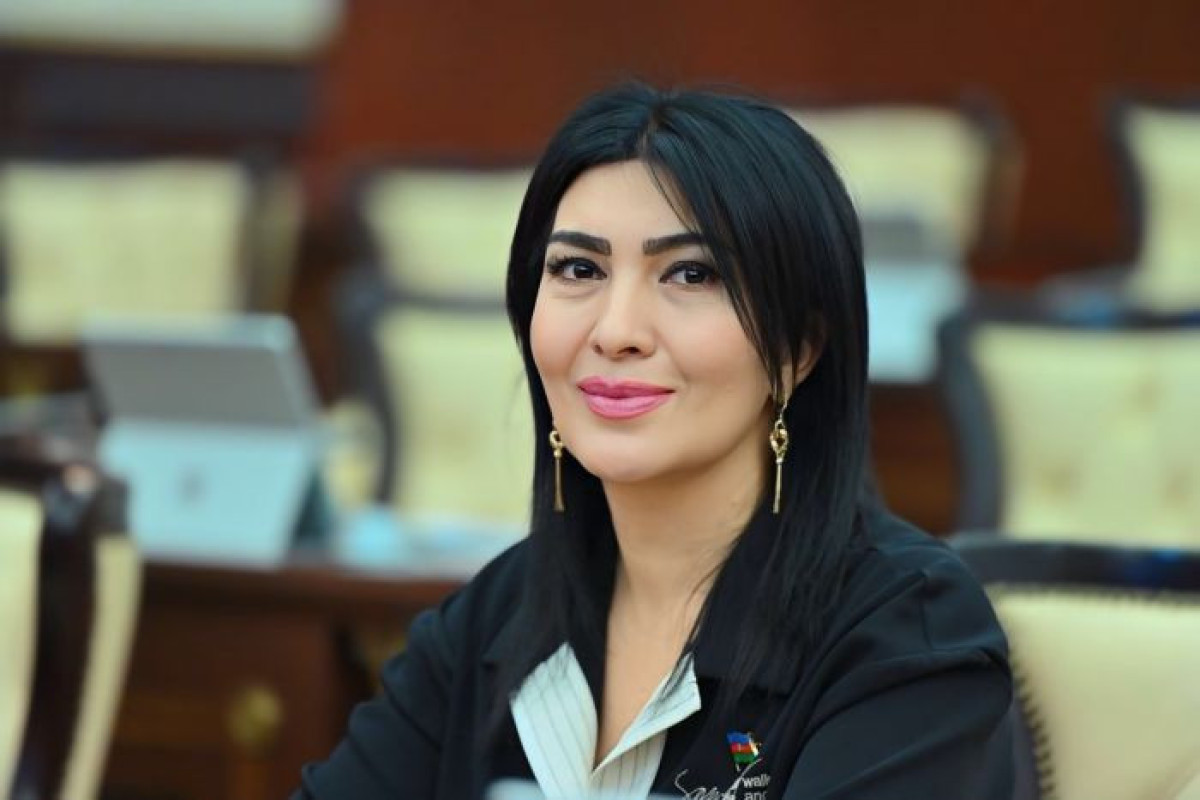
Meanwhile, Elnara Akimova, a member of the Science and Education Committee of the Milli Majlis, believes that the identification of the preparation of the new Law “On Education” as one of the main priorities of the spring session at the committee meeting should be regarded as a fully justified and timely step.
“Although the existing Law “On Education” played a significant role in shaping the country's education policy at the time of its adoption, today it struggles to respond to modern challenges on several issues. Structural changes in education, new teaching models, technological innovations, and the demands of the labor market require a more flexible, clear, and future-oriented legal framework. In this sense, the preparation of a new law is not merely a normative necessity but a matter of strategic development.
The new Law “On Education” must first and foremost ensure the expansion of academic freedoms and the autonomy of educational institutions. Strengthening the academic, administrative, and financial independence of higher education institutions is particularly important for increasing their international competitiveness. The flexible formation of university curricula, the stimulation of scientific research activities, and the application of modern approaches in management must be supported at the legislative level”.
The deputy also emphasized that the issue of digitalization should be one of the main directions of the new law:
“The clear definition of the legal status of online and hybrid education forms, and the regulation of quality and evaluation mechanisms for distance education, are now inevitable. The pandemic period showed that digital education is not an alternative but an integral part of the modern education system, and this reality must be reflected in the law.
Integration into the international educational space is also an issue requiring special attention. The mutual recognition of diplomas, the expansion of the legal basis for joint and dual degree programs, and the simplification of institutional cooperation mechanisms with foreign higher education institutions will serve to increase the international prestige of Azerbaijani education”.
The member of the Milli Majlis also drew attention to the importance of eliminating a number of gaps and contradictions that have arisen over the years in the implementation of the existing law through the new law:
“Inconsistencies between normative legal acts, insufficient clarity of transition mechanisms between educational levels, and the predominantly formal nature of autonomy in higher education create serious practical difficulties. Furthermore, legal regulation for non-formal and informal education forms, as well as professional development mechanisms for teachers, is not at an adequate level.
The new law must adopt a student-centered approach as its main principle, create conditions for strengthening the social and professional status of teachers, and increase accountability for the quality of education. Strengthening the links between the education system and the labor market, and the implementation of results-oriented financing mechanisms, are also among the important innovations.
Consequently, the new Law “On Education” should not merely be an update of the existing document, but the legal expression of a strategic approach that determines the country's future development. This law must serve the development of human capital, the promotion of innovations, and Azerbaijan's rightful place in the global educational space. Investment in education is an investment in the future, and the new law must fully reflect this philosophy”.