Against the backdrop of the severe impacts of the Ukraine war on the Russian economy and in a situation where the US had previously taken various steps to weaken Russia, Moscow's provision of certain support to Iran in the current confrontation involving that country is regarded as an indirect response strategy against Washington. Overall, some experts, characterizing the tension in Iran as a new phase of Russia-US geopolitical rivalry, evaluate this situation as a 1:1 parity in the US-Russia confrontation. Thus, there are those who present Russia as a party that has already achieved a certain outcome.
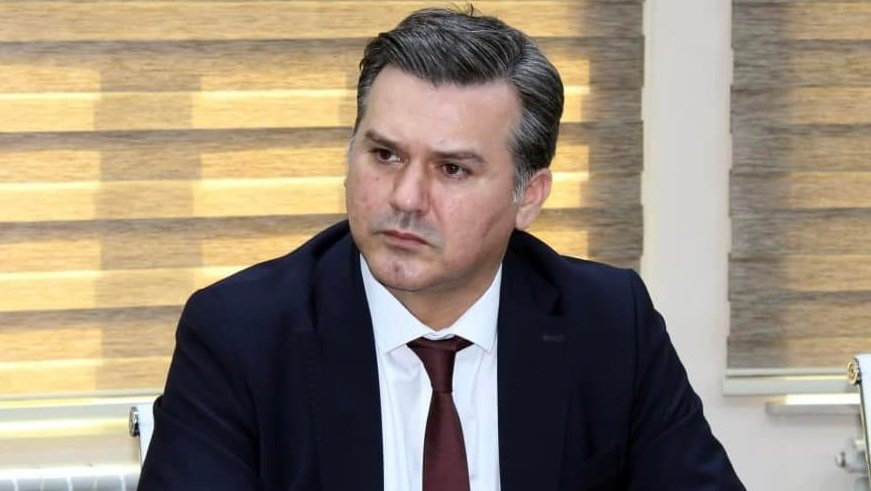
In a statement to Modern.az, political commentator Rufiz Hafizoğlu stated that it is possible to draw certain parallels between the Russia-Ukraine war and the US-Israel-Iran war:
“It is not excluded that Russia's support today for the war between Iran, Israel, and the US is an indirect, adequate response to the events in Ukraine. At the same time, let's consider that this might not be the case at all. Because the support Russia currently provides to Iran is quite negligible and imperceptible compared to the support China provides to Iran. On the other hand, Russia and China, in turn, have called on the United States of America and Israel to act more wisely and approach events more calmly. That is, this conflict has not yet entered its hottest phase. This is my opinion, it might be wrong.
Yes, they can cite Iran's strikes on Israeli targets, the events that occurred the day before yesterday in the city of Dimona, as examples. Naturally, these are normal. Against the backdrop of all these events, let's not forget that there is also a disinformation war being waged by both Iran and the US. So, I am strongly against drawing parallels. It can be done, but let's not forget that neither Russia, nor Iran, nor Israel is the main player in this conflict. There are two main players here: China and the US. This is the main nuance at the root of the matter. But this topic is so deep that other significant events are also taking place against the backdrop of the China-United States confrontation. Examples include the Afghanistan-Pakistan confrontation, where a temporary ceasefire was achieved related to Ramadan, and at the same time, an event unfortunately not given much attention in our media – India's inclination towards Israel, moving away from the main axis amidst the ongoing events, meaning Modi's visit to Israel and the meetings held there, arms supplies, and subsequently, the nomination of a former Israeli military officer for the prime minister's post in Armenia itself. All these nuances are overlooked but extremely interesting facts. Considering all this, it can be said with full certainty that the war in the region has not reached its active phase. This is related to Iran, and also to a new wave of war that will engulf the Middle East.”
The political commentator believes that, on the other hand, the issue of involving Turkey and Arab countries in this war is on the agenda:
“Behind-the-scenes talks are already underway regarding this. Turkish Foreign Minister Hakan Fidan made statements in Riyadh. These statements regarding Iran were different from previous ones. In these speeches, it was said: why are Muslim countries being bombed? If your problem is with Israel, you will strike it. To what extent is it logical to strike Saudi Arabia, Qatar, Azerbaijan, and other countries? Even if the war ends, Iran will be obliged to answer before the Islamic world and Muslim countries. The Organization of Islamic Cooperation, as well as other Muslim blocs, will demand accountability from Iran. The world will face a very different landscape after the Iran war. I believe that even the fragmentation and division of NATO, if not in the near future, is among the possibilities in the coming decades.”