The number of Azerbaijani young people who postpone their education plans because they cannot get a student visa, even though they have been accepted by Italian universities, is increasing. In recent months, the increase in dissatisfaction in this direction has brought to the agenda the reasons for the rejection of visa applications and ways to solve the problem.
In his statement to Modern.az regarding the issue, the vice-president of the Italy-Azerbaijan Association, Carlo Marino, stated that the rejection rate of student visa applications for the 2026 academic year has increased from 2 percent in the previous year to 3.9 percent:
"There is no single reason behind this increase. The tightening of Italy's visa criteria, the increase in financial requirements, and delays in administrative procedures are the main factors. According to official information from the Italian Embassy in Baku, although the overall level of visa rejections is relatively low, checks on Azerbaijani applicants have been tightened. The official position of the Italian side on this issue is unequivocal. The Embassy clearly states that being accepted to an Italian university does not grant the right to obtain a visa. University admission only confirms that the candidate meets the academic requirements. The independent and final decision regarding the visa is made by consular officers. Their assessment is based on the applicant's financial capabilities, the authenticity of their intention to study, and the conformity of the documents they submit."
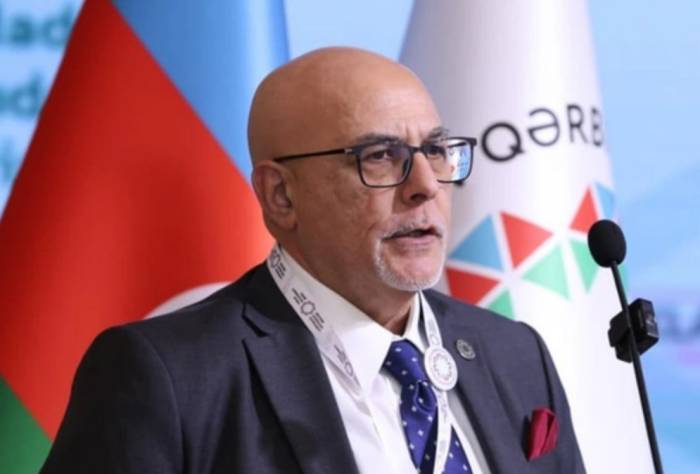
He noted that one of the main difficulties faced by Azerbaijani students is proving financial security:
"According to the new rules that came into force for the 2026/2027 academic year, students must confirm that they have access to 10,179.85 euros per year to cover living expenses in Italy. This represents a 46 percent increase compared to the previous limit of approximately 6,000 euros. The most important point is not only the availability of funds but also that they are obtained from a legal source and their origin can be traced. Large sums deposited into a bank account at once and funds whose source cannot be explained are not considered reliable financial proof. In many cases, the discrepancy between the savings reflected in bank statements and the family's declared income leads to rejection. The presentation of assets such as real estate and cars is also not considered sufficient to prove financial security."
According to K. Marino, another important problem is the completeness of documents and their conformity with the information on the "Universitaly" platform:
"The Italian Embassy in Baku requires the student to complete their initial registration through this portal and for the registration to be confirmed by the relevant university. The information in the visa application must fully match the information shown on the portal. Failure to submit language certificates, improper translation of notarized documents, and the lack of a logical connection between the purposes stated in the motivation letter and the chosen specialization can also result in the rejection of the visa application. Some students face problems at the final stage because they cannot provide a valid document confirming their place of residence in Italy or medical insurance with a minimum coverage of 30,000 euros."

He stated that when reviewing applications, consular authorities evaluate not only financial capabilities and the correctness of documents but also migration risks and the authenticity of the student's intention to study. In this regard, the candidate's intention to return to Azerbaijan after completing their education is also taken into account.
"If the candidate cannot justify their return to their country after completing their education with factors such as family ties, future career opportunities in Azerbaijan, or property status, the risk of obtaining a visa increases," K. Marino emphasized.
Another issue highlighted by K. Marino is the time required for processing applications:
"The legally established period for processing long-term national visas in Italy is 90 days. However, during periods of high application volume, obtaining an appointment time to submit documents can itself take several weeks. Many Azerbaijani students can only get an appointment for a visa application in July or August. This means very little time remains until the start of the academic year. Even if the visa is approved, the student may miss the deadline for university registration and consequently lose their right to admission. The Italian Embassy in Baku has also admitted that such delays create real difficulties for students after the academic year begins. At the same time, it emphasized that all procedures must be carried out within the framework of legislative requirements. At a time when energy and strategic partnership between Italy and Azerbaijan are deepening, difficulties related to student visas require special attention. Italy is the second largest destination for Azerbaijan's oil exports, and high-level diplomatic contacts between the two countries are regular."
The vice-president of the Italy-Azerbaijan Association proposed the implementation of several specific mechanisms for solving the problem at the diplomatic level.
According to him, first of all, a bilateral accelerated procedure or a special dialogue mechanism for student visas should be created:
"The Italian Ministry of Foreign Affairs and International Cooperation, the Ministry of Science and Education of Azerbaijan, and the Italian Embassy in Baku can implement special appointment times or a preliminary document verification mechanism for students whose registration on the 'Universitaly' portal has been confirmed. This does not mean softening visa requirements. On the contrary, pre-verification of document completeness can help prevent rejections due to technical errors and at the same time eliminate the shortage of appointment times during periods of high application volume."
His other proposal concerns the simplification of procedures for verifying academic documents and financial security. Marino believes that student mobility can become one of the topics of discussion at the meetings of the Italy-Azerbaijan Intergovernmental Commission and business forums:
"Italy can recognize specific forms of certified financial statements issued by designated banks in Azerbaijan. In addition, Italian universities can provide official documents confirming partial scholarships they offer to high-achieving students. Such scholarships can be taken into account to meet students' financial security requirements. This would reduce the risk of misunderstandings and incorrect decisions that may arise during the assessment of families' financial situations."
Another issue highlighted by K. Marino is the strengthening of the Italian Embassy in Baku's information work regarding visa procedures. He believes that there is a need for clearer instructions on how financial security is assessed, and how the sponsor's income and savings are taken into account.
"The Embassy can cooperate with local educational institutions in Azerbaijan to hold regular visa information meetings or publish analyses of the most common reasons for application rejections. This would allow students to identify and prevent possible problems before submitting their documents," the Italian journalist emphasized.
He added that while complete documents do not guarantee a visa, submitting incomplete or suspicious documents can result in rejection.
K. Marino concluded by stating that the main need of young people who have been accepted by Italian universities but are forced to stay in Baku because they cannot get a visa is not a concession, but the removal of administrative barriers:
"The main issue is to reduce administrative barriers that jeopardize educational opportunities and to make the application process more predictable. In a situation where strategic relations between the two countries are developing, solving this administrative problem serves the long-term interests of both sides. In this regard, it would be appropriate for governments to intervene in the matter and reach a bilateral agreement to improve the service provided to students and facilitate the visa procedure."