The ceremonial hall of the Blue Mosque in Yerevan has been named after the Armenian poet Yeghishe Charents. The nameplate was unveiled by Iran's Vice President Hamid Pourmohammadi. The Iranian Embassy in Armenia announced that a bust of the poet would also be placed in the same hall. In the information provided by the embassy to "Armenpress", the mosque was presented as a symbol of the historical and cultural heritage of Iran and Armenia. The history of Azerbaijanis related to this monument remained outside the presentation.
This is precisely what causes the main objection. An important monument of the Azerbaijani people's religious and cultural memory in Yerevan is turning into a platform for demonstrating the friendly relations between the two countries, while the historical environment that created and preserved it is made invisible. The participation of the Iranian government turns this relationship into a heavier political and moral responsibility.
The history of the Blue Mosque does not begin with later diplomatic presentations. According to historical sources, the monument was built in the 1760s by the Khan of Yerevan, Huseynali Khan. The complex, with its prayer halls, cells, and auxiliary buildings, was one of the important centers of the city's religious life.
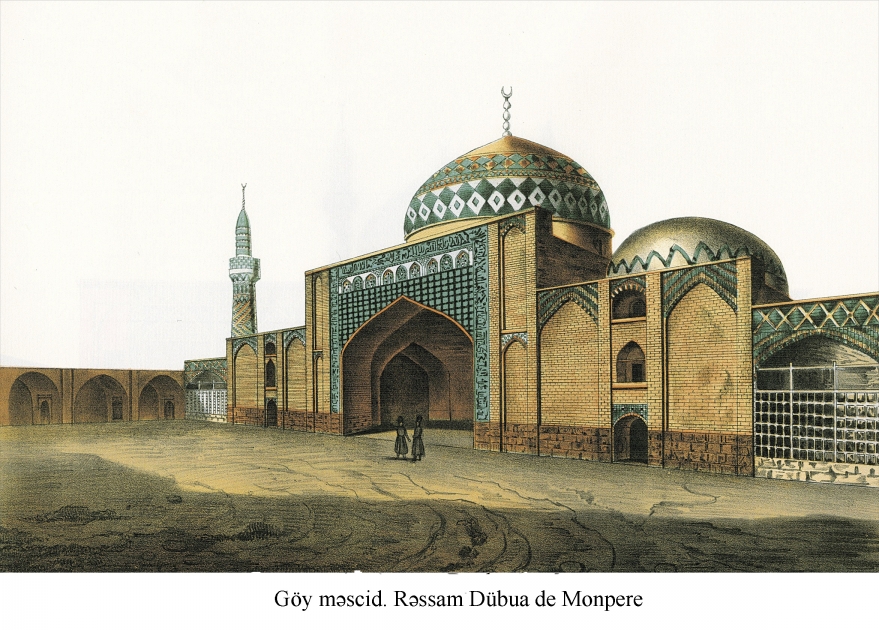
This origin is also confirmed in the Armenian side's own source. Yerevan's official tourism website states, based on the inscription at the entrance of the mosque, that it was built by Huseynali Khan in 1766. The names of the monument "Blue Mosque", "Huseynali Khan Mosque" and "Blue Jami" are also indicated in the same source.
The mosque's connection with the local Azerbaijani community has also been reflected in foreign scientific research. Anthropologist Tsypylma Darieva's research published in the "Central Asian Survey" journal notes the important role of Azerbaijani-speaking Shia Muslims in Yerevan's urban life. The author also presents traveler Henri Lynch's description of the Blue Mosque being surrounded by numerous "Tatar" houses. These facts show how incomplete an approach it is to separate the monument from the historical environment of Azerbaijanis.
Iran's allocation of funds for the restoration of the mosque for its own interests does not change this history. The restoring party does not gain the right to redefine the monument's past in accordance with its political relations. The "protection" of the walls cannot be separated from the protection of the memory of the community that kept them alive.
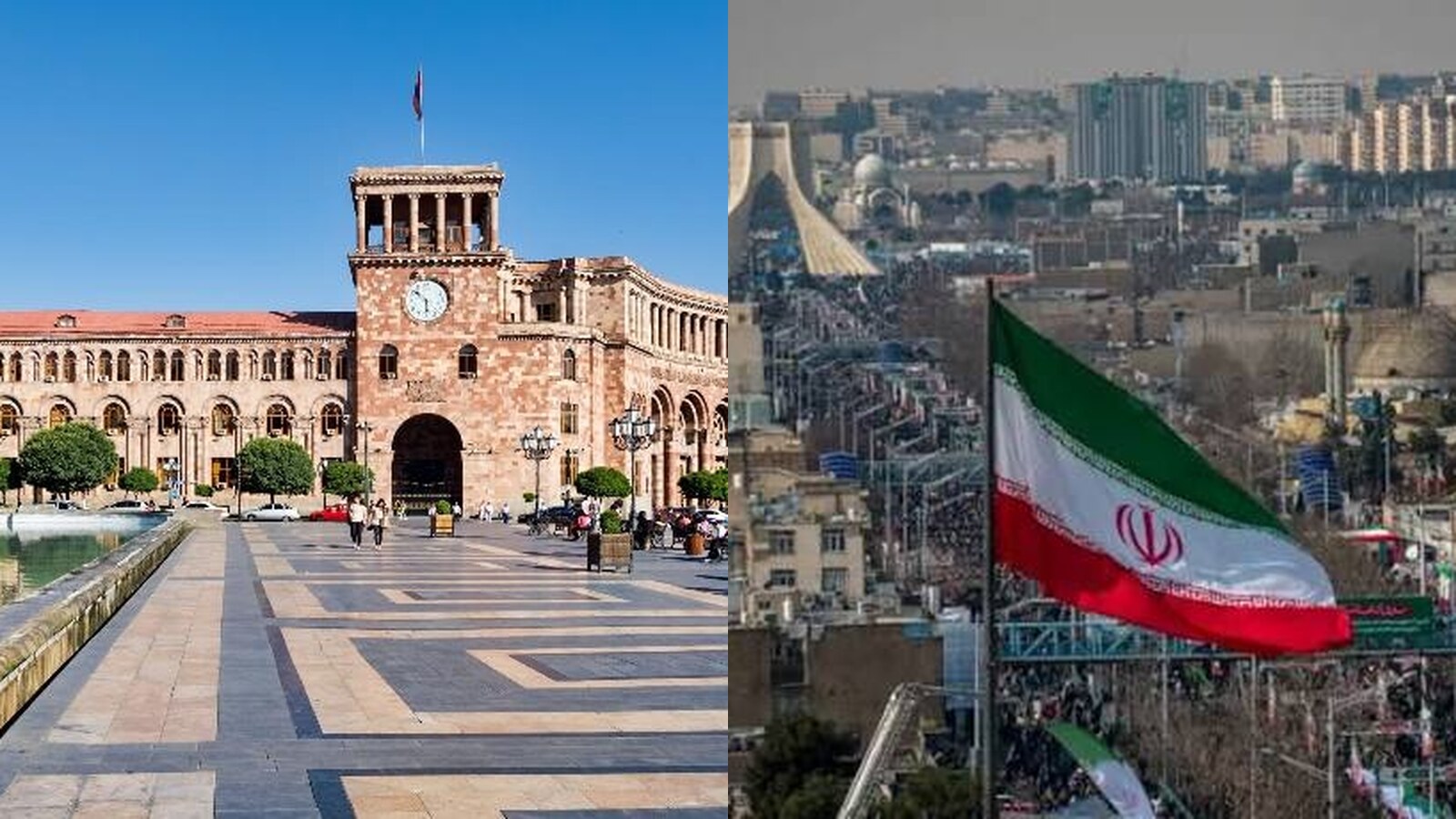
Moreover, the problem did not start only with the current ceremony. Darieva's research shows that the Blue Mosque is associated with Iran-Armenia friendship in official presentations, is known only as a "Persian mosque", and that this approach has an exclusionary character. Therefore, the criticism about the marginalization of Azerbaijani memory also has a basis in scientific sources.
The Iranian government, which presents itself as a defender of Islamic solidarity, faces serious contradictions here. Being the protector of a Muslim monument requires respect for the memory of its spiritual owners. Removing the history of Azerbaijanis related to that mosque from the presentation empties the content of the claim of religious solidarity. This is disrespect for the historical memory of Muslims, and Tehran cannot evade responsibility by calling such behavior cultural cooperation.
The Iranian regime's statements about stability in the region cannot be evaluated separately from its real policy. When the Council of the European Union expanded its sanctions mechanism on May 14, 2024, it cited Iran's military support for non-state armed groups in the Middle East and Red Sea region as one of the reasons.
Support for armed groups, expansion of pressure capabilities, and indifferent attitude towards the sensitivities of neighboring societies do not serve to strengthen stability. These create conditions for the continuation of tension and confrontation. In the Blue Mosque, too, political interests seem to be prioritized over mutual trust. Tehran does not take into account the dissatisfaction created in the memory of another nation when expanding its influence.
In such a case, Armenia's responsibility does not disappear either. Protecting the monument located on its territory creates an obligation to accurately present its historical affiliation. Presenting the Blue Mosque within the framework of Iran-Armenian heritage sends a message to Azerbaijanis that their past in Yerevan is not accepted. This message negatively affects the reconciliation of peoples, weakens mutual trust, and undermines the public foundations of peace.
The announced text of the peace agreement initialed by Azerbaijan and Armenia in 2025 includes the will for good neighborliness, humanitarian and cultural cooperation opportunities. For this direction to create trust in societies, the attitude towards historical heritage must also change. Removing the memory of one nation from the friendship presentation of two other states does not serve that purpose.
Recognizing the Blue Mosque's connection to the cultural and historical heritage of the Azerbaijani people is not a territorial claim. This is a demand for respect for historical truth and the memory of the people who lived there. Iran and Armenia should show this connection in official presentations, information boards, and materials explaining the history of the complex.
The value of Tehran's words about religious solidarity is measured in such moments. High-level participation in a ceremony where Azerbaijani heritage is marginalized cannot be considered an example of solidarity. The Iranian government should not turn its support for the protection of the Blue Mosque into a political tool that covers up its Azerbaijani memory.
Yerevan should reconsider where this policy is leading it. Does Armenia's future lie in adapting to the political interests of the Iranian regime, which faces international pressure, or in establishing lasting peace and cooperation with Azerbaijan, one of the main power centers of the region, connecting East and West? Steps that marginalize Azerbaijani memory in the Blue Mosque weaken the credibility of good neighborliness statements. If Armenia wants to benefit from peace, it must also turn respect for its neighbor's historical heritage into a part of its political behavior.