Georgian Parliament Speaker Shalva Papuashvili is one of the figures who have come to the fore in the country's political life in recent years. A lawyer, scientist, university lecturer, and specialist who worked for many years in the German international cooperation agency, Papuashvili entered politics relatively late, but quickly rose to the leadership of the parliament. His biography highlights his years in Germany, the lands inherited from his family, his viticulture and winemaking activities, as well as Georgia's controversial position in relations with the West.
The next article in Modern.az's "Speakers" section is about the Georgian parliamentarian.
Studied in Germany, became a Doctor of Law
Shalva Papuashvili was born on January 26, 1976, in Tbilisi. The politician, who is currently 50 years old, received his higher education in Georgia and Germany.
He graduated from the Faculty of International Law of Ivane Javakhishvili Tbilisi State University in 1998. In the same year, he continued his education at Saarland University in Germany. The Georgian politician, who studied with a scholarship from the German Academic Exchange Service (DAAD), received a master's degree in law in 1999 and a doctorate in 2002.
Sh. Papuashvili's connection with Germany did not end with education. From 2000-2001, he worked as an assistant lawyer at a law firm in Germany. He then returned to Georgia and began working in international cooperation.
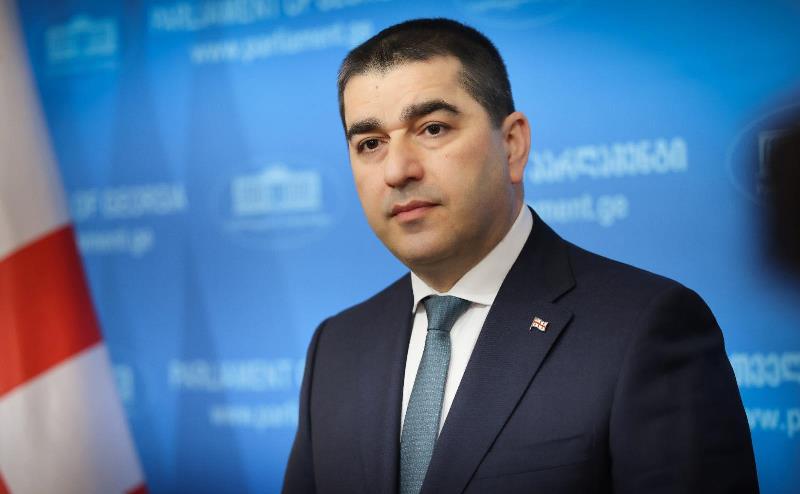
Worked for a German organization for 17 years
One of the most striking points in Shalva Papuashvili's biography is his long-term activity in the German Society for International Cooperation (GIZ).
Since 2003, he has worked in the legal programs of this organization in Georgia. He first held positions as a legal expert, then as a team leader, and deputy program manager. From 2017-2020, he led the GIZ team for Georgia.
During this period, his work focused on legal reforms, the development of the legal system, and cooperation in the South Caucasus.
Sh. Papuashvili also engaged in academic activities. Since 2012, he has lectured at various universities and worked as an associate professor at the Faculty of Law at Caucasus University and Ilia State University.
He is the co-author of several scientific publications in the field of law. These include a 545-page German-Georgian-German legal dictionary published in 2014.
Entered politics at the age of 44
Shalva Papuashvili's political career began after many years of academic and international activity.
In 2020, he was elected a member of parliament on the list of the ruling "Georgian Dream - Democratic Georgia" party. He first worked in the Education, Science, and Culture Committee, and then became the chairman of the Education and Science Committee.
In March 2021, he was appointed secretary for public relations of the ruling party.
On December 29 of the same year, he was elected Speaker of the Georgian Parliament. Papuashvili, who rose to the leadership of the parliament at the age of 45, was supported by 88 deputies, with 1 deputy voting against.
Shalva Papuashvili retained this position after the 2024 parliamentary elections.
Lands inherited from his grandfather
One of the topics that attracted attention in the Georgian media regarding Shalva Papuashvili's personal life and property is his lands in Sighnaghi municipality.
Investigations regarding the lands inherited from his grandfather were published in the media in 2023-2024. The striking aspect of the issue was the formalization of some land plots for one lari.
On January 31, 2026, Papuashvili made a statement regarding this issue, denying the claims.
The Speaker of Parliament stated that it was not about the state selling him land for one lari. According to him, the lands were inherited from his grandfather, and a symbolic amount was used during the legal formalization of the property they used together with his cousin.
Sh. Papuashvili stated that his grandfather died in 2003, and the lands were inherited by him and his cousin. According to the Speaker, the family had been engaged in farming on those lands for a long time, cultivating crops and growing grapes to make wine.
The politician said that before coming to parliament, he wanted to officially declare his property and regularize the legal situation.
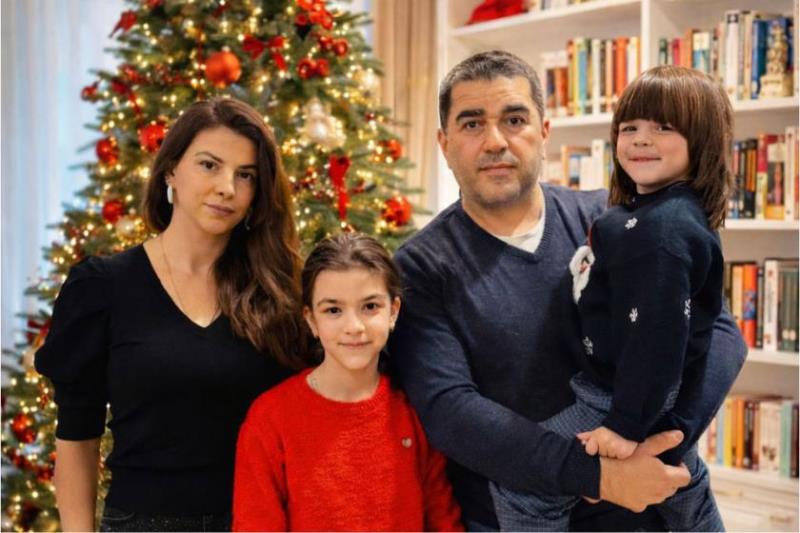
Shalva Papuashvili's wife is Gvantsa Sutidze. The couple married in 2012. They have two children named Yelena and Aleksandr.
Gvantsa Sutidze works at Tbilisi State University. Interesting details about Papuashvili's family life were included in the information disseminated by the Georgian media.
Relations with Georgian Azerbaijanis
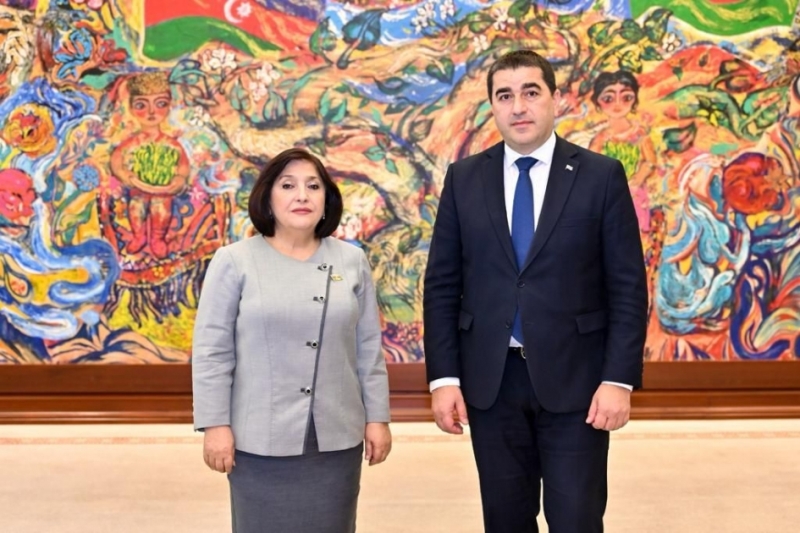
The country led by Shalva Papuashvili has a multinational population. Azerbaijanis living in Georgia constitute the largest ethnic minority in the country by number.
According to the results of the 2014 census, more than 233,000 Azerbaijanis lived in Georgia. The majority of them are settled in the Kvemo Kartli region, especially in Marneuli, Bolnisi, Dmanisi, and Gardabani districts.
Papuashvili is also one of the visible political figures in relations with the Azerbaijani community.
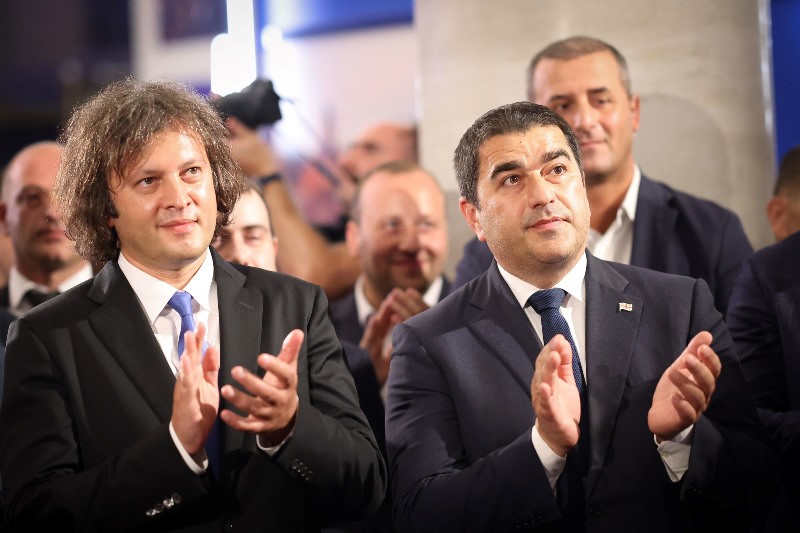
On March 21, 2025, the Speaker of the Georgian Parliament celebrated Novruz in Marneuli. Georgian Prime Minister Irakli Kobakhidze and President Mikheil Kavelaishvili also attended the event.
In his speech, Sh. Papuashvili emphasized the special importance of Novruz in the multinational Georgian society, characterizing it as a holiday that strengthens unity among different peoples and religions.
Regarding interstate relations with Azerbaijan, Papuashvili has repeatedly made statements about the development of these relations.
Controversial position in relations with the West
One of the most discussed issues in Shalva Papuashvili's political activity is Georgia's relations with the West and the confrontation arising around the foreign influence law.
In 2024, a bill on organizations funded from abroad caused widespread protests in Georgia. Critics likened the document to Russia's foreign agents legislation, calling it the "Russian law." The authorities, however, stated that the law aimed to ensure transparency.
After the bill was adopted in parliament, President Salome Zurabishvili vetoed it. However, the parliament overrode the veto, and on June 3, 2024, Papuashvili signed the law.
This decision created serious tension in Georgia's relations with the European Union. The European Union, the United States, and Great Britain were among the parties criticizing the law.
Interestingly, Papuashvili, who studied in Germany and worked for many years in a German international cooperation agency, later came to the agenda with his statements that Western states and international organizations interfered in Georgia's internal affairs.
In March 2025, he accused international organizations and a number of Western diplomats of interfering in Georgia's political and judicial processes.
This position of the government is criticized by the opposition and Western partners. The Georgian government, however, cites the protection of the country's sovereignty and national interests.
His visit to China also attracted attention
The direction of China also holds a special place in Sh. Papuashvili's foreign policy activities in recent years.
On May 18, 2026, he met with the head of the Chinese parliament, Zhao Leji. According to the Georgian parliament, this was the first visit of a Georgian parliament speaker to China in the last 20 years.
During the meeting, trade, economy, tourism, modern technologies, education, and transport corridors were discussed. Papuashvili particularly emphasized the importance of the Middle Corridor.
A. Gorkhmaz