There are politicians who manage to retain their positions even as governments change, wars begin and end, and political alliances crumble in their countries. Nabih Berri, the Speaker of the Lebanese Parliament, is one such political figure. He has been the head of parliament since 1992. For 34 years, N. Berri has become one of the most influential figures in Lebanon's political system.
Modern.az website presents the next article in the “Speakers” section.
There are many remarkable points in his life. Nabih Berri remains an important figure in Lebanon's domestic politics, its relations with Israel, and regional diplomatic contacts today. But what events lie behind his political career? How did a lawyer born in Africa become the unchanging face of Lebanese politics for decades?
Lebanese politician born in Africa
Nabih Mustafa Berri was born in 1938 in Freetown, the capital of Sierra Leone, West Africa. His family is originally from the village of Tibnin in southern Lebanon. His father was involved in trade, and the family had moved to Africa in search of better economic opportunities.
The family later returned to Lebanon. After completing his primary and secondary education in Lebanon, Nabih Berri studied at the Faculty of Law and Political Sciences of the Lebanese University in Beirut, the capital.
According to his official biography, N. Berri graduated from university as a lawyer in 1963. He then continued his higher education in law at the Sorbonne University in Paris. He was admitted to the Beirut Bar Association and began working in the office of lawyer Abdullah Lahoud.
Berri's political activity began during his student years. He participated in the organization of university students and led the National Union of Lebanese University Students. During that period, N. Berri, who participated in various political conferences, gradually began to gain recognition in the country's public and political life.
However, the main factor that brought him into Lebanon's political elite was not his legal activity, but the struggle for the political representation of the Shiite community in the country and the movement of Musa al-Sadr, who stood at the forefront of this struggle.
The disappearance of Musa al-Sadr and Berri's rise
To understand Nabih Berri's political career, it is necessary to consider Lebanon's religious and political structure. Various religious communities in the country have historically participated in the division of power. However, Shiite Muslims long felt that they were not adequately represented politically and socially.
In this situation, Musa al-Sadr, one of the prominent religious leaders of Lebanon's Shiite community, came to the fore. He fought for the protection of Shiite rights, the improvement of their social situation, and more active participation in political processes. Those who gathered around Musa al-Sadr later laid the groundwork for the creation of the “Amal” movement.
Nabih Berri also joined this political circle. He dealt with various organizational, political, and informational issues in the movement led by Musa al-Sadr. This connection played a decisive role in his future career.
In 1975, the civil war began in Lebanon. The confrontation between religious and political groups plunged the country into a long-term crisis. In the early years of the war, Shiite political movements also strengthened their organizational and military structures.
In 1978, Musa al-Sadr disappeared during a visit to Tripoli, Libya. His fate has not yet been fully clarified. The “Amal” movement and its supporters held Muammar Gaddafi, the then leader of Libya, responsible for al-Sadr's disappearance.
Musa al-Sadr's disappearance brought the issue of leadership within the movement to the agenda. In 1980, Nabih Berri was elected leader of the “Amal” movement and has remained the organization's leader ever since.
He was not just a politician in the civil war
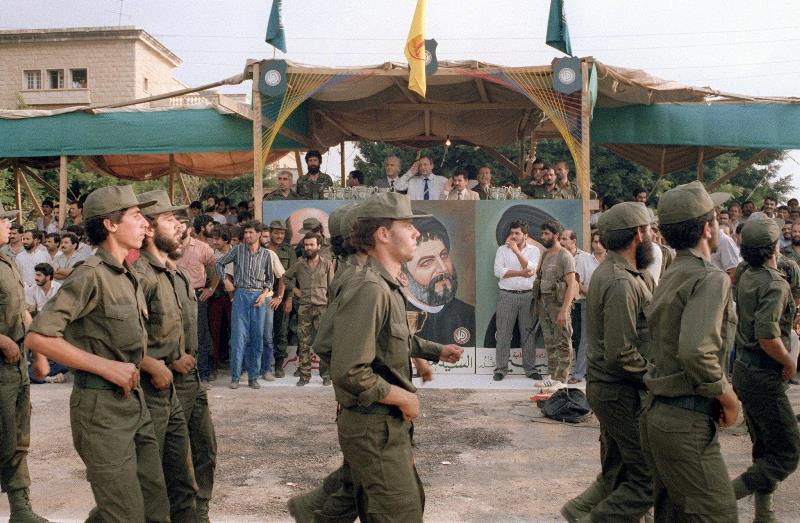
Nabih Berri was one of the active participants in the Lebanese civil war, which lasted from 1975 to 1990.
The “Amal” movement had become one of the main political and armed forces of the Shiite community in Lebanon during that period. The movement opposed Israel's military presence in southern Lebanon, and at the same time fought against other political and armed groups in the country.
In 1984, Nabih Berri and the forces he led participated in the armed uprising against the government of Lebanese President Amin Gemayel. During that period, forces opposing the political course supported by the US and Israel were strengthening their positions in Beirut. Berri participated in these processes not only with political statements but also through the armed organization he led.
However, “Amal”'s activities during the war were not limited to fighting against Israel. The movement's relations with Palestinian organizations are also remembered for bloody confrontations.
From 1985 to 1988, armed clashes known as the “War of the Camps” took place in Lebanon. “Amal” fighters participated in attacks on and sieges of Palestinian refugee camps around Beirut. During the clashes, many people were killed, wounded, and forced to leave their homes.
These events are among the controversial aspects of Nabih Berri's biography. While his supporters emphasize his struggle against Israeli intervention, “Amal”'s operations against Palestinian refugee camps should also be considered as a historical fact.
Research on Lebanese conflicts shows that behind these confrontations lay not only local rivalry but also the interests of Syrian, Iranian, and Palestinian political forces. Syria supported “Amal,” while Iran had established close relations with “Hezbollah,” another important force in Lebanon's Shiite political camp.
Nabih Berri was, on the one hand, the leader of the resistance movement against Israel, and on the other hand, a political leader who fought with other armed groups in Lebanon's internal war.
Hijacked plane, hostages, and Berri's contradictory role
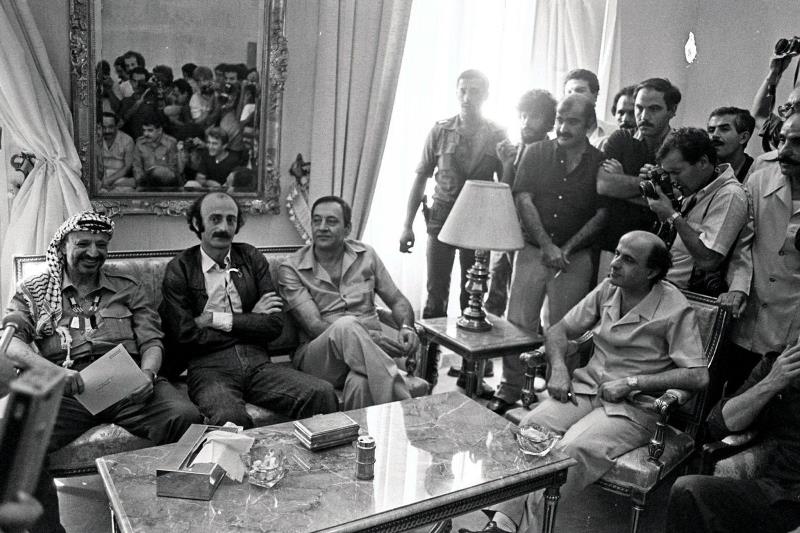
One of the most striking events that brought Nabih Berri's name to international attention was the hijacking of TWA Flight 847 in June 1985.
On June 14, 1985, a TWA airliner flying from Athens to Rome was seized by armed individuals. There were 153 passengers and crew members on board. The hijackers forced the plane to fly repeatedly between Beirut and Algiers. The incident lasted 17 days.
According to the US Federal Bureau of Investigation, the hijackers demanded the release of hundreds of Lebanese held in Israeli prisons. Among the hostages was US Navy diver Robert Stethem. He was beaten to death and his p was thrown onto the runway of Beirut airport.
At that time, Nabih Berri, the leader of the “Amal” movement, became one of the main participants in the crisis.
According to “The Washington Post,” Nabih Berri said he ordered the removal of the hostages from the plane. He stated that he feared bloodshed during the rescue operation. At the same time, Berri supported the demands of the armed individuals, linking the release of Shiites held in Israeli prisons with the release of the hostages.
During that period, N. Berri openly stated that he was a party to the decisions regarding the release of the hostages.
As a result of the incident, diplomatic processes related to the release of the hostages led to Nabih Berri's international recognition. However, that crisis remains one of the most contradictory episodes of his political activity: Berri played a role in negotiations and also defended the demands of the armed group holding the hostages.
From ministry to leadership of parliament
During the war years, Nabih Berri gradually began to hold positions in state administration. In 1984, he served as minister for justice, water resources, and electricity in the government led by Rashid Karami. During that period, issues related to the reconstruction and rebuilding of southern Lebanon were also within his scope of activity.
In 1989, he held positions in water resources, housing, and cooperatives in the government led by Salim Hoss. From 1990 to 1992, he served as minister of state. In 1992, he held a state position in southern affairs and reconstruction.
N. Berri's transition to state administration coincided with the period when Lebanon was trying to emerge from the civil war. The Taif Agreement signed in 1989 became one of the main frameworks for restructuring the country's political system and ending the war.
In 1992, the first post-war parliamentary elections were held. On October 20, Nabih Berri was elected Speaker of Parliament. Thus, the politician, once known as the leader of an armed movement, began to lead one of the country's main state institutions.
Nabih Berri was also elected Speaker of Parliament in 1996, 2000, 2005, 2009, 2018, and 2022. In 2022, he was elected to this position for the seventh time, entering Lebanese political history as one of the long-serving leaders.
His long tenure in office is not only explained by election results. In Lebanon's political system, the speakership of parliament is considered the highest state position reserved for the Shiite Muslim community. Berri has maintained this position thanks to his leadership of the “Amal” movement, his political support in parliament, and his relations with various forces.
The special place of the speaker in Lebanon's political system
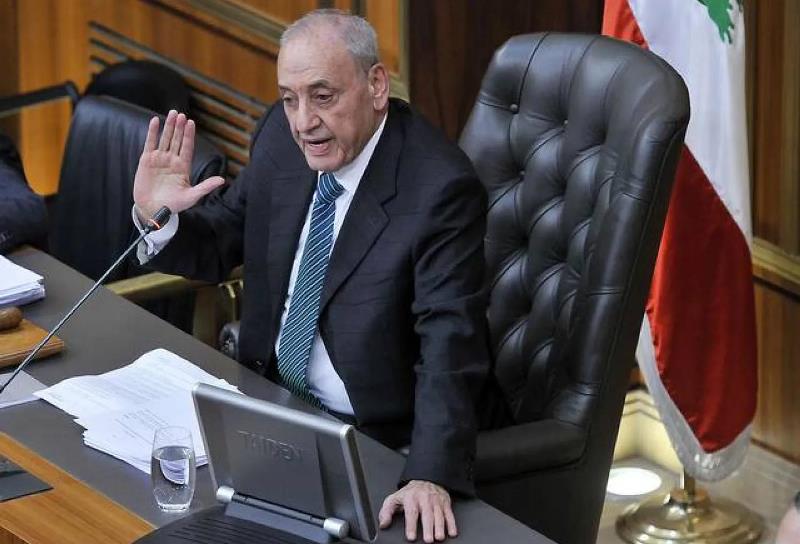
To understand Nabih Berri's longevity, it is also necessary to consider the uniqueness of Lebanon's political system.
Lebanon is a multi-confessional state. The main political positions in the country are traditionally divided among religious communities: the president is a Maronite Christian, the prime minister is a Sunni Muslim, and the speaker of parliament is a Shiite Muslim.
This division aims to ensure the representation of the country's various religious communities in state administration. However, the system can complicate political decision-making and create conditions for long-term confrontations between parties and religious communities.
The 1989 Taif Agreement played an important role in readjusting the division of power after the civil war. This agreement resulted in the transfer of some of the president's powers to the Council of Ministers and the renewal of the sectarian balance in the political system.
Nabih Berri became one of the most influential participants in that system. The “Amal” movement he led held an important place in the political representation of the Shiite community. As Speaker of Parliament, Berri not only led the legislative process but also played a role in the formation of governments, presidential elections, and negotiations on political agreements.
Berri's supporters emphasize his experience and political dialogue capabilities. His critics, however, state that the long-term rule of the same political elite has contributed to the deepening of the country's governance problems.
This debate intensified particularly during the mass protests that began in Lebanon in 2019. Protesters opposed corruption, the political system based on sectarianism, and problems in state administration. Berri, along with other long-serving political leaders, was one of the targets of the protesters' criticism.
First enemy, then ally with “Hezbollah”

One of the most interesting points in Nabih Berri's political biography is the change in relations between the “Amal” movement and “Hezbollah.”
Today, both organizations are considered key forces in Lebanon's Shiite political camp and support each other on a number of issues. However, their relations have not always been like this.
In the 1980s, armed clashes occurred between “Amal” and “Hezbollah.” Both organizations claimed to represent the Shiite community, but their foreign allies, political approaches, and positions on armed activity differed.
Syria supported the “Amal” movement, while Iran played an important role in the formation and strengthening of “Hezbollah.” For this reason, the Shiite political camp in Lebanon was also affected by regional rivalry.
In later years, relations changed. “Amal” and “Hezbollah” moved to political cooperation and began to take a common stance on a number of issues in parliament. Berri, thanks to his close relations with “Hezbollah,” also acted as one of the important mediators in Lebanon's internal political processes and regional diplomacy.
While this closeness is one of the main pillars of his political position, critics consider Berri's political support for the maintenance of “Hezbollah”'s armed structure controversial.
In 2024, Nabih Berri was presented as one of the main mediators in the negotiations between “Hezbollah” and the US to achieve a ceasefire with Israel.
He has 10 children, but the issue of political succession remains open
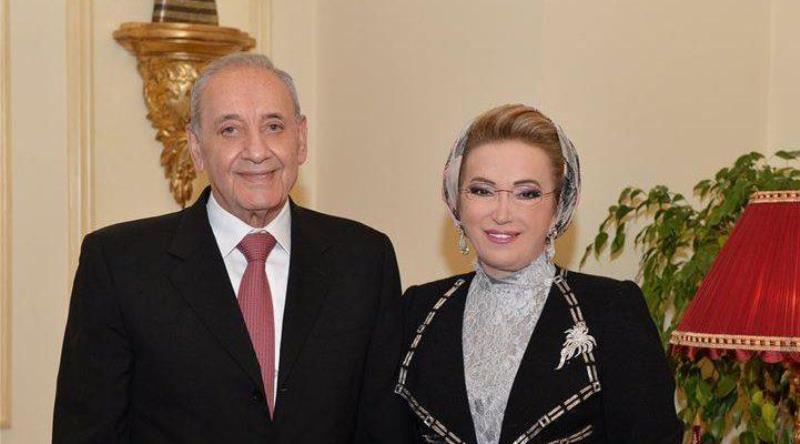
In Lebanese politics, it is a widespread tradition for family members of political leaders to also assume state positions and party leadership. One of the striking points about Nabih Berri's personal life is his large family.
Nabih Berri is reported to have a total of 10 children. He divorced his first wife, Leila, and his second wife, Randa, is one of the publicly known figures.
It is emphasized that Nabih Berri has not designated any of his children as his political successor. This detail is interesting in terms of family and political succession relations in Lebanese politics.
Berri has led the “Amal” movement since 1980. After his long-term leadership, the question of who will be entrusted with the future leadership of the organization is of interest to political observers.
Criticism directed at Berri amid the economic crisis
Another controversial aspect of Nabih Berri's political career is his and the political camp he leads' role in the context of Lebanon's long-term economic crisis.
Lebanon has been facing a severe financial and economic crisis since 2019. The depreciation of the national currency, problems in the banking system, public debt, and the social situation have caused widespread dissatisfaction in the country.
Foreign media outlets specifically emphasize Berri's ability to influence financial policy. His close political ally, Ali Hassan Khalil, served as finance minister from 2014 to 2020. According to Reuters, Berri also had significant influence in the selection of individuals who took over the finance minister position after that period.
However, experts link the country's problems to financial policies, state administration, political rivalry, and regional conflicts that have formed over many years.
Still on the agenda in 2026
Nabih Berri's political activity continues in 2026. The Lebanese parliament postponed the elections planned for May of this year for two years, thereby extending the parliament's term of office. The decision was approved with the support of 76 out of 128 deputies.
The postponement of the elections occurred against the backdrop of the renewed conflict between Israel and “Hezbollah” and the security situation in the country.
A.Gorkhmaz