Rustam Emomali, the chairman of the upper house of the Tajik parliament, is one of the most prominent figures in the country's political elite. The 38-year-old politician, who is the eldest son of President Emomali Rahmon, is also the mayor of the capital Dushanbe. He was appointed head of the country's capital at just 29 years old, and at 32, he became the chairman of the upper house of parliament. This rapid rise has fueled discussions about his preparation as his father's political heir.
It should be noted that Tajikistan's parliament, called the Supreme Assembly, consists of two chambers, each with its own chairman: Rustam Emomali is the chairman of the upper house - the National Assembly, and Fayzali Idizoda is the chairman of the lower house - the Assembly of Representatives.
Modern.az presents the next article in its "Speakers" column.
Grew up in the presidential family
Rustam Emomali was born on December 19, 1987, in Tajikistan. He is the eldest son of President Emomali Rahmon, who has led the country since 1992. The President has 7 daughters and 2 sons. Rustam is the eldest son of the family.
His childhood and adolescence coincided with a complex political period in Tajikistan. The country experienced a civil war from 1992-1997. This war claimed thousands of lives and displaced hundreds of thousands of people from their homes. Emomali Rahmon came to power during that war and became the main figure of the political system in the country in subsequent years.
The family in which Rustam grew up gradually became one of the most influential families in the country, both politically and economically. The President's children, sons-in-law, and other close relatives have obtained important positions in state administration, diplomatic service, the banking sector, and large business structures.
Three higher educations, three different directions
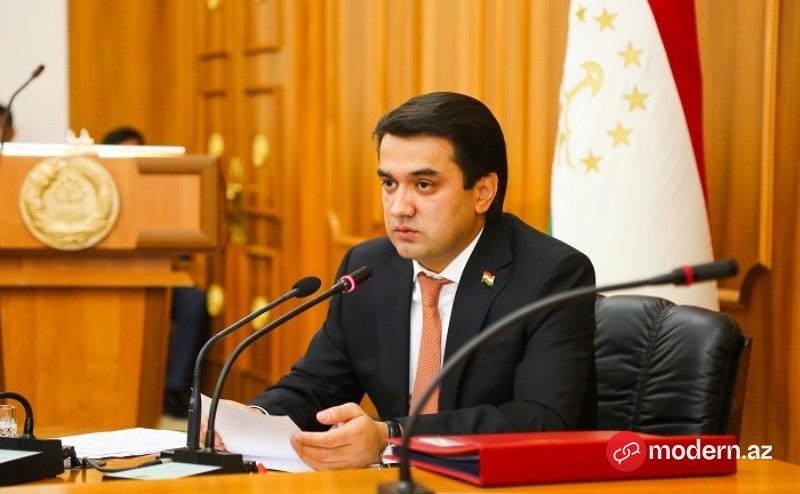
Rustam Emomali's education and professional training cover the fields of economics, public administration, and law.
According to his official biography in the Dushanbe city administration of Tajikistan, he graduated from the Tajik National University in 2006 with a degree in world economics.
In 2011, he also obtained a higher education in state and local administration at the Academy of Public Administration under the President of the Russian Federation.
In 2014, he graduated from the Academy of the Ministry of Internal Affairs of Tajikistan with a degree in law.
An interesting point is that his career in public service began in parallel with the first stage of his higher education. Thus, in 2006, at approximately 19 years old, Rustam began working as a chief specialist in the Department of Cooperation with the World Trade Organization of the Ministry of Economic Development and Trade.
In 2009, he was appointed acting head, and later head, of the Department for Entrepreneurship Support at the State Committee for Investments and State Property Management.
The next direction in his career was the customs system.
Became head of customs service at 25
Rustam Emomali's rise in state structures has been quite rapid.
In 2011, he was appointed head of the Department for Combating Customs Violations in the Customs Service of Tajikistan. In 2012, he became deputy head of the service, and in 2013, he became head of the institution.
Thus, at the age of 25, he began to lead the country's Customs Service.
This appointment was not only an important stage in his career but also indicated the increasing role of the president's son in the state's economic and financial structures.
In 2015, Rustam Emomali was appointed director of the State Agency for Financial Control and Combating Corruption. He served in this position until 2017.
An interesting paradox arose: the person leading the fight against corruption in the country was the president's son and himself a member of the ruling family who was rapidly rising in state structures.
His appointment did not go unnoticed by international media and observers.
Footballer, club owner and Major General
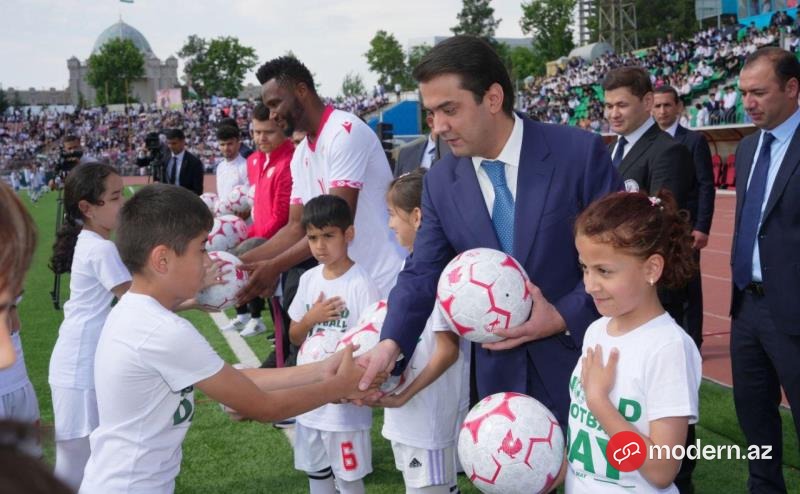
Rustam Emomali's dossier also contains an interesting direction outside of politics: football.
In his youth, he played as a forward for the "Istiqlol" football club. He was also one of the founders and owners of this club.
In 2010, he was appointed vice-president of the Tajikistan Football Federation. In 2012, he was elected president of the federation. On December 14, 2024, he was re-elected to this position for a four-year term. Thus, he will remain the head of the country's football until 2028.
One of the most discussed events related to Rustam's football activities occurred in 2012.
At that time, after a match between his club "Istiqlol" and the rival team "Ravshan", the Disciplinary Committee of the Football Federation punished several players of "Ravshan". The decision caused dissatisfaction among fans and players. Some critics viewed this as punishment for the team that opposed the president's son's club.
Safarali Karimov, the captain of "Ravshan", also stated that the decision was biased.
Rustam Emomali's military rank also attracts attention. He received the rank of Major General in November 2013. This event was particularly discussed because questions arose about his reaching a high rank without traditional military service and an officer's career.
Became mayor of the capital at 29
On January 12, 2017, President Emomali Rahmon appointed his son mayor of Dushanbe, the capital of Tajikistan.
At that time, Rustam was 29 years old.
He replaced Mahmadsaid Ubaydulloyev, who had led the city since 1996, in this position. Ubaydulloyev was considered one of Tajikistan's most influential statesmen for many years.
After Rustam's appointment, changes were made in the Dushanbe administration, and the mayor's deputies and heads of city districts were dismissed from their positions.
The new mayor faced the tasks of changing the capital's appearance, expanding infrastructure projects, and updating the city's administration.
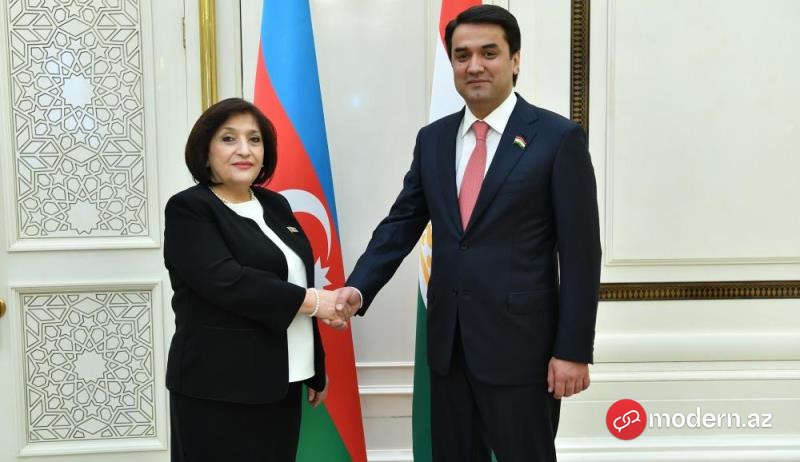
During his leadership, new roads, parks, administrative buildings, and public spaces were created in Dushanbe. A new Master Plan for the city's development was adopted.
However, not all decisions were met with unanimous approval. For example, the decision to gradually eliminate approximately 20,000 marshrutka taxis in the city and replace them with buses caused dissatisfaction. In 2018, a driver injuring himself in front of the mayor's office building was recorded as one of the dramatic manifestations of this dissatisfaction.
The demolition of historical buildings and the cutting down of trees in city boulevards were also criticized.
Nevertheless, Rustam's supporters state that he contributed to the modernization of the city, the creation of new public spaces, and the support of initiatives for young people.
Chairman of Parliament at 32 – the second step of power
On April 17, 2020, Rustam Emomali was elected chairman of the National Assembly (Majlisi Milli), the upper house of the Tajik parliament.
This position is considered the most important stage in his political career.
The Parliament of Tajikistan consists of two chambers. The National Assembly is the upper house, and the Assembly of Representatives is the lower house. Rustam Emomali leads the upper house.
He was re-elected chairman of the National Assembly on April 11, 2025.
The importance of this post is not limited to parliamentary leadership. According to the Constitution of Tajikistan, if the president is unable to perform his duties or resigns, the chairman of the National Assembly temporarily exercises the powers of the head of state.
This means that Rustam Emomali holds one of the most important constitutional positions in the country after the president.
Is he being prepared as his father's political heir?
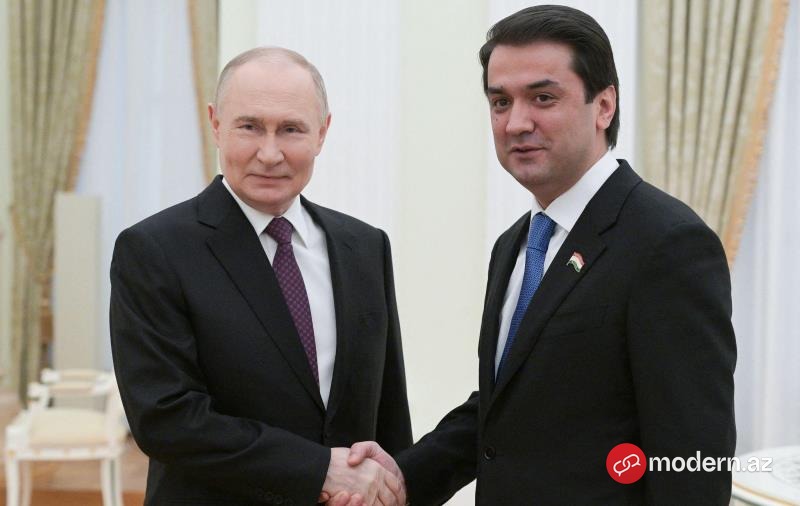
Rustam Emomali's name has been at the center of discussions about possible power succession in Tajikistan for many years.
Emomali Rahmon has led the country since 1992. With a constitutional referendum held in 2016, the age limit for presidential candidates was reduced from 35 to 30. This change created a legal opportunity for Rustam, who was 29 at the time, to participate in future presidential elections.
Since then, his rapid rise in state structures, his appointment to lead the capital, and then his election as chairman of the upper house of parliament have been evaluated as part of a succession plan.
In 2020, Rustam's election to lead the upper house of parliament further strengthened these assumptions.
In international analyses, he is considered his father's most realistic heir. At the same time, according to some reports, there are disagreements within the presidential family regarding the transfer of power.
Rustam Emomali's meeting with Uzbek President Shavkat Mirziyoyev on November 4, 2026, also attracted attention. He led a Tajik delegation on an official visit to Tashkent. After the meeting, Mirziyoyev awarded him Uzbekistan's "For Dedicated Services" order.
This visit shows that he is now playing a more visible role not only in domestic politics but also in regional diplomatic contacts.
His sister Ozoda Rahmon – another powerful political figure in the family
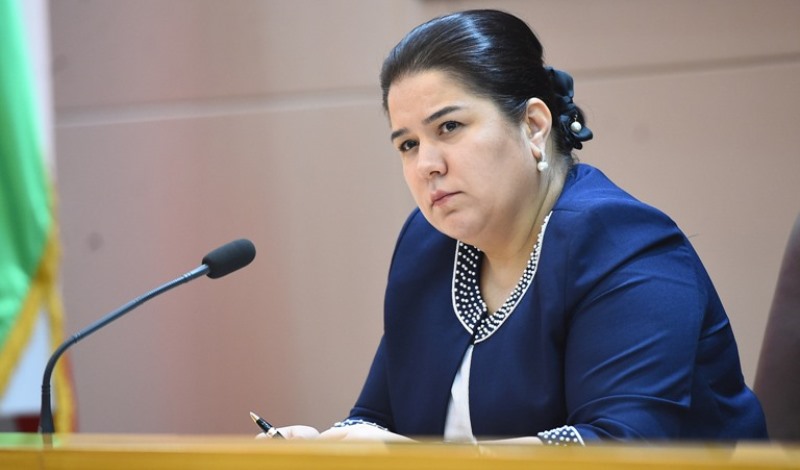
In discussions about Rustam Emomali's possible succession, his sister Ozoda Rahmon's name should also be specifically mentioned.
Ozoda Rahmon has held the position of Head of the Presidential Administration since January 2016. Prior to this, she worked in the Ministry of Foreign Affairs, serving as Deputy Minister and First Deputy Minister.
Ozoda holds an important position in the country's political elite. Her role in state administration is not limited to protocol and administrative activities. In the assessments of Freedom House and Carnegie analysts, her influence on high-level personnel appointments and power structures is particularly emphasized.
Ozoda's husband, Jamoliddin Nuraliyev, is also considered one of the country's influential figures. He served as Deputy Chairman of the National Bank of Tajikistan from 2015-2022.
In Carnegie Foundation's analysis, Ozoda Rahmon is presented as one of Rustam's main rivals in the issue of possible power succession. It is noted that she has also gained trust in security structures.
This makes discussions about possible competition for power within the Tajik presidential family even more interesting.
The economic empire of the presidential family
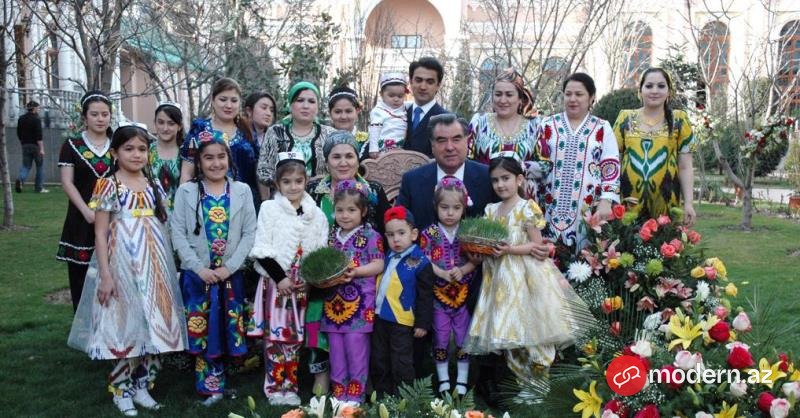
To understand Rustam Emomali's political rise, it is also necessary to look at the economic influence of Emomali Rahmon's family.
The significant positions held by the president's close relatives in Tajikistan's political and economic life have been repeatedly noted in international studies.
The president's brother-in-law, Hasan Asadullozoda, is known as an influential businessman who controls business structures associated with "Orienbank", one of the country's largest banks, and the airline "Somon Air". He also has business interests related to the TALCO aluminum plant, one of the country's main industrial enterprises.
The business interests of the president's other son-in-law, Shamsullo Sohibov, cover transport, trade, media, banking, and other sectors. He is married to the president's daughter, Ruhshona Rahmon. Ruhshona Rahmon has worked in diplomatic service and served as Tajikistan's ambassador to Great Britain.
The president's other daughter, Parvina Rahmon, is reported to have businesses in the pharmaceutical sector. Her companies are noted to have grown with state support and state orders.
According to investigations, the president's daughter Parvina Rahmon and her husband Ashrafjon Gulov also own expensive properties in foreign countries.
Freedom House characterizes Tajikistan as a country where the presidential family has extensive influence in political and economic spheres. The organization's 2024 report emphasizes that family ties play an important role in state and business structures.
Is his name mentioned in scandals?
Rustam Emomali's name is mentioned in several incidents. According to international organizations' claims, Rustam shot and wounded his uncle Hasan Asadullozoda in 2008, and Saimumin Yatimov, the head of the State Committee for National Security of Tajikistan, in 2022.
However, these claims have not been confirmed by an independent court decision or official investigation results.
Rustam Emomali's public image is ambiguous.
The president's son's limited public appearances and speeches have raised questions about his image.
Carnegie's 2023 analysis noted that his speeches were broadcast in pre-recorded form, and in television reports, the presenter often provided information on his behalf. It was also reported that he was given the nickname "Great Mute" on social networks.
Will he be the future president of Tajikistan?
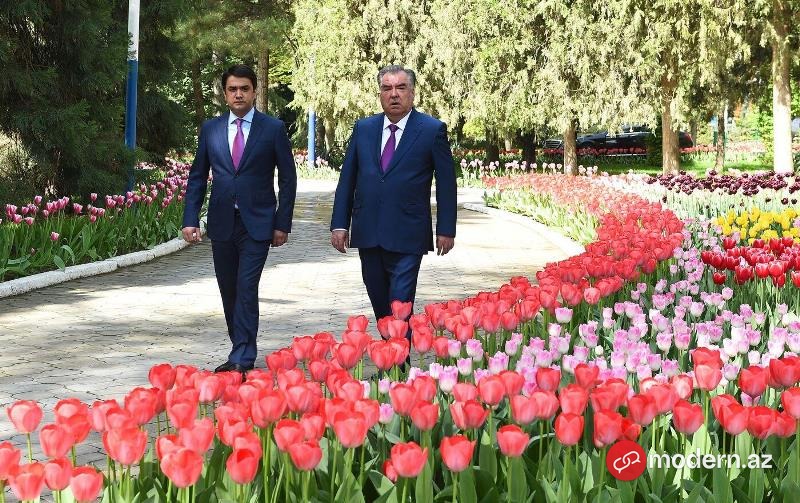
Rustam Emomali married on June 28, 2009, at the age of 21. According to reports, he married Fatima Davlatova, the niece of Mustafa Davlatov, who was one of Tajikistan's influential businessmen, the founder and former head of the country's largest confectionery factory "Shirin". Fatima Davlatova's father is reportedly the current owner of the "Shirin" factory.
The couple has two sons (Anushirvan and Emomali) and one daughter.
There is no information about what the Speaker's wife, Fatima Davlatova, does, and it is said that she does not appear in public.
Currently, Rustam Emomali is the most frequently mentioned person as a possible successor to power in Tajikistan. His positions as mayor of the capital, chairman of the upper house of parliament, and head of the Football Federation indicate his broad position in the country's political, administrative, and public structures.
However, he faces several serious issues.
Firstly, managing the political system that his father has shaped over many years. Secondly, reconciling interests within the presidential family. Thirdly, the support of security and military structures. Fourthly, gaining independent political influence among the people.
The final stage of the political path prepared by Emomali Rahmon for his son has not yet been completed. Whether Rustam will reach the highest post in the state remains one of the most important political questions in Tajikistan's near future.
A.Gorkhmaz