For centuries, the Caspian Sea has played an important role in people's lives with both its wealth and its dangers. Countless events, shipwrecks, storms, and tragedies have occurred in its waters. Oil Rocks, which holds a special place in the development of the Azerbaijani oil industry, also witnessed one of the difficult pages of this history. A powerful hurricane in November 1957 changed the lives of dozens of families and ended the lives of 21 oil workers.
Modern.az recalls that this tragedy remained in memory as one of the most severe events in the history of Oil Rocks. On the night of November 20-21, 1957, the wind speed in the Caspian Sea reached 44 meters per second, and the wave height reached 13 meters. The strong storm in the sea caused serious damage to the oil extraction facilities.
The tragedy occurred in the area where drilling operations were carried out in the "Palçıq Pilpiləsi" field. Under the influence of strong waves, the offshore platform collapsed, and the oil workers working on it fell into the waters of the Caspian Sea. Although screams and calls for help were heard from where they drowned until morning, it was not possible to help them due to the technical capabilities of that period. As a result of the incident, 21 members of two drilling brigades led by Mikhail Kaveroçkin and Süleyman Bağırov died.
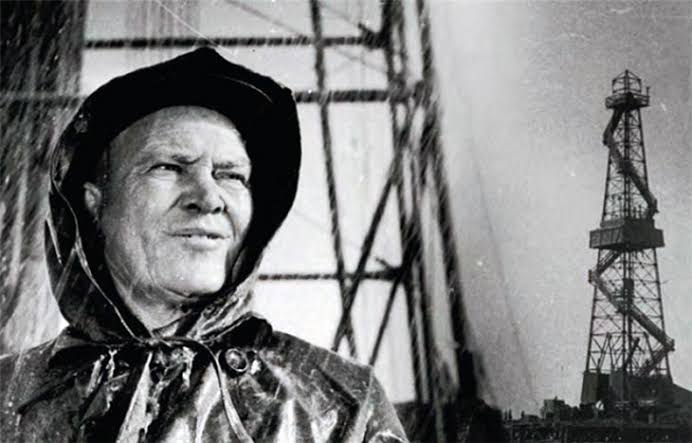
Among the deceased was drilling master Mikhail Pavlovich Kaveroçkin, who had worked here since the early years of Oil Rocks and played an important role in the development of the field. He was one of the specialists who participated in the drilling of the first exploration well of Oil Rocks.
Bakhtiyar Mammadov, who was a witness to the 1957 incident and was substituting for the mine manager at Oil Rocks at that time, later shared some details of the tragic night in his memoirs. According to him, on the evening of November 20, around 9 p.m., Bahman Hajiyev, the chief engineer of the "Gürgənneft" Oil Fields Trust, contacted him by phone, warned him about strong winds, and instructed him to check the situation in the mine area.
That night, the weather conditions rapidly deteriorated. The strength of the wind and waves paralyzed the operations of the offshore facilities. The collapse of the offshore platform and strong waves made rescue operations extremely difficult.
The storm not only caused human casualties. The infrastructure of Oil Rocks also suffered serious damage. A number of trestles, trestle-side platforms, and communication lines were destroyed. After the incident, the issue of the safety of offshore facilities, especially their resistance to extreme weather conditions, began to be considered more seriously. The memory of the victims of the tragedy was kept alive in subsequent years. In 1999, on the eve of the 50th anniversary of Oil Rocks, a monument was erected in memory of the deceased oil workers. In 2009, a new memorial complex was created in the area.
Every year on November 21, the victims of the 1957 tragedy are commemorated in Oil Rocks. During the memorial ceremonies, 21 bouquets of flowers are released into the sea. This tradition is an expression of respect for the memory of the oil workers who lost their lives on that stormy night.
Today, the Caspian Sea is still one of the main witnesses of Azerbaijan's energy history. Oil Rocks, more than an industrial city built in its bosom, reminds us of the labor, dedication, and sometimes heavy losses of the people who worked to obtain this wealth.