The recent statement by Iran's Ambassador to Armenia, Khalil Shirgholami, regarding the Blue Mosque in Yerevan has once again brought Tehran's attitude towards Azerbaijan's cultural heritage to the forefront. In fact, the roots of this issue go deeper, to the most difficult periods of the Armenia-Azerbaijan conflict.
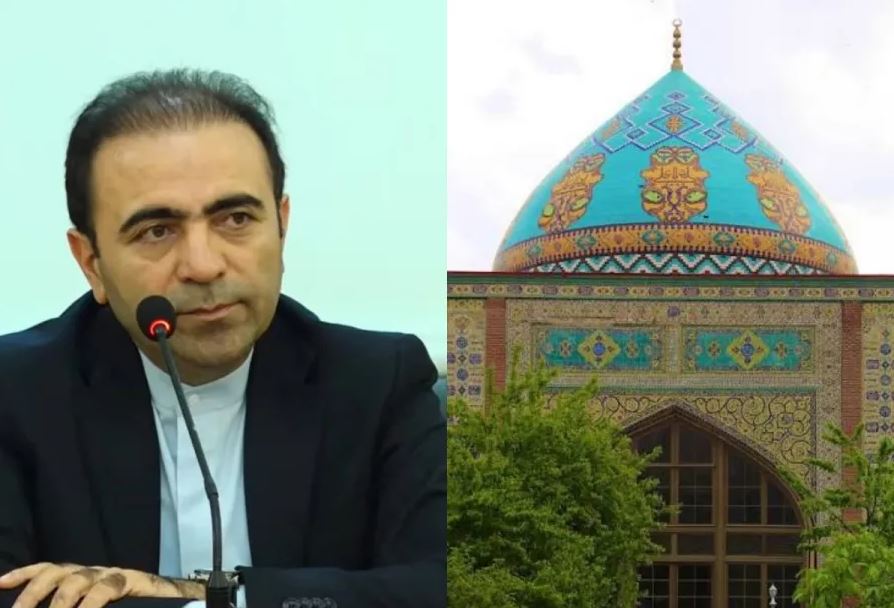
Modern.az reports that Iran's Ambassador to Armenia, Khalil Shirgholami, claimed that the Blue Mosque in Yerevan is an example of Armenian-Iranian cultural heritage and opposed its association with Azerbaijani history.
The diplomat emphasized that the architectural features of the mosque belong to Iranian culture and that the monument will remain an Armenian-Iranian heritage.
It is not enough to evaluate this statement simply as an opinion expressed by an ambassador about a historical monument. Because what is happening around the Blue Mosque is closely linked to the history of the Armenia-Azerbaijan conflict, Iran's regional policy, and how Yerevan's past is presented.
The expulsion of Azerbaijanis from Yerevan and Iran's historical opportunity
Starting from 1988, against the backdrop of the Armenia-Azerbaijan conflict, Azerbaijanis living in Armenia were forced to leave their homes en masse. According to data from the UN High Commissioner for Refugees, approximately 198,000 ethnic Azerbaijanis became refugees from Armenia between 1988 and 1991.
This was not just a demographic change. The separation of the Azerbaijani population from their native places of residence also dealt a heavy blow to their living historical memory, religious traditions, and connections with cultural heritage in those areas.
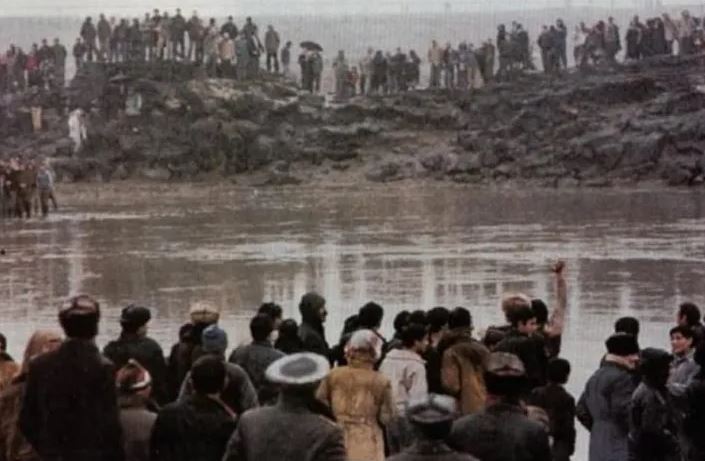
Mosques, which played an important role in the religious and social life of Azerbaijanis in Yerevan, were also affected by this process. In such circumstances, the Blue Mosque held special significance. Built in the 18th century by the Khan of Yerevan, Huseynali Khan, this monument was one of the most important architectural witnesses to the city's Muslim past. It was during this period that Iran began to establish close relations with Armenia. In 1995, an agreement was reached between Tehran and Yerevan on the restoration of the Blue Mosque. The restoration work was carried out with Iran's participation and funding, and the mosque later became "Iran's important religious and cultural activity center in Armenia."
If we look at the essence of the event, it raises serious questions about whether Iran's role in this process was limited only to restoration work.
If the goal was to preserve the historical identity of the mosque, why was its connection to the Yerevan Khanate and Azerbaijani cultural heritage not equally reflected in Iran's official presentations?
Why did the monument increasingly begin to be presented as a symbol of Iranian-Armenian cultural cooperation?
These questions indicate that Iran's participation in the restoration process also had political and ideological consequences.
What did Armenia gain from this process?
The political advantage created for Armenia by presenting the Blue Mosque as Iranian heritage deserves special attention.
Religious monuments play an important role in disputes concerning the historical presence of Azerbaijanis in the modern territory of Armenia. Because mosques are not only places of worship but also material evidence of the history of Muslim communities that lived in those areas.
 Presenting the Blue Mosque solely as Iranian cultural heritage created a favorable environment to remove its connection with Azerbaijani history from public perception. The political benefit of this approach for Armenia is clear: the existence of the mosque is not denied, but its historical identity is explained within a different framework. Thus, the monument is preserved, but the important context recalling the historical presence of Azerbaijanis in Yerevan is weakened.
This is a result consistent with Armenia's historical narrative. Because when the Blue Mosque is accepted as a purely Persian monument, its connection with the Azerbaijani Muslim population of Yerevan becomes less visible. Although there are no explicit documents confirming that Iran predetermined this outcome as a goal, it should not be overlooked that subsequent diplomatic statements reinforced precisely such a presentation.
A paradoxical situation arises: Armenia gains a superior position in the historical dispute with Azerbaijan by presenting the historical Muslim monument in its territory as Iranian heritage, while Tehran strengthens its cultural influence over this monument.
As a result, a picture emerges that suits the political and cultural interests of both sides, but the monument's connection to Azerbaijani history takes a back seat.
Did Iran restore the mosque, or did it change the presentation of its history?
At this point, it is necessary to pay attention to a fundamental issue. Restoring a historical monument does not give the right to change its origin. It is possible that the Blue Mosque was built under the influence of Iranian architectural traditions, and this influence is also noted in scientific literature. However, the architectural style does not replace the historical circumstances in which the monument was built, by whom it was built, and to whose religious life it served.
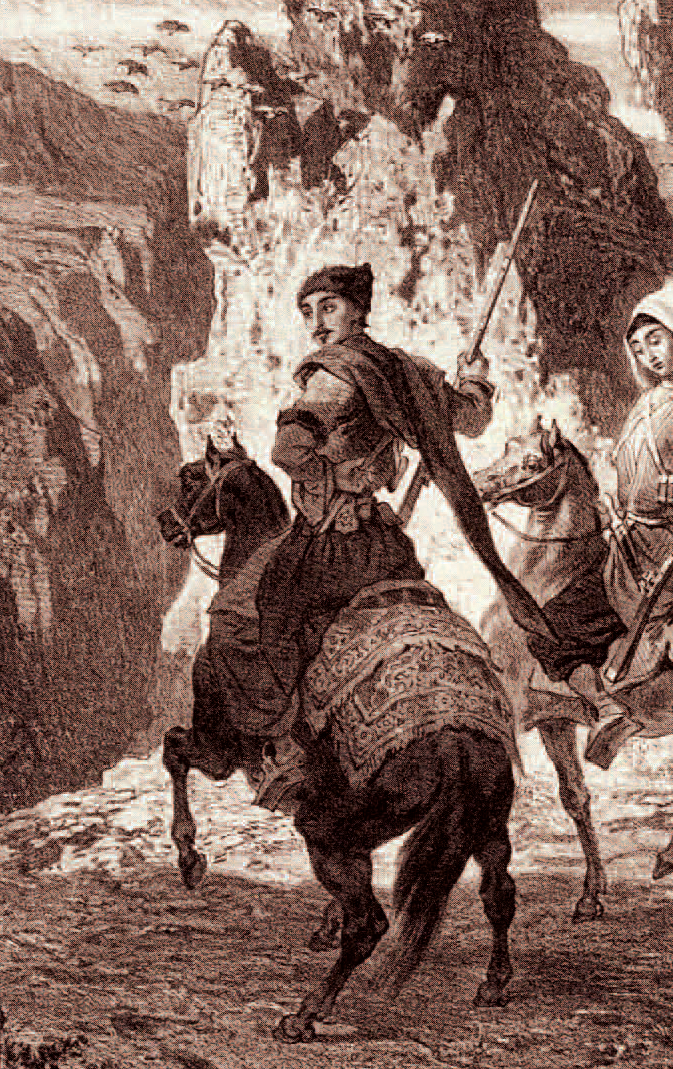
Even in official tourism sources related to the city of Yerevan in Armenia, it is stated that the Blue Mosque was built in 1766 by Huseynali Khan, the Khan of Yerevan. This means that the historical fact overlooked by Iranian diplomacy also exists in Armenia's own official sources.
If the ambassador is in favor of preserving the true history of the monument, why does he not highlight these facts in the same statement?
It is easy to present the turquoise dome, tiles, and architectural ornaments of the mosque as evidence of Iranian culture. However, making a definitive judgment about its identity without explaining the historical environment in which that structure emerged and whose place of worship it was for centuries is a one-sided approach. In this regard, the positive fact of Iran's restoration of the Blue Mosque does not eliminate the criticisms directed at its historical presentation. On the contrary, the situation that has formed after the restoration should be investigated more seriously.
What does the ambassador's current statement promise for the peace process?
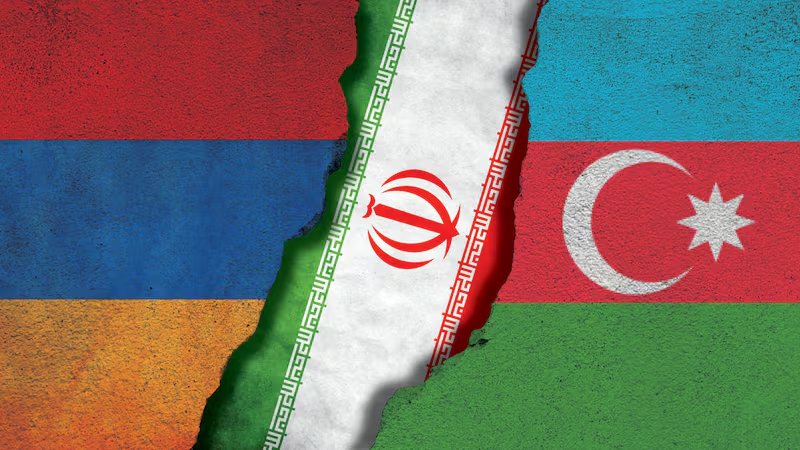
The recent events around the Blue Mosque also reveal another important point. Azerbaijan and Armenia have moved to a stage of normalization of relations after many years of war and confrontation. On August 8, 2025, the text of a peace agreement between the two countries was initialed in Washington. This process has created new opportunities for restoring mutual trust, developing regional cooperation, and resolving disputed issues through political and diplomatic means.
However, peace does not only mean the silencing of weapons at the borders.
Peace also means not deepening the wounds of the past, respecting historical memory, and not turning cultural heritage into a new means of confrontation. At such a stage, the Iranian ambassador's presentation of the Blue Mosque solely as Armenian-Iranian heritage does not give the impression of a coincidental diplomatic expression. This position could negatively affect the newly forming atmosphere of trust between Armenia and Azerbaijan.
Moreover, the naming of the ceremonial hall of the Blue Mosque after the Armenian poet Yeghishe Charents at an event organized by the cultural center of the Iranian Embassy in Armenia on November 9 also increased the sensitivity of the issue.
The State Committee for Work with Religious Organizations of Azerbaijan expressed its protest, evaluating this step as a distortion of historical and cultural identity. When Iran's participation in such an event and the ambassador's recent statements are considered together, the possible impact of Tehran's cultural diplomacy on Azerbaijan-Armenia relations emerges as a serious question.
Evidence is required to definitively state that this is a deliberate plan to disrupt peace. However, the political risk is evident. The re-transformation of a controversial historical topic into an object of confrontation can make it difficult to strengthen trust between the two countries. If Iran states that it supports regional peace, the expressions used by its diplomatic representatives in cultural heritage matters should also be consistent with this position.
It should not be forgotten: the history of Yerevan does not begin only with current political borders
Today, Yerevan is the capital of the Republic of Armenia and its internationally recognized sovereign territory. However, modern state borders do not change the city's centuries-old history and the role of various communities in that history. The history of Yerevan does not begin only with the establishment of the modern Armenian state. Azerbaijani Turks, Muslim communities, and the Yerevan Khanate had an important place in the city's history. The Blue Mosque is one of the material witnesses of that past. There is no need to confuse the dispute over the historical affiliation of this monument with modern territorial claims. On the contrary, the recognition of Azerbaijan's historical and cultural heritage and respect for Armenia's state sovereignty are not contradictory concepts. Such an approach would be more constructive for both Iran and Armenia.
Because accepting the connection of a historical monument with Azerbaijani heritage does not mean changing the political status of the territory where it is located. The deliberate or erroneous identification of these two concepts, however, can turn historical disputes into political confrontation.
What should be the future of the Blue Mosque?
An important truth that the Iranian ambassador and Armenian officials should consider is that historical memory does not disappear simply by changing the names of monuments or presenting them as examples of a different culture. The fact that the Blue Mosque was built by Huseynali Khan, existed during the period of the Yerevan Khanate, and played a role in the religious life of the city's Muslim population is the subject of historical research. These cannot be eliminated by political statements.
In the future, the establishment of lasting peace between Azerbaijan and Armenia can also create new opportunities for the protection, research, and restoration of religious and cultural monuments located in Armenia and related to the history of the Azerbaijani people. Including this issue in the peace agenda, independent experts researching the monuments, documenting historical inscriptions, and creating joint mechanisms for the restoration of damaged mosques would be important steps. The restoration of all historical mosques in Armenia should also become a goal of long-term cultural cooperation. The consent of the parties, legal mechanisms, and international cooperation are required for this to happen.
 No one should forget that the fate of historical monuments is not determined solely by who controls them today. The origin of the monuments, their historical identity, and how they are presented to future generations are equally important. What is happening around the Blue Mosque once again shows that when cultural heritage is turned into a tool of diplomacy, historical facts can remain in the shadow of political interests. Iran faces a clear choice: to accept the multifaceted history of the Blue Mosque with all its aspects, or to continue presenting it only as a symbol of Armenian-Iranian relations. The first approach leads to historical dialogue and mutual trust, while the second can lead to new protests in Azerbaijani society. Because it is possible to restore the walls of the Blue Mosque. But it is not possible to rewrite its historical memory with political statements.