In recent years, Azerbaijan has become one of the active participants in international political dialogue. Our country's growing role in issues such as energy security, transport connections, regional stability, and international cooperation also affects the relations of European states with Baku. Azerbaijan hosting the "European Political Community" summit in May 2028 will be a new stage in this process.
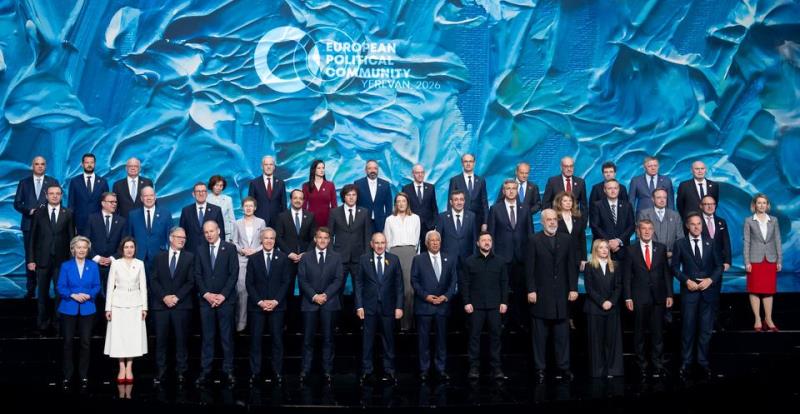
President Ilham Aliyev's announcement via video link at the 8th EPC summit in Yerevan on May 4, 2026, that Azerbaijan's candidacy was accepted and that our country would host this event in May 2028, has opened the door to new diplomatic opportunities for Baku.
A new stage in dialogue with Europe
The "European Political Community" was established in 2022, against the backdrop of new geopolitical realities created by the Russia-Ukraine war. The main goal of the platform is to expand political dialogue among European countries, and to hold discussions on security, energy, economy, transport, and other common issues. This format brings together both EU member states and non-EU countries in a single political discussion space.
Azerbaijan's participation in this platform is not accidental. Our country is an important participant in discussions on Europe's energy security, East-West transport links, and ensuring lasting peace in the South Caucasus.
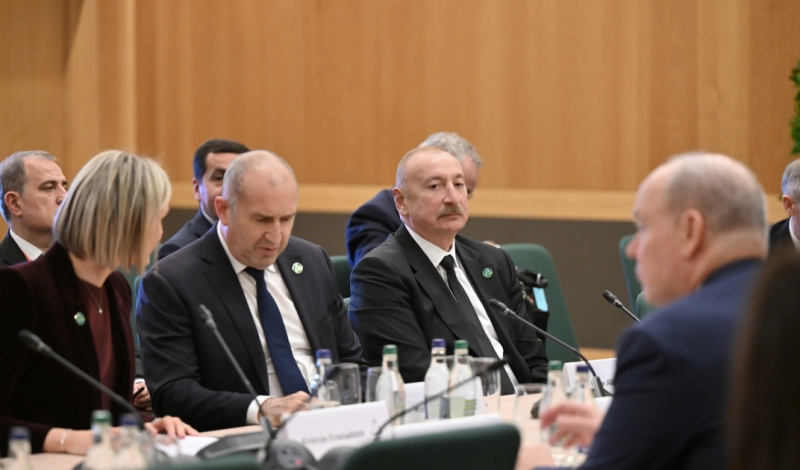
President Ilham Aliyev's participation in various summits of the "European Political Community" and his meetings with leaders of European states within the framework of these events show that Azerbaijan's attitude towards this platform is not merely formal participation. Baku uses this opportunity to directly bring its national interests, regional initiatives, and strategic priorities to the attention of European leaders.
Hosting the summit in Baku in 2028 means that this dialogue will now continue on a political platform hosted by Azerbaijan.
Dublin summit: Azerbaijan's diplomatic activity
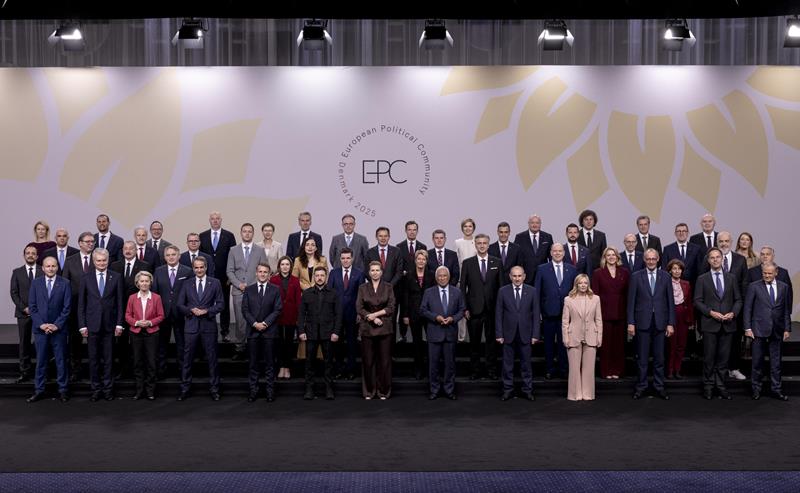
The 9th summit of the "European Political Community" held in Dublin, the capital of Ireland, on November 12, once again demonstrated the agenda of Azerbaijan's relations with European countries. The meeting, held under the slogan "A Strong, Secure and Connected Europe," discussed continental security, the war in Ukraine, economic resilience, energy supply, and transport connections. More than 40 heads of state and government participated in the event.
President Ilham Aliyev's participation in the summit and the meetings he held within the framework of the event are important points demonstrating the breadth of Azerbaijan's contacts in the European political space. The head of state's contacts with Ukrainian President Volodymyr Zelensky, Moldovan President Maia Sandu, Armenian Prime Minister Nikol Pashinyan, Greek Prime Minister Kyriakos Mitsotakis, Czech Prime Minister Andrej Babiš, Romanian President Nicușor Dan, Lithuanian President Gitanas Nausėda, President of the European Council Antonio Costa, and other leaders are noteworthy in this regard.
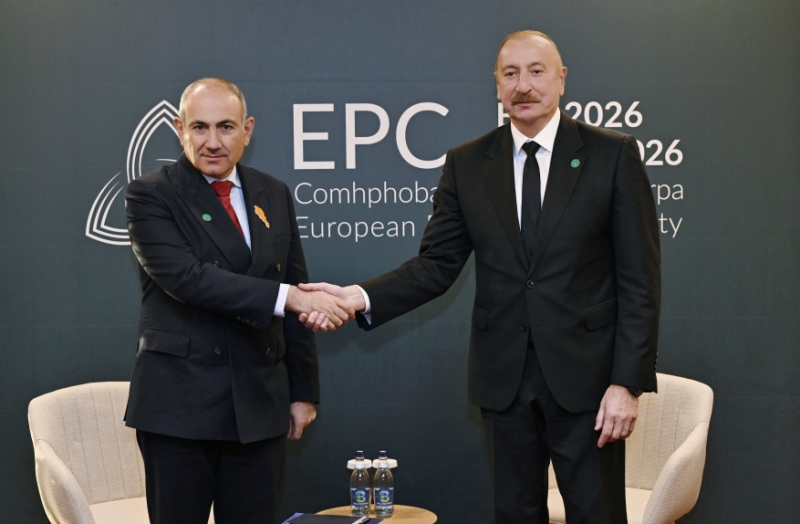
The importance of the meeting with Armenian Prime Minister Nikol Pashinyan should be particularly noted. The parties discussed the normalization of Azerbaijan-Armenia relations, the development of transport and transit links, border delimitation, economic and trade relations, and confidence-building measures. The planning of the railway and road components of the TRIPP route was also on the agenda. According to official information, 105 thousand tons of cargo have been transported to Armenia via Azerbaijani territory since November 2025. This fact shows that the regional peace agenda is already linked to practical economic and transport issues.
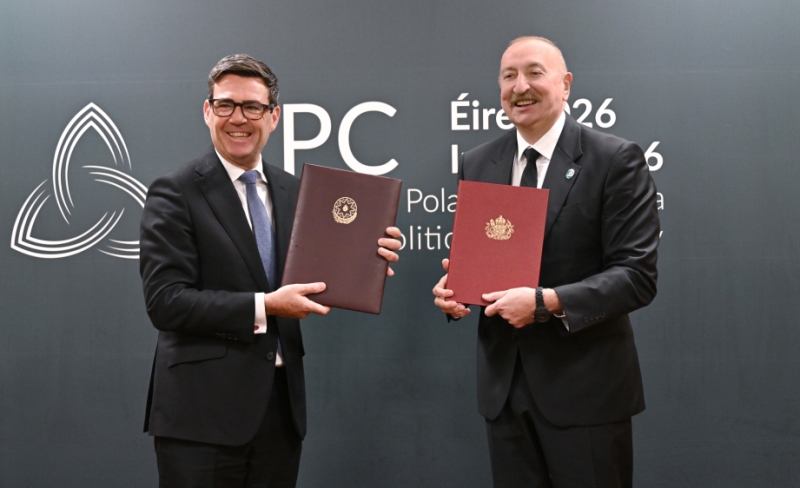
Another important outcome of the Dublin contacts is the signing of the Joint Declaration on Strategic Partnership between Azerbaijan and the United Kingdom. The document is important in terms of expanding the political and economic framework of relations between the two countries. The President's meeting with the President of the European Council within the framework of the summit also indicates the continuous nature of the Baku-Brussels dialogue.
There is another noteworthy point here: the interest of European countries in relations with Azerbaijan is not limited to diplomatic protocol and mutual visits. Cooperation with Baku is related to specific strategic issues such as energy security, diversification of transport routes, stability in the South Caucasus, and broader Eurasian connections.
Energy factor: Europe's need for cooperation with Azerbaijan
One of the main directions increasing Azerbaijan's importance for Europe is energy security. After the Russia-Ukraine war, the policy of European countries to diversify energy sources and supply routes has become even more relevant. In this process, Azerbaijan acts as one of Europe's energy partners.
The signing of the Memorandum of Understanding on strategic partnership in the energy sector between Azerbaijan and the European Union on July 18, 2022, ensured that relations in this direction entered a new stage. The document covers the goals of increasing the supply of Azerbaijani gas to Europe and developing the relevant infrastructure.
According to President Ilham Aliyev's statement in Davos in January 2026, Azerbaijan exports natural gas to 16 countries, including 10 EU member states. According to European Commission data, Azerbaijan supplied gas to 14 countries, including 8 EU members, via SOCAR in 2025, and started exporting to Germany and Austria in January 2026.
The Southern Gas Corridor is the main infrastructure pillar of Azerbaijan's position in the European energy market. This system, which transports gas extracted from the "Shah Deniz" field in the Caspian Sea to Europe via Georgia, Turkey, Greece, Albania, and Italy, is approximately 3500 kilometers long. According to the European Commission, gas supply from Azerbaijan to the European Union via the Southern Gas Corridor increased by more than 40 percent between 2021 and 2024.
However, Azerbaijan's energy potential is not limited to natural gas. There are also wide opportunities for cooperation with Europe in the field of green energy. The wind energy potential of the Caspian Sea, the construction of solar and wind power plants in the liberated territories and other regions, and the creation of green energy connections with Central Asia are promising projects in this direction.
The project of laying an electric cable under the Black Sea is also of particular importance in terms of expanding Azerbaijan's access to European energy markets. This project aims to connect the energy systems of Azerbaijan and Georgia with Romania and other European countries.
All this suggests that energy security and green transition issues are expected to occupy a special place on the agenda of the summit to be held in Baku in 2028. Azerbaijan will participate in these discussions as a country with concrete energy infrastructure and projects.
Middle Corridor and Azerbaijan's increasing transit importance
Another important factor conditioning Europe's cooperation with Azerbaijan is the transport and logistics sector. Global geopolitical changes, risks faced by traditional transport routes, and the restructuring of supply chains have increased the importance of alternative connections between Europe and Asia.
In this regard, the Middle Corridor is one of the key projects strengthening Azerbaijan's strategic position. This route, extending from China and Central Asia to Europe via the Caspian Sea, Azerbaijan, Georgia, and Turkey, plays an important role in the development of East-West trade relations.
Azerbaijan's port, railway, road, and logistics infrastructure expands the capabilities of this route. Alat International Sea Trade Port, Baku-Tbilisi-Kars railway, and other transport projects are key components of our country's transit potential.
In addition, the North-South International Transport Corridor also strengthens Azerbaijan's geo-economic position. This route creates alternative opportunities for cargo transportation from India and Iran to Russia and Northern Europe.
Growing attention of European leaders to Baku
The intensification of visits of high-ranking representatives of the European Union to Azerbaijan in recent years should not go unnoticed. The visits of EU High Representative for Foreign Affairs and Security Policy Kaya Kallas and Commissioner for Enlargement Marta Kos to Baku in 2025, the presence of President of the European Council Antonio Costa and European Commissioner for Energy and Housing Dan Jorgensen in Azerbaijan in March 2026, and the working visit of President of the European Commission Ursula von der Leyen to our country in July of the same year, indicate the scale of high-level contacts in Baku-Brussels relations.
It would not be correct to evaluate the importance of these visits only within the framework of diplomatic protocol. They are an indicator of Europe's need for direct dialogue with Azerbaijan on energy, transport, security, and regional cooperation issues.
President Ilham Aliyev's bilateral meetings at Davos, Munich, and other international platforms also demonstrate the activity of Azerbaijan's foreign policy agenda. The fact that some of these meetings were organized at the request of the other side is one of the factors indicating the growing interest in contacts with Azerbaijan on international platforms.
From participating in summits to hosting them
Azerbaijan's path to hosting in 2028 passes through our country's consistent participation in this platform. President Ilham Aliyev participated in the first summit of the "European Political Community" in Prague in October 2022, the second meeting organized in Moldova in June 2023, the fourth summit held in Oxford, Great Britain in July 2024, and the meetings held in Tirana in May 2025 and Copenhagen in October of the same year.
At the eighth summit held in Yerevan on May 4, 2026, the head of state delivered a speech via video link. In that speech, Ilham Aliyev announced that Azerbaijan would host the participants of the "European Political Community" in Baku in May 2028.
It should be noted that the meeting to be hosted by Azerbaijan will be the 12th summit of the "European Political Community". After the meetings to be held in Switzerland and Greece until 2028, one of the next stages of the platform will be organized in Baku.
What will the Baku summit bring to Azerbaijan's international agenda?
The importance of the summit to be held in Baku in 2028 is not limited to the context of relations with Europe. Azerbaijan's foreign policy covers a wider geography. The development of relations with Central Asia, the CIS space, the Turkic world, and Islamic countries is one of the main directions of our country's international activity.
In recent years, Azerbaijan has increased its activity in various international organizations and regional cooperation formats. Hosting a global event like COP29, expanding cooperation within the Organization of Turkic States, and bringing relations with Central Asian countries to a new institutional level have expanded the geography of our country's participation in the international agenda.
In this regard, the "European Political Community" summit in 2028 also creates an opportunity for Azerbaijan to demonstrate its coordinating role between different political and economic platforms. Baku can bring topics of cooperation between European states and Central Asia, the South Caucasus, and the wider Eurasian space to the same table for discussion.
However, to correctly assess the importance of the summit, the institutional nature of the "European Political Community" must also be taken into account. This platform provides heads of state and government with the opportunity to discuss issues of common interest, conduct political dialogue, and establish bilateral contacts.
It is precisely this feature that highlights the diplomatic importance of the Baku summit. Because in such events, sometimes the behind-the-scenes meetings of leaders, bilateral negotiations, and political agreements reached attract more attention than official plenary sessions.
The main issue for Azerbaijan will be to make the most of these opportunities. The discussion of concrete cooperation initiatives on energy, transport, regional security, green economy, digital connections, and the peace agenda can serve to make the summit results-oriented.
What message will Baku send to Europe?
The gathering of dozens of European heads of state and government in Baku in 2028 could open a new page in Azerbaijan's international political agenda. This is an opportunity for our country to demonstrate that its relations with Europe are not limited to energy and economy, but also its intention to be an active partner in political dialogue and regional security issues.
The Baku summit will also create conditions for discussing the place of the South Caucasus in Europe's security and cooperation agenda. Azerbaijan can use this platform to bring the importance of lasting peace, the opening of transport communications, and the expansion of economic ties in the region to the attention of European leaders.
Of course, hosting the summit itself does not mean solving political and economic problems. Its real outcome will depend on the content of the meetings held, the agreements reached, and their implementation in the subsequent stage. However, organizing such a platform in Baku is an important opportunity for Azerbaijan to expand its participation in international dialogue and to bring its relations with European countries to a new level.
This summit, in addition to being another test of our country's multilateral diplomacy, can become an important event that determines the directions of future cooperation between Baku and Europe.
Modern Analysis Group