The fate of Afghanistan has been decided abroad for a hundred years. An empire comes, redraws the map according to its interests, gets tired and leaves. Then another comes. And Afghans have always been the stake in the game.
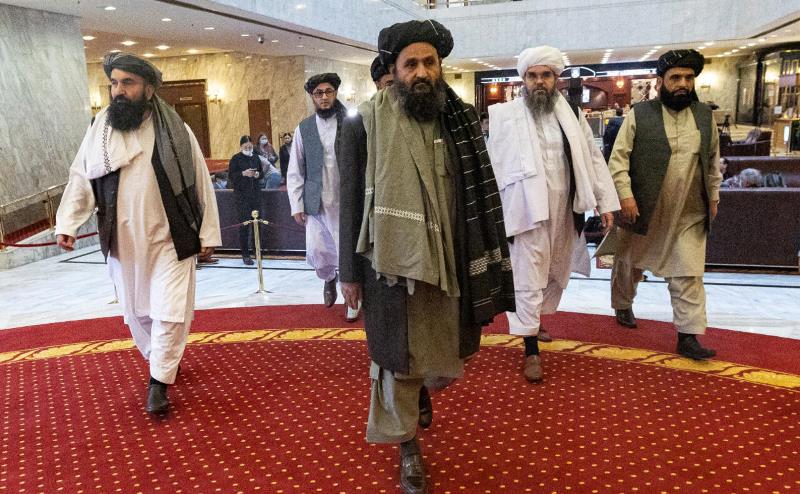
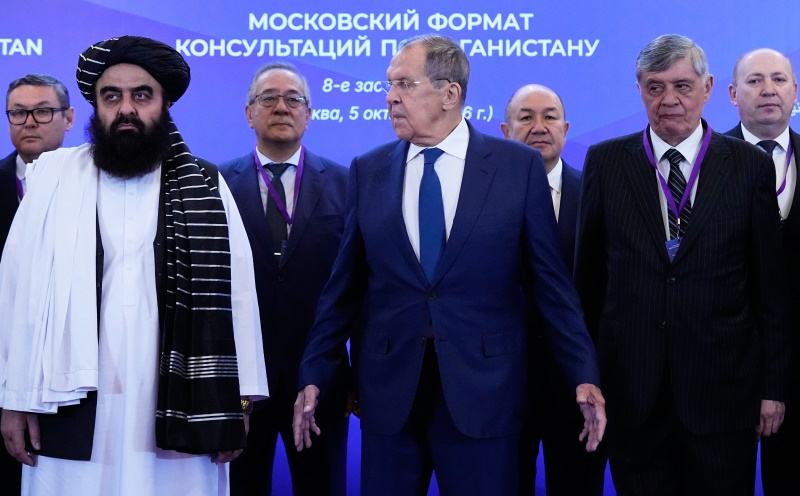
This week there is a different detail in the picture. On October 5, the eighth round of "Moscow format" consultations on Afghanistan was held in Moscow. According to the Associated Press, a delegation of the ruling Taliban government met at the same table with representatives of China, India, Iran, Pakistan and other countries. For the first time in many years, Afghanistan appeared as a party to the game.
To understand this meeting, one must look back much further than Moscow, to 1919.
Moscow table: who said what, what didn't happen?
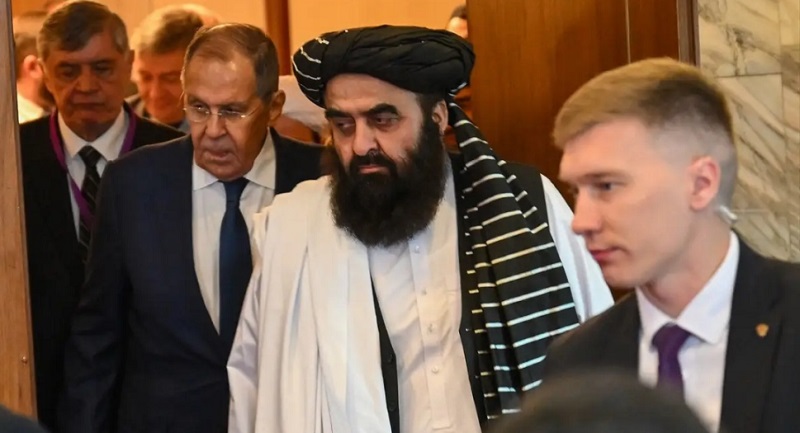
Russian Foreign Minister Sergey Lavrov greeted Taliban Foreign Minister Amir Khan Muttaqi, congratulating him on the "fifth anniversary of Afghanistan's liberation from the NATO contingent." According to AP, Lavrov also stated that historical experience shows that foreign military presence destabilizes and intensifies conflict. Anewz notes that Lavrov did not accept the redeployment of NATO military infrastructure in Afghanistan and neighboring countries.
Muttaqi, on the other hand, said that Afghanistan wants to be a connectivity hub, not a field of competition in the region. Local sources also wrote about this. He recalled the TAPI gas pipeline, CASA-1000 power line and Trans-Afghan railway projects. At the same time, he criticized Pakistan's attacks.
The most important result emerged at the end of the meeting. According to the Afghan Kabul Now portal, the eighth round ended without a joint statement due to disagreement over the text between the Taliban and Pakistani delegations. This was stated by Russia's special representative for Afghanistan. The Pakistani side claimed that groups such as TTP, Balochistan Liberation Army, East Turkestan Islamic Movement, ISIS-Khorasan and Al-Qaeda operate with impunity from Afghan territory. According to the same source, the participants called on both sides to refrain from military actions and expressed their readiness to help find a solution.
It seems that although Moscow set the table, it could not unite the parties around a single text. This shows both the strength and the limits of the meeting.
How does the world media read a meeting?
The same event was presented with different nuances in various media. Western agencies (AP, CBS News) focus on Russia's recognition line and the legitimization of the Taliban. CBS and AP recall that in July 2025, Russia was the first country to officially recognize the Taliban government since 2021. China welcomed this step.
Al-Jazeera and Reuters focus more on the Kabul-Islamabad war. Al-Jazeera wrote that in February 2026, Pakistan bombed Kabul and Defense Minister Khawaja Asif declared "open war."
Afghan media (Kabul Now, Tolo News, Amu TV) highlighted the failure to reach a joint statement and tensions with Pakistan.
Russia's independent media (Meduza) presented the Taliban's five-year rule against a backdrop of poverty, unemployment, and loss of women's rights. At the same time, it writes about achievements in "drugs and security." Russian state media (Sputnik) spoke more about economic projects, including the Trans-Afghan railway.
Iranian media (Kayhan) covered the meeting in the context of Kabul-Islamabad tensions and the regional organization format. The same source recalled that Afghanistan participated as an official member for the first time in the seventh meeting in October 2025.
The fact that the world media presents the same process in such different ways once again shows that each media has its own interests in Afghanistan. For Moscow, a security partner, for the West, a human rights problem, for Pakistan, a source of threat, for Central Asia, a transit opportunity is the main goal.
A century's chronology: 1919–2026
|
Year |
Event |
Meaning |
|
1919 |
Foreign policy independence after the Third Anglo-Afghan War |
End of British influence. King Amanullah begins reforms |
|
1929 |
Amanullah overthrown |
First major reaction of rural and religious leaders to rapid modernization |
|
1933–1973 |
Zahir Shah era |
Relative stability. 1964 Constitution, women's suffrage |
|
1973 |
Mohammed Daoud Khan's coup |
Monarchy abolished |
|
1978 |
Saur Revolution |
Communist PDPA seizes power. Harsh reforms spark rural rebellion |
|
1979 |
Soviet troops enter |
Beginning of a ten-year war |
|
1989 |
Soviet troops withdraw |
Country remains in ruins |
|
1992 |
Najibullah regime collapses |
Civil war among Mujahideen groups |
|
1996 |
Taliban enters Kabul |
First "Islamic Emirate", very limited international recognition |
|
2001 |
US and allies intervene |
Taliban removed from power after September 11 |
|
2020 |
Doha Agreement |
US-Taliban agreement |
|
2021 (August 15) |
Taliban back in Kabul |
20-year war ends |
|
2025 (July) |
Russia recognizes Taliban |
First crack in international isolation |
|
2026 |
Armed conflict with Pakistan, Moscow format |
Search for a new regional order |
Russia's place in this history is ironic. AP recalls that the former Soviet Union waged a 10-year war in Afghanistan and withdrew its troops in 1989. Today, that same Moscow is the first state to recognize the Taliban.
The myth of "almost Europe in the 1970s"
In those years, the streets of Kabul had women in modern clothes, university auditoriums, cinemas.
But Kabul was an island in the country. The majority of the population lived in rural areas, in tribal and religious community structures. Modernization started from the capital from above, and did not reach the countryside at the same speed. This difference between the city and the countryside exploded in 1978. The communist government's land and education reforms, alien to the countryside, and harsh secularization policy sparked a rebellion by tribal and religious leaders. The Soviet intervention turned this internal conflict into an international proxy war.
It should also be known that failure in Afghanistan is not only the fault of foreign forces. Reforms imposed from above, which do not penetrate the deep layers of society, also create a backlash. This pattern has been repeated from the 1920s to the present day.
At this point, the number of Afghans is of serious interest. Official sources confirm that there has been no general population census in Afghanistan since 1979. At the same time, wars have brought Afghans to the status of the fastest aging, shortest-lived people in the world.
How do Afghans live today?
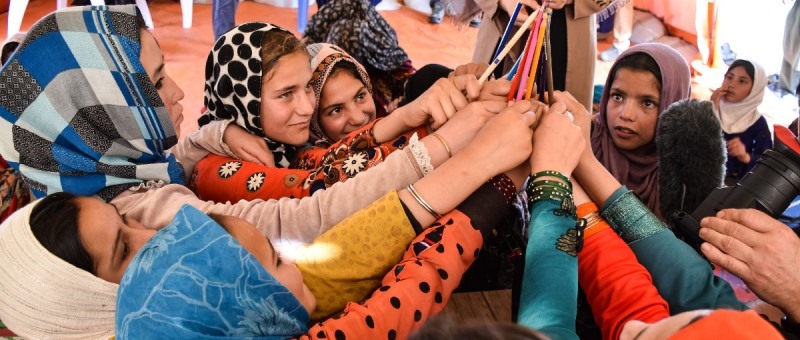
Afghan society is an ethnic and tribal mosaic, where Pashtuns, Tajiks, Hazaras, Uzbeks, Turkmens and representatives of other nationalities live. Since there is no official list, the shares are approximate. Local community and council (jirga) are a stronger social order than the official state in many regions.
According to reports, attempts to pressure the Taliban resulted in international humanitarian aid falling from $4 billion to $1 billion. Human Rights Watch writes that in 2025, the US sharply cut aid, which exacerbated the crisis in the country where more than 3 million children suffering from acute food shortages needed help. A January 2026 report by Tulane University's Newcomb Institute states that more than 85 percent of the population lives in poverty.
According to a Crisis Group report, 49 percent of working Afghans are employed in agriculture. This share is 70 percent for women. The Taliban's drug ban announced in 2022 has undermined rural incomes dependent on poppy cultivation. No alternative jobs have been created. Women are the most severely affected by this situation.
According to the BTI 2026 report, Afghanistan remains the only country where secondary and higher education is completely banned for girls and women.
According to UN data, approximately 2.4 million girls were out of secondary education in 2026. It has reached a point where, since August 2024, women are also forbidden to speak loudly in public.
UN Women reports that approximately 80 percent of young women aged 18-29 are neither in education, employment, nor vocational training.
The UN Human Rights Council this week called on the Taliban to repeal all policies violating women's rights, and judges of the International Criminal Court accused two Taliban ministers of gender-based persecution.
Why can no power remain in Afghanistan?
Afghanistan is at the crossroads of Central Asia, South Asia, and the Iranian plateau. In the 19th century, Russia and Britain played the "Great Game." In the 20th century, the Soviet Union and the United States clashed in the same field.
British, Soviet, and American experiences were different. What united them was not the mountainous terrain or the "warlike people," but a lack of legitimacy. All three sides tried to build a strong state, but failed to form a structure trusted by the local society.
Today, states do not occupy Afghanistan, but build their spheres of influence by cooperating with it. The Taliban understands this well, and its strongest card is natural resources. Asia Times writes that Afghanistan's mineral deposits are geographically dispersed, and many are far from Kandahar, where Supreme Leader Akhundzada has centralized governance. JFeed states that the Taliban offers the US access to lithium and rare earth elements, but sanctions, frozen assets, and women's rights issues are obstacles on this path.
Natural resources, wealth, or a curse?
According to several foreign sources, calculations by the US Geological Survey estimate the potential value of Afghanistan's mineral resources to exceed $1 trillion.