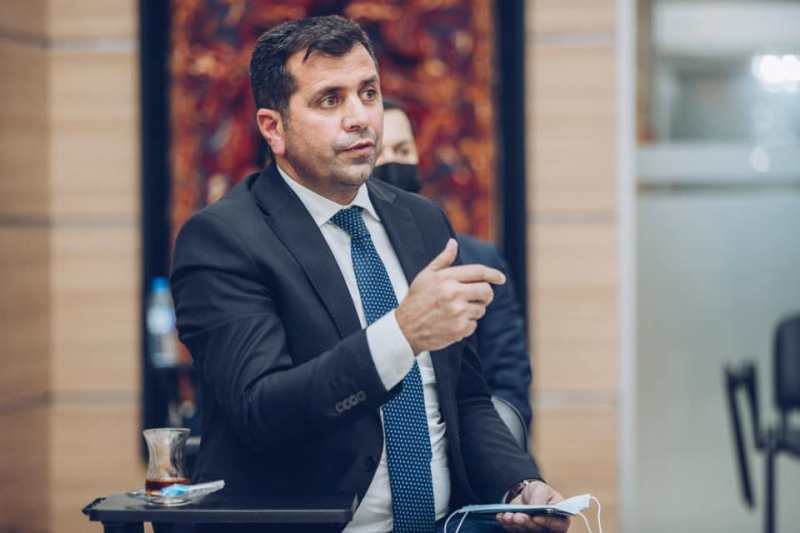
Not Yerevan, but IREVAN!
Today, Azerbaijan celebrates Sovereignty Day. Sovereignty is not limited to the end of a military operation, the raising of a flag, or the control of borders. Sovereignty is when a state enforces its own laws within its territory, determines the name of its own city, and preserves its own history without the dictation of others.
Three years ago, on September 19-20, 2023, Azerbaijan fully restored its sovereign rights in its territories by conducting one-day anti-terrorist measures. In international law, the concept of sovereignty has a simple formula: a state's full and undivided control over all parts of its territory, without foreign interference or parallel power structures. For nearly thirty years, Azerbaijan was deprived of the main element of this definition: territorial integrity.
Karabakh and Eastern Zangezur remained under Armenian occupation for more than thirty years. It cannot be assumed that the fact of occupation was a random geopolitical event. Armenia carried out this occupation under the military-political umbrella of Russia, which it historically considered its "father," and with the support of France and the diaspora-lobby, which it considered its "sister." As a result, Armenia's military aggression led to the occupation of more than 900 settlements in 17 thousand square kilometers of Azerbaijani territory, and more than one million people became internally displaced persons.
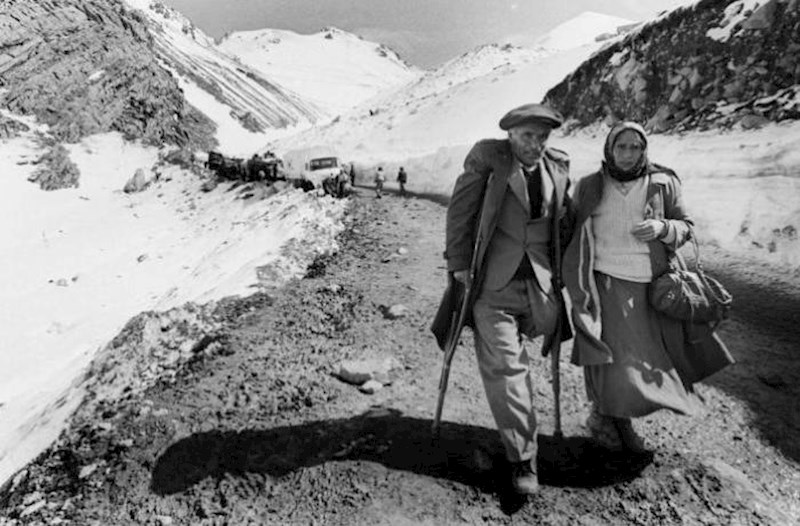
The culmination of the occupation occurred on the night of February 25-26, 1992, in the city of Khojaly. According to the proven investigative materials of the Prosecutor General's Office of Azerbaijan, what happened in Khojaly was a planned act of genocide. The shooting of the population in pre-prepared ambushes on the exit routes from the territory proves this. According to the official statement of the Azerbaijani parliament, among the victims, murders were recorded using inhumane methods, including scalping, dismemberment, and targeting children and pregnant women. The number of Khojaly victims, including those missing, exceeded 1050 people.
Similar massacres were repeated in Aghdaban, Bashlibel, and hundreds of other Azerbaijani settlements. The common factor uniting all of them was the targeting of victims based on their ethnic origin. The Khojaly genocide has been officially recognized by official documents by the parliaments of Mexico, Pakistan, Czech Republic, Bosnia, Serbia, Jordan, Slovenia, and more than 20 states of the USA to this day.
Historical facts prove that before the occupation of Karabakh, the same scenario was tested in Western Azerbaijan, on the territory of the Armenian SSR, as early as 1987-1989. According to the official figures of the UN High Commissioner for Refugees, by December 1988, 182 thousand Azerbaijanis (up to 400 thousand in total according to additional sources) living in Armenia were forcibly expelled from their historical lands. According to the description of Russian historian Yuri Pompeyev, unarmed, defenseless people were driven out of their homes naked and empty-handed, sent off with the words "Get out of Armenia!" Some of the people who headed to the mountains in the winter frost died from freezing, and some from heart attacks. There are also enough facts of people being burned alive and shot on the spot for protesting.
The tragedy in Western Azerbaijan did not end with the expulsion of people. According to the Western Azerbaijan Community, Armenians destroyed more than 2000 cemeteries and changed the names of 34 districts (Gamarli to Artashat, Basarkechar to Vardenis, Garakilsa to Sisian, etc.) after 1988 alone, with the aim of erasing the traces of Azerbaijanis from history. This was, in fact, the first testing phase of the toponymic policy repeated in Karabakh during the occupation.
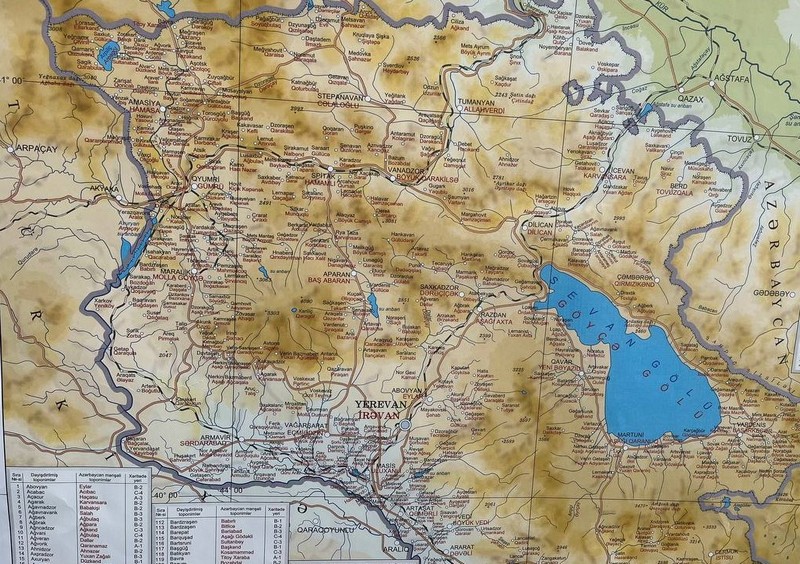
Yes, the second, parallel form of occupation carried out by Armenia in the occupied territories is the destruction of toponyms and place names. According to research by the Institute of Geography of ANAS, 277 geographical names in Azerbaijani territories were Armenianized during the occupation. Concrete examples clearly show this. Khankendi was presented as Stepanakert, Shusha as Shushi, Kalbajar as Karvachar, Aghdara as Mardakert, Aghdam as Akn, Fuzuli as Varanda, Zangilan as Kovsakan, Gubadli as Sanasar, Jabrayil as Jrakan, and even Khojaly, where the genocide took place, as Ivanyan (in honor of the Russian general considered the author of the occupation plan).
On November 7, 1995, the law "On Administrative-Territorial Division" adopted by Armenia formally gave legal status to this change. Although international law, including the 1949 Geneva Conventions, does not give the occupying state the authority to change the name of the occupied territory. As can be seen, the Armenian parliament nullified both international laws and ordinary human approaches with this law.
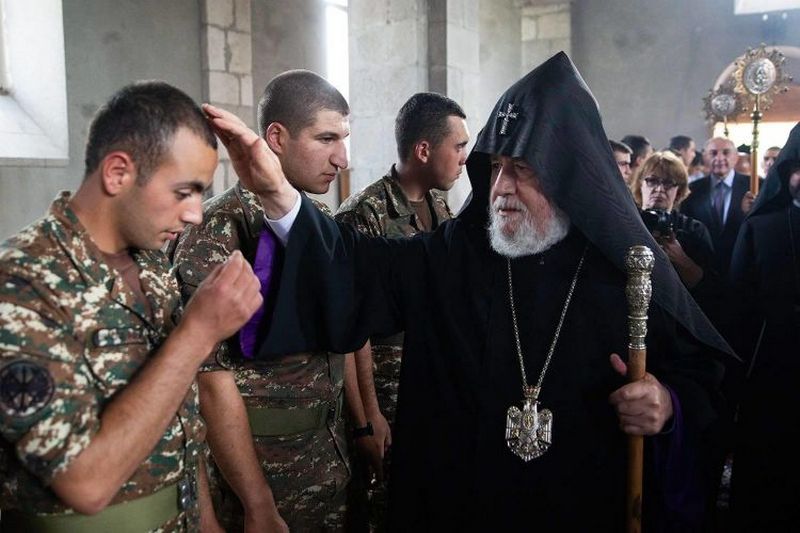
One of the most disturbing aspects of the process is the role of the Armenian Apostolic Church. Historical documents show that instead of preventing violence, the church leadership actively participated in the formation and spread of the "Greater Armenia" ideology. The religious institution, in fact, served as the ideological justification for the ethnic cleansing process. This is a historical example of religious leadership going beyond its humanitarian mission and becoming an instrument of political-territorial claims.
Throughout this difficult period, the foundation of Azerbaijan's future strategy was laid by National Leader Heydar Aliyev. His far-sighted, purposeful state-building course, army building, economic independence, and strengthening of international diplomatic positions created the necessary basis for the restoration of territorial integrity in subsequent decades.
Continuing this strategic course, under the leadership of President, Supreme Commander-in-Chief Ilham Aliyev, Azerbaijan fully restored the country's territorial integrity as a result of the 2020 Patriotic War, followed by the anti-terrorist measures carried out on September 19-20, 2023. Today, the flag flies over all internationally recognized territory of Azerbaijan. Irredentist, ideological constructions directed against humanity and the Turkic peoples, such as "Greater Armenia" and "Artsakh," have been sent to the archives of history.
Azerbaijan has repeatedly stated at the official level that anyone who wants to live in the liberated territories, including ethnic Armenians, can do so within the framework of Azerbaijan's sovereign legislation, using correct toponyms. Calling Khankendi Khankendi, and Aghdara Aghdara, is an elementary requirement of international law and sovereignty. No one was forcibly expelled from Khankendi. This was a matter of voluntary choice, although the exact opposite was happening to Azerbaijanis in Western Azerbaijan during the same period.
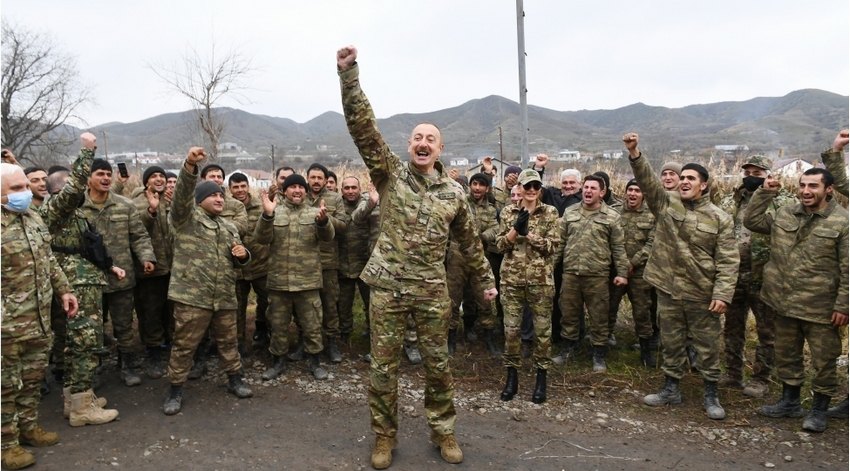
The sequence of facts forms a clear chronology. Complete ethnic cleansing from Western Azerbaijan in 1988, the Khojaly genocide in 1992, thirty years of occupation and an attempt at cultural-historical destruction with a systematic toponymic policy, and finally, their legal-military restoration in 2020 and 2023. Sovereignty Day is precisely the name of the official, legal result of this long, difficult path.
Today, as Azerbaijan celebrates its sovereignty, Armenians are wailing and wishing for Khankendi. But they still call Khankendi Stepanakert.
Hey Armenians, why don't you understand, calling Khankendi Stepanakert does not turn Khankendi into a city of another state. Calling Shusha Shushi does not erase its place in Azerbaijani history. Calling Kalbajar Karvachar does not question Azerbaijan's sovereignty.
By saying Stepanakert, Shushi, Karvachar, Yerevan, you are opposing peace. Azerbaijan does not want a new war. But if you want a new war, you will erase the name of the so-called Armenia from history yourselves.
Azerbaijan's sovereignty is not a subject for discussion. Its protection, strengthening, and transmission to future generations is the responsibility of each of us.
Happy State Sovereignty Day!