Armenia's failure to take concrete steps on issues related to enclaves, the TRIPP project, and a new constitution has brought discussions about the future of the peace process with Azerbaijan back to the agenda. Armenian Prime Minister Nikol Pashinyan's statement that the peace agreement will be signed by 2031 indicates this country's intention to delay the peace process.
Kamran Bayramov, a member of the International Relations and Interparliamentary Relations Committee of the Milli Majlis, told Modern.az that after the end of the military phase, the next step should naturally have been the formalization of peace on a legal level:
“The conflict between Azerbaijan and Armenia, which held the development of the South Caucasus hostage for decades, approached its logical conclusion in 2020, and in September 2023, with Azerbaijan's full restoration of its sovereignty, this issue was definitively resolved. After the end of the military phase, the next step should naturally have been the formalization of peace on a legal level, and certain progress had been made in this direction. Thus, in August 2025, a meeting of leaders took place in Washington with the participation of the US President, and the text of the peace agreement was initialed by the foreign ministers.”
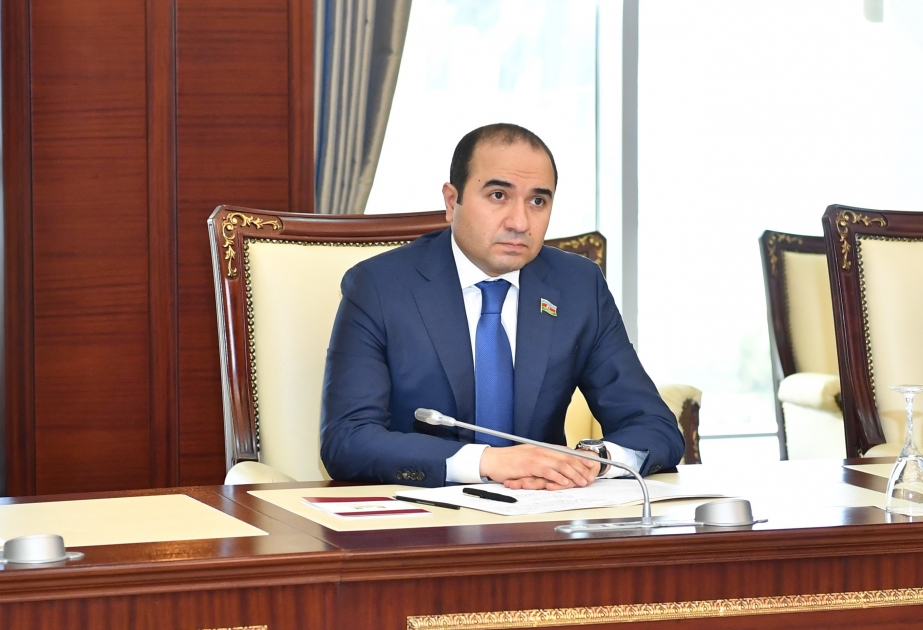
According to Kamran Bayramov, after this stage, it was necessary to eliminate the provisions containing territorial claims in the Armenian Constitution and sign the agreement:
“After this stage, the only necessary step was the elimination of the provisions containing territorial claims in the Armenian Constitution and the signing of the agreement. However, official Yerevan initially delayed the process by citing elections to be held a year later, and although the elections were behind in June, Armenian Prime Minister Nikol Pashinyan this time announced a much later date – 2031. The Armenian Prime Minister's announcement of the signing and ratification of the peace agreement as a task for the period up to 2031 indicates that it is no longer about forming the basis of agreements, but about deliberately postponing the achieved result to an uncertain future. Such artificial delays, the postponement of the process to the next “five-year plan” at a time when a diplomatic agreement is approaching, rightly raise questions and create serious doubts about Yerevan's true intentions, including its commitment to peace.”
The MP noted that for Azerbaijan, peace means the guarantee of national sovereignty, security, and sustainable development of the region:
“For Azerbaijan, peace is not just an abstract diplomatic expression, but a guarantee of national sovereignty, security, and sustainable development of the entire region. Our country has gone through difficult trials, restored control over its internationally recognized territories, and succeeded in creating new political realities, but as a logical continuation of this process, an agreement that excludes a return to armed conflict and establishes mutual obligations is inevitable. Nevertheless, keeping the peace process in a permanent interim state opens up wide scope for uncertainty, mutual suspicions, and various political maneuvers, which indicates a deep gap between Yerevan's statements and real practical steps.”
According to him, the risk of some political forces and revanchist circles in Armenia trying to change the realities created in the region by taking advantage of the current situation should also be taken into account:
“At the same time, the risk of certain political forces and revanchist circles in Armenia trying to change the realities created after 2023 by taking advantage of the current moment and the information attacks against Azerbaijan should not be overlooked. To prevent such threats, transparent commitments, confidence-building mechanisms, and the rejection of any double standards against territorial integrity are vital. Explaining the process solely by the competition of external players in the context of Washington's, Brussels', and Moscow's interests in the South Caucasus would be one-sided, as the main responsibility lies with the states of the region themselves. Azerbaijan prefers real and sustainable peace that allows for the opening of transport communications, trade, and cooperation, rather than endless diplomatic expectations. Peace should not remain merely a declaration postponed indefinitely, but must be strengthened by practical decisions.”
Kamran Bayramov emphasized that the transition to normal neighborly relations in the South Caucasus depends on Armenia abandoning its delay in signing the peace agreement:
“Thus, the transition of the South Caucasus from historical confrontation to normal neighborly relations depends precisely on Yerevan honestly explaining why it is still not ready to sign the initialed peace agreement and abandoning attempts to extend the signing of the document until 2031. Delaying this issue and playing behind-the-scenes games does not serve peace in the region, and true peace is measured not by merely talking about the future, but by the ability to make decisive decisions today.”