In recent days, military escalation between Russia and Ukraine has intensified. The parties are mutually targeting each other's infrastructure and strategic objects in depth, and long-range missile and drone strikes are becoming one of the main directions of the war. Against the background of this situation, in addition to battles on the front line, attacks aimed at weakening the military-economic potential of the opposing side are also expanding.
In a statement to Modern.az, Ukrainian political scientist Stanislav Zhelikhovsky stated that the military confrontation between Ukraine and Russia has clearly intensified in recent months:
"However, the process is gradually not only consisting of battles on the front line, but also taking on the character of strikes in depth, and a struggle for logistics and economic stability. Ukraine has expanded attacks against Russia's oil infrastructure, military facilities, and logistics system. Russia, in turn, continues massive missile and drone strikes against Ukrainian cities and critical infrastructure. This escalation is unlikely to create a serious turning point in the near future. However, the process may gradually change the balance of forces in the war. Ukraine is trying to make it more expensive for Russia to wage war by disrupting fuel supplies, logistics, and military production. Russia still has significant resources and the ability to adapt to changing circumstances. Nevertheless, over time, sustained pressure may reduce Moscow's ability to continue the war at its current intensity.
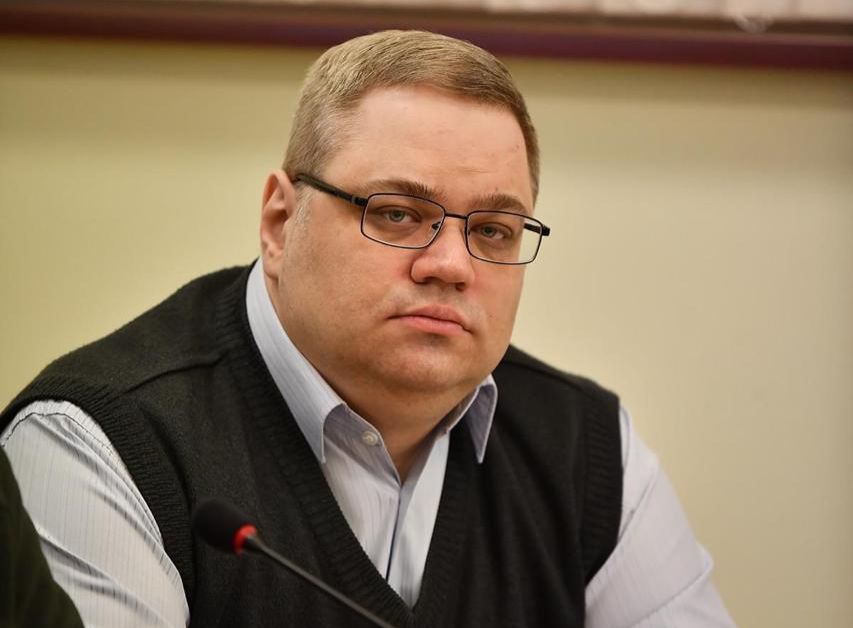
According to the political scientist, the most realistic scenario for the coming months is a long-term confrontation accompanied by periodic escalations:
"The intensification of long-range strikes is highly probable. At the same time, a return to negotiations is also possible. However, since the positions of Kyiv and Moscow fundamentally differ, diplomacy is unlikely to result in an immediate peace agreement in the near future. In this regard, the current escalation can be partially assessed as a struggle to gain a stronger position in negotiations. Ukraine is trying to demonstrate that Russia cannot continue the war indefinitely without increasing costs. Moscow, in turn, is trying to absorb the pressure and show that it can continue the war. The side that succeeds in changing this calculation will enter the next serious stage of negotiations from a stronger position. The broader geopolitical context is also important. The US-Israeli military confrontation with Iran has complicated Washington's ability to focus its attention and resources on Ukraine. At the same time, the expected visit of US President's special representatives Steve Witkoff and Jared Kushner to Kyiv could create a new opportunity to restart the stalled diplomatic process. However, unless Washington is prepared to exert additional pressure on Moscow, their visit is unlikely to yield immediate serious results and break the diplomatic deadlock."
Russian political scientist, Deputy Director of the Institute for Political Studies, Darya Grevtsova, also told Modern.az that the situation has entered an intensive escalation phase:
"Yes, indeed, the situation has entered an intensive escalation phase, and as we see, the probability of negotiations in the next few months is quite low. The most realistic scenario is the continuation of military operations and, most likely, their further intensification. There are several key factors indicating this escalation. First of all, we are talking about strikes against infrastructure. Both sides have switched to the tactic of striking strategic objects in the rear of the opposing side. We see that Russia is intensifying missile and drone attacks against Ukraine's energy and military infrastructure. Ukraine, in turn, is striking Russia's oil refineries, as well as the warehouses of 'Wildberries', one of the country's largest marketplaces. This is assessed as an attempt by the parties to exhaust each other's military-economic potential. As for the strikes on oil refineries in Russia, we see that the country's leadership is coping with the consequences of the attacks quite quickly. Yes, at the beginning of June there was a fuel crisis, large queues formed at gas stations, and prices increased at some stations. However, it was possible to overcome this problem in less than a month. Currently, there are no queues in Moscow and St. Petersburg, nor is there an increase in gasoline prices. People are comfortably refueling their cars at gas stations. The situation is also gradually normalizing in other regions."

The Russian political scientist said that the positions of the parties are far apart and they are not ready for compromise:
"It is also necessary to note the serious shortage in Ukraine's air defense systems. We clearly see how vulnerable Ukraine's air defense systems have become. According to some reports, none of the ballistic missiles launched by Russia during the recent massive attacks were neutralized precisely due to the shortage of ammunition for air defense. Even now, the Ukrainian authorities do not disclose the number of missiles and drones flying towards the country. Because they do not want to show how many of these attacks were intercepted. As for the prospect of negotiations, a diplomatic deadlock can be noted here. The positions of the parties are quite far apart, and neither of them demonstrates readiness for compromise. As we see, Kyiv currently does not need this at all. Because if peace is achieved, elections will be held in the country, and it is more likely that Zelensky will lose, not win, these elections. Therefore, it seems that this is not beneficial for him in any case. He can talk about negotiations, but when it comes to real steps and serious, substantive negotiations, he will not be ready for it.
Russia, on the other hand, always declares that it is in favor of peace talks. However, Europe also opposes peace talks. We see this not in words, but in deeds. Europe is actually interested in the continuation of the war and a long-term conflict in which the parties will exhaust each other. Europe talks about peace talks and states that immediately after the cessation of hostilities, i.e., the end of military operations on the contact line, it will send its troops to Ukraine, deploy its weapons and missile systems there. Thus, Europe states that it will control peace. Of course, Russia absolutely disagrees with this and is not ready for peace under such conditions. Therefore, we see that escalation is currently used as a tactic. The strikes carried out by Ukraine on various Russian facilities are assessed by analysts as an attempt to force Moscow to negotiate on Kyiv's terms. However, this tactic has so far only led to an intensification of Russia's retaliatory measures. The most realistic scenario here is a further intensification of military operations, and no transition to negotiations."
D. Grevtsova emphasized that several key features will manifest themselves in the next phase of escalation:
"First of all, the continuation of intensive mutual strikes deep behind the front line is expected, with the aim of weakening the military potential and economy of the opposing side. In addition, battles on the front line will continue, and tactical successes of the Russian side may be observed. At the same time, the emergence of real diplomatic initiatives that could lead to a ceasefire, at least in the short term, is unlikely. The humanitarian consequences of this escalation will also only worsen. This is also evidenced by reports of an increase in the number of civilian casualties on both sides."