Armenian Prime Minister Nikol Pashinyan's recent statements at first glance bring optimism to the peace process. Pashinyan, who on October 15 set a target of 2031 for the signing and ratification of a peace agreement with Azerbaijan, on October 22 already voiced 2027–2028 as a possible date. The main point of interest here is not so much the change in dates, but rather the internal and external conditions associated with this change.
On the same day, Pashinyan stated that a new Constitution project would be prepared, that he would try to persuade the opposition to this process, and that if no result was achieved, he did not rule out the option of early parliamentary elections. This means that the discussion is about Armenia's internal political architecture, the legitimacy of the government, and on what legal and political grounds the peace agreement will be concluded.
The question that now arises is whether Pashinyan is shortening the path to peace, or preparing to renew his government's mandate to overcome internal political obstacles to peace?
On October 15, Pashinyan called the signing and ratification of the peace agreement one of his main tasks, setting a deadline of 2031. A week later, his indication of 2027–2028 means a more concrete and faster political calendar than the previous position. This change brings at least three possibilities to the agenda.
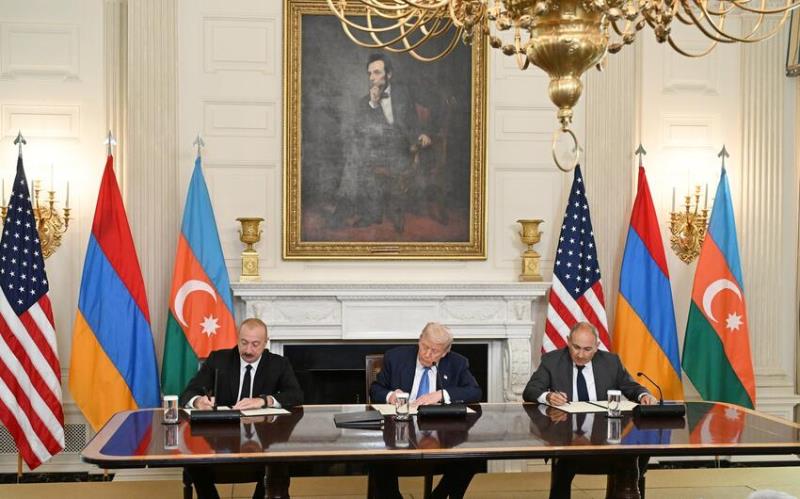
The first possibility is that Yerevan does not want to lose the political and economic opportunities created by the agreements reached in Washington and is trying to accelerate the formalization of the peace agreement. Another approach is that Pashinyan wants to turn the peace agenda into the main election message in the upcoming internal political struggle. The third point is that the prime minister is trying to create a unified political roadmap, seeing how difficult it is to solve the issues of a new Constitution, referendum, and regional communications separately.
A crucial reality is that in Armenia, the issue of peace is viewed less as a matter of relations with Azerbaijan and more as how the country's future state model will be built.
According to Azerbaijan's position, the problem with Armenia's Constitution is the risk of territorial claims created by the reference to the 1990 Declaration of Independence. Armenia's current Constitution contains a concrete territorial claim against Azerbaijan. Although Yerevan has not yet agreed with the idea that this legal and political connection creates a territorial claim against Azerbaijan. It states that constitutional reforms are part of its internal political agenda. But the fact is that there is a territorial claim. It is impossible to cover this up.
That is why for Azerbaijan, the issue is not considered as interference in Armenia's internal politics. It is important for Azerbaijan to prevent the agreement to be signed from being disputed later through constitutional references and political claims.
Of course, changing a state's Constitution is within that state's internal authority. But the impact of that Constitution on a peace agreement to be concluded with another state directly concerns bilateral relations.
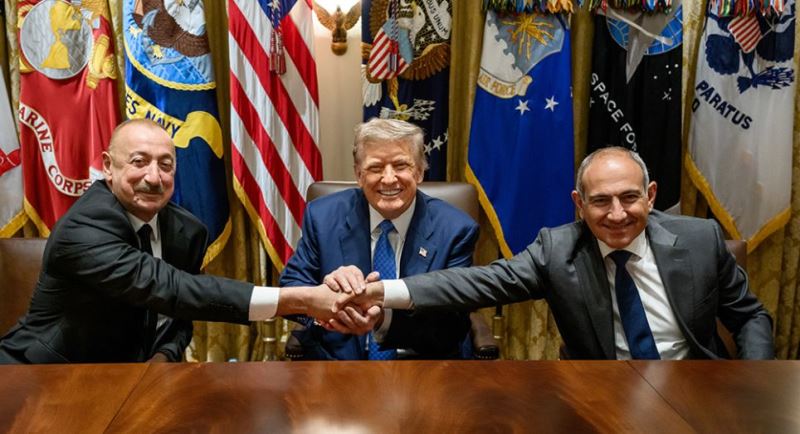
Therefore, Azerbaijan does not want peace to be limited to a signing ceremony. Peace must be established in a way that is legally sustainable, politically reliable, and not jeopardized by changes in future governments.
Why Pashinyan wants a new parliament is also hidden in the political arithmetic of the Armenian parliament.
After the 2026 Armenian parliamentary elections, the ruling