The Jeyhun Bayramov-Ararat Mirzoyan meeting, held in New York within the framework of the 81st session of the UN General Assembly, sends different messages. It seems that the peace process is moving from the negotiating table to the phase of concrete infrastructure projects.
The process is also on the agenda of the world media. Reuters writes that the two foreign ministers met during the high-level week of the UN General Assembly to discuss progress since the joint statement signed and peace agreement initialed in Washington in August 2025. The striking point is that the international agency presents this process as the implementation stage of a signed legal document.
The main point in the official information released after the meeting is that almost the same expressions are used in the statements of Baku and Yerevan. Armenia's official Armenpress agency writes that the ministers emphasized the importance of peace, focusing especially on unblocking economic and transport infrastructure. The Public Radio of Armenia complements this idea by stating that the parties have decided to continue direct dialogue.
The fact that the two countries present the same process with overlapping expressions attracts serious attention. In diplomacy, this is a sign that the parties have agreed in advance even on the message to be conveyed to the public. All this indicates how institutionalized the peace process has become.
In international legal language, the term “unblocking” directly refers to the provisions of the November 2020 statement. In practice, this does not mean full border liberalization, but rather the gradual, controlled opening of border crossing points, customs protocols, and transport corridors.
Another subtle point in the material published by Reuters attracts attention. The two ministers presented trade and transit relations as a “practical example” of the benefits of peace. This formula differs from diplomatic rhetoric. This means that peace on the table is ceasing to be an abstract principle and is beginning to turn into a measurable economic indicator.
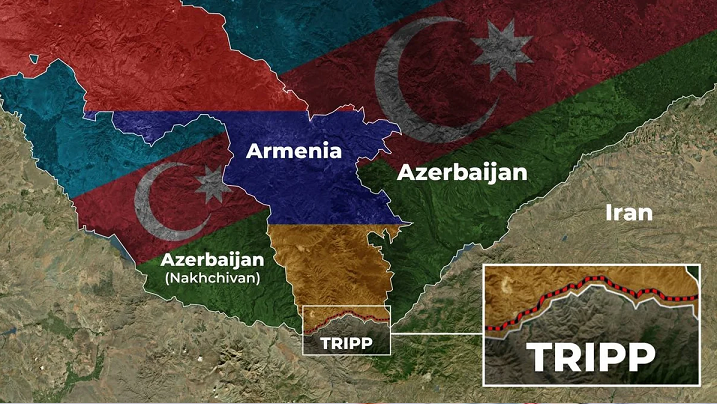
Interestingly, on the same day, Bayramov, in a separate meeting, discussed the expansion of the TRIPP initiative with representatives of US companies. The Azerbaijani press mostly covers this topic in the context of concrete economic opportunities. International media, however, views the process within a broader framework of regional connectivity. For the West, the South Caucasus appears as an integral part of a unified geopolitical architecture.
Armenian official media Armenpress and Public Radio of Armenia present the same facts with approximately the same text, but in a different national framework. The process is treated as a continuation of Prime Minister Pashinyan's “Crossroads of Peace” concept. A curious balance appears here. For Baku, the process means the restoration of territorial integrity and transit sovereignty, while for Yerevan, it means exiting isolation. The fact that the two sides interpret the same infrastructure differently through the prism of their national interests is, in fact, a rare healthy sign for the sustainability of the agreement. Both societies can accept the process as their own.
The real significance of the September 24 meeting is that what happened has moved beyond the framework of local news disseminated by Baku and Yerevan for their audiences and entered the international monitoring sphere. The created situation also increases the political value of the irreversibility of peace.
At this point, the statements made by Armenian Prime Minister Nikol Pashinyan on the same issues in different places arouse serious interest. Regarding the TRIPP project, he says in Armenia, “this is our long-standing dream,” while abroad he notes that this project leads to peace.
Armenia is also not unanimous on the issue of peace. The visit of 150 diplomats from 58 countries and 9 international organizations to Karabakh and Eastern Zangezur, organized by Azerbaijan on September 11-12 this year, caused serious concern in Armenia. In some circles, even harsh reactions against diplomats were voiced. But why?
The fact that these reactions are not limited to representatives of the church, diaspora, and opposition, but rather similar notes are heard within the government, indicates that full unanimous support for the peace process has not yet formed.
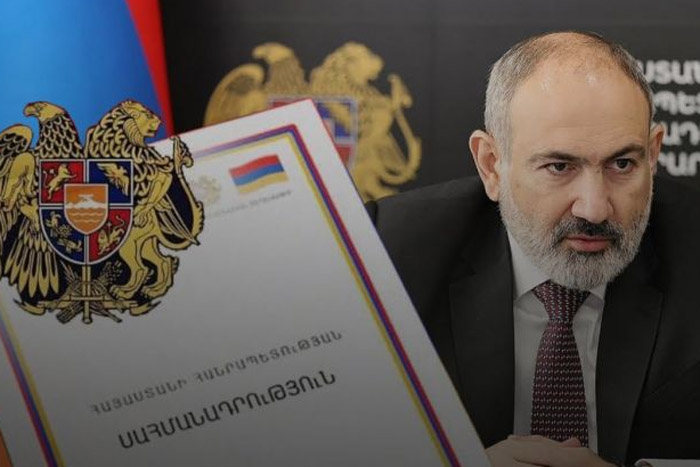
The constitutional issue, however, remains an open knot. One of the most sensitive points is the provisions in the Armenian Constitution containing territorial claims. The Azerbaijani side has repeatedly stated that the abolition of these articles is a necessary condition for the signing of a final peace agreement. Pashinyan demonstrates cautious maneuvering on this issue. On the one hand, he emphasizes his commitment to peace on international platforms, and on the other hand, he conveys the message to the domestic audience that “no one can dictate the Constitution to us.” This dual language, in fact, reflects the fragile balance Pashinyan has found between convincing his foreign partners and playing a game domestically.
Pashinyan is simultaneously trying to strengthen relations with Russia with a “fresh perspective.” He stated that after peace is established in the region, Armenia-Russia relations should acquire new content, and even spoke about the joint construction of a nuclear power plant with Russia. At the same time, he emphasizes Armenia's European direction in the Parliamentary Assembly of the Council of Europe and holds talks with US companies. This is the natural instinct of a small and geopolitically sensitive state. The main thing is that the peace process is moving from the table to a more serious phase. The coming days will show where the next stop will be.
Elnur AMIROV