The visit of Assistant to the President of Azerbaijan Hikmet Hajiyev with foreign diplomats accredited in our country to Karabakh caused a real political uproar in Armenia. Armenian media, deputies, revanchist politicians, former representatives of separatist entities, and diaspora activists have started targeting the diplomats participating in the visit.
However, what happened is extremely simple: Azerbaijan took diplomats accredited in its territory to its internationally recognized territories. This has no legal or political connection with Armenia. But the reactions in Yerevan show that although the Armenian leadership talks about peace, the political circles and society of this country are still not ready to accept the post-conflict realities.
Modern.az investigated the reactions voiced in the Armenian media, parliament, and the Armenian segment of social networks.
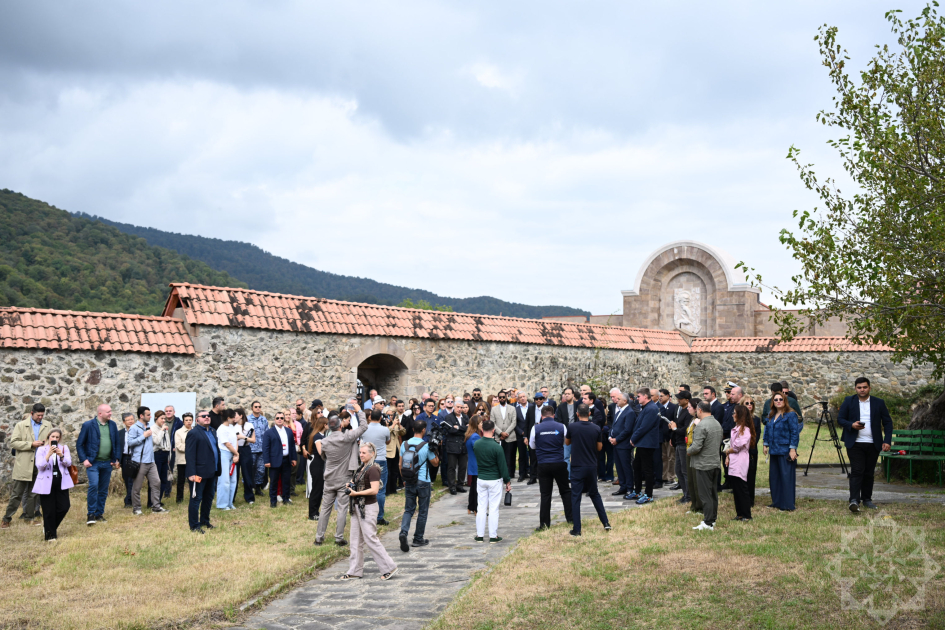
Karabakh visit of 150 foreign representatives
About 150 diplomats and foreign representatives from 58 countries and 9 international organizations participated in the visit held on September 11-12.
The delegation, accompanied by Assistant to the President of Azerbaijan, Head of the Foreign Policy Affairs Department of the Presidential Administration Hikmet Hajiyev, visited Khankendi, Shusha, Aghdara, and Kalbajar.
Diplomats were informed about the construction and restoration work carried out in the liberated territories, new settlements, transport infrastructure, the activities of Karabakh University, and the current state of historical and religious monuments.
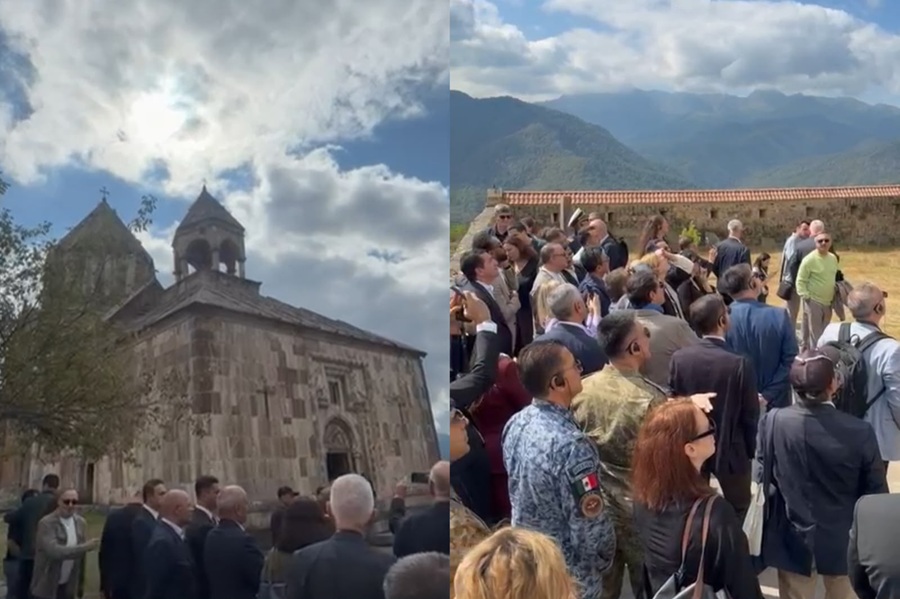
On the second day of the visit, the delegation visited the Ganjasar monastery in Aghdara district and the Khudavang monastery in Kalbajar district.
Hikmet Hajiyev told the diplomats that these monuments are an integral part of the Christian heritage of ancient Caucasian Albania. It was noted that the Ganjasar monastery was built in the 13th century by the Albanian ruler Hasan Jalal Dovla.
The Azerbaijani official said that illegal interventions were carried out in the monuments during the years of occupation, their architectural features were changed, and attempts were made to falsify their historical identity.
Taking diplomats to Ganjasar and Khudavang first of all allowed them to see the monuments with their own eyes. This presented a different picture for foreign representatives who had been familiar with only one-sided information presented by Armenian propaganda about the monuments in Karabakh for many years.
Apparently, this is the main issue that worries the Armenian media: Azerbaijan is now presenting the realities of Karabakh directly on its territory, not through intermediaries and third parties.
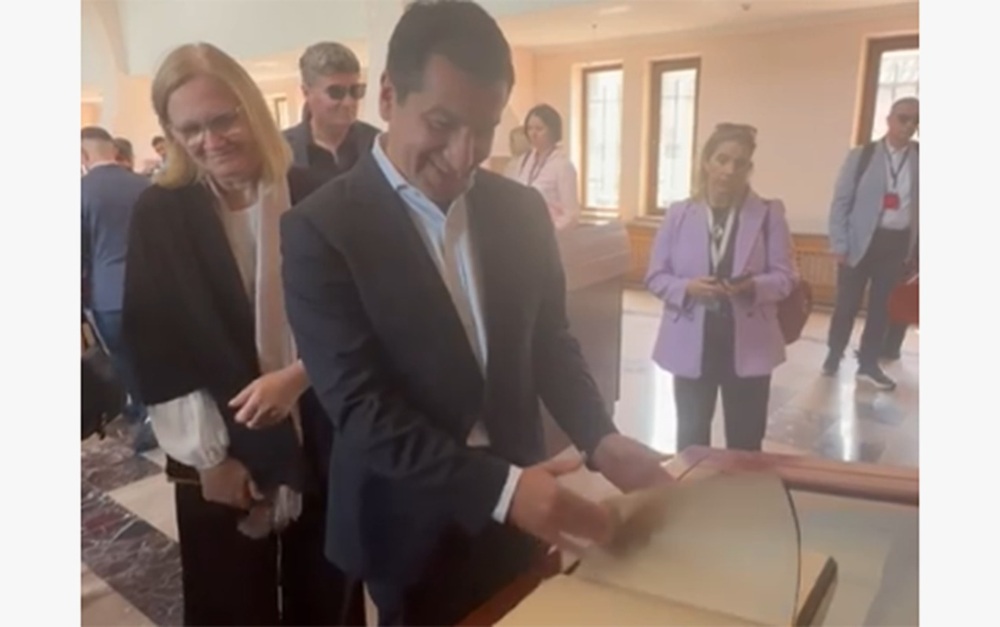
Why did the empty book alarm the Armenian media?
The most discussed part of the visit in the Armenian media was the images taken at the Ganjasar monastery.
Hikmet Hajiyev showed the diplomats one of the publications exhibited as an ancient religious book in the monastery. It was demonstrated that only a few pages of the book contained text and illustrations, while the other pages were completely blank.
The images show the Azerbaijani official flipping through the book in front of the diplomats. These very frames caused serious concern in the Armenian media.
Armenian authors hastily tried to prove that the book was not an original manuscript, but a reproduction prepared for the museum. Historian Hamlet Petrosyan wrote on social media that only certain pages were reproduced for the exhibition, and the rest of the book was left blank in advance. According to his claim, the original manuscripts are preserved in Matenadaran in Yerevan.
The Armenian side's explanation raises new questions. If the publication was merely a reproduction prepared for display, why was its status not clearly indicated? Why did a large part of the museum exhibit presented to the diplomats consist of blank pages? The scientific and museological necessity of copying only two pages of a historical manuscript and then binding hundreds of blank pages is also not explained.
In other words, as soon as the “ancient book” that the Armenian media tried to defend at length was opened in front of the diplomats, not history, but blank pages emerged from it.
Armenians are again trying to name Azerbaijani cities
Another point that draws attention in the presentation of the Armenian media is the continuous distortion of the names of Azerbaijani territories.
Armenian publications referred to Karabakh as “Artsakh”, Khankendi as “Stepanakert”, and Shusha in some cases as “occupied Shushi”. It is as if the visit was organized not to the sovereign territory of Azerbaijan, but to some administrative district of Armenia.
However, Armenia itself has declared that it recognizes the territorial integrity of Azerbaijan of 86.6 thousand square kilometers. The text of the peace agreement initialed in August 2025 also envisages that the parties recognize each other's sovereignty, territorial integrity, and inviolability of borders. The disclosed text of the agreement also reflects the rejection of mutual territorial claims.
The Armenian media, however, continues to present Azerbaijani cities with names invented by the separatist regime, ignoring the principles signed or declared to be accepted by the country's leadership.
This struggle over geographical names shows that Azerbaijan's sovereignty is still not internally accepted in Armenian society.
Yerevan officials state at international events that they recognize the territorial integrity of Azerbaijan, while the Armenian media and political circles return to the phrases “Artsakh”, “Stepanakert” and “occupied Shushi” at the first opportunity.
A legitimate question arises: Is Armenia's true position the peace statements voiced at official meetings, or the territorial claims continuing in the country's parliament, media, and public discussions?
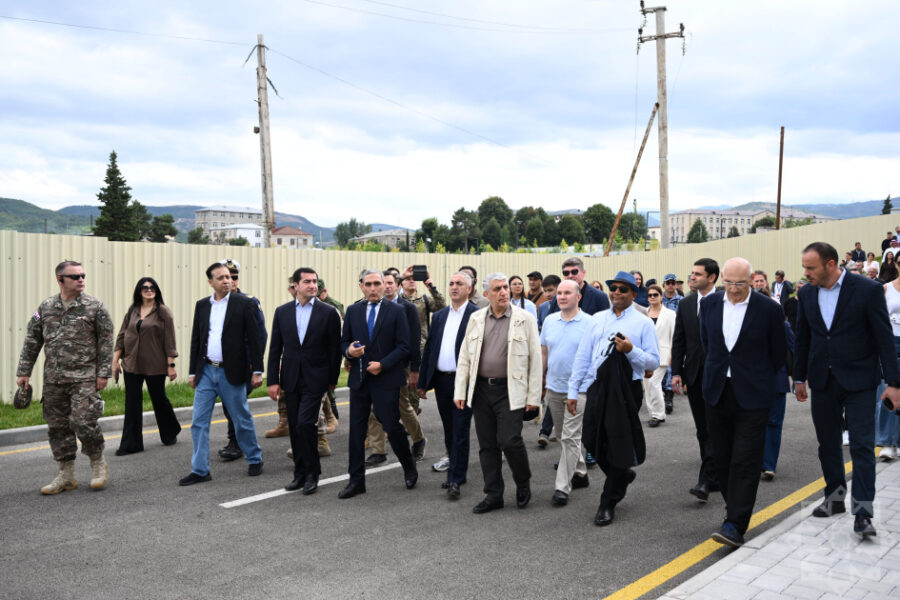
Why were diplomats targeted?
Armenian circles were not content with merely addressing their protests to Azerbaijan. The names of the diplomats who came to Karabakh were listed separately, and they became targets of public pressure.
The “301.am” platform, known for its radical stance, published the names of representatives from the USA, France, Great Britain, the European Union, Mexico, Pakistan, Indonesia, Uzbekistan, and Kyrgyzstan.
The website presented the diplomats' visit to Khankendi, Shusha, Ganjasar, and Khudavang as legitimizing Azerbaijan's position on Karabakh. The article stated that even the silence of foreign representatives during the visit could be considered “complicity” and called on diplomats to give a public account. In the article, where they stood in Karabakh, which monument they entered, and where they took pictures even became a subject of accusation.
Listing the names of diplomats in this way is not ordinary criticism. This is a message to foreign representatives: “If you visit the Karabakh region of Azerbaijan, you will be targeted in Armenia.”
Sergey Shahverdyan, who introduces himself as the head of the “Tourism and Culture Development Agency” of the former separatist entity, also addressed an open letter to the diplomats. He specifically tried to demand an explanation from the representatives of the USA, France, and Russia for their visits to Karabakh.
The organization called “Artsakh Union” issued a statement condemning the visit of foreign diplomats. In the statement, the event organized by Azerbaijan on its territory was called a “staged diplomatic visit”. The organization, which tries to keep the separatist ideology alive, evaluated the participation of diplomats as support for Azerbaijan's position.
A more dangerous tone was observed in the thoughts shared by Armenian historian Hayk Demoyan on social media. He wrote that what happened could change and that such changes sometimes have a “heavy price”. He used expressions suggesting that innocent people could pay this price.
Such rhetoric directly goes beyond the boundaries of diplomatic discussion and creates an implicit threat. The publication of the names of diplomats visiting Karabakh, demanding accountability from them, and then voicing messages about a “heavy price” indicates the existence of a dangerous political atmosphere in Armenia's revanchist circles.
The issue also stirred up the Armenian parliament
The discussion that started on social networks moved to the Armenian parliament on September 14.
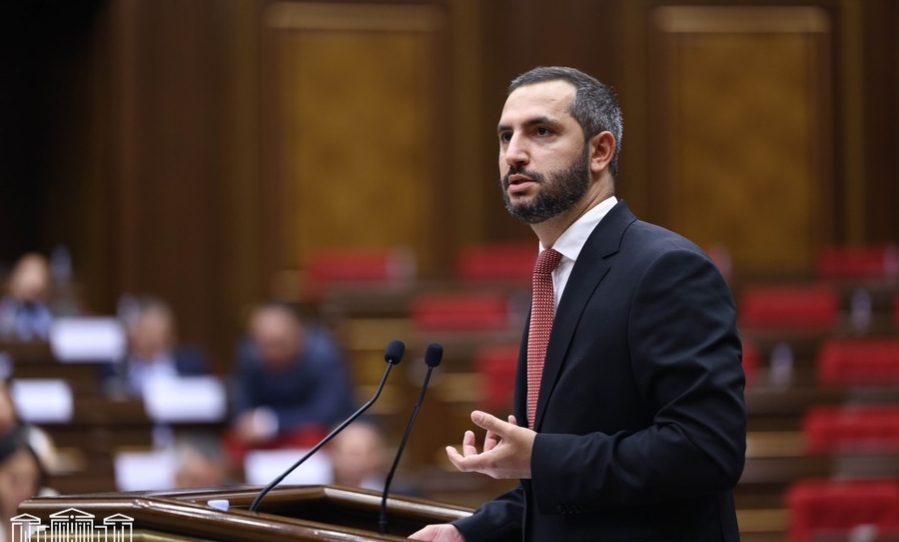
Artur Khachatryan, secretary of the opposition “Hayastan” faction, demanded that the Armenian government express its position against Azerbaijan at the highest level. He called for official steps to be taken against the presentation of Ganjasar and Khudavang as Caucasian Albanian heritage.
Opposition MP Anna Grigoryan called on the parliament leadership to declare Ganjasar an Armenian monument. She accused the Armenian government of not responding to the information given by Hikmet Hajiyev to the diplomats.
MP Mesrop Manukyan called Hikmet Hajiyev's presentation in Ganjasar and the participation of diplomats from European countries in the visit a “disgrace”. He announced that the opposition faction would react separately to the issue.
Thus, the Azerbaijani official's informing diplomats about historical monuments on our country's territory was discussed in the Armenian parliament almost as an emergency.
According to the opposition's approach, the Armenian government should intervene in a diplomatic visit held within another state, issue a note to Azerbaijan, and start proving to foreign diplomats to whom Ganjasar belongs.
Apparently, for the Armenian opposition, the borders have only changed on the map. In political thought, however, the habit of interfering in Azerbaijan's sovereign territories still remains.
The government criticizes, but tries to keep its distance
Deputies of the ruling “Civil Contract” party took a more cautious stance compared to the opposition.
MP Sona Ghazaryan called Hikmet Hajiyev's statements about Ganjasar “unfounded”. At the same time, she stated that peace already exists, that it needs to be preserved, and that the parties should be careful in their statements. The MP also called for consideration of the agreements reached between Azerbaijan and Armenia and the progress towards normalization.
Another deputy of the ruling party, Armen Khachatryan, reacted nervously to repeated questions from journalists, stating that the topic was overly exaggerated. According to him, such statements are expected after 30 years of conflict, and the issue has been answered many times.
Although these reactions show that a certain pragmatic approach has formed within the Armenian government, representatives of the ruling party also cannot completely abandon the old historical theses regarding Karabakh. The reason for this is the fear of being subjected to pressure from society and the revanchist opposition.
The Yerevan leadership understands that Azerbaijan's territorial integrity is no longer a subject of discussion. However, stating this openly to Armenian society is still considered a political risk.
Why is the Armenian MFA silent?
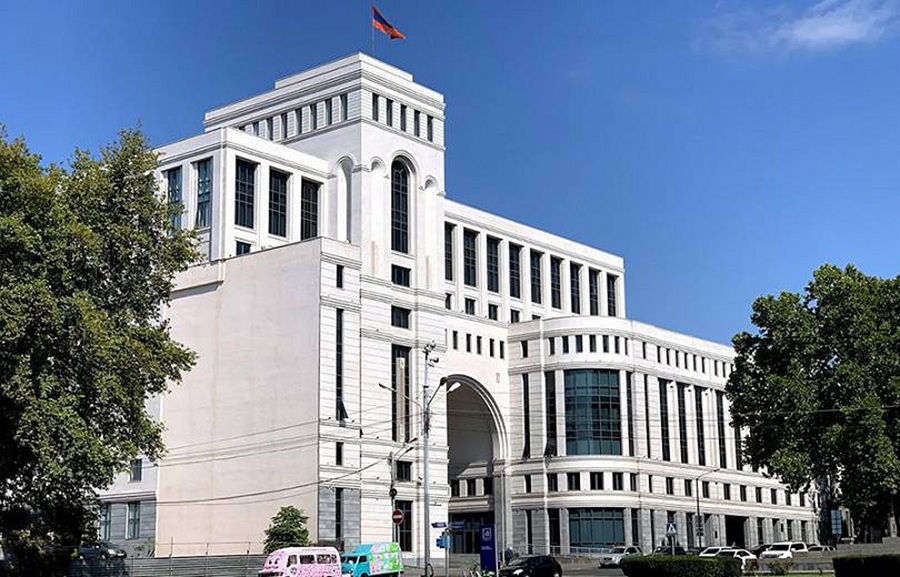
While the material was being prepared, no separate official statement from the Armenian Ministry of Foreign Affairs regarding the visit was recorded.
The reason for this silence is understandable. If the Armenian MFA officially protested Azerbaijan's organization of a visit by foreign diplomats on its territory, it would effectively interfere in Azerbaijan's internal affairs.
On the other hand, protesting the visit would contradict the Armenian leadership's statements about recognizing Azerbaijan's territorial integrity.
Therefore, official Yerevan remains silent, but a protest campaign is being carried out through close media outlets, diaspora organizations, and former representatives of separatist entities.
This picture shows that Armenia has transitioned to peace rhetoric at the state level, but a significant part of its socio-political consciousness still lives with pre-war claims.
The real concern is not Ganjasar
It appears from the reactions of the Armenian media that the main concern is not only related to the historical affiliation of Ganjasar and Khudavang.
Armenian political circles see the visit of foreign diplomats to Khankendi, Shusha, Aghdara, and Kalbajar at the invitation of Azerbaijan as an international acceptance of the post-conflict reality.
Diplomats visit Karabakh as Azerbaijani territory, get acquainted with projects implemented by the Azerbaijani state, and are accompanied by Azerbaijani officials throughout the visit. No permission is obtained from Yerevan for this, the opinion of the Armenian side is not sought, and the existence of the former separatist entity is not taken into account in any way.
This is precisely the reality that revanchist circles do not want to accept.
By discussing the blank pages of the book in Ganjasar, they are actually trying to reopen another politically closed page. But the previous page of the Karabakh issue has already been closed. Azerbaijan has fully restored its sovereignty, and only Baku decides which diplomatic visit will be held in the region.
Why is Azerbaijan's constitutional demand justified?
The recent reactions in Armenia once again show that Azerbaijan's demand for changes to this country's Constitution is not a formal or technical issue.
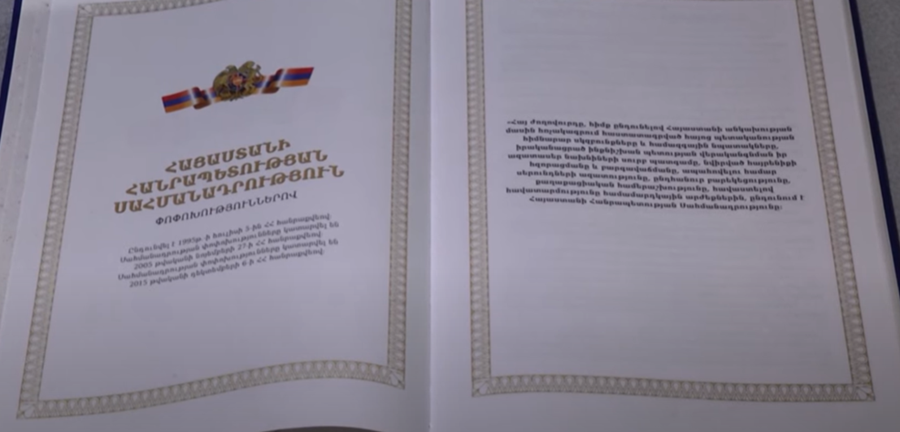
The preamble of the Armenian Constitution is based on the principles and national goals enshrined in the country's 1990 Declaration of Independence. That Declaration refers to the decision of December 1, 1989, on the “unification” of the Armenian SSR with the former “Nagorno-Karabakh” Autonomous Region. The current preamble of the Constitution maintains this as one of the foundations of Armenian statehood.
The Armenian side says that these provisions are not direct territorial claims against Azerbaijan. However, if the country's deputies, media, and diaspora organizations still call Azerbaijani cities by other names, present Karabakh as “occupied territory”, and target diplomats visiting Azerbaijani territory, it is difficult to say that Baku's concern is unfounded.
Apart from the text of the Constitution, political behavior in Armenia shows that the claims linked to that text continue to live in society.
Azerbaijan rightly demands that the peace agreement to be signed does not contradict Armenia's supreme legal document. Signing a document recognizing Azerbaijan's territorial integrity on the one hand, and preserving a constitutional basis that refers to the idea of uniting Karabakh with Armenia on the other hand, does not create a legal guarantee for lasting peace.
President Ilham Aliyev also stated that the signing of a final peace agreement is possible after Armenia removes its territorial claims against Azerbaijan from its Constitution. Baku's position is also shown in the international media as one of the main conditions for the peace agreement.
The reaction created in Armenia by a diplomatic visit to Karabakh is the best answer to why Azerbaijan wants legal guarantees. Those who protest diplomats going to Khankendi today may tomorrow put forward a political claim by calling the same city “Stepanakert” again.
Peace rhetoric, revanchist thinking
Azerbaijan taking diplomats accredited in its territory to its cities is an internal affair of our country. There is no need for Armenia's consent to determine the route of the visit, or to show the delegation which construction project or historical monument.
Azerbaijan took diplomats not to Armenian territory, but to Khankendi, Shusha, Aghdara, and Kalbajar. These territories have always belonged to Azerbaijan under international law, and today they are under the full sovereign control of the Azerbaijani state.
The campaign launched by politicians, deputies, diaspora organizations, former separatists, and media resources in Armenia against a single visit raises serious questions about how ready Armenian society is for the peace agenda.
Publishing the names of foreign diplomats, accusing them, demanding accountability, and taking the discussion to the rhetoric of veiled threats shows the extent of revanchism in Armenian society.
Peace is not created only by the statements of heads of government. For this, society must abandon past claims and accept the territorial integrity of the neighboring state not only on paper but also in political thought.
If Yerevan talks about peace, it must first explain to its deputies, media, and diaspora that Khankendi, Shusha, Aghdara, and Kalbajar are Azerbaijani cities. Azerbaijan will not ask Armenia whom it will take to those territories.
The pages of the book shown to diplomats in Ganjasar may be blank. But the question facing Armenian society is not blank: are they truly ready for peace, or are they just trying to gain time after defeat?