The Democrats' takeover of both houses of Congress in America does not only change the internal political landscape of the United States. This result has the power to affect a number of geopolitical processes, from the war in Ukraine to the Middle East, from relations with Russia to competition with China, from the South Caucasus to the global economy. The eyes of the world are once again on Washington.
The result from the ballot boxes in America is actually a bigger event than one political party winning over another. This is a change in the balance of political power in the second phase of Donald Trump's rule, a narrowing of the White House's room for maneuver, and the emergence of the possibility of a new institutional confrontation in US foreign policy.
In the November 3, 2026 midterm elections, Democrats gained a majority in both the Senate and the House of Representatives. This result is considered as a voter reaction to Trump's political course. In particular, economic difficulties, rising prices, the war with Iran and the administration's foreign policy decisions are among the main factors affecting the election results.
The US political system has its own unique characteristics. The president heads the executive branch of the country, while Congress holds the mechanisms of legislation, budget, approval of appointments, and control over the executive branch.
Now the possibility of these two centers of power operating with different political wills is increasing.
Democrats will control both houses of Congress starting January 3. Of course, the current situation will create a serious obstacle to Trump's legislative initiatives. It seems that Trump's appointments will also become more difficult.
However, we must also emphasize that Trump has not yet lost his presidency. His veto power, executive orders, and authority to make diplomatic decisions remain. This means that a change in the balance of power within the government is taking place in America. To be more specific, Washington is entering a new phase of institutional confrontation.
_nThe struggle between Republicans and Democrats in America is a struggle over which line the country's domestic and foreign policy will be built on.
Republicans, especially Trump's political line, are built on national sovereignty, protectionism, strict migration policy, tariff mechanisms, and bilateral deals. Trump prefers direct political and economic agreements in international relations, rather than the traditional alliance system.
Democrats, on the other hand, traditionally prioritize multilateral diplomacy, cooperation with NATO and other international institutions, coordination with allies, and the preservation of a liberal international order.
This difference should not be absolutized either. Democrats also take a tough stance in strategic competition with China. Among Republicans, there are forces that advocate support for Ukraine and want to increase pressure on Russia. The main difference is not so much in the goals, but in the means chosen to achieve those goals.
Trump's policy relies more on individual leadership, political pressure, and economic levers. The Democrats' approach is closer to institutional coordination and collective decision-making with allies.
The victory of the Democrats is also a serious message to Trump's political influence. The voter actually evaluated the administration's activities. This result may also affect the political configuration of the 2028 presidential elections. But it is wrong to think that Trump has withdrawn from the political scene. On the contrary, the new resistance in Congress may also cause the White House to choose a tougher political tactic.
Russia-Ukraine war, will Washington's account with Moscow change?
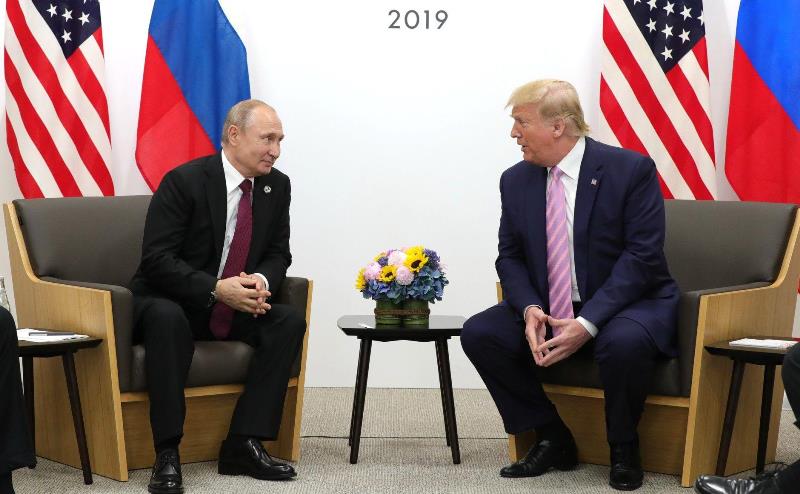
One of the most interesting issues in the world is this: How will the Democrats' majority in Congress affect the fate of the Ukrainian war? The answer to this question interests Moscow, Kyiv, and Europe.
During the Trump administration, serious changes occurred in Washington's attitude towards Ukraine. The previous administration's large-scale military and financial support model weakened, and issues of reviewing negotiations and sanctions policy in relations with Russia came to the fore.
Democrats, on the other hand, criticize Trump's relations with Moscow and the reduction of support for Ukraine.
Now the new political balance in Congress can create additional opportunities for Ukraine.
It can be assumed that Democrats will put forward legislative initiatives to increase military and financial aid to Ukraine. The issue of tightening sanctions mechanisms against Russia will be on the agenda again. Possible agreements between the White House and Moscow will face more serious political and institutional control in Congress. The coordination opportunities of European countries with Washington on the issue of supporting Ukraine will increase.
Moscow, on the other hand, will face another problem. In parallel with the diplomatic relations it established with the Trump administration, Russia will have to reckon with tougher positions in Congress.
Thus, in Washington's relations with Moscow, a dual political center will emerge, with Trump in the White House and a new political force dominated by Democrats in Congress. All this means a more complex diplomatic environment for the Kremlin than before.
How will the Iran-Israel confrontation be...
One of the most serious geopolitical consequences of the elections in America will be felt in the Middle East. Because in any case, the US and Israel's war with Iran will go beyond the regional security plane and directly affect energy markets, international trade, oil prices, maritime transport, and global economic stability.
The economic burden created by the war has also entered the daily lives of American voters. Rising prices, energy costs, and the financing of military operations have become one of the factors weakening the Trump administration's political positions.
The new Democratic Congress may bring the issue of financing this war and the president's military powers to a more serious discussion. The main issue here is the constitutional control of war powers.
The US Congress can limit additional funding for military operations, investigate the administration's decisions, and exert political pressure on the legal basis of the war.
New discussions may also arise on the issue of military aid to Israel. In particular, issues of civilian safety, arms export control, and the compliance of military operations with international law will occupy a more prominent place on the Democrats' agenda.
However, support for Israel is not only the position of Republicans in US politics. There is also a strong political group among Democrats who consider Israel's security a strategic interest.
Therefore, it is not about Washington turning its back on Israel. It is about the possibility of changing the conditions of support, political control, and the future model of military cooperation.
For Iran, the election results may also create certain diplomatic opportunities. Of course, Tehran will seek a new platform for negotiations by taking advantage of the strengthening of political resistance to the war within the US.
But let's not forget that the victory of the Democrats does not automatically mean the normalization of relations with Iran. Iran's nuclear program, regional military activities, and security issues will remain on Washington's political agenda.
The biggest risk is the transition period until January. The possibility of the Trump administration escalating militarily before the new Congress begins its work will further complicate the regional situation.
China, the common rival of two parties
There is a direction in American foreign policy where there is a serious strategic closeness between Democrats and Republicans. This is competition with China. Although the election results in Washington may create certain tactical changes for Beijing, it would not be correct to expect the strategic competition to stop.
Trump uses tariffs, trade restrictions, and economic pressure mechanisms against China. Democrats, on the other hand, pay special attention to technological superiority, the semiconductor industry, artificial intelligence, cybersecurity, and international partnerships in competition with China. That is, although the tools of struggle are different, the main strategic goal is similar, protecting the US's global economic and technological superiority is a priority. The new Congress will more seriously investigate Trump's tariff policy and trade relations with China. All this does not guarantee a softening of relations with Beijing.
The main issue for China is to correctly assess the opportunities arising from the political fragmentation of the US. Beijing may try to expand its economic partnerships in Asia, Africa, Europe, and the Middle East in this situation. In short, the political balance in Washington is changing, but the US-China strategic competition continues.
South Caucasus, what should Baku, Yerevan and Tbilisi expect?
The impact of political changes in America on our region also requires special attention.
The South Caucasus is currently one of the places where the geopolitical interests of great powers intersect. The foreign policy choices of Azerbaijan, Armenia, and Georgia, regional transport corridors, energy security, and relations with Russia are the main directions of this competition. Economic interests, energy routes, and strategic transit opportunities play an important role in the Trump administration's approach to the region.
The political change in Congress does not mean that there will be an immediate radical change in US policy towards Baku and Yerevan. The main implementer of this policy is still the White House and the State Department.
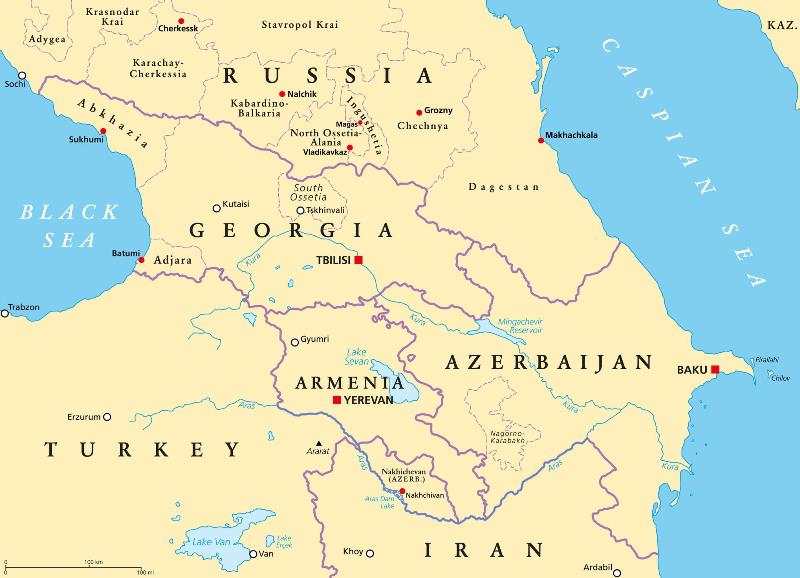
The main issue for Azerbaijan is to correctly read the changing Washington reality. Baku should prioritize strategic directions such as energy security, regional stability, transport and communication lines, and the fight against terrorism in its relations with the US.
At the same time, it is important that the peace agenda in Azerbaijan-Armenia relations progresses on the basis of regional realities, sovereignty, and mutual security principles. The future of economic and transit initiatives launched by the Trump administration in the region will also be in the spotlight.
Will the new Democratic Congress hinder these projects? Or will it support the strengthening of their institutional and economic foundations? The answer to such questions is not yet clear. One truth is that the South Caucasus is also in the sphere of interest of global powers. Azerbaijan's main task is to obtain strategic opportunities from this competition by protecting its national interests.
Middle East, new political configuration
The victory of the Democrats in Congress does not mean that US policy in the Middle East will completely change. However, it is inevitable that Washington's priorities in the region will be re-discussed. Israel's security, Iran's regional influence, the Palestinian issue, relations with Lebanon, Syria, and the Gulf countries will be evaluated in a new political plane. In particular, the financial and political cost of US military interventions will be discussed more.
Democrats may pay more attention to diplomatic solutions to regional conflicts, coordination with international partners, and humanitarian issues. Strategic priorities such as energy security, Israel's defense, and preventing Iran's nuclear program will not disappear with a change of party in US Middle East policy. The main issue that may change will be the means by which these priorities are implemented.
What the world media sees...
A striking point in the world media's approach to the elections is that the event is not presented as an internal political crisis of the United States.
Reuters analyzes the election results in the context of economic pressures, the energy crisis created by the Iran war, and the impact of Trump's foreign policy on voters.
Associated Press considers the Democrats' victory as a serious political protest against the Trump administration.
Al Jazeera, on the other hand, draws attention to the possible consequences of the changing composition of Congress in terms of the Iran war, aid to Ukraine, and US international obligations.
RFE/RL's analysis highlights the expansion of Congress's oversight capabilities, especially in the direction of Russia, Ukraine, and Iran.
The common conclusion of these approaches is that the American elections are an event that affects the future behavior of the international system.
What awaits the world...
It cannot be ruled out that what is happening in America will be the beginning of a new stage in the system of international relations. On one side is the president's executive power and individual political strategy, and on the other side are the institutional control mechanisms of Congress. The results of this confrontation will manifest themselves seriously in several directions.
The first scenario is that the Trump administration seeks a compromise with the Democrats, and diplomatic opportunities for ending the Iran war and economic stability expand.
Other options are also possible. The White House uses executive powers more actively despite Congress's resistance, a tough course in foreign policy continues, and political confrontation in Washington deepens. Or, the internal political fragmentation of the US weakens the trust of international allies in Washington. European, Asian, and Middle Eastern countries begin to build their security and economic strategies more independently. Each of these scenarios can have a different impact on the geopolitical architecture of the world.
The reality is that US political decisions, after passing through discussions within Washington, affect the front line in Kyiv, the security cabinet in Tel Aviv, diplomatic strategy in Tehran, economic planning in Beijing, and regional security calculations in Baku. So, it is a question of what to expect from the changing US and what the US can offer the world. Trump now faces a new political reality. Democrats have won, but what consequences this victory will have in world politics will be determined in the coming months.
Modern Research and Analysis Group