There are stages in the history of Azerbaijani statehood whose significance cannot be explained by a single event. State Sovereignty Day is also the result of such a historical stage. Behind this day lies three decades of occupation, the displacement of hundreds of thousands of people from their native lands, destroyed cities and villages, military and diplomatic struggle, a long-standing international mediation process, and finally, the full restoration of Azerbaijan's territorial integrity and state sovereignty.
By the Decree signed by President Ilham Aliyev on September 19, 2024, September 20 was declared State Sovereignty Day in the Republic of Azerbaijan. The Decree stated that the elimination of the 30-year occupation, the 2020 Patriotic War, and the anti-terrorist operation held on September 19-20, 2023, were the main stages leading to the full restoration of Azerbaijan's sovereignty.
30 years of occupation: forces threatening our sovereignty
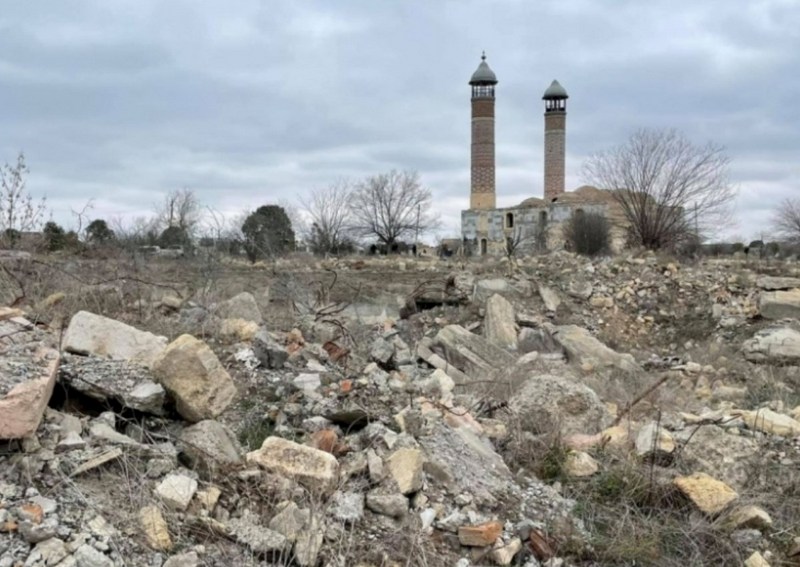
In the early 1990s, as a result of Armenia's military aggression against Azerbaijan, approximately 20 percent of the country's territory remained under occupation. During this period, the Azerbaijani population was subjected to ethnic cleansing, settlements were destroyed, the Khojaly tragedy occurred, and hundreds of thousands of people became internally displaced persons.
UN Security Council Resolutions 822, 853, 874, and 884 adopted in 1993 demanded the elimination of the occupation of Azerbaijani territories and the withdrawal of occupying forces. However, in subsequent years, the implementation of these resolutions was not ensured. The President of Azerbaijan has repeatedly emphasized in his speeches that these documents did not yield practical results for a long time.
Negotiations conducted within the framework of the incompetent OSCE Minsk Group also did not lead to a final resolution of the conflict for approximately 30 years. The Azerbaijani leadership, on the one hand, emphasized international law, UN Security Council resolutions, and the principle of territorial integrity in the negotiation process, and on the other hand, continued to strengthen the military and economic capabilities of the state.
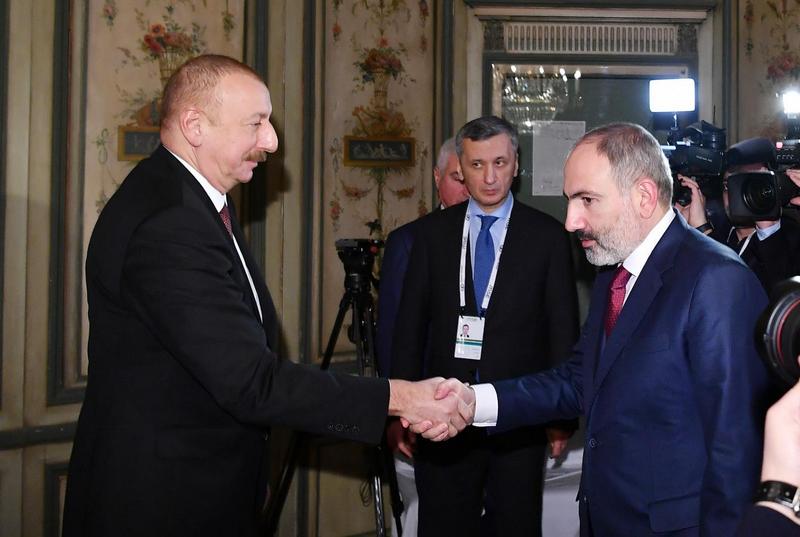
President Ilham Aliyev repeatedly expressed this approach in subsequent years. For example, in his speech at the Valdai Discussion Club on October 3, 2019, he used the phrase “Karabakh is Azerbaijan!” giving a strong response to Armenian Prime Minister Nikol Pashinyan's provocative statements that undermined negotiations, and once again presented Azerbaijan's position to the international audience.
Power factor in parallel with negotiations
One of the important features of this stage was the parallel conduct of diplomacy and military potential.
Since the 2000s, Azerbaijan has allocated significant resources to army building. In a speech in 2010, President Ilham Aliyev openly stated that the negotiation process was continuing, and at the same time, the army was being strengthened. In subsequent years, Azerbaijan's military-technical capabilities expanded, and cooperation in the defense industry and military-technical fields was established with various countries. In addition, increasing economic potential also became an important part of the state strategy.
Thus, by 2020, a state model had been formed before Azerbaijan that had serious capabilities not only diplomatically but also militarily. Azerbaijan, working for a just solution with a strong army and a strong economy, under the wise leadership of Ilham Aliyev, first considered a peaceful solution, and in the event of the futility of negotiations, a military path.
2020: 44-day war and new reality
On September 27, 2020, large-scale military operations began between Armenia and Azerbaijan. In response to the military provocations of the Armenian side, the Azerbaijani Army launched counter-offensive operations and, as a result of the 44-day war, liberated many of our occupied settlements, villages, and towns, including the city of Shusha, from occupation.
The trilateral statement signed by the leaders of Azerbaijan, Armenia, and Russia on November 10, 2020, provided for the cessation of military operations and the return of a number of territories to Azerbaijan. According to the document, the return of Aghdam, Kalbajar, and Lachin regions to Azerbaijan was also ensured peacefully. This was, in fact, Armenia's capitulation.
In his address to the nation on that day, President Ilham Aliyev called it a historic day for Azerbaijan, stating that the trilateral statement created a new stage in the resolution of the conflict.
However, the 2020 Victory did not mean the full restoration of Azerbaijan's state sovereignty. A Russian peacekeeping contingent was stationed in a certain part of Karabakh, and the problem of the remnants of Armenian armed forces in the region remained.
2020–2023: from war to full restoration of sovereignty
It was precisely this stage that determined the next direction of Azerbaijan's political-diplomatic and security policy.
The Azerbaijani side demanded the implementation of the provisions of the November 10, 2020 statement regarding the withdrawal of Armenian armed forces from Karabakh. At the same time, the issue of the presence of illegal armed groups in Karabakh, the transportation of weapons and ammunition, and mined areas remained on the agenda. New mines and weapons were transported to Azerbaijan's sovereign territories with the irresponsibility of the Russian military contingent and the sponsorship of official Yerevan, and attempts were made to maintain a permanent hotbed of separatism.
On April 23, 2023, Azerbaijan established a border checkpoint in the direction of Lachin. The President called this event an important stage in the process of full restoration of Azerbaijan's territorial integrity. After this, the remnants of the separatist regime in Karabakh deliberately began to escalate the situation. On September 18, 2023, information was released about the application of radio interference to the GPS systems of civil aviation vehicles using Azerbaijan's airspace. On September 19, Azerbaijani citizens and police officers were killed as a result of mine explosions in the direction of Khojavend.
In a telephone conversation with US Secretary of State Antony Blinken on September 19, President Ilham Aliyev assessed these events as a continuation of provocations against Azerbaijan's sovereignty.
23 hours: full restoration of sovereignty
On September 19, 2023, the Azerbaijani Army launched local anti-terrorist measures in the Karabakh economic region. The main objectives of the operation were to disarm and withdraw the remnants of the Armenian armed forces from Azerbaijani territory, neutralize illegal armed groups, and restore the constitutional order. The operation lasted only 23 hours.
On September 20, 2023, at 13:00, an agreement was reached on a ceasefire. This was followed by the laying down of arms by the formations of the Armenian armed forces located in Karabakh, their withdrawal from combat positions, and their departure from Azerbaijani territory. In the Decree of the President of Azerbaijan dated 2024, precisely this result is assessed as the full restoration of Azerbaijan's state sovereignty.
In the head of state's address to the nation on September 20, 2023, mine terror, armed provocations, and the threats of illegal military presence in Karabakh were once again confirmed as the reasons for the start of the operation. After this event, the activities of the separatist entity in Karabakh were terminated, and the constitutional jurisdiction of the Azerbaijani state over the entire territory was restored.
Flag in Khankendi: triumph of justice
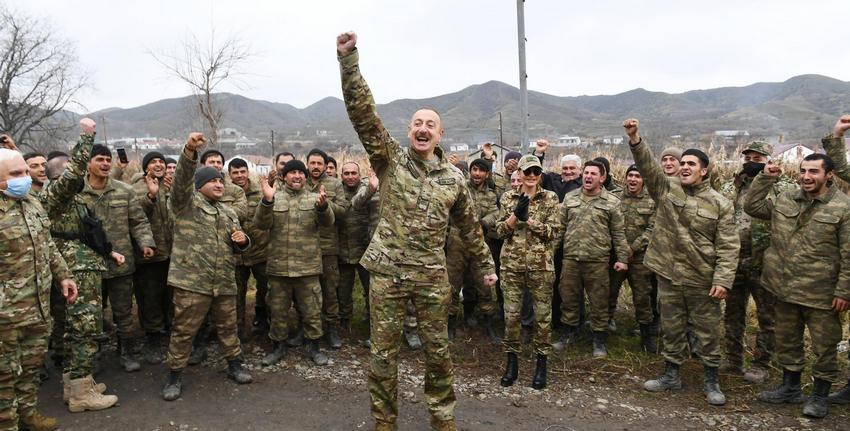
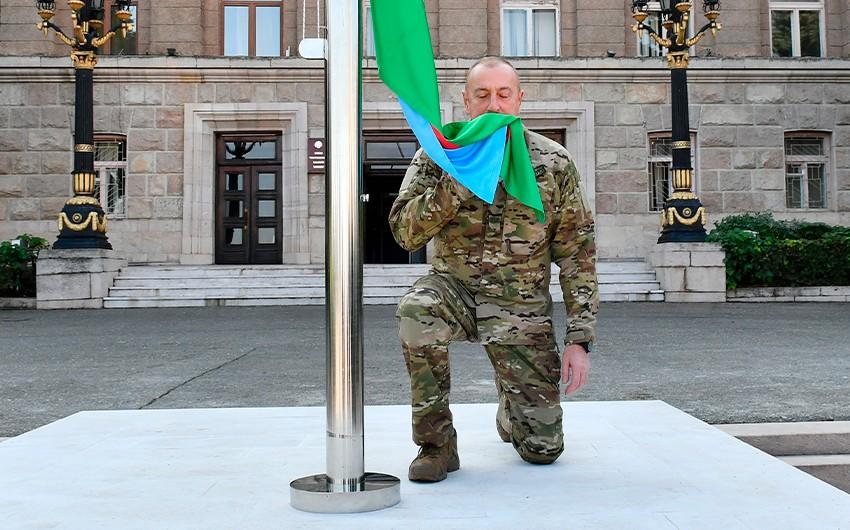
25 days after the 23-hour operation - on October 15, 2023 - President Ilham Aliyev raised the State Flag of the Republic of Azerbaijan in Khankendi.
This event had special significance both politically and symbolically. In his speech, the President stated that one of the main tasks he set for himself when he was elected head of state 20 years ago was to raise the Azerbaijani flag in all occupied territories.
“Every day, every hour we were moving towards this sacred goal,” said the President, emphasizing that this was the result of a long-term state policy.
Thus, while the military Victory of 2020 completed the decisive stage in the restoration of territorial integrity, the September 2023 events ensured the full restoration of state sovereignty.
Withdrawal of peacekeepers: a new stage
After the restoration of sovereignty, the issue of the presence of the Russian peacekeeping contingent in the region also disappeared from the agenda.
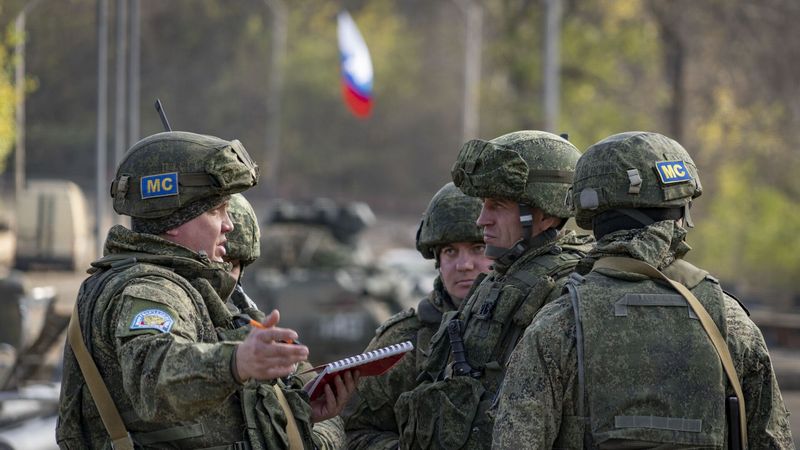
In April 2024, the withdrawal of Russian peacekeepers from Azerbaijani territory began. The process was completed in May. During that period, a contingent of approximately 2,000 people was withdrawn from Karabakh.
This event was an important stage in terms of the completion of the temporary security mechanism created in 2020 and the strengthening of the Azerbaijani state's full control over the entire territory.
President Ilham Aliyev's political line: diplomacy, military power, and state will
It is not enough to look at this chronology only through the prism of military events. One of the main features of the post-2003 period was the maintenance of the Karabakh issue as one of the long-term priorities of Azerbaijan's state policy. In an interview with local television channels in 2023, President Ilham Aliyev, evaluating his activities over the past 20 years, highlighted the continuation of Heydar Aliyev's political course in 2003 as an important point. At the inauguration ceremony on February 14, 2024, the President specifically mentioned the restoration of the country's territorial integrity among the promises he made since 2003 and stated that Azerbaijan decided its own destiny.
The essence of this policy can be summarized in three main directions:
Firstly – protection of the international legal position. Azerbaijan consistently brought to the agenda over the years that Karabakh is an internationally recognized territory of the country and that UN Security Council resolutions must be implemented.
Secondly – increasing the military and economic potential of the state. Against the background of the fruitless diplomatic process, Azerbaijan strengthened its defense capability and gained military superiority in 2020.
Thirdly – transforming the military result into a political-legal result. After the 2020 Victory, consistent steps were taken towards the restoration of territorial integrity, and in 2023, towards the full restoration of state sovereignty.
In this regard, the September 2023 events yielded a broader result than a separate military operation: the de facto and legal administration of the Azerbaijani state over Karabakh was restored. The architect of this magnificent success is President Ilham Aliyev, who brought the process to its logical conclusion with his successful, far-sighted, and consistent policy.
September 20 – turning the result into a state symbol
The declaration of September 20 as State Sovereignty Day by the Decree signed on September 19, 2024, formalized this historical process at the state level.
This day is now celebrated with the reality that the state flag of Azerbaijan flies throughout the country.
On one side is the occupation that began in the early 1990s and the conflict that lasted for nearly 30 years, and on the other side is the 44-day war of 2020 and the 23-hour anti-terrorist operation of 2023.
The main result of this chronology is as follows: Azerbaijan first restored its territorial integrity, and then fully ensured its state sovereignty.
In this sense, September 20 is not just a new holiday on the calendar. This date symbolizes the stage in Azerbaijan's modern statehood history where long-term political, diplomatic, economic, and military processes were concluded.
Following 30 years of occupation, fruitless mediation processes, and security problems that continued after 2020, the new reality created in September 2023 marked the beginning of a completely new stage in Azerbaijan's state building.
The essence of State Sovereignty Day emerges precisely here: ensuring the unified legal space of the Constitution and state power throughout Azerbaijan.
And the path leading to this date was not created in one day. Behind it lies a 30-year struggle, a long-term state policy, diplomatic activity, military preparation, and finally, an operation that concluded in 23 hours.