On August 8, 2025, the Joint Declaration signed in Washington by Azerbaijani President Ilham Aliyev and Armenian Prime Minister Nikol Pashinyan, with the participation of US President Donald Trump, was presented as the beginning of a new stage in the South Caucasus.
Modern.az recalls that in the document, the parties declared their commitments to close the page of the past conflict, respect the territorial integrity and sovereignty of states, refrain from the use of force, and reject revanchist attempts. Within the framework of that meeting, the foreign ministers of Azerbaijan and Armenia initialed the agreed text of the peace agreement. After this, the topic of peace, dialogue, and opening of communications in the region came to the forefront in official Yerevan's rhetoric. Pashinyan announced his intention to continue the peace agenda with Azerbaijan in various speeches. On August 8, 2026, in a phone conversation with President Ilham Aliyev, he noted the progress made in normalizing relations after the Washington agreement and the development of economic ties between the two countries. On August 31, the two leaders met in Bishkek and discussed the peace agenda.
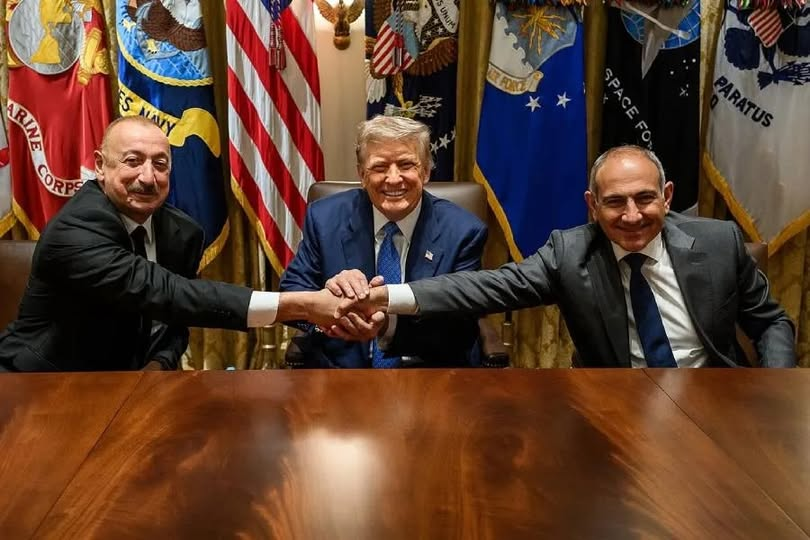
On August 24, Pashinyan also stated that the signing of the Armenia-Azerbaijan peace agreement remains one of his government's priorities and that they will continue to work with Azerbaijan in this direction. That is, the fact is that after August 8, 2025, peace messages were voiced at the official level, high-level meetings were held, and processes related to border delimitation and regional communications continued.
But there is another parallel process: Armenia is increasing its military potential.
Peace agenda and military modernization proceed simultaneously
Official Yerevan presents the reforms in the army, including armament, as strengthening defense capabilities after the 2020 war. However, the scale and directions raise certain questions.
In recent years, Armenia has moved away from the Russian-dependent military supply model and expanded cooperation with new arms suppliers, primarily India and France. A military parade in May 2026 showcased Indian-made air defense systems, French-made artillery and armored vehicles, Armenian-made drones, and Russian-made missile systems. Reuters described this parade as an event where Armenia displayed foreign weapon systems more broadly.
More interestingly, the discussion is no longer just about acquiring weapons from abroad.
Pashinyan himself stated in June 2026 that since 2022, the Armenian government has invested approximately half a billion dollars in the military industry. According to him, a new military-industrial complex is being formed in the country, and the first exports and large contracts have also been implemented.
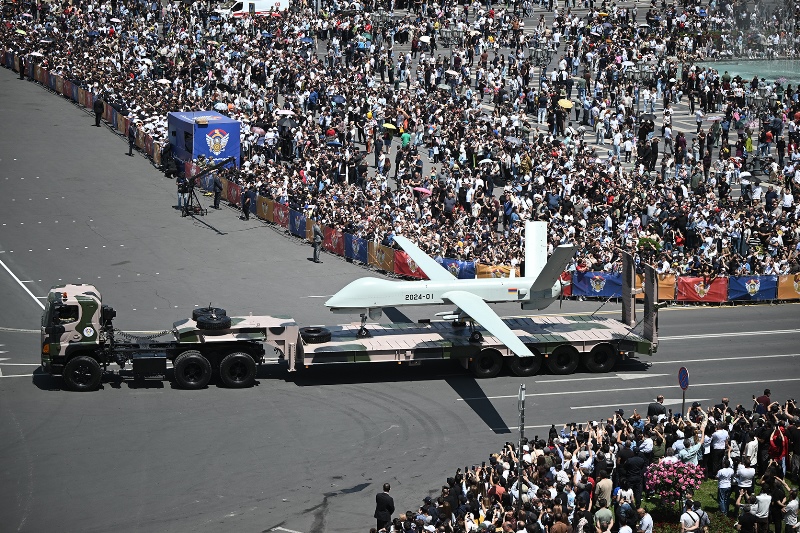
In the statements of the Armenian Ministry of High-Tech Industry, the main directions of the military industry include drones equipped with artificial intelligence, robotic systems, electronic warfare tools, optical-electronic and thermal imaging systems, surveillance and perimeter control technologies, unmanned aerial vehicles, and missile guidance systems.
The participation of 30 Armenian military-industrial companies with a single pavilion at the “Eurosatory” defense exhibition in June 2026 also indicates that this policy has taken on an institutional character.
Financial and military-logistical support from Europe
Armenia's security cooperation with the West is also expanding. In January 2026, the European Union approved a new aid package of 20 million euros for the Armenian Armed Forces. This brought the total amount of aid allocated to Armenia within the framework of the European Peace Facility to 30 million euros. The EU states that these funds are primarily intended for logistics, medical capabilities, crisis preparedness, and increasing the interoperability of the army.
In addition, within the broader framework of EU-Armenia relations, there is a Resilience and Growth Plan of 270 million euros for 2024–2027. A large part of this package is directed towards economic, institutional, and infrastructure projects.
Thus, the picture here is also more complex: Armenia receives support from the West in economic, institutional, and security fields, but all these funds are directed towards military purposes.
Fortifications, new positions on the border
Another notable issue is Armenia's construction of military infrastructure along the border with Azerbaijan.
In August 2026, Armenian Defense Minister Suren Papikyan familiarized himself with the construction of new reinforced concrete fortifications in the border areas with Azerbaijan. The Armenian Ministry of Defense presented these works as part of increasing the defense capability of the territory.
This is an open fact indicating that engineering and fortification works are ongoing. Armenia's simultaneous reorganization of the army, acquisition of various weapon systems from abroad, expansion of the local military industry, and increased investment in drone and robot technologies show that this process is not just about a few trenches and concrete structures.
Armenia is also going into space
One of the interesting points is the development of space capabilities. Armenia's first satellite, ARMSAT-1, was launched into orbit in 2022. The main mission of the satellite was Earth observation, and Armenian officials stated that its data was also used for security monitoring.
In September 2026, Pashinyan announced that space capabilities were identified as a separate strategic goal in Armenia's government program for 2026–2031. According to him, Armenia plans to launch at least three satellites – two for Earth observation and one for telecommunications.
This, in turn, shows the reality of the modern era where military potential is not only composed of tanks, artillery, and missiles. Satellite observation, unmanned systems, artificial intelligence, and communication technologies have become important elements of future wars.
So why did the 22nd diplomatic visit cause such a harsh reaction?
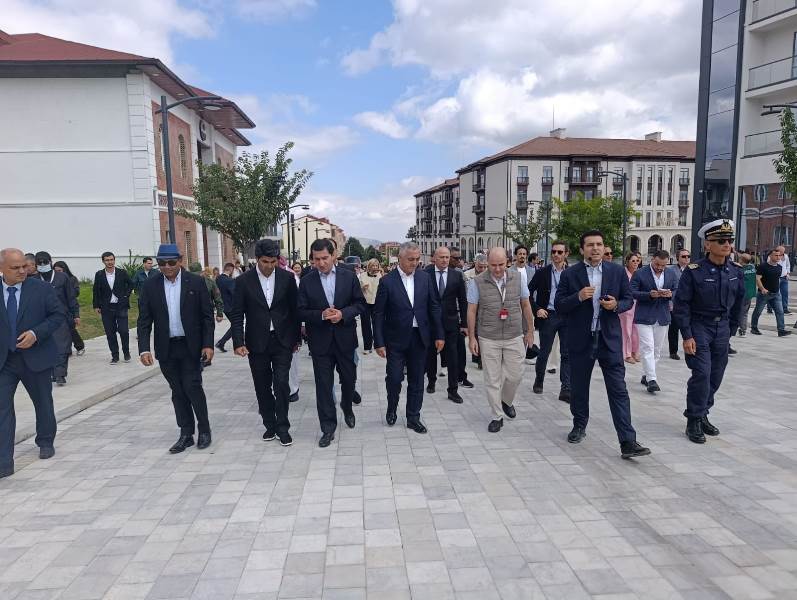
Against this background, the event that took place on September 11-12 attracts special attention. Within the framework of the visit organized by Azerbaijan, approximately 150 representatives from 58 countries and 9 international organizations visited Karabakh and Eastern Zangazur. This was the 22nd visit of foreign diplomats to the liberated territories.
Following the visit, sharp reactions began within Armenia. A number of political and public circles criticized the visit of the diplomats, and some individuals protested the position of foreign diplomats.
However, there is another detail here. The Secretary of the Security Council of Armenia, Armen Grigoryan, adopted a more cautious stance after the incident, stating that harsh public responses could harm negotiations. According to him, sometimes a “sharp response” may look good to the domestic audience, but it may not benefit the peace process.
This detail shows that the attitude towards the event is not uniform even in official Yerevan. However, the resonance created by that visit once again revealed an important political problem: whether the Karabakh issue has been completely closed within Armenia.
The “Armenian heritage” narrative re-emerges
After the visit, a number of institutions associated with Armenia and the Armenian diaspora brought up the issue of the historical affiliation of the Gandzasar and Dadivank monasteries. Pashinyan, on the one hand, stated that he considered Azerbaijan's views in this direction unacceptable, and on the other hand, emphasized that Armenia must continue to “approach peace with care.”
This is actually an important nuance.
Because in the document signed on August 8, 2025, the parties agreed to close the page of past enmity and reject “any revanchist attempt.”
Naturally, the expansion of political campaigns around the historical and cultural heritage of Karabakh just one year after such a document raises questions.
The issue of Armenia's Constitution has not yet been fully resolved
Another important issue concerns the Constitution of Armenia. Azerbaijan has long stated that for the final signing of the peace agreement, the issue of eliminating territorial claims against Azerbaijan within Armenia's constitutional and other legal framework must be resolved.
In the Washington document, the parties reaffirmed their respect for the 1991 Almaty Declaration and the territorial integrity of states. Thus, although the process has moved forward politically, the issue of making peace fully irreversible from a legal and institutional perspective is still on the agenda.
The main question: why is armament necessary?
It is at this point that the parallelism between Armenia's military policy and its peace rhetoric creates an analytical question.
If the main goal is long-term peace, economic integration, and the opening of regional communications, why is the military industry rapidly developing? Why is special attention paid to new drone, robot technologies, and electronic warfare systems? Why are relations with new military partners like France and India being deepened? Why are new fortifications being built on the border?
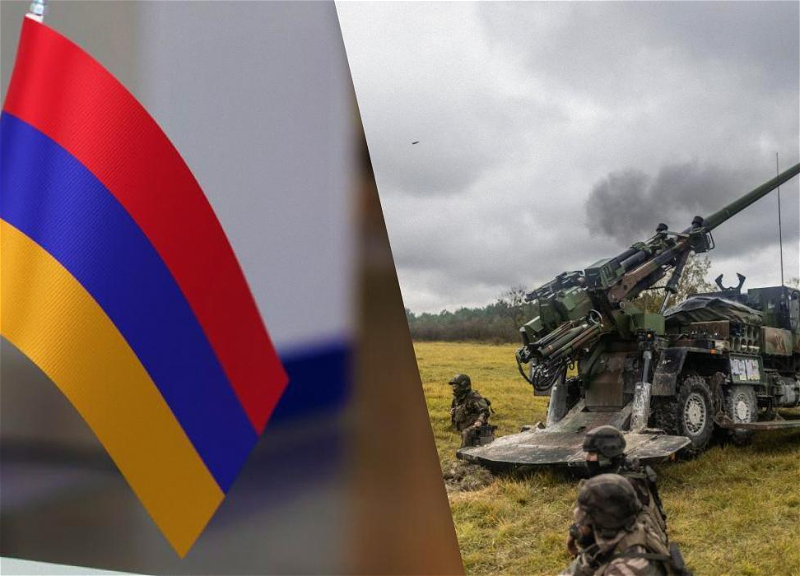
There is another point in Azerbaijan's security approach: if the peace agreement has not yet fully entered into force and military potential is being increased in parallel, it is impossible to ignore the risks this creates.
Is the “3rd Karabakh War” a realistic scenario?
Current open data does not indicate that Armenia has decided to start a new war against Azerbaijan in the near future.
On the contrary, in the last year, high-level meetings have been held between the parties, certain steps have been taken on economic and transport links, and the Armenian leadership has repeatedly stated its support for the peace agenda. In the joint statement of the US, Azerbaijan, and Armenia in August 2026, it was also noted that stability was maintained on the border and steps were taken towards normalization.
But at the same time, Armenia's military modernization program continues. The apparent contradiction between these two processes raises the main question: Is Yerevan strengthening itself to ensure peace, or is it building its capabilities for a possible future confrontation?
It is not possible to give a definitive answer to this question at present.
The Azerbaijan factor should not be forgotten either
On the other hand, after the 44-day war in 2020 and the local anti-terrorist measures in September 2023, the military-political reality in the region has fundamentally changed.
Azerbaijan has already restored its sovereignty over Karabakh. President Ilham Aliyev has also repeatedly warned against Armenia's revanchist attempts.
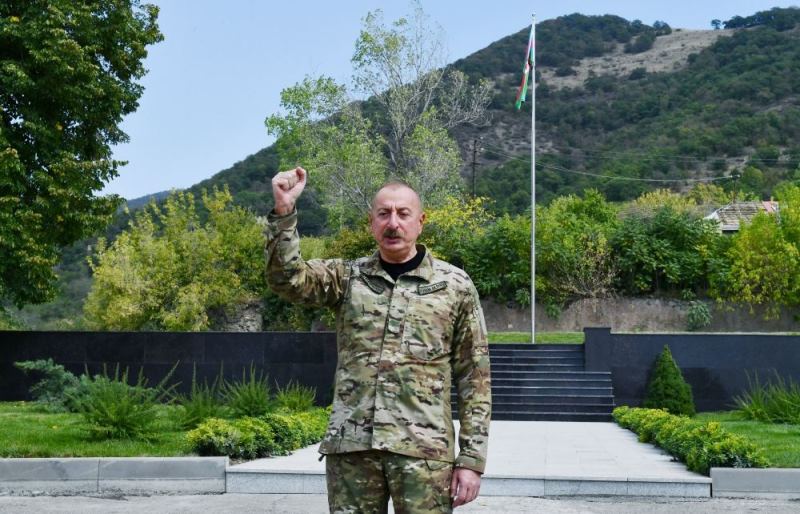
The essence of these warnings has not changed: Azerbaijan states that it supports the peace process, but considers the increase in Armenia's military capabilities and the strengthening of revanchist rhetoric as a security issue.
On the one hand, Armenia, through Pashinyan, speaks of “peace,” “dialogue,” “opening of communications,” “regional cooperation,” and “peace dividends.”
On the other hand: it cooperates with new foreign arms suppliers, acquires various military systems from India and France, directs large state funds to the military industry, develops the production of drone and robot systems, invests in electronic warfare and surveillance technologies, creates new fortifications and defense infrastructure on the border, expands satellite and Earth observation capabilities, and deepens security cooperation with Western structures.
All this does not necessarily mean the preparation of a third Karabakh war. However, political statements alone are not enough for the peace process to be irreversible. Military doctrine, armament policy, border infrastructure, and domestic political rhetoric must also be consistent with the logic of peace.
In this regard, the tension around the 22nd visit of foreign diplomats to Karabakh in September cannot be ignored. Because the most serious test of peace is precisely how the parties react to issues that cause dissatisfaction. If Yerevan truly intends to open a new page, it must refrain from rhetoric that allows Karabakh to become a political conflict topic again, and openly link Armenia's military modernization to defense purposes and the framework of the peace process.
In any case, all steps of official Yerevan are closely monitored by official Baku, and when the armament of the opposing side reaches a certain point, preventive steps will be taken by Azerbaijan. In this regard, if Pashinyan's team intends to restore the military balance, these attempts are doomed to failure.