The political crisis surrounding the formation of a new government in Israel has brought to the forefront not only the country's domestic policy but also the future of its regional relations. The possibility of opposition leader Gadi Eisenkot coming to power with the support of Arab parties is of particular interest in terms of the future of military operations in the Gaza Strip, the Palestinian issue, and the normalization of relations with Turkey.
In a statement to Modern.az, Israeli political scientist Igor Roytapel said that currently no political bloc in Israel has a realistic chance of forming a stable majority in parliament:
"Gadi Eisenkot has been given a 42-day mandate to form a government. In the current situation, Eisenkot is considering various options for forming a coalition, including relying on the support of Arab parties. Although Arab factions have a total of 19 mandates, forming a government with their support causes serious dissatisfaction among the majority of Israeli society. The reason for this is the consistent refusal of these deputies to openly condemn Hamas and recognize it as a terrorist organization."

I. Roytapel emphasized that there are three possible scenarios for the formation of a government in Israel:
"The first scenario is forming a government 'at all costs'. In this case, despite serious public protests, extra-parliamentary support mechanisms, including Arab parties, may be used. The second scenario is an alternative compromise. In this option, a right-center bloc could be reformed and traditional Zionist factions could be drawn into the coalition to prevent the participation of Arab parties in the government. The third scenario is the failure of the mandate and the holding of early elections. If the attempt to form a government is unsuccessful, early elections may be held."
The political scientist also touched upon the future prospects of Israel-Turkey relations. He stated that it is too early to make concrete predictions about the directions of development of relations between the two countries at the current stage.
According to him, the format and level of dialogue with Ankara will depend on the final composition of the new government, who will be entrusted with key ministerial posts, and the provisions of the coalition agreement.
"We prefer to comment on real facts, not predictions. After the government formation process is completed and the structure of power is clarified, it will be possible to draw substantiated conclusions and make concrete assessments about bilateral relations," he said.
I. Roytapel added that it is still too early to talk about the future policy of the new government. Even the possible coalition options currently being discussed do not create a clear idea about Israel's future political course.
"Even if a government is formed, its direction of activity will only become clear after the coalition talks are completed and the new cabinet is sworn in. Until then, all assessments made are simply nothing more than guessing the future by looking at coffee grounds," the political scientist concluded.
Turkish General Yücel Karuz, however, told Modern.az that the formation of an Eisenkot government could lead to certain tactical changes in Israeli policy, but a change in strategic course is not expected.
According to him, after the elections held on October 27, Benjamin Netanyahu's bloc won 53 mandates, and the opposition bloc led by Gadi Eisenkot won 48 mandates. Although the 19 mandates of the Arab parties increase Eisenkot's chances of forming a government, their extra-parliamentary support does not guarantee the stability of the coalition. President Isaac Herzog tasked Eisenkot with forming a government on November 8, but coalition talks have not yet concluded.
The General noted that if an Eisenkot government is formed, the main change could manifest itself in the style of Israeli policy and the pace of decision implementation:
"The removal of far-right politicians like Ben-Gvir and Smotrich from the government could somewhat limit the provocative policy in the West Bank and the scale of operations in Gaza. Arab parties could also exert pressure for a ceasefire, delivery of humanitarian aid, and reduction of destruction."
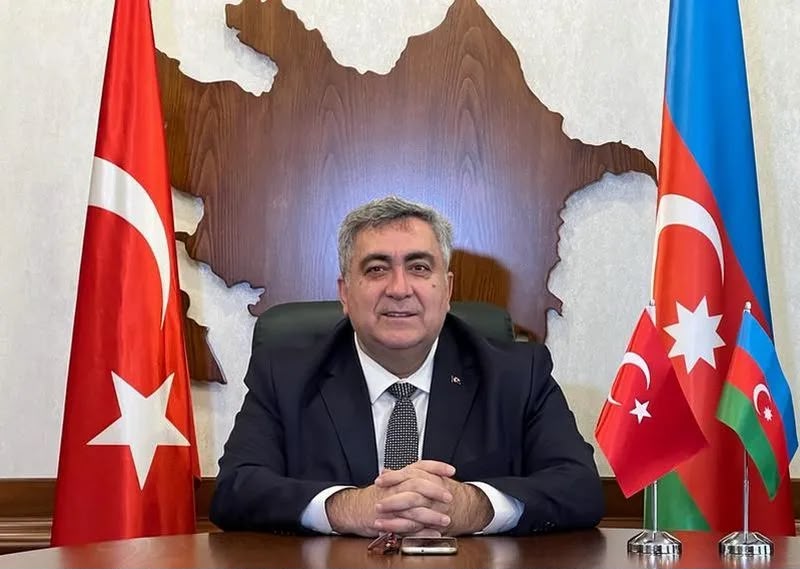
Yücel Karuz emphasized that Eisenkot's position does not provide a basis for a radical political shift on the Palestinian issue. According to him, Eisenkot is skeptical of a two-state solution, advocates for continued Israeli security control, and has promised to end Hamas's rule in Gaza within 18 months.
"Therefore, even if the government changes, Israel's main security objectives are not expected to change. The possible difference will be more in the means used and the pace of operations," the general said.
Touching upon Israel-Turkey relations, Y. Karuz believes that Netanyahu's departure from power could create conditions for a softening of political rhetoric between the two countries. If tensions in Gaza decrease, there could also be an opportunity for limited diplomatic contacts.
However, he does not consider full normalization of relations realistic in the near future:
"Trade has been suspended since May 2024, and diplomatic relations are at a low level. Strategic disagreements such as Syria and the Eastern Mediterranean remain. Therefore, full normalization does not seem realistic in the near future."
According to the general, an Eisenkot government formed with the support of Arab parties could create a tactical softening in Israeli politics, but it does not promise a strategic shift in the Palestinian issue and relations with Turkey. The scale of the change will depend on the stability of the coalition, pressure from the US, and the course of events in Gaza.