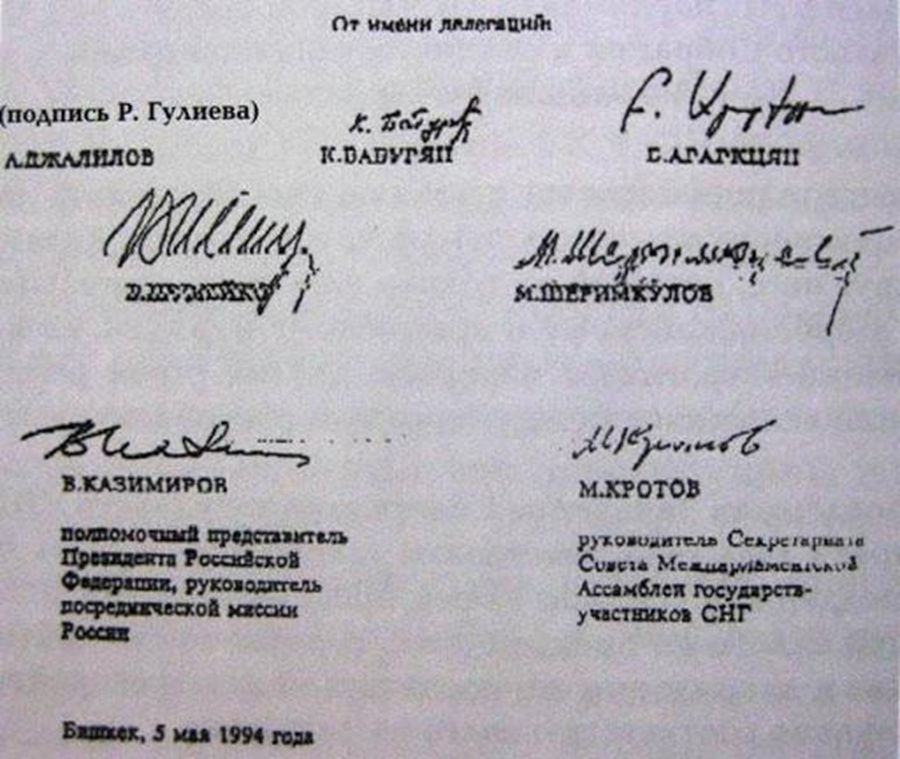
Bishkek, where Azerbaijani President Ilham Aliyev and Armenian Prime Minister Nikol Pashinyan met today, years ago became the diplomatic memory of one of the most difficult stages of the Karabakh problem. The Bishkek Protocol, adopted here in May 1994, called for a cessation of armed conflict and the continuation of negotiations. This document was followed by the signing of a ceasefire agreement. However, at that time, Armenia did not adhere to the ceasefire. It wanted to gain international status for its occupation of Azerbaijani lands.
There are 32 years between Bishkek in the 1990s and today's Bishkek. At that time, Azerbaijan was at the negotiating table as a country that had emerged from war, lost a large part of its territories, and had hundreds of thousands of people displaced from their native lands. Azerbaijan faced a huge problem of returning its lands. Armenia, on the other hand, was taking advantage of the opportunities created by the military superiority of the status quo. It was playing with an occupying policy. At that time, for the political leadership of Azerbaijan, the issue was to change the fate of the lost lands.
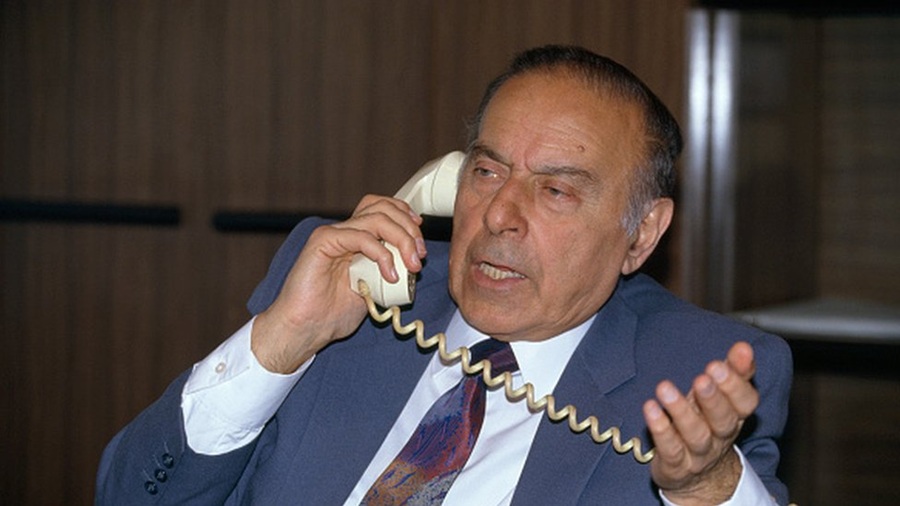
The severity of the struggle waged by the late President Heydar Aliyev during that period should be evaluated in this context. He tried to preserve political and diplomatic opportunities and defend Azerbaijan's position on the international stage in a situation where extremely severe military consequences had arisen. The Bishkek Protocol was one of the documents reflecting the reality of that period.
After that came the Minsk Group process. Meaningless statements and resolutions that remained on paper were adopted. We could only see change in the change of mediators. The question facing Azerbaijan was when the occupied territories would be returned.
Years later, Azerbaijan had its say, and the 2020 war fundamentally changed the military-political reality in the region. In September 2023, Azerbaijan fully restored its sovereignty over Karabakh.
Thus, Azerbaijan, which years ago discussed the fate of its lands at the negotiating table, returned to that table with a completely different reality.
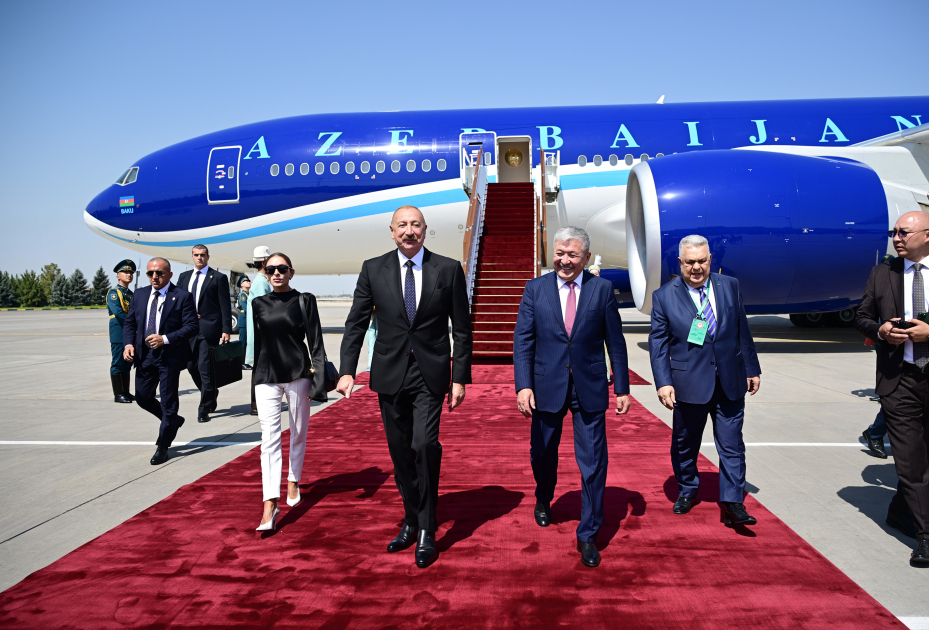
Today, the table in Bishkek is the same, but the reality on the table is completely different. Now Azerbaijan is not the party discussing the Karabakh problem in its previous status. It is the party that has ensured its territorial integrity and sovereignty and rebuilt life in the liberated territories.
Look at the irony of history, in Bishkek, a ceasefire was discussed, but today in Bishkek, how peace will be built is being discussed. This is the main difference of today's meeting. The agenda of Azerbaijan-Armenia relations is no longer built around the status of Karabakh. The main issue is the strengthening of peace, the creation of new cooperation opportunities in the region, and the transition of relations between the two countries to a new legal and political framework. The leader who created these realities is Ilham Aliyev.
The very fact that the Aliyev-Pashinyan meeting took place on August 31, 2026, shows that the political map of the region is not the same as before. The meeting takes place in Bishkek within the framework of the Shanghai Cooperation Organization events, but there is a bigger picture here. Azerbaijan is a state that has a say in the formation of the post-war regional order. To understand this difference, it is enough to compare Bishkek of 1994 with Bishkek of 2026.
Yes, in 1994, Azerbaijan was engaged in a diplomatic struggle to eliminate the consequences of the occupation. In 2026, Azerbaijan is already building a new life in the liberated territories. In 1994, one of Azerbaijan's main demands was the restoration of territorial integrity. Today, that territorial integrity is already one of the main pillars of Azerbaijan's political and legal reality.
Bishkek, Azerbaijan, the region has changed. Most importantly, the content of the conversation at the table has changed. Now Azerbaijan is not facing the problems of the past, but bigger issues such as the Zangazur corridor and regional communications, trade, energy, transport, economic cooperation, and a new security architecture. Azerbaijan is recognized as one of the main actors influencing the future of the South Caucasus. Therefore, to view today's Bishkek meeting only as another meeting between Aliyev and Pashinyan would be a poverty of thought. Behind this meeting lies a 32-year political path. This path has seen defeat, heavy losses, and diplomatic struggle. Now, on this path, there is a peace stage.
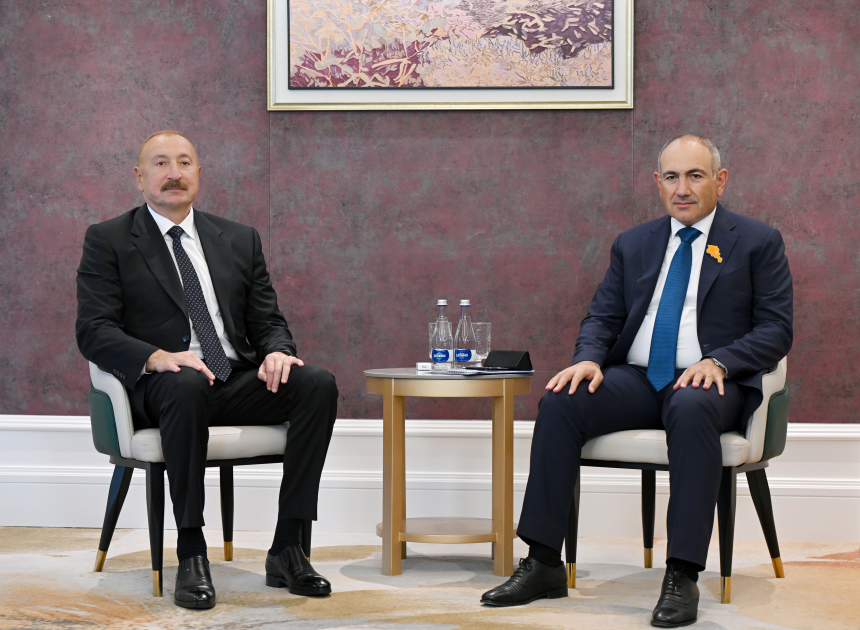
When you analyze history, you see that, in fact, today in Bishkek, more than two leaders, two different eras are sitting face to face. On one side is the Bishkek of the past, on the other side is today's Bishkek.
In one, there is the harsh reality born from the occupation of Azerbaijani lands, in the other, there is a new reality created after Azerbaijan restored its territorial integrity. Today, a meeting is not just being held in Bishkek; history is placing its new page before one of its previous pages. 32 years ago, Azerbaijan was at the table for peace in Bishkek. Today, Azerbaijan is the main party determining the terms on which peace will be built.
Much has changed from Bishkek to Bishkek. The most changed is Azerbaijan at the table.
Elnur Amirov