As the next political processes in Armenia approach, the attention of the region's countries once again turns to Yerevan. Especially for Iran, Armenia is no longer just a neighboring state, but also one of the main elements of the geopolitical balance in the South Caucasus. This is precisely why discussions about Tehran's lukewarm attitude towards Nikol Pashinyan remaining in power have become more frequent recently.
The main reason for this is Armenia's gradual rapprochement with the West during Pashinyan's rule. In recent years, Yerevan's ties with the European Union have expanded, and Armenia has begun to participate more actively in European Political Community summits. In parallel, joint military exercises with the US and the expansion of relations in the field of security and defense are causing serious concern in Tehran.
Iran particularly views the activities of the European Union observation mission in Armenia as a strategic threat. Tehran believes that the mission's transition to a more long-term and institutional form in the future could strengthen Western positions in the region. Iranian officials see this not only as a diplomatic issue but also as a security problem.
Another issue of concern for Tehran is the possibility of Armenia becoming an intelligence and observation platform for the West. It is often claimed in Iranian media and expert circles that it is possible to collect information about Iran's northern regions, military facilities, and communication lines through Armenian territory. Especially against the backdrop of Iran's tense relations with the US and Israel, this issue has become more sensitive for Tehran.
Although recent US-Israel confrontations and tensions in the region have weakened Iran's military-political resources, Tehran does not overlook the Armenian direction. On the contrary, Iran believes that losing its positions in the South Caucasus could further reduce its regional influence in the future.
Iran openly tries not to create the impression of interfering in Armenia's internal politics. Official statements maintain a balanced and cautious rhetoric. However, regional observers believe that Tehran is providing political and informational support to pro-Russian forces behind the scenes and is closely monitoring the processes.
One of Tehran's main fears is the Zangezur corridor issue. Iran believes that the implementation of this project could change the geopolitical map of the region and weaken Iran's role in the Eurasian direction via Armenia. In addition, Tehran fears that the corridor will increase Turkey's and Azerbaijan's influence in the region.
This is precisely why Iran is reportedly interested in pro-Russian political forces coming to power in Armenia. For Tehran, figures pursuing a coordinated policy with Moscow are considered a safer choice. In this context, figures such as businessman Samvel Karapetyan, former president Robert Kocharyan, and businessman Gagik Tsarukyan are mentioned more often. In particular, the more coordinated Iran-Armenia relations during Robert Kocharyan's presidency (1998-2008) increase sympathy for that political line in Tehran.
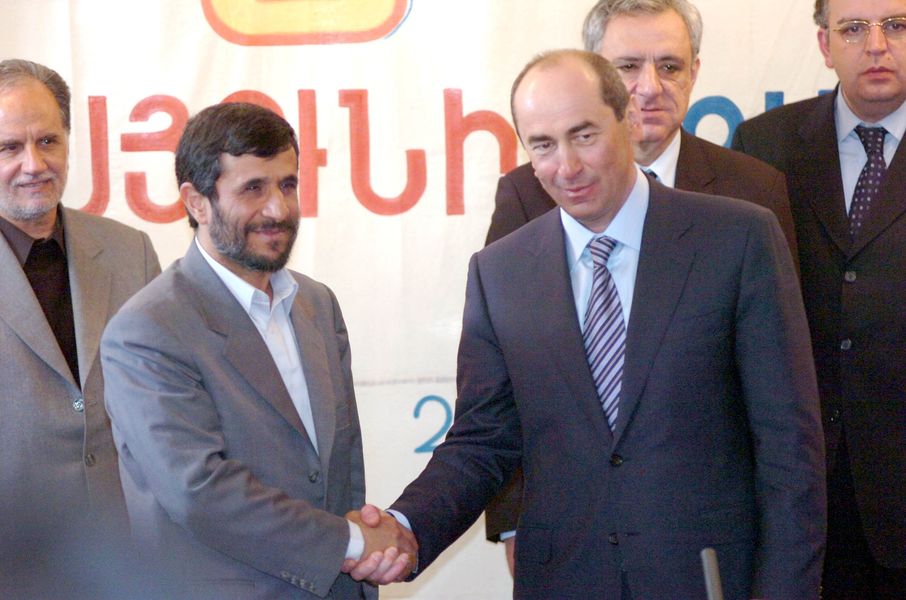
For this reason, it is observed that Armenian politicians who oppose the Zangezur corridor are treated more positively on Iranian platforms and in the media. Tehran's main goal is to prevent Armenia from fully entering the Western orbit and to keep it from moving away from the Russia-Iran line.
Thus, the political struggle within Armenia is no longer just an internal power struggle. This process has become an important part of the silent geopolitical competition for the South Caucasus. Although Iran appears calm on the surface in this competition, it remains one of the most attentive players.