Modern.az continues its series of interviews with foreign journalists. In these interviews, we try to learn about their perceptions of Azerbaijan and Azerbaijanis, explore commonalities between the two countries, and exchange views on other issues.
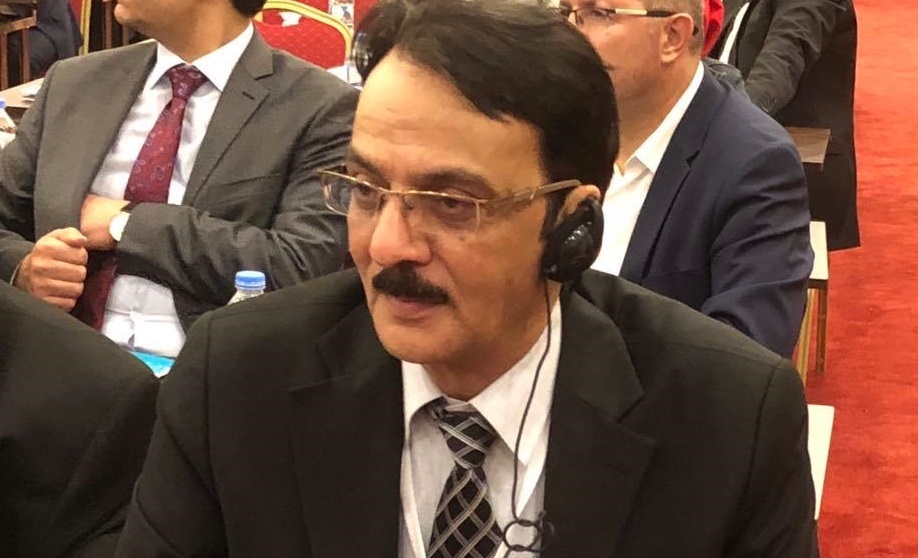
Our interviewee this time is our colleague from Saudi Arabia, Ahmed Saleh Halabi. He is a member of the Saudi Opinion Writers Association, the World Press Council, and the International Union of Arab Writers.
We present the interview with the journalist from Saudi Arabia:
– Which platform is more dominant in Saudi media currently: print media, television, radio, or social media?
– Various media outlets operate in Saudi Arabia. Print media includes newspapers such as “Makkah”, “Al-Madinah”, “Ar-Riyadh”, “Al-Jazirah”, “Okaz”, “Al-Watan”, “Al-Yawm”, “Al-Bilad”, “Asharq Al-Awsat”, “Al-Iqtisadiyyah” and “Ar-Riyadiyyah”.
In the radio sector, “Quran-e-Karim”, “Nida al-Islam”, the General Program broadcast in Riyadh, the Second Program operating in Jeddah, and “Khuzama” radio are active.
Television channels include Saudi Television, “Al-Ikhbariya”, “SBC” and three sports channels.
With the emergence of new media, approximately 660 licensed digital newspapers have started operating. Among them are traditional print newspapers that have created their own electronic platforms. However, it is impossible to deny the dominant position of social media platforms in the media space. The most used platform is “X” (formerly Twitter), followed by Snapchat and YouTube.
It can be said that sports channels have the greatest advantage in the television space. They are followed by drama and film channels. This does not mean that general and news channels do not have an audience. They also have their own viewership. Especially in recent years, Saudi media has undergone significant development, and artificial intelligence has also been incorporated into the news production process. This technology ensures data analysis and content creation tailored to the audience's interests. This demonstrates the importance given to successfully combining traditional media with modern technologies. News presentation is not limited to text and images; more comprehensive and professional media products are prepared through reports, live connections with correspondents, and other modern methods.
– Do traditional television channels still influence public opinion, or has social media already surpassed them?
– It is impossible to deny the influence of television channels on public opinion. Their influence primarily depends on the content they broadcast. When talking about Saudi traditional television channels, I must note that their influence is felt not only within the country but also internationally. This is particularly evident in the wide global audience of “Quran-e-Karim” and “Sunnah” channels.
This means that the success, competitiveness, and longevity of a television channel primarily depend on the quality of the materials it broadcasts.
– What are the most influential media organizations in Saudi Arabia?
– One of the most prominent private media organizations in Saudi Arabia is MBC Media Group. This group includes numerous television channels operating in various directions. Among them is a general-purpose channel broadcasting news, socio-political programs, entertainment, arts, sports, films, and series.
The group also includes the English-language channel MBC2. This channel presents English-language films and various programs. MBC3, intended for children, is broadcast in Arabic and serves the Middle East and North Africa audience. In addition, the MBC group also operates a digital platform called “Shahid”.
The main channels of the network are:
* MBC1 – a general television channel for Arab families, broadcasting various series and programs;
* MBC4 – primarily aimed at youth and families, presenting Arab and foreign series;
* MBC5 – intended for the family audience of Maghreb countries;
* MBC Iraq – offers a package of entertainment and programs specially prepared for Iraqi families;
* MBC Max – broadcasts the latest Hollywood and family films;
* MBC Drama – shows Arab and Gulf country series 24 hours a day;
* MBC Bollywood – presents Indian films and series with Arabic dubbing or subtitles.
Among news channels, “Al-Arabiya” and “Al-Hadath” hold a special place. In addition, MBC FM and Panorama FM radios are also active.
Another large media group in Saudi Arabia is “Rotana”. This group includes channels such as “Rotana Khalijia”, “Rotana Mousiqa”, “Rotana Clip”, “Rotana Tarab”, “Rotana Aghani”, “Rotana Zaman”, “Rotana Aflam” and “Rotana Drama”. “Rotana Drama” specializes primarily in broadcasting series produced in Egypt, Syria, Lebanon, Gulf countries, and Turkey.
– Does print media (newspapers and magazines) still maintain its influential audience in Saudi Arabia?
– Yes, print media still retains its readership. However, this primarily happens through their electronic platforms. Increased printing costs, decreased advertising revenue, and sales have led to a decline in circulation. Therefore, some newspapers have started publishing in PDF format to reach readers.
The continued operation of print media indicates that there is still a certain readership in society that prefers these newspapers. They believe that traditional press is more responsible and reliable.
– Has social media journalism already adopted the main functions of traditional journalism?
– A part of social media platforms provides sufficiently high-quality journalistic materials. This is primarily due to the fact that the individuals managing these platforms previously worked in professional journalism and gained experience. However, in another group, the lack of professionalism is clearly felt, and journalistic standards are not visible in the materials they present.
– How is the boundary between influencer journalism and professional news reporting defined in Saudi Arabia?
– Influencer journalism primarily manifests itself in covering public events, social activities, and various entertainment-related events. Their participation in covering official events and topics requiring professional news reporting is quite limited. The main reason for this is that a large part of those working in this field do not have sufficient professional experience.
– What is the average monthly salary of journalists in your country?
– Journalists' salaries vary depending on the media organization they work for. There are newspapers where the lowest salary is approximately 1500 US dollars. In some other media organizations, the minimum salary is even higher than 2000 US dollars.
– Does the media sector primarily operate on state support, or is the main driving force the advertising market?
– The private media sector is not financed by the state. The main source of funding and the primary factor ensuring its development is the advertising market.
– What are the main limitations journalists face when obtaining information within the country?
– Unlike some countries, there are no strict restrictions on journalists' activities. A Saudi journalist has the right to express their opinion freely. However, it is unacceptable to use this freedom to insult or target others.
– How are relations between the government and the media regulated in Saudi Arabia?
– These relations are regulated by the Media Regulatory Authority. The Authority's goal is to form a legal and institutional framework that ensures a balance between the interests of the public, media organizations, and professionals working in the media field. This activity is carried out based on the country's media policy.
The Authority also applies strict standards for controlling media content, ensures transparency in the media market, and places special emphasis on protecting ethical and cultural values in society.
– How has the role of women in Saudi media changed in recent years?
– Previously, women's activities were mainly limited to covering news and events related to women. They were given the opportunity to publish articles, poems, novels, and stories in certain cases. However, these writings were published without the author's photo.
In recent years, significant changes have also occurred in the media sector as a result of the empowerment of women in various fields. One of the most striking examples of this is the appointment of Sumayya Jabarti as the editor-in-chief of the English-language newspaper “Saudi Gazette”. Thus, she became the first female editor-in-chief to lead a newspaper in Saudi Arabia.
– How are international news presented to the local audience?
– The simplification method is used to deliver international news to the local audience in a more understandable way. News is reprocessed, linked to local public interests, and presented in a format closer to the reader.
At this time, the possible impacts of international events on the country's economy, society, and politics are analyzed. Foreign news is presented in connection with local reality, and their impact on the domestic market and daily life is explained. Events are interpreted not as dry information, but in a historical and political context, and the question “what does this event mean for our audience?” is answered.
In addition, international news is presented in visually attractive and dynamic ways for easy comprehension by different age groups. Information is obtained from correspondents working on the ground or from reliable news agencies to ensure its accuracy and reliability before broadcast.
– In your opinion, does modern journalism primarily reflect reality, or does it also influence its formation?
– Modern journalism is a tool that combines traditional and modern approaches. It reflects reality by covering events with high presentation quality, reliable information, and in a format that the audience can easily understand.
For journalism to be a mirror of society, it is important to accurately document news, present facts honestly and impartially, and at the same time provide people with the necessary information to make decisions.
– Is there interest in Azerbaijan and the South Caucasus region in Saudi media?
– The developing relations between Saudi Arabia and Azerbaijan have created favorable conditions for Saudi media to widely cover the opportunities created and successful results achieved between the two countries.
Saudi media regularly monitors the development of relations between the two countries from both political and economic aspects. Politically, the foundation of relations was laid with the establishment of diplomatic relations in 1992. In the economic sphere, the establishment of the Saudi-Azerbaijani Joint Business Council in December 2022 was a significant event. This initiative was implemented based on an agreement signed in Baku between the Federation of Saudi Chambers of Commerce and Azerbaijan's Small and Medium Business Development Agency (SMBDA).
In the field of tourism, Saudi media has also widely covered the concessions applied by Azerbaijan. In particular, the visa exemption for Saudi citizens for one year starting from February 15, 2026, and the ability of ordinary passport holders to enter Azerbaijan three times for 30 days each visit, have been widely presented.
The media has also highlighted Azerbaijan's rich tourism potential. As a result, Saudi Arabia has entered the top five countries in terms of the number of flights to Azerbaijan. According to statistical indicators for the first four months of 2023, it ranked 10th among the countries sending the most tourists to Azerbaijan.
– Can you give an example from your own activities to show Saudi media's interest in Azerbaijan?
– Yes. On September 19, 2024, I wrote an article titled “Saudi-Azerbaijani relations: development and ascent”. In the article, I noted the following:
“While reading materials about newly independent states, my attention turned to the Republic of Azerbaijan. Azerbaijan was established on May 28, 1918, as the first democratic, legal, and secular republic in the East. On October 18, 1991, it restored its state independence.
In 1993, at the request of the people, Heydar Aliyev returned to political power and saved the country from the fragmentation, coup attempts, and chaos it faced in the first years of independence, bringing a new and prosperous stage of development to the Azerbaijani people.”
The article further noted that Saudi Arabia recognized Azerbaijan's independence on December 30, 1991, and diplomatic relations between the two countries were established on February 24, 1992. In the same year, Azerbaijan's foreign minister visited Saudi Arabia. In April 1994, Azerbaijan's embassy in Saudi Arabia began its activities. On November 21 of the same year, the Saudi ambassador accredited in Turkey also began serving as ambassador to Azerbaijan. Finally, in June 1999, Saudi Arabia's embassy in Azerbaijan was opened.
The article emphasized that after these steps, relations between the two countries developed year by year. Following the recognition of Azerbaijan's independence and the establishment of diplomatic relations, from 1994 to 1999, medicines and humanitarian aid were provided to Azerbaijani refugees within the framework of the King Fahd Humanitarian Aid Program. In January 2000, the International Islamic Relief Organization sent humanitarian aid totaling 957,385 Saudi riyals to Azerbaijan.
In addition, Saudi Arabia also participated in the “Contract of the Century” signed on September 20, 1994. Saudi “Delta Hess” company held a 2.72 percent share in the project.
In 2005, a credit agreement worth 18 million US dollars was signed between the two countries. The credit was directed to finance the construction of the Taxtakörpü-Vəlvələçay canal. In the same year, an agreement on the mutual promotion and protection of investments was also signed.
On December 28, 2002, the Saudi Development Fund decided to allocate a credit of 35.7 million Saudi riyals to the Azerbaijani government for financing projects for the construction of secondary school buildings in Baku.
On February 1, 2006, Saudi Arabia allocated 50,000 US dollars for the project of neutralizing mines and unexploded ordnance in the Tartar and Aghstafa regions of Azerbaijan.
In 2009, Saudi Arabia allocated a credit of 25 million US dollars for the reconstruction and expansion of the water supply and sewerage system on the Absheron Peninsula.
In December 2022, within the framework of the seventh meeting of the Azerbaijan-Saudi Joint Commission held in Baku, an agreement on the establishment of the Saudi-Azerbaijani Joint Business Council was signed between the Federation of Saudi Chambers of Commerce and Azerbaijan's Small and Medium Business Development Agency (SMBDA).
This agreement reflects the desire of both countries and their business circles to further expand trade and investment cooperation. The Joint Business Council will systematically carry out various promotional and commercial activities for the development of economic cooperation. It will also play an important platform for Saudi and Azerbaijani businessmen to promote their activities, establish new business partnerships, and develop new directions of cooperation.
One of the main tasks of the Council is to support the establishment of continuous relations between business circles, overcome existing barriers, exchange information about markets and investment opportunities, develop trade and investment partnerships, and also provide recommendations to the relevant institutions of both countries regarding the improvement of economic relations. In addition, promoting participation in exhibitions, forums, and organizing mutual visits of business delegations are also included in the Council's activities.
According to the agreement, the Council will consist of representatives of Saudi and Azerbaijani businessmen interested in investment and trade. It is planned that the Council's meetings will be held alternately in Riyadh and Baku, and trade and investment opportunities between the two countries will be discussed at these meetings.
The article notes that trade turnover between the two countries has also shown an increase. Thus, while trade turnover was 13.4 million US dollars in 2020, this indicator increased to 15.7 million US dollars in the first ten months of 2021.
However, Azerbaijan's Deputy Foreign Minister stated in an interview with “Asharq Al-Awsat” newspaper in December 2023 that the existing trade turnover does not fully reflect the real level of relations between the two countries.
He noted:
“In my opinion, an annual trade turnover of approximately 26 million dollars does not express the level of relations between our countries. This indicator is below the desired level. However, investment cooperation has been steadily developing in recent years.”
The Deputy Minister added that Saudi “ACWA Power” company invests in the wind energy sector in Azerbaijan. In addition, the company has other projects in Azerbaijan, mainly in the energy sector.
In May 2023, an intergovernmental agreement on cooperation in the energy sector was signed between Saudi Arabia and Azerbaijan.
The agreement envisages expanding cooperation in the fields of oil, petrochemicals, natural gas, electricity, renewable energy, energy efficiency, carbon circular economy, and climate change mitigation technologies.
In addition, the document also reflects the development of innovative use of hydrocarbons in various fields, conducting joint research between universities and research centers, as well as exchanging experience and information in the energy sector.
In the field of tourism, Azerbaijan has become one of the most popular destinations for Saudi Arabian citizens. In April 2023, the number of tourists coming to Azerbaijan from Saudi Arabia increased threefold compared to the same period of the previous year. According to the results of the first four months of 2023, Saudi Arabia ranked 10th among the countries sending the most tourists to Azerbaijan. During this period, the number of Saudi tourists visiting Azerbaijan was 96,231 people.
“Asharq Al-Awsat” newspaper also published an interview with Azerbaijan's Ambassador to Saudi Arabia, Mütəllim Mirzəyev. The Ambassador stated that Baku contributes to the development of mutual investments and trade by utilizing its unique geographical position. Azerbaijan's goal is to further strengthen comprehensive strategic partnership with Riyadh, including transforming the initiative to create a joint investment fund and other agreements into practical projects.
According to him, about 30 official agreements covering economy, trade, investment, and agriculture have been signed between the two countries.
In January 2026, during the official opening of the Khizi-Absheron Wind Power Plant implemented by “ACWA Power” company, the ambassador highly appreciated the active participation of a high-level delegation from Saudi Arabia in the XIII World Urban Forum (WUF13) of the UN held in Baku.
The Ambassador noted that within the framework of the forum, advanced projects implemented by Saudi Arabia in the field of urban planning and sustainable housing construction were presented. This is another indicator of increasing cooperation between the two countries.
Mütəllim Mirzəyev emphasized that the forum transformed Baku into a global platform where issues of smart cities, modern urban planning, and adaptation to climate change were discussed. He stated that these principles form the main directions of reconstruction and development programs implemented in the liberated territories of Azerbaijan.
– Does Saudi media sufficiently explain the new reality formed in the South Caucasus – the post-conflict period, the Middle Corridor, and other processes?
– Saudi media, through its media organizations, demonstrates an objective and strategic approach to the new realities in the South Caucasus. “Al-Arabiya” and “Asharq” news channels periodically highlight the region's importance as a crucial transit hub in global trade routes and supply chains. At the same time, existing investment opportunities in energy, infrastructure, and tourism between the Gulf countries and the South Caucasus states remain in focus.
Saudi media also supports peaceful resolution mechanisms based on respect for state sovereignty, emphasizing the importance of ending conflicts for the security and sustainable development of the region.
– Today, from which perspective does Saudi media primarily view Azerbaijan and the South Caucasus: energy, security, or geopolitical transport?
– Saudi media primarily prioritizes security issues. Because where there is security, states develop, and people feel safe. Security and stability create conditions for rising economic indicators, increasing agricultural production, and improving overall well-being.
– Have you ever been to Azerbaijan? If so, which cities have you visited and what are your general impressions of the country?
– Unfortunately, I have not yet had the opportunity to visit Azerbaijan. Nevertheless, I have great respect and admiration for Azerbaijan and its people. I have good relations with a number of colleagues working in Azerbaijan, and my articles have been published on various Azerbaijani news websites.
– What similarities do you see between the Saudi and Azerbaijani peoples?
– There are many similarities between the two peoples. Saudi and Azerbaijani cultures are very close to each other in terms of adherence to Islamic values, strong family ties, traditions of hospitality and generosity, as well as the importance given to preserving national heritage and customs.
Both peoples are committed to the spiritual values of Islam and deep-rooted traditions. At the same time, hospitality is one of the most characteristic features of both peoples. Many Saudi tourists who have visited Azerbaijan have told me about this and spoken with great satisfaction about the hospitality of Azerbaijanis.
– Do you have information about Azerbaijani cuisine, music, and history? How do you generally evaluate Azerbaijani culture?
– Unfortunately, I have not yet had the chance to visit Azerbaijan and taste Azerbaijani cuisine. However, based on what my colleagues and friends who have vacationed in Azerbaijan have told me, I can say that Azerbaijani dishes are very similar to Eastern and Saudi cuisine. Especially dishes prepared with meat and rice are widely featured in both cuisines.
In addition, Azerbaijan's enchanting nature and mild climate attract great interest from Saudi tourists.
– Can you provide information about some customs and traditions of Saudi society? We would also like to know more about Saudi cuisine and daily life.
– The customs and traditions of Saudi society are based on the principles of Islam and rich Arab heritage. Strong family ties are one of the main characteristics of Saudi identity. Therefore, society remains true to its traditions even today.
For example, on the first day of Ramadan, married children gather with their spouses at their parents' home for iftar. The breakfast on the first day of Eid al-Fitr is held at the home of the oldest family member.
One of the main characteristics of Saudi culture is hospitality and generosity. Wedding ceremonies, modest dress style, and serving Saudi coffee with dates to guests are an integral part of this culture.
Coffee is always served to the guest with the right hand. The cup is filled with a small amount, which is considered a symbol of respect shown to the guest. The guest indicates that they no longer want coffee by gently shaking the cup.
Regarding national dress, men usually wear a long white “soub” (Arab dress), and on their heads, they tie a “shemagh” or white “ghutra”, securing it with a black ring called an “iqal”. Women, on the other hand, mainly wear abaya and headscarves.
Saudi cuisine also resembles Azerbaijani cuisine in many ways.
– Water scarcity is one of the most serious environmental problems facing Saudi Arabia. What measures and strategies is the Kingdom implementing to solve this problem?
– Water resources in Saudi Arabia are provided from three main sources. The first of these is groundwater. The second is desalinated seawater. Saudi Arabia is considered the country with the largest capabilities in the world in the field of seawater desalination for obtaining drinking water.
This process is quite expensive and is not considered highly profitable economically, but the government bears all these costs to provide the population with quality drinking water.
The third direction is rainwater harvesting. Rainwater is stored in dams and used in agriculture when needed. In addition, treated wastewater is also widely used in agriculture and some industrial sectors.