Modern.az continues its series of interviews with foreign journalists. In these interviews, we try to learn about these journalists' perceptions of Azerbaijan and Azerbaijanis, explore commonalities between the two countries, and exchange ideas on other issues.
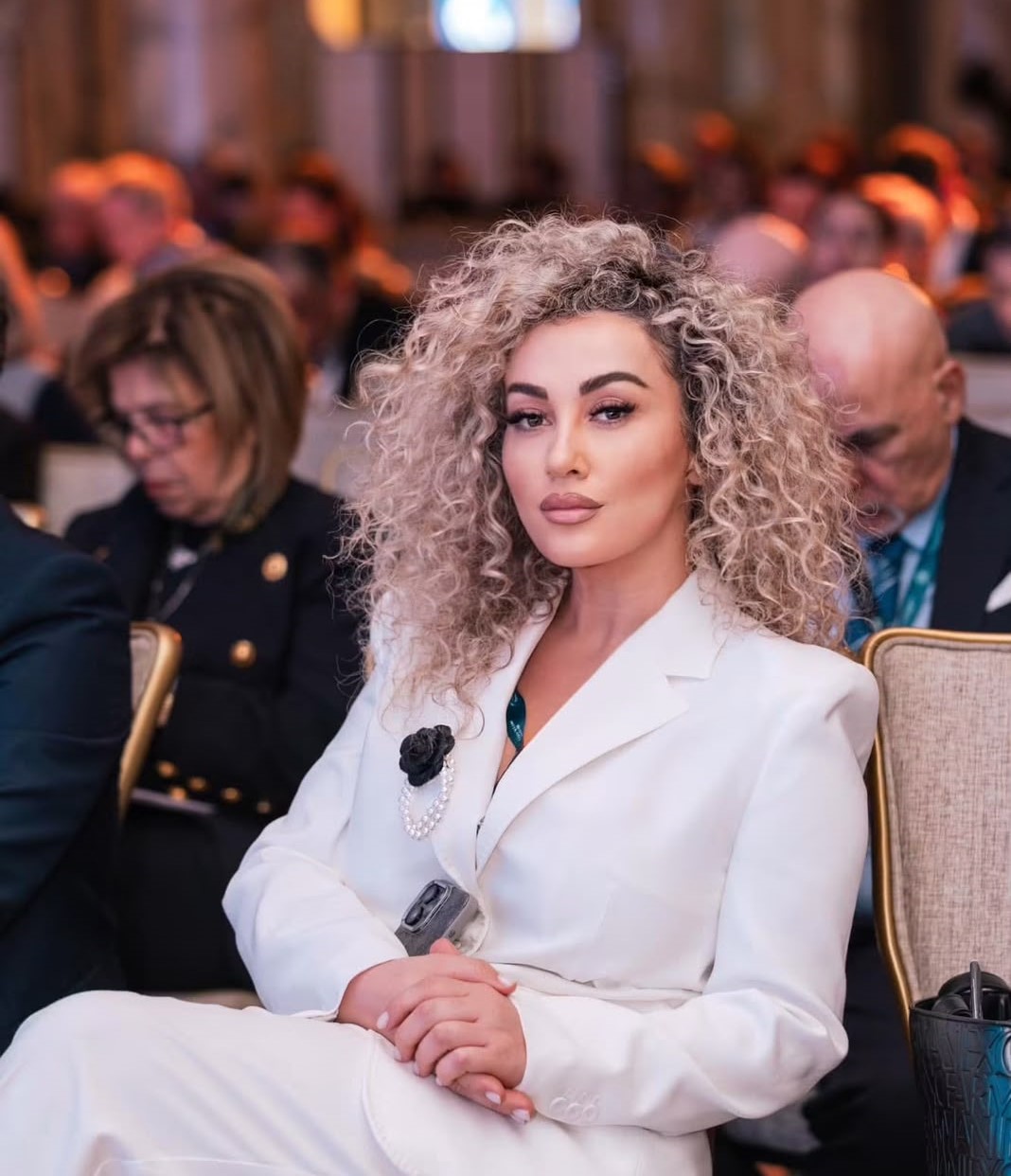
Our interviewee this time is our colleague from Albania, Anisa Bahiti. Anisa Bahiti is a media founder, television presenter, and communication specialist.
– Ms. Anisa, how did your professional career in journalism and media begin, and what stages has it gone through to date?
– First of all, I sincerely thank you for this opportunity and interview. My professional activity has always been closely linked to communication, media, youth work, and public service. Since my university years, I have actively participated in various initiatives aimed at youth and society. At the same time, I have been represented in public life as a member of the Municipal Council of my hometown.
My great interest in communication and journalism led me to publish analytical articles and author's columns on Albanian-language media platforms operating in Albania, Kosovo, and North Macedonia. This experience further strengthened my view of journalism and formed in me the belief that journalism is not only a profession but also a great responsibility towards society.
A few years ago, together with a group of journalists and young professionals, we founded a digital media startup with the aim of creating a modern media platform that meets the demands of the information age.
This initiative later transformed into a digital media platform called "InfowebTV". The platform quickly expanded its operations throughout Albania and became one of the recognized digital media organizations broadcasting in Albanian in the Balkan region.
As the founder and director of "InfowebTV", I also created my own author's project, "Bahiti's Podcast". In this project, I conduct interviews with prominent figures representing various fields of politics, culture, society, and public life.
In 2025–2026, I took the next important step in my media career by joining TOP Media, one of Albania's leading media groups. Here, I created the television program "On The Road", which airs every Thursday during prime time.
Thanks to its distinctive format, which brings together interviews, personal life stories, and candid conversations with public figures, this program quickly became a successful and recognized television project.
– How do you assess the current state of Albanian media?
– Albanian media is generally free and democratic. However, like in other countries around the world, the media here faces significant challenges.
Digital transformation, new technologies, the rapid development of social networks, and changes in audience information consumption habits have fundamentally altered the media landscape.
Today, people primarily obtain information through online platforms. The role of print media has significantly decreased. Television channels and traditional media organizations, adapting to digital platforms, are making serious investments in new technologies.
The main challenge of modern journalism is to embrace innovations while preserving the fundamental principles of the profession – independence, accuracy, professionalism, and public responsibility.
– How has digital transformation changed journalism?
– Digital transformation has completely reshaped the media world. This process has created vast opportunities for journalists, independent media platforms, and new storytelling methods.
At the same time, it has also brought about new problems such as disinformation, prioritizing speed over quality, and establishing a sustainable financial model for media organizations.
One of the most important innovations affecting journalism today is artificial intelligence. It can provide significant support to journalists in conducting research, analyzing data, and preparing content. However, technology must remain a tool serving journalism.
If we want to protect the freedom and reliability of journalism, professional journalists must continue to play the main role. No technology can replace human values such as critical thinking, ethical principles, research skills, and public responsibility.
– What is the economic situation of journalists in Albania today?
– The economic situation of journalists in Albania has improved compared to previous years.
The monthly salary for journalists starting in the profession usually begins at 500 euros. Experienced journalists, editors, and other professionals working in the media field can receive higher salaries depending on their experience and positions. However, one of the main challenges ahead is to create more sustainable economic conditions and provide broader professional development opportunities, especially for young journalists entering the profession. A strong and independent media sector is possible not only with freedom of speech and press but also by creating stable and decent working conditions for journalists.
– In your opinion, does true journalism still exist today?
– Of course. Journalism is not just a profession, it is a mission. A true journalist serves the truth, protects public interests, asks important questions, and performs their work with professionalism, honesty, and conscience. Maintaining a balance between freedom and responsibility will always be a difficult issue. But this is a natural characteristic of democratic societies.
Professional journalism still plays an irreplaceable role today in the formation of informed societies and the protection of democratic values.
– Which topics would you prioritize when preparing material about Azerbaijan and the South Caucasus region?
– Azerbaijan is a country with an important geopolitical position in terms of international relations. The region where the country is located plays a significant role in international politics. Given its geographical and political ties with Iran, Russia, and the South Caucasus in general, political processes and international relations are naturally topics of focus.
In addition, Azerbaijan's rich cultural heritage, ancient traditions, achievements in sports, tourism potential, and opportunities for economic cooperation are also very interesting topics for an international audience.
– How would you characterize the relations between Albania and Azerbaijan?
– Relations between Albania and Azerbaijan are at a very high level and continue to develop.
Diplomatic relations exist between both countries, cooperation actively continues, and mutual high-level visits of state representatives are carried out. In recent years, economic cooperation has also significantly expanded. One of the most important projects connecting Albania and Azerbaijan is the Trans-Adriatic Pipeline (TAP) project. This project is of great importance for regional and European energy cooperation. However, I believe there is great potential for further expanding cooperation among media organizations, journalists, cultural organizations, business circles, and youth.
Media can be one of the most important bridges bringing our peoples closer together.
– Do Albania and Azerbaijan share common values and historical ties?
– Yes. Although our state structures and political systems are different, there are many similarities and historical ties between our peoples. Our relations are based on mutual respect and stem from centuries-old historical contacts. In the 20th century, there were also important stages of cooperation between our countries.
One interesting example was the import of olive trees from Albania to Azerbaijan in the 1950s and 1960s. During that period, many Albanian youths also had the opportunity to study in Baku. Sports is also one of the important areas connecting our countries. In Albania, many people remember Ansi Agolli, known for his successful performance in the "Qarabağ" Football Club and his appearances for the Albanian national team.
– Are you familiar with the history of Caucasian Albania? Are there discussions in Albania regarding the connections between the two Albanias?
– Yes, I am well aware of the historical significance of Caucasian Albania and the interest this topic generates between Azerbaijan and Albania.
The name "Albania" creates an interesting historical parallel that attracts the attention of historians and researchers from both countries. However, it is important to approach this topic from a historical and scientific perspective. Caucasian Albania and the modern Republic of Albania are two separate historical entities formed in different geographies and under different historical circumstances.
Caucasian Albania was an ancient state that existed in the South Caucasus, in present-day Azerbaijan and surrounding territories. Modern Albania, on the other hand, is a state located in the Western Balkans, with its unique history, language, culture, and national identity.
Nevertheless, the fact that both countries bear the same name naturally arouses interest and encourages the development of scientific discussions, cultural ties, and joint research among historians. In Albania, some historians and researchers are also interested in ancient civilizations, historical names, and the connections between different cultures.
I believe that history is one of the strongest bridges between peoples. Studying our past based on scientific research and the principle of mutual respect can further strengthen mutual understanding between Azerbaijani and Albanian societies.
The fact that both countries bear the same name, linked to ancient historical roots, creates additional interest and opportunities for dialogue to expand cooperation among historians, universities, cultural institutions, and researchers.
– What were your impressions of the Azerbaijani media and journalists during your visits to Azerbaijan?
– During my visits to Azerbaijan, I had the opportunity to meet local journalists and closely observe the activities of the Azerbaijani media. The great dedication of Azerbaijani journalists to their profession, their professionalism, and the quality of the materials they prepared left a positive impression on me. I observed that the Azerbaijani media is dynamically developing and attaches great importance to the development of professional journalism. I believe that cooperation between Albanian and Azerbaijani journalists can become one of the strongest bridges bringing our peoples even closer in the future.
– What message would you like to convey to the citizens of Albania about Azerbaijan?
– My message is very simple: Albanians should get to know Azerbaijan better.
Azerbaijan is a beautiful country with a rich history, ancient culture, traditions formed over centuries, and hospitable people. This country offers unique experiences and great opportunities to its guests.
I wish that more Albanians would visit Azerbaijan, establish personal contacts, and get to know the friendship that exists between our peoples firsthand.
– Finally, what would you like to say to Azerbaijan and the Azerbaijani people?
– My message is this: We love Azerbaijan and the Azerbaijani people. I believe that the friendly relations between Albania and Azerbaijan will further strengthen in the future based on mutual respect, cooperation, common values, and mutual understanding.
I wish Azerbaijan continuous development, prosperity, and success. I hope that your country will become an even more important partner for both Albania and the international community in the coming years.