June 15 - National Salvation Day is one of the most important dates in the modern history of Azerbaijan, associated with the preservation of statehood traditions and the restoration of political stability. Heydar Aliyev's return to power in 1993 took place against the backdrop of a deep political crisis, economic decline, and security threats faced by the country, laying the foundation for the subsequent stage of development.
On the occasion of this significant day, Modern.az gathered the opinions of political experts from various countries.
In his statement to Modern.az, Turkish expert Imbat Muğlu stated that Heydar Aliyev's return to power in 1993 is evaluated not only as a change of leadership in the history of Azerbaijan but also as a process of rescuing the state from the threat of disintegration and directing it towards institutional stability:
“That is why many historians and political scientists consider 1993 a turning point when the modern Azerbaijani state was rebuilt. At that time, Azerbaijan faced serious political and security problems. On the one hand, the First Karabakh War with Armenia continued, and on the other hand, internal political strife and economic crisis weakened the functioning of state institutions. After Heydar Aliyev's return to power, the main goal was to strengthen central authority and ensure political stability. The re-establishment of state bodies, the strengthening of constitutional foundations, and the creation of security mechanisms laid the groundwork for development in subsequent years.
Decisions made in the economic sphere also yielded long-term results. In particular, the “Contract of the Century” signed in 1994 ensured Azerbaijan's energy resources access to international markets. Thanks to this agreement, significant foreign investments were attracted to the country, and energy revenues became the main driving force of economic development. Oil and gas projects implemented in the subsequent period contributed to strengthening Azerbaijan's position as an important actor in regional and global energy security.”
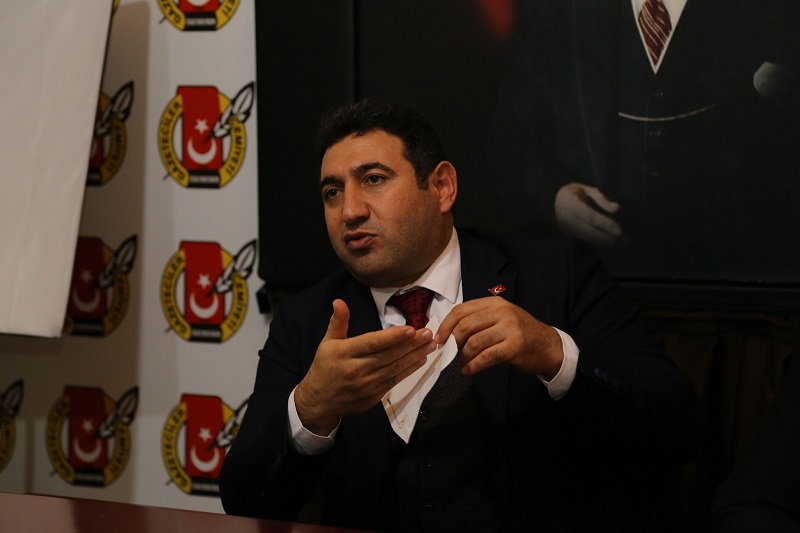
The expert noted that a balanced and diversified approach was formed in foreign policy:
“From that day, Azerbaijan tried to develop its relations with both regional powers and Western countries. This strategy allowed the country to pursue an independent foreign policy based on its national interests without becoming completely dependent on any power center. It is believed that the diplomatic approach formed during that period is the basis for Azerbaijan's ability to demonstrate an independent position on various international platforms today.
In addition, the strengthening of state institutions and the expansion of economic opportunities also created conditions for increasing Azerbaijan's defense potential. This process became one of the important factors that led to the expansion of the country's regional influence in subsequent years.
Consequently, it can be said that the political decisions made after 1993 played an important role in Azerbaijan becoming one of the leading actors in the South Caucasus today. Ensuring political stability, economic development based on energy resources, strengthening state institutions, and a balanced foreign policy course emerge as key factors contributing to the further strengthening of the country's independence and its regional position."
Khalid Akram, an expert on international relations from Pakistan, said that this day, associated with Heydar Aliyev's return to political power, is considered a decisive turning point in the preservation of Azerbaijani statehood:
“June 15 is Azerbaijan's National Salvation Day. This date holds a special place in the country's political and historical memory. This day, associated with Heydar Aliyev's return to political power in 1993, is considered a decisive turning point in the preservation of Azerbaijani statehood. National Salvation Day is not only a political event but also a symbol of the country's overcoming severe trials and preserving national unity and statehood traditions.
In the early 1990s, after regaining its independence, Azerbaijan faced serious political, economic, and security problems. Political instability, economic decline, and security threats negatively affected the state's functioning. Management decisions made after 1993 were primarily aimed at restoring stability in the country and strengthening state institutions. This policy helped prevent internal fragmentation, form a more functional governance system, and accelerate the state-building process. By ensuring stability, Azerbaijan was able to shift its focus from crisis management to long-term development and national construction processes.
One of the most important achievements of that period was the formation of a strong economic foundation. The “Contract of the Century” signed in 1994 opened Azerbaijan's energy sector to large international investments. This decision brought capital, modern technologies, and global partnerships to the country, making a significant contribution to infrastructure development and economic revival. At the same time, Azerbaijan became one of the important energy producers in the region, increasing its strategic importance.”

X. Akram said that in the field of foreign policy, Azerbaijan gradually formed a more independent and balanced course:
“While cooperating with various international partners, the country pursued a policy based on national interests and managed to avoid becoming overly dependent on any single power center. This flexible approach strengthened Azerbaijan's diplomatic position and increased its influence in the South Caucasus.
Over time, these political and economic decisions contributed to Azerbaijan becoming a more stable, self-confident, and strong state. Improving governance, economic development, and diversifying international relations played an important role in strengthening the country's independence and increasing its regional influence.
Today, National Salvation Day is celebrated as a significant date commemorating that fateful turning point in Azerbaijan's history. This day shows that strong leadership and political stability can determine the fate of a young state. The period after 1993 is often considered the foundation of modern Azerbaijani statehood and is regarded as the stage that laid the groundwork for the country to become a more active, resilient, and influential actor in regional and global processes.”
Italian political scientist Carlo Marino assessed Heydar Aliyev's coming to power as the salvation of Azerbaijan from collapse:
“As a specialist in Azerbaijan's political history and foreign policy, I can firmly say that Heydar Aliyev's return to power in June 1993 was not merely a change of political power. It was a historic salvation mission that rescued Azerbaijan from the threat of statehood collapse and put it back on the path of stable development. To understand how that period laid the groundwork for today's independent foreign policy, one must first consider the existential crises the country faced in 1992–1993: severe war conditions in Karabakh, the occupation of 20 percent of Azerbaijani territories, over a million internally displaced persons, hyperinflation exceeding 1000 percent, and various armed groups operating in Baku itself.
Political decisions made between 1993 and 1997 reshaped the foundations of Azerbaijani statehood and laid the groundwork for the country to become one of the leading powers in the region in the future.
Heydar Aliyev's first and most important decision was to restore the state's monopoly on legitimate force. Upon coming to power, he faced serious threats such as Surat Huseynov's armed formations and various paramilitary groups. To overcome these problems, illegal armed groups were disbanded, military leadership disloyal to the central government was removed from office, and a professional National Army was formed under a unified command.
In 1994, a fragile ceasefire agreement, known as the Bishkek Protocol, was reached, effectively freezing the conflict. While this step did not ensure the return of occupied territories, it prevented greater losses. The cessation of active military operations was vital for the implementation of subsequent economic and diplomatic initiatives.
In the economic sphere, the most transformative decision was the signing of the 30-year Production Sharing Agreement – the “Contract of the Century” – with a consortium of leading energy companies (BP, Amoco, UNOCAL, LUKoil, and others) on September 20, 1994.
Instead of remaining dependent on Russia's monopoly in the export of Caspian energy resources, Heydar Aliyev chose a strategy of creating alternative routes. The most important result of this policy was the realization of the Baku–Tbilisi–Ceyhan (BTC) main export oil pipeline.”
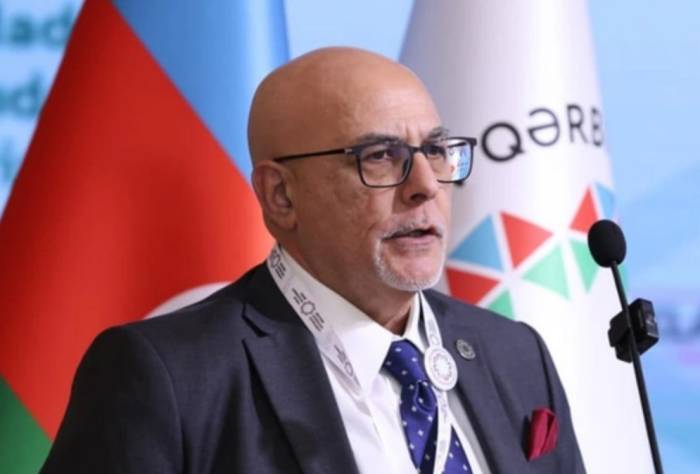
The expert noted that the multi-vector energy policy had three important results, stating them as follows:
“Firstly, it strengthened state potential. Although oil revenues were limited in the initial stage, they rapidly increased in subsequent years, allowing Azerbaijan to build independent state institutions.
Secondly, it linked the interests of Western states to Azerbaijan. The USA, Great Britain, and Turkey became directly interested parties in Azerbaijan's stability and independence.
Thirdly, it weakened Russia's levers of influence. With the commissioning of the BTC pipeline in 2006, Azerbaijan became the first post-Soviet country to have an energy export route bypassing both Russia and Iran.
After the cessation of the war and the signing of energy agreements, Heydar Aliyev began to strengthen the legal foundations of state power. The Constitution, adopted by referendum in 1995, formed a strong presidential governance model.
Although the Constitution enshrined the principle of separation of powers, a more important point from the perspective of the realities of the 1990s was the prohibition of activities aimed at forcibly changing state borders and violating territorial integrity.
This legal framework put an end to the political chaos of 1990–1993 and the confrontations within parliament. For foreign investors and international partners, Azerbaijan became a predictable state. It was this predictability that created conditions for signing long-term agreements.
In the context of the 1990s, Heydar Aliyev's internal security policy yielded effective results. In March 1995, the coup attempt by the Special Purpose Police Detachment (OPON) linked to former Prime Minister Surat Huseynov was suppressed, preventing Azerbaijan from turning into fragmented territories controlled by military groups. The chaos experienced by Georgia in the early 1990s and the situation in Transnistria in Moldova showed that such risks were real. A strong and unified center of power allowed Baku to act from a position of internal unity in international negotiations.
The decisions made in 1993–1997 formed the structural foundations of Azerbaijan's independent foreign policy today. This policy is neither pro-Russian nor pro-Western – its main principle is the protection of Azerbaijani national interests.
Today, Azerbaijan is the only state in the South Caucasus where permanent foreign military bases are not located. While Russian military bases operate in Armenia, and Georgia has chosen the path of integration with NATO, Azerbaijan independently finances its defense capabilities. The main source of annual defense expenditures amounting to billions of dollars is energy revenues. Heydar Aliyev's cooperation not only with Russia but also with various international consortiums in 1994 brought Azerbaijan both financial and political sovereignty.
The foreign policy model observed today – active participation in the Non-Aligned Movement, strategic partnership with NATO, and at the same time maintaining close economic relations with Russia – is a continuation of the course formed in 1993–1995.
In 1994, Heydar Aliyev participated in the collective security mechanisms of the CIS on the one hand, and on the other hand, signed the “Contract of the Century” with Western companies. This principle prevented a harsh reaction from Russia and formed the basis of the balance strategy still used in Azerbaijan's foreign policy today.
The establishment of a professional army in the 1990s and the accumulation of energy revenues for strategic purposes instead of immediate consumption later influenced the results of the Second Karabakh War in 2020. At that time, Azerbaijan's military budget exceeded Armenia's entire state budget. The victory achieved in 2020 was, in fact, the logical result of the military and economic consolidation policy implemented in the 1990s.
Heydar Aliyev did not save Azerbaijan by chance. He made three main and strategic decisions: first, to stop the war to prevent territorial losses, even if it meant accepting the reality of a frozen conflict; second, to transform energy resources into economic power through international cooperation and gain financial independence; and third, to eliminate internal fragmentation and form a unified state administration.
If these decisions had not been made in 1993–1997, there was a high probability that Azerbaijan would have become a failed state, fallen into a sphere of foreign influence, or remained in the whirlpool of internal conflicts. Instead, Azerbaijan today is one of Eurasia's important energy centers, a state that has restored its territorial integrity through its own strength, and a country with the status of a regional middle power that independently determines its foreign policy priorities.
This is considered the most important result of the turning point that began in 1993 and Heydar Aliyev's political legacy.”
Ukrainian political scientist Stanislav Zhelikhovsky noted that the formation of a foreign policy framework that protected Azerbaijan's sovereignty and maneuverability was the greatest achievement:
"National Salvation Day in Azerbaijan is valued not only as a historical day of remembrance but also as a symbol of the state's consolidation at a decisive stage in the country's history. Political decisions made after Heydar Aliyev's return to power in 1993 served to stabilize state institutions, strengthen central governance, and create the necessary conditions for long-term strategic planning.
One of the most important achievements of that period was the formation of a foreign policy framework based on balancing relations with major regional and global powers, while also protecting Azerbaijan's sovereignty and maneuverability. The development of energy diplomacy, including oil and gas projects, as well as transport corridors, gradually transformed Azerbaijan from a newly independent state facing serious internal difficulties into an important geopolitical actor.
The long-term significance of these decisions is even clearer today. Azerbaijan is no longer just an object of regional competition but has become one of the key actors shaping political and economic processes in the South Caucasus. The country's role in energy security, East-West connections, and regional transport initiatives has significantly increased, especially against the backdrop of geopolitical changes caused by the Russia-Ukraine war and the reshaping of Eurasian trade routes.
From a broader regional perspective, Azerbaijan's experience shows that sustainable sovereignty depends not only on military power but also on strong institutions, economic resilience, strategic infrastructure, and the ability to pursue an independent foreign policy. These factors are becoming increasingly critical for medium-sized states seeking to maintain strategic autonomy in the modern fragmented international system."
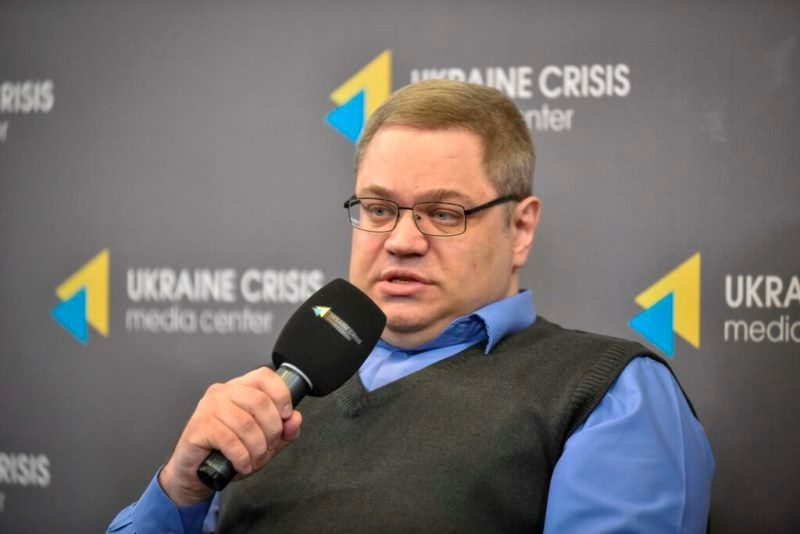
In his opinion, from a Ukrainian perspective, Azerbaijan's experience is particularly noteworthy:
"Because both countries have sought to preserve sovereignty and strategic independence in a complex geopolitical environment for many years. Although their historical development paths differ, Kyiv and Baku share the importance of strong state institutions, diversified international partnerships, energy and transport connections, as well as the right of each nation to make independent decisions about its future. In recent years, the growing importance of the Black Sea-Caspian region and the Middle Corridor has created new cooperation opportunities between Ukraine and Azerbaijan in the areas of trade, logistics, energy security, and regional stability.
Today, as Europe seeks new energy routes, transport corridors, and security partnerships, the strategic importance of the South Caucasus is steadily increasing. In this context, Azerbaijan's transformation from a state focused on internal stabilization in the 1990s to a regional actor with its own diplomatic and economic agenda is particularly important. For Ukraine, which is fighting for its sovereignty and future position in Europe, this experience offers important lessons in terms of resilience, state capacity, and strategic vision."