General Abbas Gharabaghi, of Azerbaijani origin, is considered one of the most controversial and contradictory military figures in 20th-century Iranian history. He rose to the highest ranks of the Iranian army during the reign of Shah Mohammad Reza Pahlavi (1941-1979), serving as commander-in-chief of the gendarmerie, minister of internal affairs, and finally, the last Chief of Staff of the monarchy.
Abbas Gharabaghi was the last military officer in Iran to hold the rank of four-star Arteshbod (army general).
Abbas Gharabaghi's name is directly linked to the withdrawal of the army from political confrontation and its declaration of “neutrality” on the last day of the Iranian monarchy in February 1979. This decision is considered one of the decisive events that effectively brought about the end of the Shah's regime.
On one hand, he was known as a loyal military officer of the monarchy, but on the other hand, by signing the army's “neutrality” declaration, he is remembered as one of the key figures who brought about the fall of the Pahlavi dynasty and created conditions for the new regime to come to power. Subjected to harsh criticism from both supporters of the Shah and Islamic revolutionaries, Abbas Gharabaghi is a prototype of a leader caught between military professionalism and political chaos within the realities of the 20th century.
Son of a family that moved from Karabakh to Tabriz
The most striking information about Abbas Gharabaghi's origin is found in his own memoirs.
Gharabaghi wrote that his ancestors moved from the Karabakh region of Azerbaijan to Tabriz. According to him, this migration occurred after Iran's wars with Russia, and the family settled in Tabriz. He himself was born in the Gharabaghilar neighborhood of Tabriz.
The family's settlement in Tabriz was not accidental. The 19th-century Russo-Iranian wars and the subsequent incorporation of the northern part of Azerbaijan into the Russian Empire accelerated the influx of population from the South Caucasus to northern Iran.
Abbas Gharabaghi never concealed his Azerbaijani origin. Foreign sources also note that he spoke Persian with a strong accent characteristic of Azerbaijani Turkish. In materials based on the Iranian press covering the 1979 events, his Azerbaijani officer status is specifically emphasized.
His father was a merchant, his brothers were military officers
Gharabaghi's father was a merchant named Mirza Karim. According to information from his memoirs, his father died in 1930. Abbas was one of the family's three sons.
Abbas Gharabaghi's entry into the military field was not accidental. Military service had become a serious tradition in his family. His elder brother, Javad Gharabaghi, was a military officer who rose to the rank of lieutenant general in the Iranian army. His other brother, Reza Gharabaghi, was also a military officer and was killed in battles with Barzani forces, which were joined by Kurds in the Ushnaviyeh region of northwestern Iran. This information is found in the biographical materials in Abbas Gharabaghi's own memoirs.
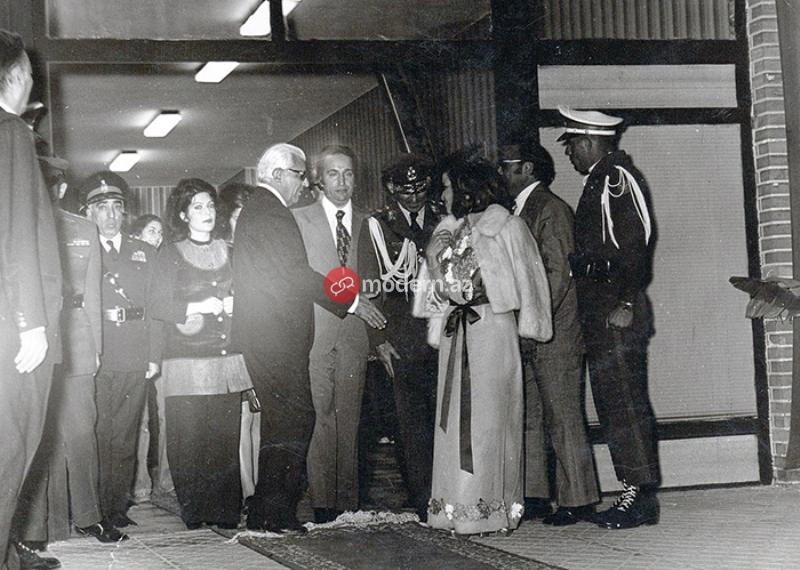
From the military school in Tabriz to the Shah's inner circle
Abbas Mirza Karim oglu Gharabaghi was born in Tabriz in 1918.
After primary education, he entered the Rushdiyya school in Tabriz. However, in 1934, he left that school and transferred to the Tabriz Military School, graduating in 1936.
He then entered the Officers' School in Tehran.
This stage was a significant turning point in Abbas Gharabaghi's life. Because among his classmates were individuals who would later rise to high positions in Iran's security and military system.
One of the most notable names was Hossein Fardoust.
H. Fardoust, with whom A. Gharabaghi was friends, would later become one of the trusted individuals in the Shah's inner circle, a high-ranking officer of the Shah's Imperial Guard, and an important figure connected to the SAVAK (Iran's Intelligence and National Security Organization) system - its deputy chief.
Abbas Gharabaghi was introduced to the circle of Crown Prince Mohammad Reza Pahlavi precisely at the military school. Biographical materials also indicate that he served as the Crown Prince's private secretary for a certain period.
This was one of the factors that played an important role in his future career.
In the army since 1938
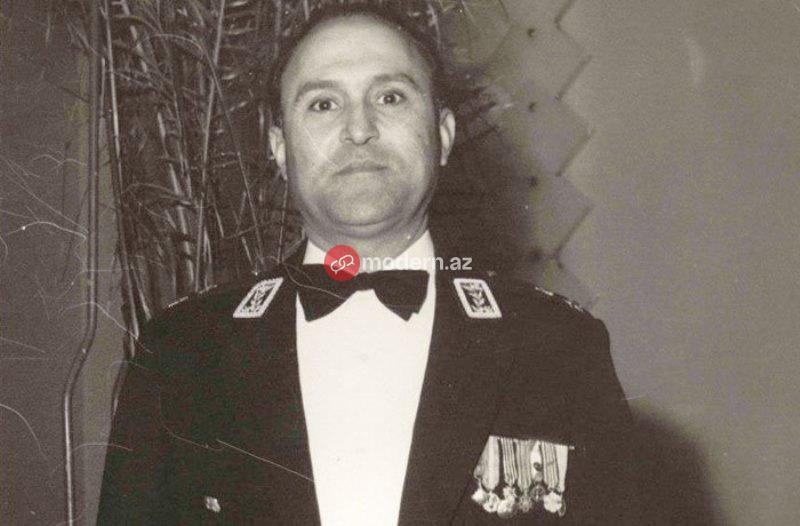
Abbas Gharabaghi began his service in the Iranian army in 1938 with the rank of lieutenant. At that time, the Pahlavi army was being reorganized and centralized.
In the next stage, his career became particularly closely linked with the Imperial Guard.
In the early 1940s, he participated in the organization of the Imperial Guard. Later, together with Hossein Fardoust, he became one of the main officers involved in the formation of the special guard created for the protection of the Shah's palaces.
This service further strengthened his proximity to the Shah's court.
Not just a military officer: he studied law
One of the distinguishing features of Abbas Gharabaghi's career is that he did not limit himself to military education.
In addition to military service, he also studied law at Tehran University and earned a bachelor's degree in law.
Later, he was sent to France to continue his education.
In France, he first specialized in military studies, and then studied law in Paris. Iranian sources state that Abbas Gharabaghi received a doctorate in law from the University of Paris in 1953. In addition, he studied at high-level staff and war courses at French military educational institutions.
This education allowed him to rise to both military and administrative and political positions in the future.
Rapid ascent: from division command to Chief of Staff
Abbas Gharabaghi's career developed particularly rapidly in the 1950s and 1970s.
He worked in various staff and operational structures, held leadership positions in military educational institutions, and became commander of infantry and guard divisions.
By the mid-1960s, he was already one of the highest-ranking commanders of the Iranian army.
In 1968, Abbas Gharabaghi became Chief of Staff of the Ground Forces and remained in this position until 1972. During that period, he was promoted to the rank of lieutenant general.
However, in the early 70s, a serious conflict also arose in the career of the Azerbaijani general.
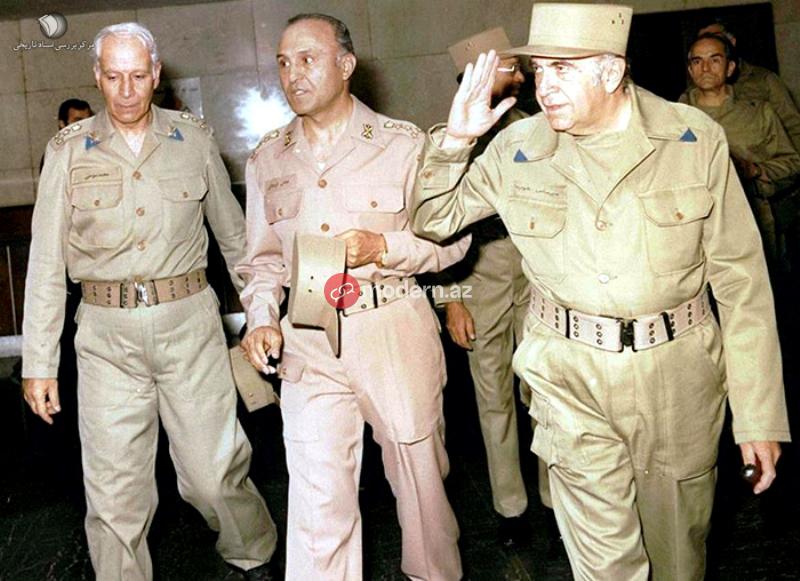
Confrontation with the commander and temporary setback
An interesting episode in Gharabaghi's career is his relationship with Gholamali Oveisi, the then commander of the Ground Forces.
In 1972–1973, a disagreement arose between the two generals. As a result, Abbas Gharabaghi was removed from his position as deputy commander of the Ground Forces and appointed commander of the Western Corps in Kermanshah. Later, he was temporarily removed from military service.
His old connections prevented his military career from being completely destroyed. According to information in Iranian sources, it was the intervention of Hossein Fardoust (Mohammad Reza Pahlavi's close friend and trusted confidant, head of the Shah's Special Intelligence Office) that played an important role in General Abbas Gharabaghi's return to the military system.
This event also creates a certain impression about Gharabaghi's character: he maintained his position within the system not only with his military talent but also with his personal connections among the court and high-ranking military officers.
Commander-in-chief of the Gendarmerie
In 1974, Abbas Gharabaghi was appointed Commander-in-Chief of the Iranian Gendarmerie.
This was a very important position.
Because the Iranian gendarmerie was not just an ordinary police force. These forces played an important role in ensuring security in rural areas of the country, protecting borders, and maintaining political stability.
In 1975, he was given the rank of Arteshbod - army general, one of the highest ranks in the Iranian army.
Thus, by the mid-1970s, Gharabaghi was already one of Iran's most powerful military figures.
General Abbas Gharabaghi remained Commander-in-Chief of the Iranian Gendarmerie until 1978.
Gharabaghi's influence: the Shah's close associate, or...
As we mentioned above, Iranian sources characterize Abbas Gharabaghi as a controversial general. Sources do not fully agree on his influence in the Iranian government.
On one hand, he was a general who was part of the Shah's inner circle and served the court for many years.
On the other hand, some sources note that he was not blindly loyal to the court like other generals, but rather an officer with administrative and political maneuvering skills.
It is no coincidence that in US diplomatic and intelligence materials published before the 1979 revolution, Gharabaghi was described as one of Iran's highest-ranking military figures.
In January 1979, the “Washington Post” presented him as Iran's “highest military official.” The newspaper wrote that Gharabaghi had issued a statement that the army would support the constitutional government - that is, the government of the last prime minister, Shapour Bakhtiar.
This fact shows how much political and military weight Gharabaghi had in those days.
1978: the general enters politics
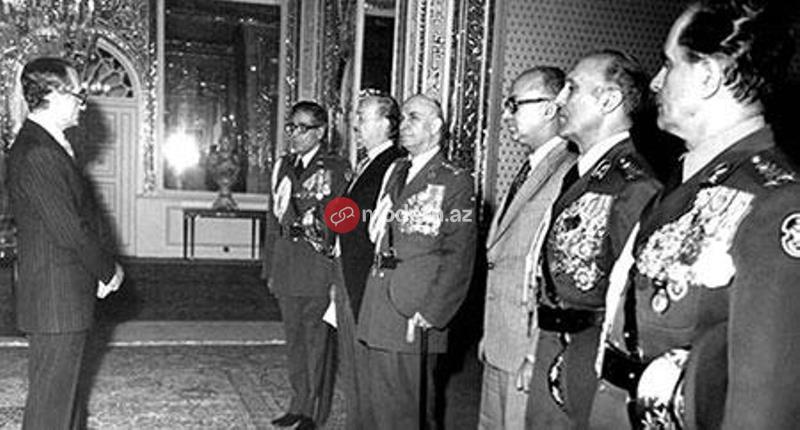
In 1978, the political crisis in Iran had already reached an unmanageable level.
Protests were expanding, strikes were paralyzing the country's economic life, and discontent against SAVAK (Iran's Intelligence and National Security Organization) and the Shah's regime was growing.
At this stage, General Abbas Gharabaghi became a figure used not only as a military officer but also in political administration.
In the summer of 1978, he was relieved of his post as Commander-in-Chief of the Iranian Gendarmerie and appointed Minister of Internal Affairs.
He held this position first in the government of Prime Minister Jafar Sharif-Emami (1978), and then in the military government of General Gholam Reza Azhari (1978).
During this period, as Minister of Internal Affairs, A. Gharabaghi had two tasks:
- to maintain public and political order in the country;
- to prevent the collapse of the Shah's regime.
However, the development of events showed that it was no longer possible to stabilize the situation with only repressive measures.
General Gharabaghi takes command of the army
General Gholam Reza Azhari, who led the military government from November to December 1978 and was the country's 39th prime minister, could not stop the political crisis.
In early January 1979, Shapour Bakhtiar became Iran's 40th prime minister.
General Abbas Gharabaghi, in January 1979, was appointed Chief of Staff of the Iranian Armed Forces - effectively the commander-in-chief of the army - by Shah Mohammad Reza Pahlavi.
This appointment was the pinnacle of a military career for an Azerbaijani Turk who had risen to the highest level in Iran.
He was now the highest-ranking officer responsible for the coordination of all major military structures of the Shah's army.
Abbas Gharabaghi's appointment as Chief of Staff of the Iranian Armed Forces coincided with a period when the political crisis in the country had reached its peak. Two political centers had emerged for power: the government of Shapour Bakhtiar, loyal to the Shah, and the opposition Khomeini movement.
Abbas Gharabaghi was caught between these two forces.
January 22: Gharabaghi was still defending the monarchy
Many foreign experts state that it would not be correct to evaluate A. Gharabaghi's subsequent fate solely based on the events of February 11 (the overthrow of the Shah).
Because on January 22, as commander, he had openly stated that the Iranian armed forces would support the constitutional government.
The “Washington Post” at that time interpreted his statement as support for the Shapour Bakhtiar government. At the same time, General Gharabaghi also emphasized that the military would not stage a coup.
However, soon after, events changed very rapidly, and General A. Gharabaghi was forced to take a different course of action.
The Huyser factor
In January 1979, US General Robert Huyser arrived in Tehran.
His mission later became one of the most debated issues related to the Iranian revolution.
Huyser met with high-ranking Iranian generals, trying to dissuade them from a military coup and to manage the political transition.
Gharabaghi was one of the key generals directly in contact with Huyser. The US press wrote in January 1979 that Abbas Gharabaghi played an important role in negotiations between General Huyser's representative, Prime Minister Shapour Bakhtiar, and the revolutionaries of the Khomeini movement.
However, one thing needs to be noted here: there is no evidence in the sources that Gharabaghi had previously agreed with the US on Khomeini's coming to power.
Shah Mohammad Reza Pahlavi later believed that Gharabaghi participated in establishing contacts between Huyser and Khomeini's representative Mehdi Bazargan and influenced the army not to intervene in the process.
Naturally, this is the Shah's position and a highly controversial claim.
Abbas Gharabaghi's most important decision in his life
Finally, February 11, 1979...
In Tehran, the fragmentation among military units was already clearly visible.
One part of the military forces was loyal to the government, the other part to the revolutionaries. The demonstration of loyalty to Khomeini by a group of technical personnel of the air force, followed by armed clashes, further deepened the crisis within the army.
In those days, Abbas Gharabaghi called a meeting of the high military command. The main issue at the meeting was:
Should the army continue to fight on the side of the government, or should it withdraw from the process?
As a result, at the end of the meeting attended by 22 high-ranking military officers, General Gharabaghi declared the army “neutral.”
The essence of this decision was to refuse to defend the government or the monarchy.
The US press at the time described this as the end of the monarchy. The “Washington Post” wrote that after high-ranking military commanders stopped supporting the government, the Shah's regime effectively collapsed.
For this reason, a view has formed in Iranian historiography:
General Abbas Gharabaghi's declaration of the army's “neutrality” removed the last pillar of the Iranian monarchy.
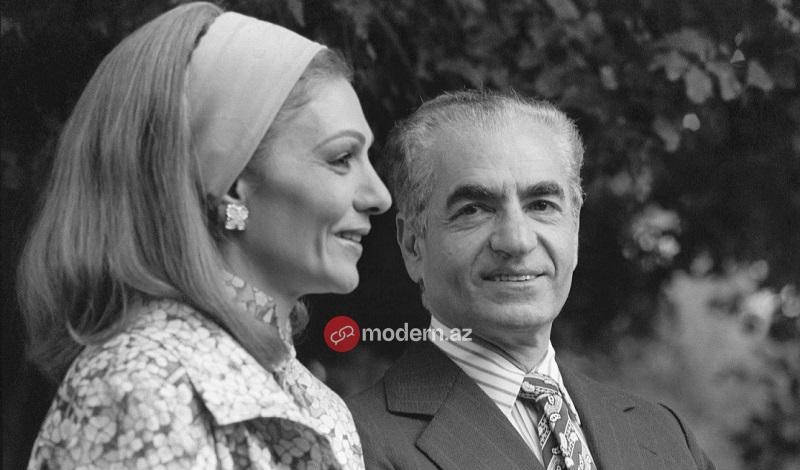
Did Gharabaghi betray the Shah?
Foreign analysts write that it is not possible to answer this question in one sentence.
Gharabaghi's harshest critics consider him the “general who betrayed the Shah.”
Especially in the memoirs of the Shah's supporters, Abbas Gharabaghi is accused of not using the army's power and stopping the defense of the monarchy.
However, Gharabaghi's own explanation was completely different.
He later wrote that involving the army in political confrontation in cities could have led to mass bloodshed.
His logic was as follows:
- If the army had fought, a civil war could have started.
- If the army remained neutral, a peaceful transition of political power would be possible.
In his memoirs, Abbas Gharabaghi presented himself not as a general who betrayed the Shah, but as a military officer who prevented the further escalation of the confrontation and much bloodshed.
He defended this very position in his book “Facts about the Iranian Crisis,” written in 1983.
Some historians state that Gharabaghi's self-defense is based on a weak argument.
That is, no matter how much his decision is explained by humanitarian motives, the political consequence was very clear: the fall of the Pahlavi monarchy.
But many experts do not consider it correct to present Gharabaghi's role in Iranian history only as “pro-Shah” or “pro-revolution.” According to their argument, A. Gharabaghi appears more as a high-ranking military officer who remained within the Shah's regime until the last moment but decided that the system could no longer be saved by military means.
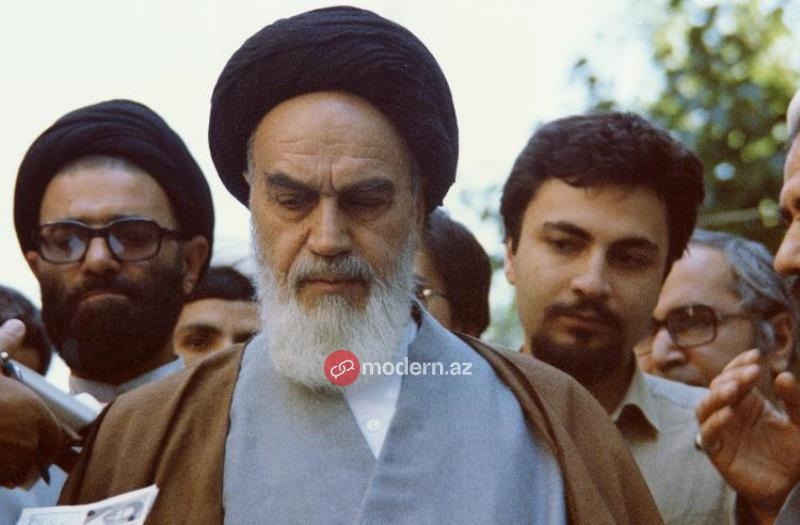
Why didn't Khomeini execute him?
This is one of the most mysterious parts of Abbas Gharabaghi's biography.
After the Islamic Revolution, numerous high-ranking generals of the Pahlavi regime were arrested and executed.
However, Abbas Gharabaghi remained unarrested for a long time and eventually managed to escape from Iran. His survival after the revolution is an interesting fact.
Some experts say that Gharabaghi's survival raises a very serious question: why was the Shah's last Chief of Staff not executed?
There is no definitive answer to this question.
Some experts explain that this is related to his ensuring the army's neutrality on February 11.
In other words, it is claimed that Gharabaghi's decision helped the new government take over Tehran without armed military resistance.
Some sources even claim that he had connections with Khomeini's side. However, since some of these claims stem from later political polemics, it would not be correct to accept them as confirmed facts.
He hid for 14 months
After the Islamic Revolution triumphed in Iran, Abbas Gharabaghi hid in Tehran for some time.
Iranian sources state that he lived in hiding in various places for 14 months, and then left the country from Mehrabad airport with a fake passport.
Thus, Abbas Gharabaghi, once one of Iran's most powerful generals, was forced to leave the country secretly.
His last address was France.
Paris: quiet life in exile and family members
Gharabaghi spent the rest of his life in Paris.
He died of cancer in Paris on October 13, 2000. From the inscription on his tombstone, it appears that he passed away at the age of 82.
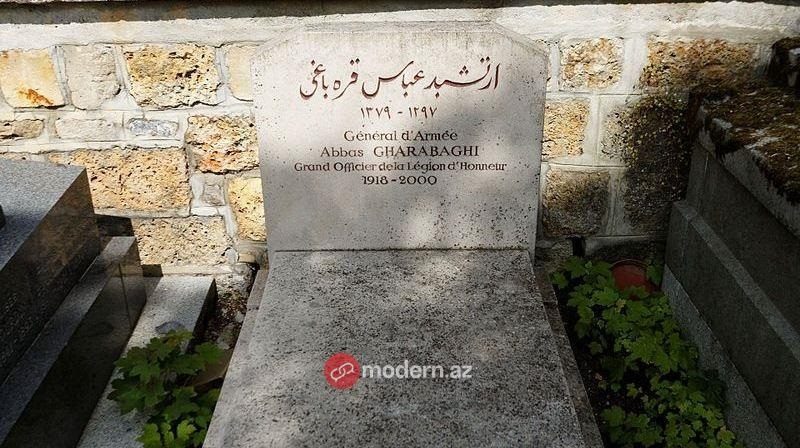
Gharabaghi is buried in the famous Père Lachaise Cemetery in Paris.
His tombstone notes that he was a general of the Iranian army and a Grand Officer of France's highest military and civil state award – the “Legion of Honor” (“Legion d'Honneur”).
But who were his family and children?
There is very little information about this on internet resources. However, there is a very valuable source: an obituary published in the French newspaper “Le Monde” in October 2000 regarding Gharabaghi's death.
That obituary specifically named Abbas Gharabaghi's family:
wife - Rakhshanda Gharabaghi (1931–2017);
daughters - Minou Gharabaghi-Bechour; Ninou Gharabaghi, Mitra Gharabaghi-Dilmaghani.
At the time the obituary was published, the name of one of the grandchildren was also mentioned – Kiarash Béçur.
It also lists Rauf Bechour and Hormuz Dilmaghani as the husbands of two of the daughters.
This is serious archival evidence confirming that Gharabaghi had at least three daughters.
There is no extensive information about where Abbas Gharabaghi's children currently live and their public activities, as his family members are not primarily public or political figures, and therefore no other information can be found in open sources.
Gharabaghi's special status in France and two books
The interesting point is that Gharabaghi did not live in France as an ordinary exiled former general.
He was a Grand Officer of the French state's high-level “Legion of Honor.” His status is also noted in the archives of the Père Lachaise Cemetery.
One of Abbas Gharabaghi's most valuable legacies for historians is his memoirs.
His book “Facts about the Iranian Crisis,” written in 1983, is his own perspective on the events that took place in 1978–1979.
The most important feature of the book is that Gharabaghi explains from his own perspective the overthrow of the Shah, the fragmentation within the army, the disagreements among high-ranking generals, the position of the government of the last prime minister Shapour Bakhtiar, the negotiations with representatives of the Khomeini movement, and the army's neutrality.
He particularly points to Shapour Bakhtiar, the last prime minister of the Shah's regime, as one of the individuals bearing serious responsibility for the fall of the monarchy.
In his second book, “What Happened That It Happened?”, written in 1999, Gharabaghi tried to look at the events of 1979 from a broader perspective.
These two works are particularly valuable because they are the memoirs of a person who was at the heart of the events and stood at the highest level of the army during that period.
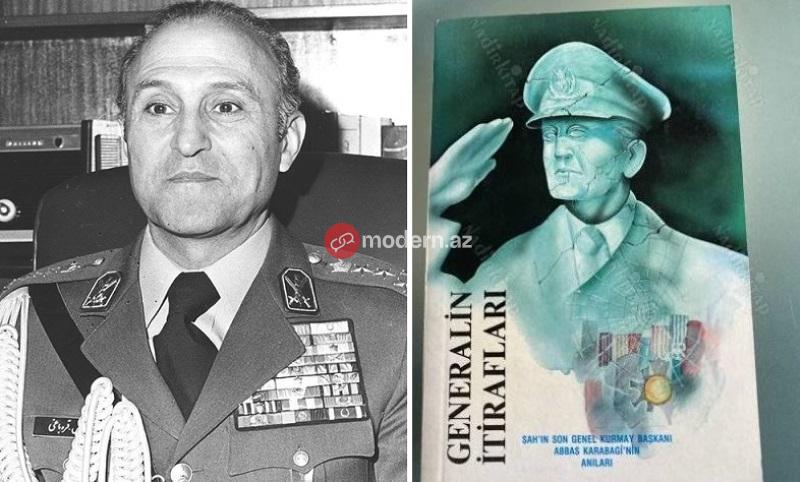
But historians note that Gharabaghi's memoirs, like other memoirs, are the author's personal position and may not reflect the full reality.
Abbas Gharabaghi was a professional officer who rose to the highest echelons of the military-bureaucratic elite of the Iranian Pahlavi state. His name is directly linked to the events of February 11, 1979. On this date, the Iranian army declared its neutrality in the political confrontation. As a result, the Pahlavi monarchy effectively collapsed.
For this reason, there are two completely opposing evaluations of Gharabaghi.
According to the view of the Shah's supporters, he was “the highest-ranking general of the Pahlavi regime, but at the last moment, he did not defend the monarchy.”
According to Gharabaghi's own view, “The army could no longer save the country; neutrality prevented a larger civil war.”
This is precisely the main paradox that makes Abbas Gharabaghi's biography interesting: the army led by the Shah's loyal general withdrew from the defense of the monarchy.
Thus, the peak of his personal career became the culmination of the political collapse of the Pahlavi state.
A. Gafarli