It would be naive to view the recent processes in Armenia in the context of internal political struggle. Here, a broader geopolitical transformation, the reformatting of political elites, and attempts to weaken Russia's influence mechanisms in the South Caucasus are observed.
One of the main directions of Nikol Pashinyan's government's policy is to change Armenia's foreign policy vector, expand political and security ties with the West, and limit Moscow's ability to influence the country's internal political processes.

This process naturally creates contradictions with actors in Armenia's previous political system who held a closer position to Russia. Robert Kocharyan stands out as a special political figure in this context. Kocharyan is one of the main opposition figures opposing the political course of the Pashinyan government. The proximity of the political network formed around him to Russia has been discussed not only in Armenia for many years, but is openly seen by the whole world. The issue is not limited to Kocharyan himself. In recent years, the Pashinyan government has been trying to nullify the capabilities of previous influence groups in Armenia's political, economic, and social institutions. This process includes relations with the political elite, business circles, diaspora structures, and even the Armenian Apostolic Church. It seems that the main issue here is larger than the arrest of specific individuals.
In other words, the Pashinyan government has not only targeted individual political rivals, but is trying to weaken possible channels of influence that Russia has formed within Armenia. It is also true that Russia's influence mechanisms are not limited to classic diplomatic relations. Political ties, business networks, diaspora structures, security institutions, information resources, and personal relationships constitute various components of this influence. In this regard, what is happening in Armenia can also be evaluated as a kind of elite transformation.
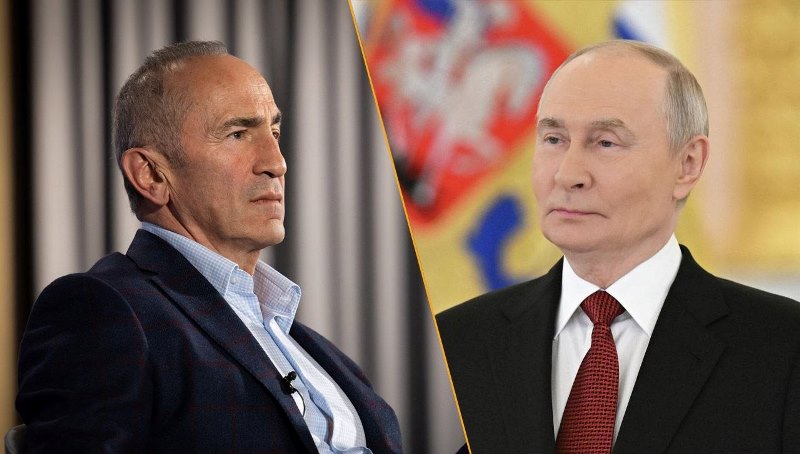
The question may be asked, where does the issue of Ramiz Mehdiyev, who held an important position in Azerbaijan's political history for many years, stand in this picture?
First, let's note that Azerbaijan was also part of the Soviet empire for many years, and in this sense, Russia's long arm also did its work here. Mehdiyev's relations with the Russian political elite and his connections from the former USSR political system are undeniable.
Precisely for this reason, it would be political blindness not to see the Kocharyan-Mehdiyev parallel directly as a possible manifestation of the same political-geopolitical model in two different countries. Political networks linked to Russia have not been the problem of only one country. As political systems changed in the post-Soviet space, connections, personal relationships, and institutional ties from previous periods also maintained their influence.
It should not be forgotten that a change of power in one country does not mean a change of political networks. True, ideological affiliations can change, and economic interests can be transformed. However, personal connections, past political relations, and cross-border networks have the potential to operate for a long time. In this regard, the search for certain political parallels between Armenia and Azerbaijan should not be considered accidental. Kocharyan and Mehdiyev are figures of different political systems and different historical stages. There have been periods in the political history of both countries when Russia's regional influence was an important factor. Therefore, it is inevitable that the previous political elites and their possible foreign relations in both countries pose a serious problem in terms of security and political stability.
In this sense, logically, the desire of national authorities to reduce foreign political influence naturally necessitates the elimination of political networks remaining from the previous system.
In Pashinyan's Armenia, this issue has been openly brought to the political plane. In the Azerbaijani context, the discussions around Ramiz Mehdiyev allow this topic to be explored through another political model.
When approaching the issue conceptually, the most interesting point in the Kocharyan-Mehdiyev issue is not whether they personally know each other. The main issue is how the same geopolitical influence model can work in different countries. To carry out the same mission in different places is the biggest connection in this work. In this context, special attention should be paid to one point. If Kocharyan, a member of the same network, was at the head of those who committed the Khojaly genocide, another member of that network elsewhere could outwardly oppose it. Of course, within the network, they would smile at this.
In conclusion, in the plane of political analysis, it seems more logical to look for the Kocharyan-Mehdiyev similarity in the long-term influence capabilities it created over post-Soviet political elites.
Elnur AMIROV