The participation of Azerbaijani President Ilham Aliyev in the Shanghai Cooperation Organization (SCO) Summit and the “SCO plus” format meeting held in Bishkek, the capital of Kyrgyzstan, can be evaluated as another important indicator of Azerbaijan's multi-vector foreign policy formed in recent years. It would not be correct to evaluate this visit only as participation in an international event. The meetings held in Bishkek demonstrated that Azerbaijan is increasingly becoming a serious actor in geopolitical and economic processes outside the South Caucasus, especially in Central Asia.
President Ilham Aliyev's visit program itself is noteworthy in this regard. The head of state held meetings with Turkish President Recep Tayyip Erdoğan, Iranian President Masoud Pezeshkian, Kazakh President Kassym-Jomart Tokayev, Armenian Prime Minister Nikol Pashinyan, and other leaders. A brief conversation with Russian President Vladimir Putin also took place within the framework of the SCO summit. There was also contact with Indian Prime Minister Narendra Modi. Thus, within a few days, opportunities for direct dialogue on various directions of special importance in Azerbaijan's foreign policy agenda arose.
In fact, the situation in Bishkek once again revealed one of the main features of Azerbaijan's foreign policy - the ability to work simultaneously with various power centers. Relations with Turkey are at the level of alliance and strategic partnership, new cooperation opportunities are discussed in relations with Iran, strategic partnership and alliance relations are developed with Kazakhstan, dialogue channels are maintained with Russia, and key issues of the post-conflict phase are discussed with Armenia.
This is not accidental diplomatic activity. This is the result of Azerbaijan increasing its weight in the international system.
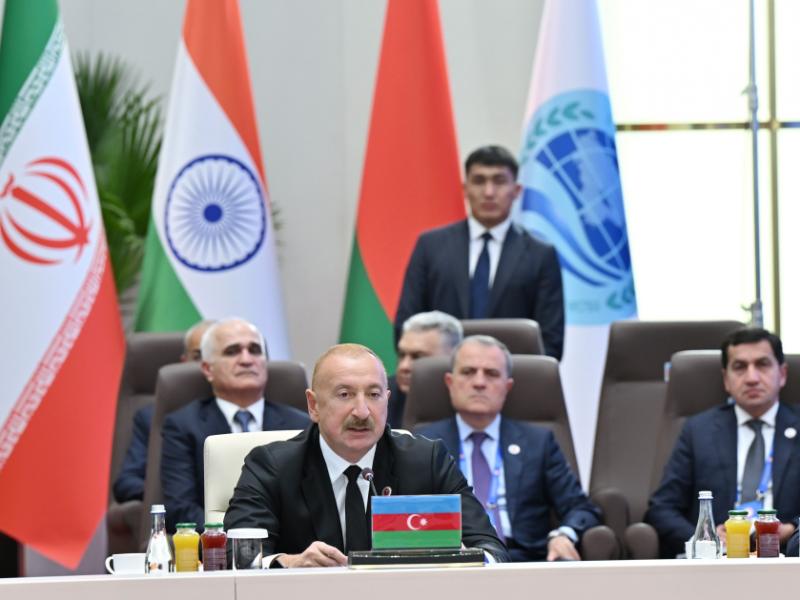
“The South Caucasus is becoming a zone of peace”
One of the most important points of President Ilham Aliyev's speech in the “SCO plus” format was his messages regarding the new stage of Azerbaijan-Armenia relations.
The head of state stated:
“A little over a year ago, Azerbaijan and Armenia initialed the text of a peace agreement, ending a 30-year conflict. Thus, the South Caucasus region, which has been a multi-year conflict zone, is becoming a zone of peace.” The voicing of this idea on the SCO platform is of particular importance. Because Azerbaijan now presents its relations with Armenia not only within the framework of the South Caucasus, but in the broader context of Eurasian security and cooperation.
The meeting between Ilham Aliyev and Nikol Pashinyan in Bishkek also attracted attention from this perspective. The parties emphasized the historical significance of the 2025 Washington Peace Summit, the Joint Declaration, and the initialing of the agreed text of the peace agreement. More importantly, the real economic results of the peace process are already visible: Azerbaijan's export of oil products to Armenia, the transit of goods from third countries through Azerbaijani territory, and the establishment of trade relations between the two countries were noted as practical examples of “peace dividends.”
This picture is the diplomatic result of the position Azerbaijan has formed over the years. Azerbaijan first restored its territorial integrity and sovereignty, and now seeks to build new regional realities on economic cooperation and transport links.
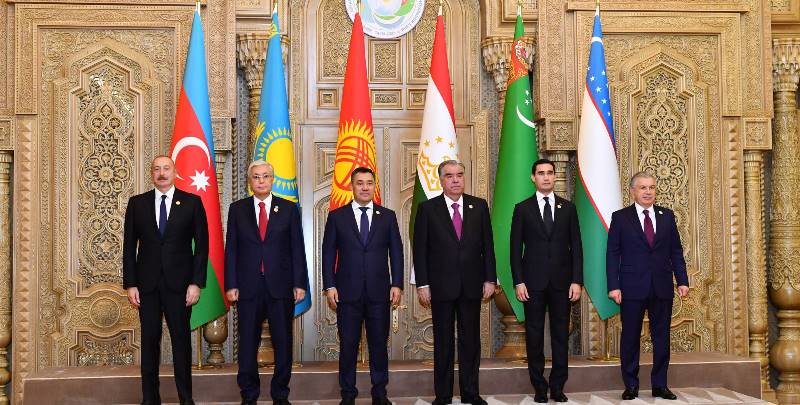
Azerbaijan is no longer an outside observer in Central Asia
Another important result of the Bishkek summit for Azerbaijan was the demonstration of relations with Central Asia at a new level.
In recent years, relations between Baku and the leading states of Central Asia have been developing rapidly. Azerbaijan is no longer just a party located on the western shore of the Caspian Sea in these processes. Our country has become one of the important links in transport, energy, and trade projects connecting Europe and Central Asia.
During the meeting with Kazakh President Kassym-Jomart Tokayev, the development of Azerbaijan-Kazakhstan strategic partnership and alliance relations, especially transport and logistics issues and the prospects of the Middle Corridor, were discussed. The parties also touched upon the holding of the next summit of the Conference on Interaction and Confidence Building Measures in Asia in Baku. This fact itself shows how much Azerbaijan's policy regarding Central Asia has expanded. Baku is transforming from a country participating in the formation of interregional connections to a country that can influence the direction of these processes.
In other words, Azerbaijan is not left out of the growing geopolitical and economic importance of Central Asia; on the contrary, it acts as one of the main communication and logistics centers of this process.
Turkey, Iran, Russia - a real picture of balance policy
The high level of Azerbaijan-Turkey relations was once again demonstrated in Bishkek. President Ilham Aliyev and Recep Tayyip Erdoğan discussed the regional agenda and issues of strengthening peace and stability. The official statement specifically emphasized that Azerbaijan-Turkey relations are built on “brotherhood and strategic alliance.”
In the direction of Iran, the issue of preserving and developing neighborhood relations, which is of fundamental importance for Azerbaijan, came to the fore. Iranian President Masoud Pezeshkian highly appreciated Azerbaijan's support to Iran in a difficult situation and expressed their interest in expanding relations between the two countries in all areas.
The fact that dialogue channels remain open in relations with Russia should not be overlooked. President Ilham Aliyev and Vladimir Putin had a brief conversation within the framework of the SCO summit in Bishkek.
All this shows the essence of Azerbaijani diplomacy: Baku works in parallel with various power centers, without being tied to one side, based on its national interests.
This approach is precisely the main advantage of the “balanced, national interest-based, and multi-vector foreign policy” model that Azerbaijan has formed in recent years.
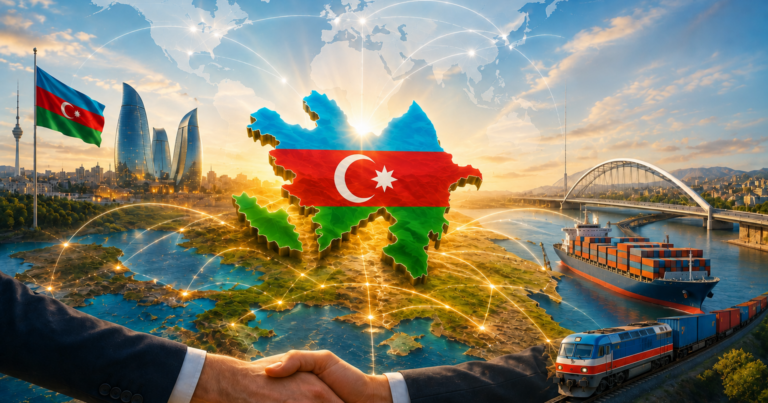
Azerbaijan is already strengthening its “middle power” status
Looking at the diplomatic landscape in Bishkek from a broader perspective, another conclusion emerges: Azerbaijan is increasingly strengthening its capabilities to act not only as a regional state in the classical sense, but also as a middle power.
Being a middle power is not only measured by economic and military capabilities. Factors such as diplomatic maneuverability, the ability to establish dialogue simultaneously with various power centers, influence regional processes, play a strategic role in transport and energy projects, and advance its agenda on international platforms are also key.
Azerbaijan has quite serious resources in this direction. Our country is located on transport routes connecting Europe and Asia. The Baku-Tbilisi-Kars railway, Alat port, the Middle Corridor, energy projects, and increasing cooperation with Central Asian countries enhance Azerbaijan's geo-economic importance.
Added to this are Azerbaijan's military-political strength, the restoration of its territorial integrity and sovereignty, its four-year leadership of the Non-Aligned Movement, and its active diplomatic line on various international platforms. Another idea voiced by President Ilham Aliyev at the "SCO plus” meeting also reflects this diplomatic line of Azerbaijan:
“Azerbaijan will continue to contribute to strengthening the principles of multilateralism in international affairs.”
This is not just a diplomatic expression. Looking at Azerbaijan's foreign policy practice in recent years, it is possible to see that this approach has turned into real policy.
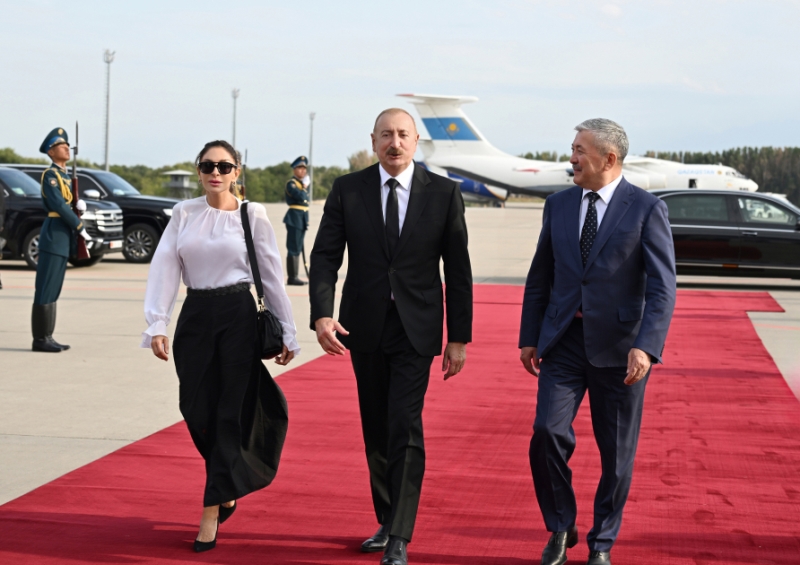
The main political outcome returning from Bishkek to Baku
If the main outcome of the SCO summit for Azerbaijan needs to be expressed in one sentence, it can be said as follows: Azerbaijan is no longer a country that has become an object of the policies of great powers, but one of the actors that have a say in the formation of interregional processes.
In Bishkek, a number of key issues on Azerbaijan's agenda were discussed simultaneously on an international platform: the peace process with Armenia, regional security, relations with Central Asia, transport and logistics corridors, alliance with Turkey, relations with Iran, dialogue with Russia, and in a broader sense, Azerbaijan's place in a multipolar world order.
Against this background, the most important feature of President Ilham Aliyev's diplomatic line emerges: Azerbaijan, while protecting its interests, can simultaneously develop relations with both the West and the East, as well as with Central Asian and South Caucasus countries.
The main strength of this policy lies in its flexibility. Baku adapts to changing geopolitical realities, but does not deviate from the main principle - Azerbaijan's national interests. The Bishkek visit also showed that Ilham Aliyev's balanced foreign policy, implemented over the years, has transformed Azerbaijan into a state that is accepted in a wider geography, and whose word and position are taken into account.
The SCO summit did not give Azerbaijan a new status - in fact, it more clearly demonstrated the status that was already forming: Azerbaijan is becoming a middle power that strengthens its connecting role between East and West, South and North in the Eurasian space, increases its ability to influence processes in Central Asia, and manages to protect its national interests in global competition.
The meetings in Bishkek were another political confirmation of this reality.