Nearly 23 years of military service... More than 20 years of this period were spent in the combat units of the Special Forces. Missions carried out behind enemy lines, the 44-day Patriotic War, operations in the Kalbajar direction, the September 2022 battles, and finally, the local anti-terror measures of 2023...
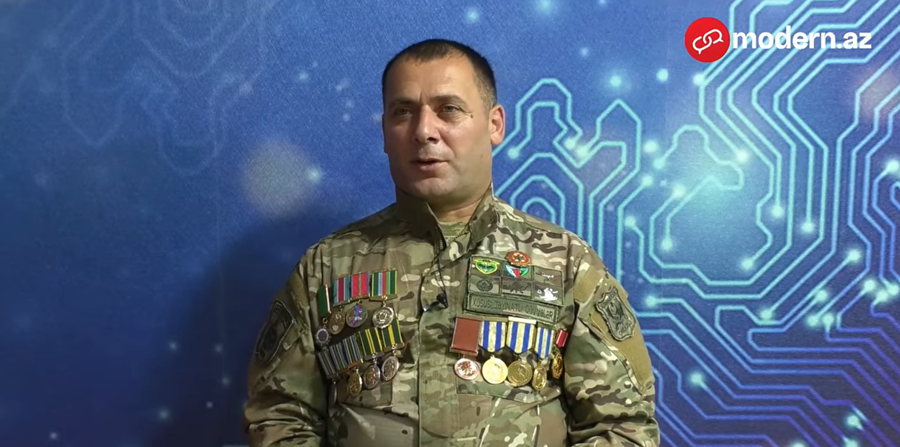
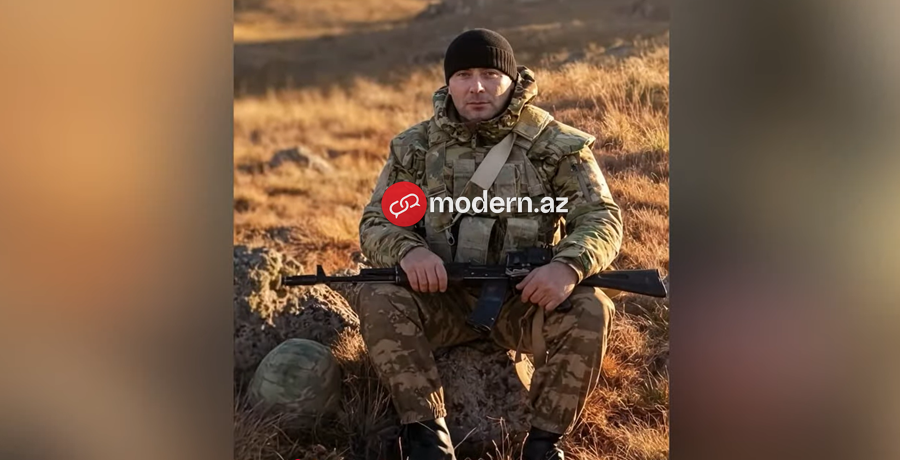
Retired Chief Warrant Officer of the Special Forces, Sharabaddin Khankishiyev, speaking to Modern.az, recalled his experiences during various periods of his military service, the most difficult tasks, and unforgettable events.
Born in Hamishan village of Astara region, the former serviceman currently lives in Sumgayit. He is married and has three children.
He served in the Azerbaijani Army for nearly 23 years, spending more than 20 of those years in the combat units of the Special Forces.
“From 2012 to 2016, I participated in combat missions behind enemy lines many times. I am a participant in the 44-day Patriotic War. In 2021, during operations in the Lachin-Kalbajar direction, I was in Kalbajar for nearly 60 days. I also participated in the September 2022 battles and the anti-terror measures held in 2023.”
Sharabaddin Khankishiyev says that since he had served in the Special Forces for many years before the Patriotic War, the combat situation was not entirely unfamiliar to him. Between 2012 and 2020, he participated in various missions and went through difficult training stages.
However, the 44-day war of 2020 opened a completely different page in his service life.
There was another mission within the battle, to find the wounded and martyrs
Sharabaddin Khankishiyev states that during the Patriotic War, he served in the search and rescue group of the Special Forces.
The duty of this group was not only to fight. One of the main tasks was to find wounded and martyred servicemen in areas where heavy fighting was taking place and to evacuate them from dangerous zones.
“During the Patriotic War, I personally was in the search and rescue group of the Special Forces. I participated in the search and rescue operation for Colonel Ramiz Gasimov and Colonel Zaur Nudiraliev. We participated in finding and evacuating them.”
According to him, the most difficult aspect of such operations was that the group sometimes had to move behind enemy lines or in areas where full control was not ensured.
Sh. Khankishiyev said that during search and rescue missions, there were several contacts with enemy sabotage groups, and he participated in operations in the directions of Jabrayil, Fuzuli, Khojavand, Zangilan, and Gubadli.
“While searching for our martyrs and wounded, we encountered enemy groups many times. We had contacts in the directions of Jabrayil, Fuzuli, Khojavand, Zangilan, and Gubadli. Our goal was both to carry out the mission and to ensure the safety of our units.”
He also says that in one of the operations, three “Ural” vehicles carrying weapons and ammunition were seized.
For him, the main result of those days was the victory of the Azerbaijani Army at the end of 44 days.
“We did our best to reclaim our lands and returned from the Patriotic War with victory.”
“The death of Panjali Teymurov increased my desire for revenge”
One name holds a special place in his conversation — Panjali Teymurov.
Sharabaddin Khankishiyev says that Panjali was his childhood friend, compatriot, and later, a comrade-in-arms.
Panjali's martyrdom in 2016 left a deep mark on his life.
“My closest childhood friend, my compatriot Panjali Teymurov, became a martyr. He was both my childhood friend, my compatriot, and my comrade-in-arms. When he became a martyr in 2016, I personally attended his funeral. Since that day, I have never forgotten him. I remember him every moment.”
The former special forces officer says that the loss of his friend also had a serious impact on his subsequent service life.
This point is felt differently in the serviceman's speech, who recalls various operations over the years. When he talks about his childhood friend, listing the dates, directions, and tasks of the battles in sequence, he expresses the events not only with military terms but also with personal memories.
The unseen side of the war emerges precisely here: directions and positions change on military maps, but the name of the fallen comrade-in-arms often lives longest in the memory of the fighter.
“In Kalbajar, shells were falling 8-10 meters from us”
Sh. Khankishiyev also recalls the battles that took place in September 2022 as one of the most difficult stages of his service.
According to him, during those days, enemy activity was observed in the Kalbajar direction, and units were brought to combat readiness.
“In September 2022, it was already clear that the enemy was trying to provoke. We were observing the situation in the Kalbajar area. When the battle began, our main goal was to protect our positions and prevent the enemy from advancing.”
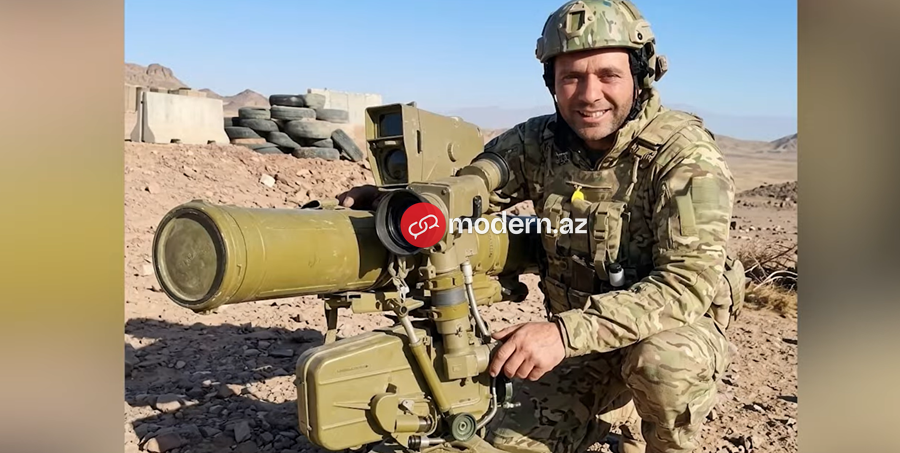
Sh. Khankishiyev says that he used the anti-tank “Fagot” complex in those battles.
According to him, a number of enemy vehicles were disabled.
“Personally, in those battles, I struck enemy equipment with the ‘Fagot’ weapon. Three ‘Ural’ vehicles carrying weapons and ammunition were also disabled.”
One of the most intense moments occurred during artillery fire.
The special forces officer states that since the shells were falling very close to their positions, he decided to move the personnel to a safer place.
“There was heavy artillery fire in that direction. Shells were falling very close to us. I placed the personnel in a more suitable and protected place. I myself remained in charge of heavy weapons.”
According to him, the “Fagot” complex they used was also damaged as a result of the fire.
Despite this, he says that they continued the mission together with a serviceman named Asgar Aliyev.
“I had a capable soldier named Asgar Aliyev next to me. Although the situation was very difficult, we stayed in position and completed our mission.”
Before the first hours of the anti-terror operation, weapons were transported to Shusha
The local anti-terror measures carried out in September 2023 were one of Khankishiyev's last major operations in his service life.
He says that during that stage, he also participated in delivering heavy weapons and ammunition of the Special Forces to the front lines.
“During the anti-terror measures, I loaded heavy weapons of the Special Forces, ‘Fagot’ complexes, and other ammunition onto a ‘Ural’ vehicle and transported them to the front lines in the direction of Isa Bulagi in Shusha.”
However, his most interesting memory related to anti-terror measures begins before this.
"On the Khalfali road, we discovered the location of ten secret posts in seven days"
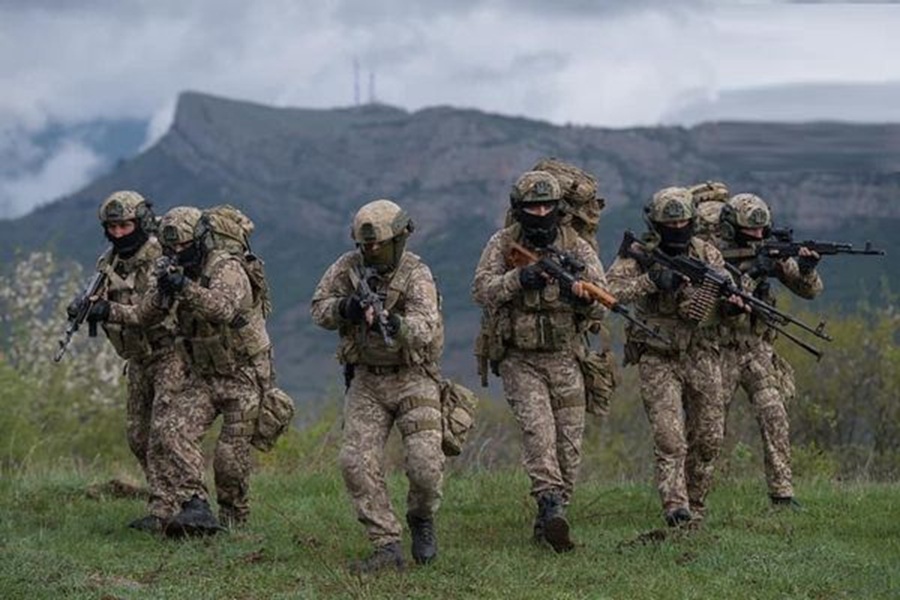
According to Sh. Khankishiyev, he received a task from the unit commander to identify the enemy's secret posts in the direction of the Khalfali road.
The purpose of the task was to determine the location of these positions and transmit the information to Azerbaijani units.
“I received an order from the unit commander that there are enemy secret posts on the Khalfali road, and it is necessary to determine the location of these posts and report them to our unit.”
Lieutenant Colonel Idris Said also joined him in this task.
“Together with Lieutenant Colonel Idris Said, we went on reconnaissance in the Khalfali direction, in the Khankendi area.”
According to the former chief warrant officer, the reconnaissance work lasted seven days.
During these seven days, they identified ten secret enemy positions.
“In seven days, we discovered the location of ten secret posts and transmitted the information to our units.”
According to him, these positions were later among the targets of Azerbaijani units in the first phase of the anti-terror measures.
He states that in some cases, it was necessary to get quite close to the positions to accurately determine the location of the posts.
“To accurately identify the posts, we had to observe from a closer distance. Of course, the risk was great. We could be discovered and captured at any moment.”
According to him, as a special forces officer and scout, the main issue was not only to collect information but also to return with that information.
“Protecting security is as important as completing the task. Because if you cannot obtain the information and bring it back, the operation has no result.”
“We could have been captured at any moment”
Sharabaddin Khankishiyev talks most about the risk factor when recalling those seven days.
According to him, the terrain, the enemy's observation capabilities, and the location of secret posts made reconnaissance difficult.
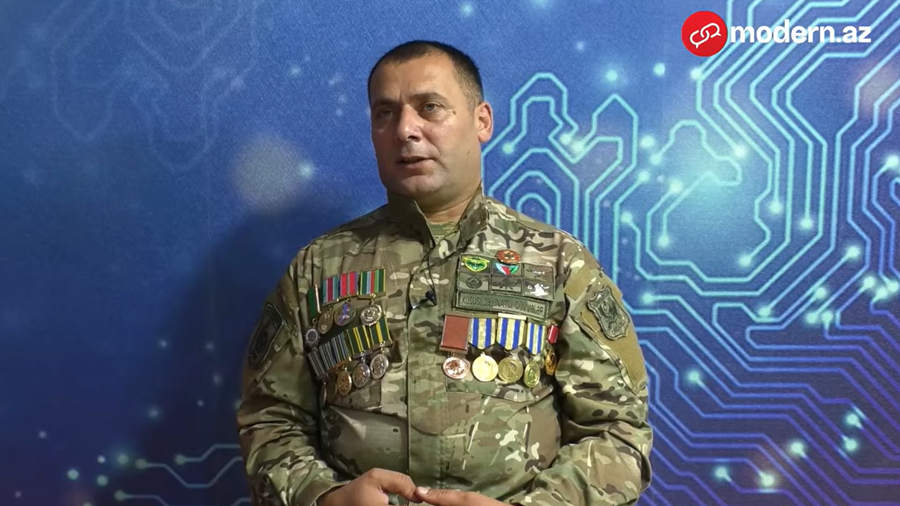
“We could have been captured at any moment. But as special forces and scouts, we were able to protect our safety and complete the mission.”
After this operation, the servicemen who returned to their units were again involved in combat missions with the start of anti-terror measures.
Khankishiyev says that seeing the information obtained during reconnaissance later used in a real operation was of particular importance to him.
It was difficult to advance in Khankendi
According to him, during the anti-terror measures, another position that hindered the movement of Azerbaijani special forces was identified.
Sh. Khankishiyev states that this position was located at a high altitude and created a serious obstacle to movement in the direction of Khankendi.
“The post was located at such a high altitude that it prevented the Special Forces from moving freely and advancing in the direction of Khankendi.”
According to him, after the position was identified, mutual fire began in that direction.
Khankishiyev states that despite sniper fire from the enemy, the unit did not retreat.
“We were being fired upon. The goal was to drive us away from that area. After fully identifying the location of the position, a strike was launched against it, and the resistance on that high ground was eliminated.”
Khankishiyev considers this moment one of the most memorable combat episodes of the anti-terror measures for him.
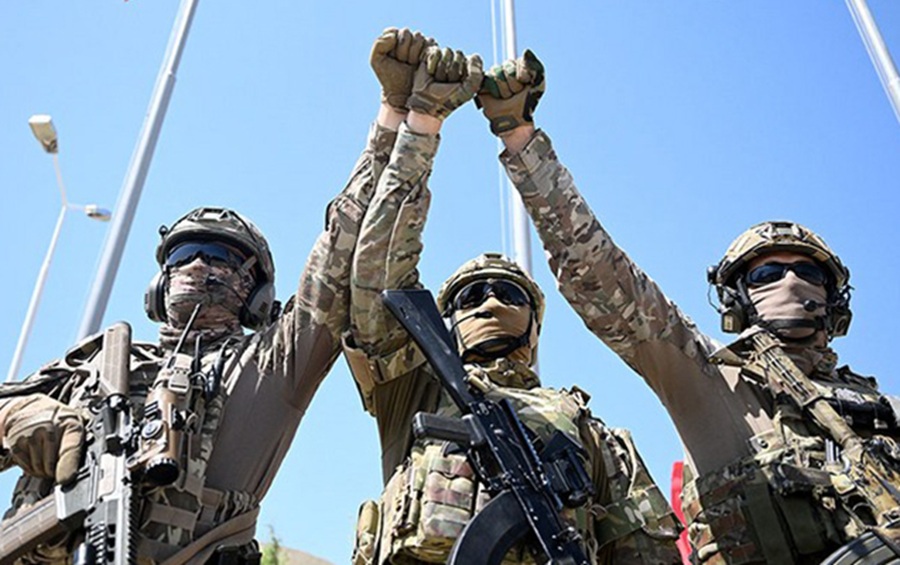
“After 32 years, I was one of the first to set foot on that land”
The most emotional part of the conversation is related to Khankendi.
Sharabaddin Khankishiyev states that together with Lieutenant Colonel Idris Said, they entered the Khankendi area during a reconnaissance mission before the anti-terror measures.
He considers this one of the proudest events of his military service.
“It was a great honor for me to set foot on that land after 32 years. Lieutenant Colonel Idris Said and I were there on a reconnaissance mission. Every time Khankendi is mentioned, I rejoice and feel proud.”
In his speech, Khankendi does not sound like an ordinary geographical name.
The memory of 23 years of military service, years of training, missions behind enemy lines, lost friends, and two wars seems to merge in the name of that city.
“Today my forehead is clear. I am proud to have been one of the servicemen who entered those lands.”
"On the path we started with 500 people, only 20 remain at the end"
Khankishiyev, who served in the Special Forces for many years, says that physical strength alone is not enough for service in these units.
In his opinion, to be a special forces officer, one primarily needs will, knowledge, psychological preparation, and devotion to the Motherland.
“To be a special forces officer, you need will, physical strength, knowledge, and love for the Motherland. A person who does not love the Motherland cannot be a soldier. A person who does not love his people, his nation, his flag cannot do this job.”
He also emphasizes that special forces courses are extremely difficult.
“Sometimes 500 people start the course, but only 20, 27, or 30 people can make it to the end.”
He believes that young servicemen who want to join the Special Forces should understand in advance that this is not just about prestige and a name.
This service requires great physical endurance, psychological preparation, long-term training, and strict discipline.
“I wish that young people serving in the Azerbaijani Army and choosing this path work on themselves, complete the courses, and become professional soldiers.”
“A soldier should prepare for battle not to die, but to win”
The thoughts expressed by Khankishiyev at the end of his conversation show the harsh reality of war rather than the romance of battle.
Although he says that martyrdom is accepted as one of the highest moral peaks in Azerbaijani society, he believes that a soldier should go to battle not with the desire to become a martyr, but with the goal of winning and returning alive.
“Martyrdom is a great peak. But a soldier going to battle should not wish to become a martyr. He trains for years. His goal should be to defeat the enemy and complete the mission.”
In his opinion, the professionalism of a soldier serves precisely this purpose.
“A person who sweats in training is more prepared in battle. If our army is preparing to win over the enemy, every Azerbaijani soldier must work on himself.”
The former special forces officer also specifically emphasizes the pain experienced by the families of martyrs.
“Behind a martyred soldier remain a mother, father, wife, children. They carry that loss throughout their lives.”
Perhaps this is the main conclusion he reached at the end of 23 years of service: the duty of a fighter is not only to advance, but to be prepared, protect his comrades-in-arms, complete the mission, and return as much as possible.
Sharabaddin Khankishiyev's story contains many dates, operations, and military episodes.
But among all these, two points stand out particularly.
One is his childhood friend Teymur Panjali, whom he lost in 2016, and the other is Khankendi, which he entered years later on a reconnaissance mission.
One reminds him of what the war took from him, and the other reminds him of what result was achieved years later.
That's why Khankishiyev says he feels the same way every time Khankendi is mentioned:
“I rejoice and feel proud.”