President Ilham Aliyev's next visit to Kyrgyzstan is the next stage of rapidly expanding relations between the two countries in recent years. As political and economic ties between Baku and Bishkek deepen, the historical and cultural foundations of these relations become clearer.
One of the foundations uniting the Azerbaijani and Kyrgyz peoples is the common epic thought. There is a striking closeness between the Kyrgyz people's "Manas" epic and a number of motifs in Azerbaijani oral literature, especially "Kitabi-Dede Korkut". The protection of the homeland, national unity, heroism, family and the institution of elders are the main lines in both epic traditions.
These similarities are evaluated not as accidental literary parallels, but rather as traces of the worldview of two peoples formed in the same historical and cultural geography. Therefore, "Manas" can be viewed not only as the national epic of Kyrgyzstan, but also as one of the important sources of common spiritual memory explaining the closeness between Azerbaijan and Kyrgyzstan.
Adil Jamil, a Manas scholar who translated the "Manas" epic into Azerbaijani, commenting on how this common memory is expressed in "Manas" and at what points the epic intersects with the Azerbaijani epic tradition, told Modern.az that "Manas" is one of the most valuable epics not only of the Kyrgyz people, but of the entire Turkic world.
According to him, "Manas" occupies a special place in world folklore culture both in terms of its physical volume and its richness of content and meaning.
""Manas" is a very valuable work and epic not only of the Kyrgyz, but of the entire Turkic world. No folklore example, no epic in world folklore culture is of this volume. "Manas" ranks first in the world in terms of physical volume. But the issue is not only about physical volume. Content, subject matter and meaning are also important here. The epic can be evaluated in any direction, in any context."
A. Jamil stated that he has been engaged in the study, research, translation and promotion of "Manas" since 1987:
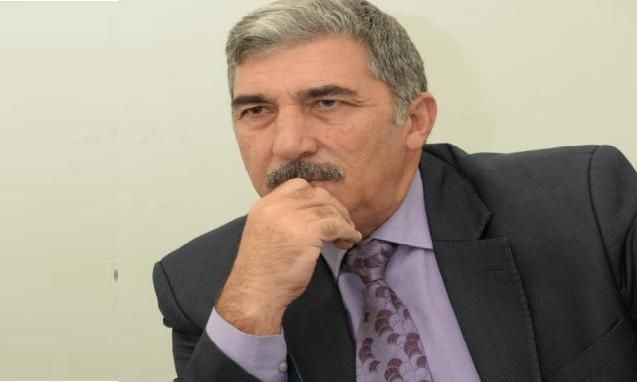
"From 1987 to the present day, I have been engaged in the study and research, translation, and promotion of "Manas". My translation and research works have been published in various languages. I have been working in this direction for 37-38 years."
The Manas scholar also touched upon President Ilham Aliyev's visit to Kyrgyzstan and emphasized the common ethnic and cultural ties between the two peoples.
"Azerbaijan and Kyrgyzstan are brotherly peoples with common roots, blood, and ethno-culture. President Ilham Aliyev's visit to Kyrgyzstan is also very valuable in this regard. The issue of Turkic unity coming to the agenda and the further strengthening of relations between Turkic peoples is an important process. I do not use the phrase "Turkic-speaking peoples". Because the Turkic language is one language. There are Turkic peoples."
Adil Jamil also recalled his participation in the "Manas-1000" jubilee event held in Kyrgyzstan in 1995:
"In 1995, I participated in the "Manas-1000" jubilee event held in Kyrgyzstan as part of the delegation led by the Great Leader Heydar Aliyev. I note this with great pride. During those events, I presented a small book I had translated to Heydar Aliyev. The Great Leader personally advised me to continue this work. "Manas" is a great work, a great sea, an ocean. It is not every son's job to enter there."
The scholar also noted that he dedicated a large part of his literary, spiritual and scientific-cultural activities to the "Manas" epic.
"I have dedicated more than half of my literary, spiritual and scientific-cultural life to the "Manas" epic. The work I have done over these years has also been appreciated by the scientific community of Kyrgyzstan. I have been awarded the title of Cultural Figure of Kyrgyzstan. I am an honorary academician of the Chingiz Aitmatov Academy and a member of the Writers' Union of Kyrgyzstan. In addition, I have been awarded various prizes and medals."
A. Jamil also drew attention to the numerous common motifs and plots between the "Manas" epic and "Kitabi-Dede Korkut":
"One chapter of my doctoral dissertation, which I wrote some time ago, is dedicated to the parallels between "Manas" and "Dede Korkut". Let me give a simple example. In "Dede Korkut" there is the character of Tepegöz. Tepegöz is a one-eyed mythical character. In "Manas", there is Jaldızgöz. Jaldızgöz is also presented as a hero with one eye, guarding the Chinese border. He is not completely mythical, he is a semi-mythical character."
According to him, the similarities between the two epics are not limited to this:
"In "Dede Korkut", our ancestors drink from jugs and pile up meat like a mountain. The same motif exists in "Manas". In "Dede Korkut", there is the motif of infertility, and the same motif is found in "Manas". Manas himself is born after many years. There is the arrival of a dervish at the door, the dervish giving an apple to Manas's father Yaqub, dream motifs and other points. In general, there is a common line, common motifs in Turkic epics. Since the roots of the peoples are common, these plots also resemble each other."
Adil Jamil stated that it is also possible to draw a number of parallels between "Manas" and "Koroglu".
"I have also researched the parallels between "Manas" and "Koroglu". For example, in "Manas" there is Ak-Otbey. Ak-Otbey means a difficult pass. In "Koroglu", there is Chanlibel. Just as "Koroglu" has its madmen, "Manas" also has its choros. Manas has 40 choros, that is, 40 madmen. In "Koroglu", 7777 madmen are shown. This, of course, is a more legendary number. That is, it is possible to draw as many parallels as desired between these epics."