Today - August 31 - the 26th summit of heads of state of the Shanghai Cooperation Organization (SCO) begins in Bishkek, the capital of Kyrgyzstan. The meeting will last until September 1 and, interestingly, coincides with the 25th anniversary of the SCO's establishment.
Once established to ensure border security and combat terrorism in Central Asia, this organization is now on a completely different scale. The SCO, where giants like China, Russia, India, and Iran sit at the same table, is no longer just a security platform, but has transformed into a large Eurasian platform where energy, transport, trade, finance, digital technologies, artificial intelligence, and a new international order are discussed.
The formation of the SCO served to fill the geopolitical vacuum that emerged in the post-Soviet space in the 1990s after the collapse of the Soviet Union. It all began in 1996 with the signing of an agreement between China, Russia, Kazakhstan, Kyrgyzstan, and Tajikistan on confidence-building measures in border areas. This format was later called the "Shanghai Five".
In 1997, the parties agreed to reduce military forces on the borders. In 2000, with the accession of Uzbekistan to the "Five", the idea of creating a broader regional cooperation format gained strength. Finally, on June 15, 2001, China, Russia, Kazakhstan, Kyrgyzstan, Tajikistan, and Uzbekistan established the Shanghai Cooperation Organization in Shanghai.
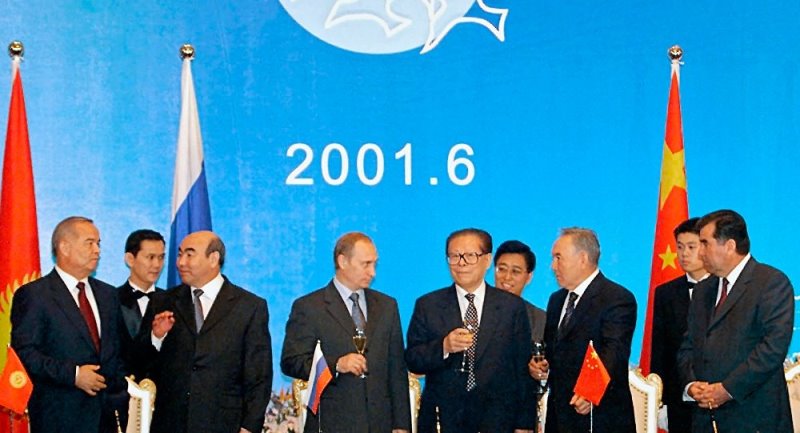
The initial agenda of the SCO mainly focused on three threats - terrorism, separatism, extremism
However, the organization's goals were not limited to this. The SCO Charter defined mutual trust, good neighborliness, regional peace and security, economic cooperation, social and cultural development, and joint response to new challenges as its main objectives. That is, the SCO was not officially created against any state or international organization. In July 2026, the SCO Council of Foreign Ministers once again issued a statement on this topic. But the geopolitical reality is more complex.
The rise of the SCO is also seen as the formation of an alternative cooperation platform to the Western-dominated international system. This is because China is the main driving force of the organization. However, it would not be correct to officially evaluate the organization as an "anti-Western" project; its strengthening serves to create an alternative power center to the Western-dominated system. The expansion of the SCO's geography and the increase in its member states also prove the organization's attractiveness.
In 2017, India and Pakistan were admitted as full members. This significantly increased the SCO's weight. Because the organization now included two of the world's largest population centers - China and India, as well as large states like Pakistan and Russia. In the following years, the number of members in the organization continued to increase. In 2023, Iran, and in 2024, Belarus were admitted as the 10th member of the SCO.
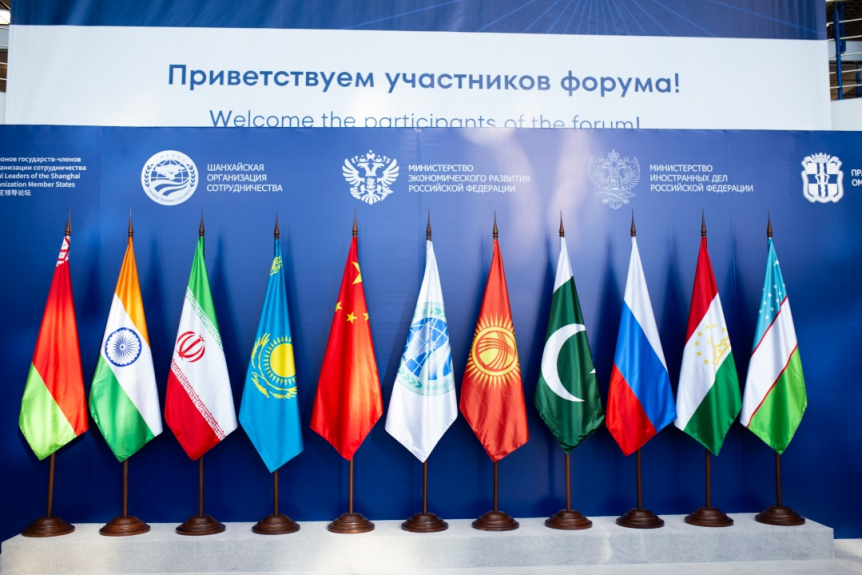
Thus, the organization also gained a geographical extension towards Europe. Today, the SCO has 10 members: China, Russia, India, Iran, Pakistan, Kazakhstan, Kyrgyzstan, Tajikistan, Uzbekistan, and Belarus.
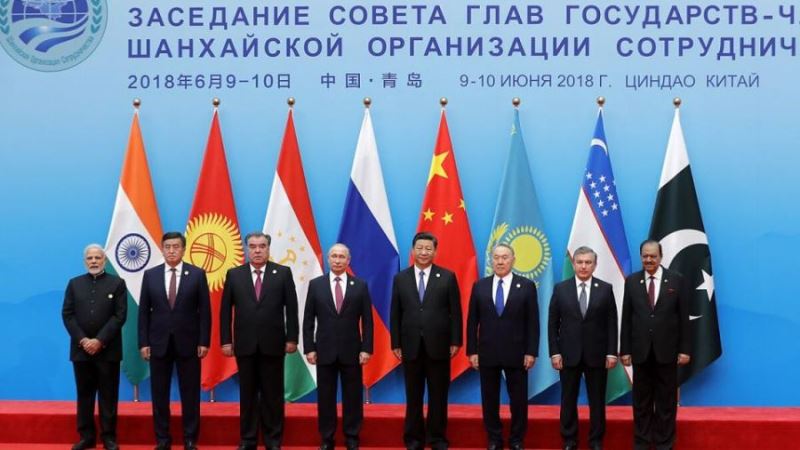
In parallel, there are 2 observer members - Afghanistan and Mongolia, and 15 dialogue partners - Azerbaijan, Armenia, Bahrain, Egypt, Cambodia, Qatar, Kuwait, Laos, Maldives, Myanmar, Nepal, UAE, Saudi Arabia, Turkey, and Sri Lanka.
As seen from the list, Azerbaijan also has the status of a country in dialogue with the SCO. This status was adopted in 2015, and the memorandum was signed in Beijing on March 14, 2016.
Although not a full member, this status allows Azerbaijan to participate in SCO events, discussions, and various cooperation mechanisms. In the future, this status will serve to create a unified "SCO partner" status. This could mean the creation of a new format for Azerbaijan in the future.
The SCO is not just a closed platform with its members. The organization cooperates with the UN and its various specialized agencies. These include UNODC, UNESCO, FAO, UNEP, and other agencies. At the same time:
It has relations with organizations such as ASEAN, CIS, CSTO, Economic Cooperation Organization, CICA, EAEU, League of Arab States, International Committee of the Red Cross. This shows that the SCO is no longer just a China-Russia-Central Asia format.
What does the SCO give to member countries? This is the most important question. Because the size of an international organization is important not only in the number of its members, but also in terms of the contribution and privileges it provides to its members.
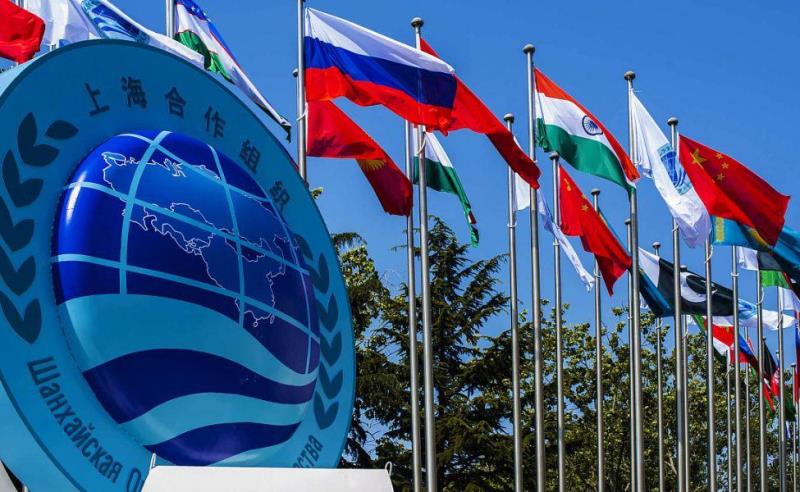
The SCO creates opportunities for countries in several directions.
1. Security. Mechanisms are being created to combat terrorism, extremism, separatism, drug and transnational crime. At the 2025 Tianjin summit, agreements were signed on the establishment of the SCO Anti-Drug Center and a Universal Center against security threats.
2. Transport. The development of railways, highways and transit corridors in the SCO area is one of the main directions. This is especially important for Azerbaijan. Because Azerbaijan presents itself as an important link in the China-Central Asia-Caspian-South Caucasus-Europe route.
3. Energy. In 2025, the SCO adopted a roadmap for the implementation of the strategy for the development of energy cooperation until 2030. This is an important direction for a country like Azerbaijan with energy resources and transit opportunities.
4. Finance One of the biggest new projects is the SCO Development Bank. In 2025, a political decision was made to establish it. In May and June 2026, practical consultations on the establishment of the bank were already held with representatives from various countries participating. This is a very serious step in terms of the SCO transforming from just a political club into an economic platform with its own financial mechanisms in the future.
The real power of the SCO is greater than many international organizations. The SCO covers a large part of Eurasia, unites almost half of the world's population, keeps nuclear and major economic powers like China, India, and Russia on one platform, possesses a significant part of the world's largest energy and raw material resources, and controls a part of the main land and sea trade routes between Europe and Asia. According to the SCO's own data, the organization covers more than 47 percent of the world's population, approximately one-third of the Eurasian territory, and the total economic weight of its members is more than a quarter of global GDP.
SCO summits at the level of heads of state are held annually. After this year's Bishkek summit, the next summit will be held in Islamabad, the capital of Pakistan, in 2027. During Kyrgyzstan's presidency, the organization's motto is: "25 years of SCO: together for a stable world, development and prosperity".

Main directions of the agenda:
Regional security, combating terrorism and extremism, economic cooperation, transport and transit, energy, digital economy, artificial intelligence, investment, trade, food security, agriculture, humanitarian and cultural ties. All these goals are linked to the SCO Development Strategy until 2035, adopted in 2025.
The Bishkek summit includes Chinese President Xi Jinping, Russian President Vladimir Putin, Indian Prime Minister Narendra Modi, Azerbaijani President Ilham Aliyev, Iranian President Masoud Pezeshkian, Belarusian President Alexander Lukashenko, Kazakh President Kassym-Jomart Tokayev, Uzbek President Shavkat Mirziyoyev, Tajik President Emomali Rahmon, Armenian Prime Minister Nikol Pashinyan, Pakistani Prime Minister Shahbaz Sharif, and the host of the summit, Kyrgyz President Sadyr Japarov.
The summit also envisages wide participation of non-member countries and international organizations. Azerbaijan's participation in this platform as an SCO dialogue partner is also of particular importance.
The 2025 strategy and the ongoing work in 2026 show that the organization wants to transform from a declarative political platform into a practical economic mechanism.
The most notable projects:
SCO Development Bank
If this bank is established, it can play an important role in financing infrastructure, energy, transport and other projects in member countries. The fact that the fourth consultation meeting on the bank was already held in June 2026 shows that the process is not just on paper.
Energy cooperation
The implementation of the energy strategy until 2030 is envisaged.
Green energy
In 2025, China put forward an initiative to increase solar and wind energy capacity by an additional 10 million kilowatts each in SCO countries over the next five years.
Digital economy and artificial intelligence
At the 2025 summit, a separate statement was adopted on deepening international cooperation in the field of artificial intelligence.
Security
New institutions such as the Anti-Drug Center and the Universal Security Center are being established.
Azerbaijan, as a partner country, can play a multifunctional role in the SCO area. Because Azerbaijan's geography creates a serious advantage here. Our country acts as a key logistics center for SCO member countries to access the Turkish and European markets and is located on the main routes. For this reason, Azerbaijan is not just a dialogue partner for the SCO, but a potential transit and logistics hub.
One of Azerbaijan's biggest advantages is related to the Middle Corridor. Alternative routes to Europe are becoming increasingly important for China and Central Asia. In this process, Baku, Alat, Baku International Sea Trade Port, Baku-Tbilisi-Kars, and the Trans-Caspian route are critical structures.
An important factor is that the expansion of transport and transit cooperation on the SCO's economic agenda directly coincides with Azerbaijan's interests. Among the organization's economic cooperation mechanisms, there are special working groups on transit, transport, and trade facilitation. This means that Azerbaijan can gain transit opportunities from the SCO.
The opportunity for Azerbaijan is also great in terms of energy
Azerbaijan can also play a special role in the energy map of the SCO area. China is a large energy consumer. Central Asia has large energy and raw material reserves. Azerbaijan, on the other hand, is one of the main countries that brings Caspian energy resources to European markets. The combination of these three directions makes Azerbaijan an interested party in the SCO's energy dialogue. Baku also seeks to increase its role in "green energy", electricity exports, and regional energy connections. This coincides with the SCO's energy cooperation strategy until 2030.
The China factor - one of the main keys in Azerbaijan's SCO policy
There is another important point here. Azerbaijan's establishment of strategic partnership relations with China in 2024 brought Baku-Beijing relations to a new stage. This relationship creates additional opportunities for Azerbaijan in the SCO context. Because China is the organization's largest economic and political power. In other words, the deepening of Azerbaijan's relations with the SCO also means bringing economic ties with China to a broader regional platform. Another advantage for Azerbaijan is the opportunity to be on the same platform with Russia, Iran, Central Asia, and China. One of the main features of Azerbaijan's foreign policy is to maintain parallel relations with various power centers. The SCO provides Baku with a ready platform in this regard. Azerbaijan has bilateral relations with the SCO member states, which unite 10 countries. For this reason, the SCO can become an additional diplomatic arena for Azerbaijan's multi-vector foreign policy.
What is the real big change?
There is a big difference between the SCO in 2001 and the SCO in 2026. In 2001, the main words were: terrorism - separatism - extremism - border security. In 2026, bank - energy - transport - digital economy - artificial intelligence - investment - green energy - trade - logistics have been added. This is not just the growth of the organization. This is the SCO redefining itself. The 2035 strategy adopted in 2025 is precisely the main roadmap for this transformation.
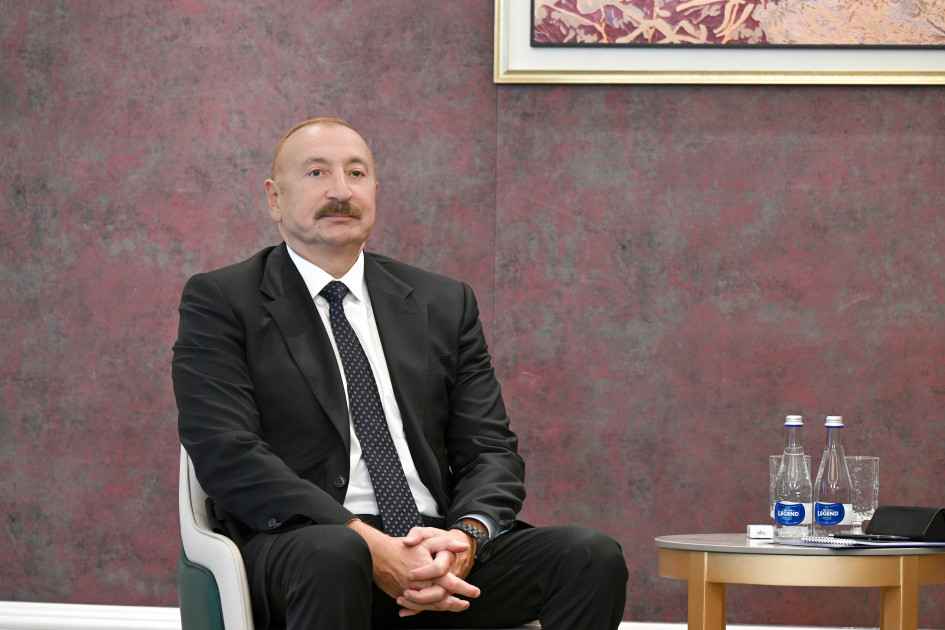
A great opportunity opens up for Azerbaijan
Azerbaijan is not a member of the SCO. But as a partner country, a number of opportunities arise for Azerbaijan.
The chance to become one of the transit gates of the new economic space that the SCO wants to create between China and Central Asia and Europe. The main issue for Baku is to be involved in the SCO's projects related to transport, energy, and logistics. If the SCO Development Bank is formed, Azerbaijan can be a party using these financial mechanisms.
If China-Central Asia-Caspian transport links expand, Azerbaijan can earn transit revenues from this. If energy cooperation deepens, Azerbaijan can bring its energy and "green energy" potential to this market. If digital and technological cooperation expands, Azerbaijan can be more closely integrated into the China and Central Asia technology ecosystem.
The SCO is no longer just an "Eastern club"
The organization created by six countries in Shanghai 25 years ago has today become a giant Eurasian platform uniting 10 member countries, 2 observers, and 15 dialogue partners.
The main question of the Bishkek summit is actually this: not how much more the SCO will grow, but how much real power it will become from now on?
If the SCO Development Bank, energy projects, transport corridors, digital economy, and security mechanisms start working in reality, the organization's next 10 years could be more significant than the previous 25 years.
For Azerbaijan, the message is more concrete: Baku is not a country standing at the door of the SCO - it is a country located at the intersection of the roads passing through it. This is why the future power of the SCO becomes a factor that must be taken into account in Azerbaijan's economic and geopolitical calculations.