With Armenia's rapprochement with the European Union (EU), a new line of confrontation has formed in its relations with Russia. Moscow sends clear political messages against Yerevan's integration course with the EU, while also using the opportunities created by Armenia's economic and energy dependence on Russia.
However, as of August 29, 2026, there is no reliable information indicating that Russia is preparing for a direct military attack on Armenia. On the contrary, the current picture shows that Moscow's influence over Yerevan is more economic, energy, institutional, and political in nature.
For Russia, the main issue is not so much to punish Armenia militarily, but to confront Yerevan's political direction towards the West with an economic and political price. Currently, there are 6 main risk factors from Russia against Armenia.
The most realistic and already applied leverage by Moscow over Armenia is trade. Since the end of May, Russia has begun to impose restrictions on the import of a number of products of Armenian origin. In the first phase, restrictions on vegetables, fruits, and other agricultural products were later extended to areas such as mineral water, alcoholic beverages, flowers, fish and fish products, and dairy products. The Russian side justifies its decisions mainly by violations of phytosanitary and other safety requirements.
However, the fact that the restrictions coincided with a period when Armenia was accelerating its relations with the West also brought their political consequences to the agenda. Armenian Prime Minister Nikol Pashinyan stated that the restrictions imposed by Russia contradict bilateral agreements and EAEU rules.
According to S&P's assessment, the volume of exports affected by the restrictions could reach approximately 2 percent of Armenia's GDP.
This is an important point: Russia's pressure against the Armenian economy is no longer a possibility, but an ongoing process.
The advantage for Moscow is that it is possible to strike specific economic sectors of Armenia without resorting to military escalation.
The second and more strategic leverage is energy. Currently, Russian gas is sold to Armenia at a border price of approximately $165 per 1,000 cubic meters. This price has been protected by long-term agreements. The share of Russian gas in Armenia's energy system remains high; data released for 2024 show that 87 percent of the country's gas imports come from Russia. Towards the end of 2026, the issue of gas prices will come up again. The Armenian side is already modeling the economic consequences of a possible price increase. It cannot be said that a final decision has been made regarding Russia's price increase. But it is precisely here that Moscow's potential leverage appears. A significant increase in gas prices could affect utility tariffs, industrial and production costs, business competitiveness, inflation, and the social burden on the population.
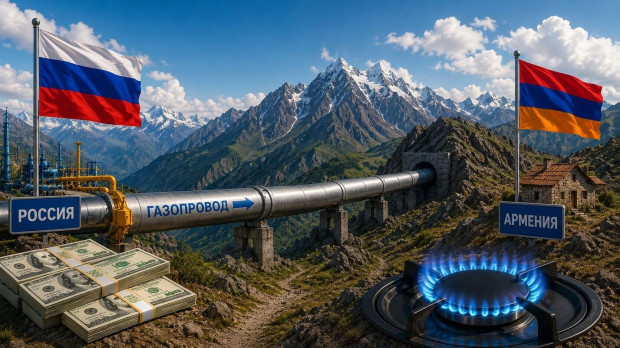
In other words, Russian gas is not just an energy resource for Armenia. It is also a means of political pressure that can affect economic and social stability. For this reason, the gas issue is one of the most carefully monitored areas in Moscow-Yerevan relations in the coming months.