The state visit of Azerbaijani President Ilham Aliyev to Uzbekistan is considered the beginning of a new historical stage in the relations between the two brotherly countries. The “Treaty on Eternal Friendship between the Republic of Azerbaijan and the Republic of Uzbekistan” signed during the visit is not just a diplomatic document, but an important document that formalizes the transition of Azerbaijan-Uzbekistan relations, which have consistently deepened in recent years, to a new political and legal stage.
The inclusion of the phrase “eternal friendship” in the title of the Treaty carries great political meaning in itself. Because it is not only about expanding cooperation between the two states in the current period. The document envisages that the relations between Azerbaijan and Uzbekistan will be built on the principles of mutual trust, strategic partnership, alliance and friendship for future generations as well.
In fact, to understand the political content of this document, it is enough to look at the rapid development path of Azerbaijan-Uzbekistan relations in recent years. Azerbaijani President Ilham Aliyev had previously stated that relations between the two countries are already at the highest level – that of alliance. Mutual visits of heads of state in recent years, the activities of the Supreme Interstate Council, documents on strengthening strategic partnership and the Treaty on Allied Relations showed that this political rapprochement was formed in stages.
Now, the treaty on “eternal friendship” means putting that line into a stronger political framework.
The main message of the Treaty: the two states take into account each other's security
The first article of the document draws special attention. The parties declare that they will build their relations on the basis of eternal friendship, mutual trust, strategic partnership and alliance, guided by universally recognized principles and norms of international law. These phrases are not general words of diplomatic protocol. They clearly show what political level the relations between Azerbaijan and Uzbekistan have reached.
A more important point is reflected in the second article of the treaty. The parties undertake to refrain from any activity that may harm the sovereignty, security and territorial integrity of each other, and not to participate in any action directed against the other party. At the same time, the parties will not allow their territories to be used for the purpose of harming the sovereignty, security and territorial integrity of the other state.This is a particularly important political provision for Azerbaijan. Because Baku defends issues of territorial integrity and sovereignty as a fundamental principle in its foreign policy. Uzbekistan's reaffirmation of this approach at the treaty level shows how high the political trust between the two countries is.
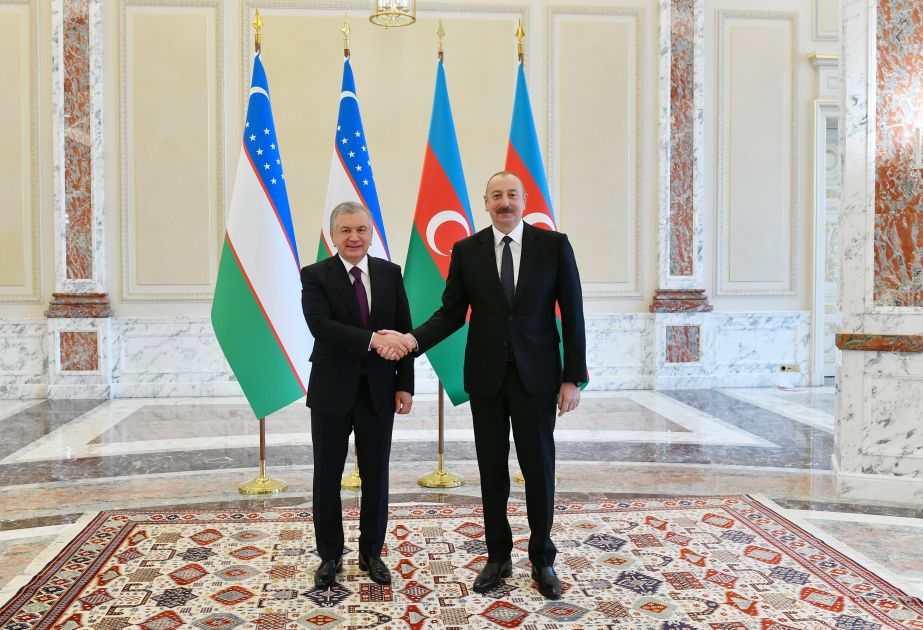
The Baku-Tashkent line no longer fits within the framework of bilateral relations
The third article of the Treaty envisages the expansion of inter-parliamentary relations, the strengthening of friendship between peoples and the strengthening of legal cooperation. The effective use of the permanent consultation mechanism between the Ministries of Foreign Affairs is separately noted.
These mechanisms are not accidental. Because relations between Azerbaijan and Uzbekistan are no longer limited to contacts established only at the presidential level. A multifaceted system of relations has been formed between the two countries, covering state institutions, parliaments, business circles, regions and societies.
The fourth article of the Treaty reveals the economic and geostrategic side of these relations. The parties confirm their intentions to develop trade-economic and investment cooperation, deepen industrial cooperation, and implement joint projects in numerous fields such as energy, transport, logistics, agriculture, digital economy, e-commerce, information-communication and space technologies.
Here, the issue of transport and transit draws particular attention. The parties undertake to create conditions for the development of cargo and passenger transportation, increasing the transit potential of transport corridors and strengthening interconnected transport systems. This provision is of particular importance from the point of view of Azerbaijan's geopolitical position.
In recent years, Azerbaijan has taken serious steps towards becoming one of the main links in East-West transport connections. Closer integration with Uzbekistan means strengthening connections extending from the depths of Central Asia across the Caspian to the South Caucasus and Europe. In other words, Baku-Tashkent relations are already gaining geo-economic importance that goes beyond the borders of the two countries.
The result of Ilham Aliyev's Central Asia policy
Azerbaijan's interest in Central Asia is not a new issue. However, in recent years, it is clear that relations with this region have acquired a more systematic and strategic character in President Ilham Aliyev's foreign policy course. Azerbaijan's relations with Uzbekistan are one of the most successful examples of this policy.
Here, it is necessary to note the special role of President Ilham Aliyev's personal diplomatic relations and his ability to build political trust. In the interview of the President of Azerbaijan to the National Information Agency of Uzbekistan, it was emphasized that the personal friendship and trust relations established with Shavkat Mirziyoyev made an important contribution to the development of interstate relations.
This, in fact, shows one of the important features of Azerbaijan's foreign policy: President Ilham Aliyev is not content with only maintaining existing relations, but manages to carry them into a broader geopolitical and geo-economic framework.
The results of this approach can also be seen in the development of Azerbaijan's relations with Central Asian states. Baku is no longer a party looking at the region from the outside. Azerbaijan is becoming an important geopolitical and logistics platform connecting Central Asia and Europe across the Caspian Sea.
In this sense, the signing of the “eternal friendship” agreement with Uzbekistan is an important event in terms of further expanding Azerbaijan's political and economic influence in Central Asia.
Karabakh factor: a real example of friendship
It would not be right to seek the strength of Azerbaijan-Uzbekistan relations only in documents. One of the most important features of these relations is the mutual support shown in difficult days. Uzbekistan has always supported the territorial integrity of Azerbaijan and has been one of the first countries to practically participate in the restoration process of Karabakh. The construction of the school named after Mirzo Ulugbek in Fuzuli is one of the brightest examples of this. Azerbaijani President Ilham Aliyev has repeatedly praised Uzbekistan's step.
This support showed that relations are not just political statements. The industrial enterprise established in Khankendi with Uzbek investment is another example of the practical transition of brotherhood between the two countries.
Thus, Azerbaijan-Uzbekistan relations have acquired a multifaceted character in terms of political, economic, humanitarian, and strategic security.
An important event for the Turkic world as well
Another important aspect of the Treaty is the additional impetus it can give to the cooperation between Azerbaijan and Uzbekistan within the framework of the Organization of Turkic States. The political rapprochement of the two countries is also important in terms of strengthening integration among Turkic states.
Azerbaijan's active diplomatic policy in the Turkic world in recent years and the systematic expansion of relations with Central Asian states have become one of the important directions of President Ilham Aliyev's foreign policy course.
As a result of this policy, the political distance between Baku and Central Asia is practically decreasing. The Caspian Sea is turning from a p of water separating the two regions into a strategic platform connecting them. In this regard, “Azerbaijan-Uzbekistan eternal friendship” is a political message not only for Baku and Tashkent, but for the wider Turkic geography as a whole.
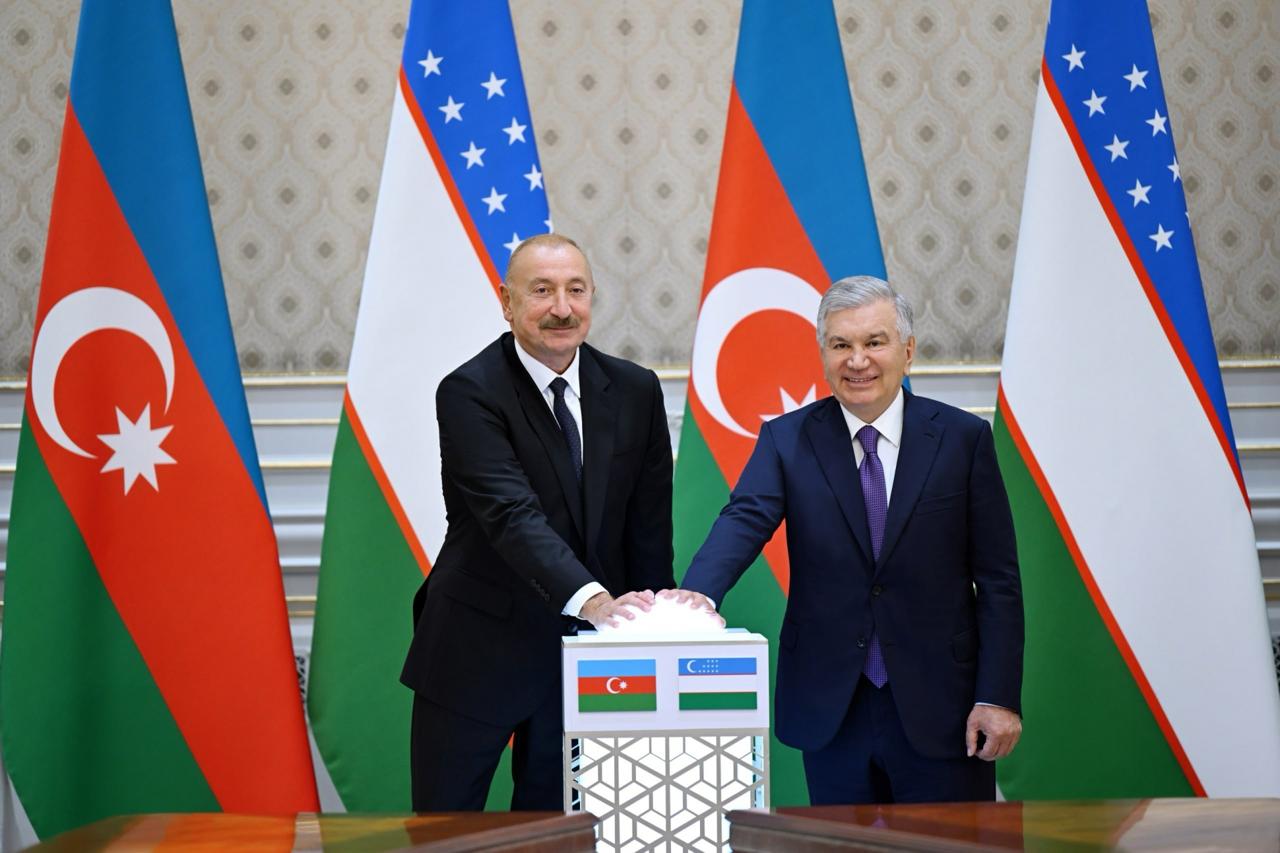
Beginning of a new stage
The fifth article of the Treaty envisages the expansion of cooperation in education, science, culture, media, tourism, health and other humanitarian areas. The sixth article attaches special importance to political consultations and exchange of views on global and regional issues. The seventh article reaffirms commitment to the central role of the UN in preventing and resolving conflicts, and in matters of regional and global security and stability.
Therefore, the treaty is not just the formalization of the term “friendship” in a political document. It is a comprehensive document that defines the main directions of the future relations between the two countries at the political, security, economic, humanitarian and international organizations level.
For Azerbaijan, one of the most important results of this document is the emergence of new opportunities in the country's Central Asia policy.
As a result of the multi-vector and pragmatic foreign policy implemented by President Ilham Aliyev, Azerbaijan is strengthening itself not only as one of the main states connecting the South Caucasus, but also the Caspian basin, the Turkic world and Central Asia.
The transition of relations with Uzbekistan to the stage of “eternal friendship” is another important result of this strategy.
Today, it is not enough to view relations between Azerbaijan and Uzbekistan simply as relations between two brotherly states. In the upcoming stage, the Baku-Tashkent line can become one of the main pillars of broader regional projects in terms of transport, energy, investment, trade, digital technologies and the integration of the Turkic world.
Most importantly: President Ilham Aliyev's foreign policy course continues to transform Azerbaijan's geographical position into a political and economic advantage. The deepening of Azerbaijan's relations with Central Asia, and the elevation of relations with a large and strategically important state like Uzbekistan from alliance to eternal friendship, is a clear indicator of this.
For this reason, August 23, 2026, can be evaluated not only as another date in the diplomatic calendar, but as the beginning of a political stage that will determine the future decades of Azerbaijan-Uzbekistan relations.
And behind this stage lies a state policy that has been consistently, pragmatically and farsightedly implemented for years. Under the leadership of Ilham Aliyev, Azerbaijan is becoming an active geopolitical actor that not only observes regional processes, but also influences the direction of these processes and connects various geographies.